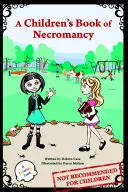
A Children's Book of Necromancy
 84
84

A Children's Book of Necromancy
Debrin Case and Darcy Melton's *A Children's Book of Necromancy* presents a bold, almost audacious, premise: that profound magical acts, including the raising of the dead, are readily accessible. The work’s strength lies in this direct, unvarnished assertion, which bypasses the usual academic or ritualistic preamble common in such texts. It posits a theory of manifestation where intent and minimal effort yield extraordinary results. However, the book’s primary limitation is its brevity and the lack of detailed, step-by-step methodologies. The assertion that one "can even raise the dead" is striking, but the practical application remains largely conceptual within its pages. A passage discussing the energy required for such feats hints at a deeper mechanics, but it is underdeveloped. Ultimately, the book functions more as a philosophical statement on potential than a comprehensive grimoire.
📝 Description
84
Published in 2010, A Children's Book of Necromancy suggests raising the dead requires minimal exertion.
Debrin Case and Darcy Melton's work, A Children's Book of Necromancy, proposes a straightforward path to achieving what it calls 'astounding miracles.' The authors frame actions often considered arcane, such as raising the dead, as attainable through focused intent and little effort. They challenge the notion that these feats are inherently difficult, suggesting perceived limitations are mental. This approach reframes necromancy not as a dark art but as a practical application of personal agency.
The book targets readers interested in pushing the boundaries of what they believe is possible. It appeals to those who question conventional limits, especially within esoteric studies. Those looking for direct instruction on manifesting extraordinary outcomes will find its premise unusual. The work arrived in 2010, a time when occult literature often merged historical practices with modern self-help ideas, making it accessible to a wider audience than more academic or traditional texts.
This book appears within a contemporary milieu where occult subjects are often presented with a self-help orientation. It contrasts with earlier, more academic or strictly traditional grimoires. The 2010 publication date places it alongside works that sought to demystify esoteric practices for a general audience, blending elements of ritualistic study with the idea of achievable personal power.
💡 Why Read This Book?
• Gain an unconventional perspective on manifestation by exploring the book's concept of "astounding miracles" achievable with "very little effort," challenging traditional views on magical efficacy. • Understand the modern accessibility of esoteric ideas, as presented in this 2010 publication, which democratizes complex magical concepts for a wider audience. • Consider the boundary between symbolic representation and literal outcome, as the book reinterprets necromancy as a practical, achievable act rather than solely a spiritual or symbolic one.
⭐ Reader Reviews
Honest opinions from readers who have explored this book.
❓ Frequently Asked Questions
Is A Children's Book of Necromancy suitable for actual children?
Despite its title, the book's subject matter is esoteric and deals with concepts like raising the dead. It is intended for adult readers interested in metaphysical and occult studies, not for young children.
What is the core philosophy behind the 'miracles' mentioned in the book?
The book suggests that extraordinary feats, including necromancy, can be accomplished through focused intent and minimal exertion, implying a direct correlation between will and manifestation.
When was A Children's Book of Necromancy first published?
The book was first published in February 2010.
Does the book provide literal instructions for raising the dead?
While it asserts the possibility, the book focuses more on the underlying principles and potential rather than offering exhaustive, literal step-by-step instructions for complex rituals.
What is the intended audience for this book, given its title and subject?
The intended audience comprises adults and mature individuals exploring metaphysical studies, occultism, and alternative philosophies who are intrigued by the potential for manifesting significant results.
How does this book relate to traditional necromancy?
It reframes necromancy from a purely historical or ritualistic practice into a concept of manifestation and personal power, accessible through specific mental or energetic applications.
🔮 Key Themes & Symbolism
Accessible Manifestation
The central theme is the accessibility of extraordinary magical outcomes, framed as "astounding miracles." The work posits that with "very little effort," individuals can achieve feats often considered impossible, including the symbolic or literal "raising of the dead." This perspective challenges the notion that complex esoteric practices require years of arduous training, suggesting instead a direct pathway through focused will and intent, a concept that aligns with modern interpretations of manifestation principles.
Reinterpretation of Necromancy
Rather than adhering to traditional grimoire depictions of necromancy, the book presents a modernized, perhaps metaphorical, interpretation. It suggests that the power associated with "raising the dead" can be channeled or understood as a potent form of energy manipulation or focused psychic projection. This redefinition moves the subject from purely historical or ceremonial contexts into a area of personal empowerment and immediate potential, encouraging readers to view such practices through a lens of achievable personal power.
The Power of Minimal Effort
A core tenet is the idea that profound results do not necessitate immense labor. The book champions the concept of efficiency in magical practice, implying that understanding the correct principles allows for significant outcomes with minimal expenditure of energy or time. This approach encourages a strategic engagement with esoteric forces, prioritizing effectiveness and directness over elaborate ritual, which can be particularly appealing to contemporary practitioners seeking practical application.
💬 Memorable Quotes
Direct passages from the work, attributed to the author.
“You can do anything, you can even raise the dead.”
— This statement captures the book's provocative premise, suggesting that the perceived limits of human capability, particularly within esoteric arts, are self-imposed. It serves as an invitation to explore the ultimate potential of focused will and manifestation.
“astounding miracle with very little effort”
— This phrase highlights the book's core promise: achieving significant, seemingly impossible results through efficient and direct methods. It implies a streamlined approach to magic, accessible to anyone willing to engage with its principles.
“Proving that you can do anything”
— This assertion frames the book's teachings as a demonstration of limitless personal potential. It encourages readers to adopt a mindset where conventional limitations are disregarded in favor of exploring the full spectrum of achievable outcomes.
“Necromancy as an achievable feat.”
— This interpretation of the book's stance on necromancy positions it as a practice within reach, rather than an exclusive or forbidden art. It invites readers to reconsider the subject's accessibility and potential for personal application.
💡 Key Ideas
Editorial paraphrase of the work's core concepts — not direct quotes.
The work explores the potential for manifesting extraordinary results.
This paraphrased concept emphasizes the book's focus on the practical application of esoteric knowledge. It suggests that the primary goal is not theoretical understanding but the tangible achievement of significant, life-altering outcomes.
🌙 Esoteric Significance
Tradition
This work does not strictly adhere to a single esoteric lineage but rather draws upon a generalized modern interpretation of manifestation and personal power, often associated with New Thought or contemporary magical theory. It departs from traditional Hermetic or Kabbalistic systems by emphasizing extreme simplicity and directness, suggesting that complex symbolic frameworks are secondary to raw intent and focused will. Its accessible framing of potent magical concepts aligns with a broader trend of democratizing esoteric knowledge.
Symbolism
While the book's title prominently features 'Necromancy,' its symbolic interpretation likely moves beyond the literal resurrection of the dead. It may symbolize the reclaiming of lost personal power, the vitalization of stagnant aspects of the psyche, or the potent invocation of will. The 'children' aspect of the title could symbolize innocence, directness, or a return to fundamental principles, stripping away complex adult inhibitions and fears associated with the subject.
Modern Relevance
The principles espoused in *A Children's Book of Necromancy* resonate with contemporary practitioners of law of attraction, manifestation coaching, and simplified magical practices. Thinkers and groups focused on psychological approaches to magic, or those seeking to bypass lengthy initiatory systems for immediate results, might find its core message of achievable power appealing. It reflects a modern desire for direct, impactful spiritual or magical engagement.
👥 Who Should Read This Book
• Individuals new to occultism seeking a provocative introduction to the concept of manifestation and personal power, framed in a uniquely direct manner. • Skeptics and philosophers interested in the psychological underpinnings of belief and the potential for self-generated reality, exploring the book's assertion of "astounding miracles." • Practitioners of modern manifestation techniques looking for alternative perspectives on achieving significant results with minimal perceived effort, as suggested by the book's approach to necromancy.
📜 Historical Context
Published in 2010, *A Children's Book of Necromancy* arrived during a period of significant popular interest in esoteric subjects, fueled by the internet and a growing dissatisfaction with purely materialistic worldviews. This era saw a rise in accessible occult literature, often blending ancient traditions with modern self-help philosophies, a trend exemplified by this work's direct approach. It stands in contrast to the more academic or rigidly traditional approaches favored by earlier occult revival movements, such as the Hermetic Order of the Golden Dawn which emphasized complex ritual and initiatory structures. While not directly engaging with contemporary scholars, the book taps into a broader cultural undercurrent that questions established boundaries of reality. Its reception was likely varied, appealing to those seeking quick empowerment while perhaps being dismissed by more conservative occultists for its unconventional framing and brevity.
📔 Journal Prompts
The concept of "astounding miracles" with "very little effort."
The book's reinterpretation of necromancy.
Your personal definition of "achievable feats."
The relationship between "anything" and "raising the dead."
The potential for "proving that you can do anything."
🗂️ Glossary
Necromancy
Traditionally, the practice of communicating with the spirits of the dead. In the context of this book, it is presented as a potent, achievable act of manifestation or energy manipulation.
Astounding Miracle
A significant, seemingly impossible achievement or event, presented in the book as attainable through focused intent and minimal exertion by the practitioner.
Raising the Dead
A core concept within the book, interpreted as the ultimate demonstration of achievable power, potentially symbolizing revitalization, profound manifestation, or direct manipulation of life/energy forces.
Very Little Effort
A key principle suggesting that profound magical or manifestational results can be achieved efficiently, without extensive ritual or prolonged struggle, emphasizing directness and focused will.
Achievable Feats
Actions or results presented as within the practical reach of the individual, challenging perceived limitations and encouraging the exploration of one's inherent capabilities.
Manifestation
The process of bringing thoughts, ideas, or desires into physical reality. The book suggests this can be applied to even the most extraordinary outcomes.
Personal Agency
The capacity of individuals to act independently and make their own free choices. The book empowers readers to believe in their ability to effect significant change.