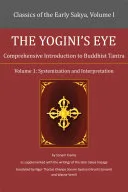
The Yogini’s Eye
 71
71

The Yogini’s Eye
Wayne Verrill's "The Yogini's Eye" tackles the monumental task of systematizing Buddhist Tantra, specifically the Sakya Lamdre lineage, with commendable academic rigor. Its strength lies in presenting a lucid, early framework for understanding the Hevajra Tantra cycle, a feat not previously undertaken with such depth in Western scholarship. The work’s methodical approach to translation and interpretation of the "Classics of the Early Sakya" series is its most significant contribution. However, its dense academic style, while precise, may prove challenging for those seeking a more accessible entry into tantric philosophy. A passage detailing the "Path and Fruit" (Lamdre) doctrine, for instance, is intellectually rewarding but demands considerable prior knowledge. Ultimately, "The Yogini's Eye" serves as an essential, albeit demanding, scholarly cornerstone for the study of Tibetan Buddhist Tantra.
📝 Description
71
Wayne Verrill's 2012 book, The Yogini's Eye, offers the first comprehensive academic study of the Sakya Lamdre lineage.
Published in 2012, The Yogini's Eye begins Wayne Verrill's "Classics of the Early Sakya" series with a detailed examination of the Sakya Lamdre lineage. It focuses specifically on the Hevajra Tantra, presenting a new translation and scholarly interpretation of its doctrines. This volume is intended for serious students of Buddhist philosophy, particularly those engaged with Vajrayana and Tibetan Buddhism. It also serves researchers in comparative religion and those seeking a deeper theoretical grounding in Tantric practices.
The book aims to systematize and clarify the complex teachings of Buddhist Tantra within the Sakya tradition. It introduces the Lamdre ("Path and Fruit") system and the revelation cycle of the Hevajra Tantra. Verrill emphasizes the necessity of correct transmission and understanding for advanced yogic practices. The work is suited for rigorous academic study, providing a theoretical framework rather than introductory spiritual instruction.
The Yogini's Eye situates itself within the academic study of Tibetan Buddhism, specifically focusing on the Sakya school's Lamdre teachings. This lineage, centered on the Hevajra Tantra, represents a significant current within Vajrayana Buddhism. Verrill's work emerged during a period of growing Western scholarly interest in Tibetan traditions, aiming to provide systematic analysis of texts previously less accessible to non-practitioners. It addresses the need for clear, scholarly interpretations of complex tantric methodologies and philosophical underpinnings.
💡 Why Read This Book?
• Gain a foundational understanding of the Sakya Lamdre lineage, specifically the Hevajra Tantra, as presented in Verrill's systematic 2012 introduction. • Appreciate the scholarly approach to translating and interpreting "Classics of the Early Sakya," offering unique insights into Tibetan Buddhist texts. • Grasp the core principles of Buddhist Tantra through a comprehensive treatment that initiated dedicated academic study in the field.
⭐ Reader Reviews
Honest opinions from readers who have explored this book.
❓ Frequently Asked Questions
What is the primary focus of "The Yogini's Eye"?
The book provides a comprehensive introduction to Buddhist Tantra, specifically focusing on the Sakya Lamdre lineage and the Hevajra Tantra cycle, initiating scholarly study in this area.
When was "The Yogini's Eye" first published?
The book was first published on August 15, 2012, marking a significant point in the academic exploration of Tibetan Buddhist Tantra.
Who is the author of "The Yogini's Eye"?
The author is Wayne Verrill, whose work aims to systematize and interpret the complex doctrines of Buddhist Tantra.
What translation series does this book introduce?
It introduces the "Classics of the Early Sakya" translation series, dedicated to the extensive literature of the Sakya Lamdre lineage.
What distinguishes this book from other works on Buddhist Tantra?
It is considered the earliest and most comprehensive book of its type, initiating dedicated scholarly study of Tibetan Buddhist Tantra from a specific lineage perspective.
What is the 'Hevajra Tantra cycle' mentioned in the blurb?
The Hevajra Tantra cycle is a significant body of tantric revelation within Tibetan Buddhism, central to the Sakya tradition and explored in detail within this volume.
🔮 Key Themes & Symbolism
Sakya Lamdre Lineage
The text meticulously details the Sakya Lamdre ('Path and Fruit') teachings, a core doctrinal system within the Sakya school of Tibetan Buddhism. It emphasizes the lineage's unique approach to understanding the tantric path, focusing on the relationship between samsara and nirvana. Verrill's work aims to clarify the intricate structure of these teachings, making them accessible for academic study and distinguishing the Sakya tradition's specific interpretative methods.
Hevajra Tantra
Central to this volume is the Hevajra Tantra, a key text within Vajrayana Buddhism. The book provides a comprehensive introduction to its revelation cycle and its significance within the Sakya tradition. It explores the tantra's complex symbolism, philosophical underpinnings, and its role as a foundation for advanced yogic practices, serving as the basis for the "Classics of the Early Sakya" series.
Systemization of Tantra
A primary goal of "The Yogini's Eye" is the academic systemization and interpretation of Buddhist Tantra. Verrill seeks to bring order and clarity to a vast and often esoteric body of literature. This involves proposing a structured framework for understanding tantric doctrines, rituals, and practices, thereby initiating a more rigorous scholarly engagement with these traditions.
Scholarly Translation and Interpretation
The book pioneers a new standard for the translation and interpretation of early Sakya texts. By focusing on the Hevajra Tantra cycle, it aims to provide accurate, contextually rich renderings that serve both academic researchers and dedicated practitioners. This emphasis on scholarly fidelity is crucial for understanding the nuances of tantric philosophy and practice.
💬 Memorable Quotes
“The earliest book of its type and comprehensive treatment of the subject matter to have been written.”
— This statement highlights the book's pioneering status in the academic study of Tibetan Buddhist Tantra, asserting its foundational role in systematically presenting the Sakya Lamdre lineage and the Hevajra Tantra.
“Initiated the scholarly study of Tibetan Buddhist Tantra.”
— This signifies the book's impact on academic discourse, positioning it as a catalyst that spurred further research and systematic analysis of tantric traditions previously less explored by Western scholars.
“Introduces a new translation series, Classics of the Early Sakya.”
— This indicates the book's function as an entry point to a larger project, the 'Classics of the Early Sakya' series, suggesting a commitment to in-depth textual analysis and dissemination of important Sakya literature.
“Comprehensive Introduction to Buddhist Tantra, Volume I: Systemization and Interpretation.”
— This subtitle precisely defines the book's scope and methodology, emphasizing its role as a foundational text that organizes and explains the complex principles of Buddhist Tantra.
“Focus on the extensive literature of the Sakya Lamdre lineage of the Hevajra Tantra cycle.”
— This pinpoints the specific tradition and tantric text that Verrill's work centers on, clarifying its specialized focus within the broader field of Tibetan Buddhism.
🌙 Esoteric Significance
Tradition
This work operates within the esoteric framework of Tibetan Buddhism, specifically the Vajrayana path as practiced and transmitted through the Sakya school. It aligns with the lineage's emphasis on tantric initiations, yogic practices, and philosophical interpretations derived from the "Classics of the Early Sakya." Verrill's contribution lies in making this lineage's complex systemization and interpretation accessible to a wider academic audience, bridging traditional transmission with modern scholarly inquiry.
Symbolism
Key symbols within the Hevajra Tantra, such as the mandala, deities like Hevajra himself, and the ritual implements, are explored. The text likely delves into the symbolic representation of enlightened consciousness, the transformation of negative emotions, and the visualization practices integral to tantric sadhana. The "Yogini's Eye" itself may symbolize direct, intuitive perception beyond ordinary conceptualization, a core attainment in tantric realization.
Modern Relevance
Contemporary scholars of comparative religion and Buddhist studies continue to reference "The Yogini's Eye" as a critical starting point for understanding the Sakya Lamdre and the Hevajra Tantra. Practitioners seeking a deeper, textually grounded understanding of these traditions also find value in its systematic approach. The work's influence is seen in subsequent academic analyses and translations of Sakya literature, solidifying its place in modern esoteric scholarship.
👥 Who Should Read This Book
• Students of Tibetan Buddhism: Those pursuing academic or dedicated self-study of Vajrayana, particularly the Sakya tradition and the Hevajra Tantra, will find this a crucial foundational text. • Comparative religion scholars: Researchers interested in the systematization of esoteric traditions and the methodologies of tantric interpretation will benefit from its analytical framework. • Advanced practitioners: Individuals with a strong existing background in Buddhist philosophy seeking a rigorous, text-based understanding of advanced tantric concepts and lineage teachings.
📜 Historical Context
Wayne Verrill's "The Yogini's Eye," published in 2012, emerged at a time when Western academic engagement with Tibetan Buddhism was maturing. While scholars like David Snellgrove and Jeffrey Hopkins had already made significant contributions to the field, Verrill's work distinguished itself by initiating a systematic academic study specifically of the Sakya Lamdre lineage and the Hevajra Tantra. This focus addressed a relative gap in the comprehensive scholarly treatment of this particular tradition's extensive literature. The book's publication coincided with a growing interest in Vajrayana Buddhism, yet its rigorous approach and focus on textual systematization positioned it as a foundational resource for serious researchers, distinct from more introductory or popular works. Its reception was crucial for establishing the groundwork for the "Classics of the Early Sakya" series, aiming to bring previously less accessible tantric texts into mainstream scholarly discourse.
📔 Journal Prompts
The systemization of Buddhist Tantra within the Sakya Lamdre.
The role of the Hevajra Tantra cycle in esoteric practice.
Interpreting the "Classics of the Early Sakya" series.
Vajrayana's approach to yogic practices.
The concept of the 'Yogini's Eye' in esoteric perception.
🗂️ Glossary
Yogini
A female practitioner of yoga or tantra; in some traditions, a class of semi-divine beings associated with tantric power and transformation.
Tantra
A genre of esoteric traditions originating in India, prevalent in Hinduism, Buddhism, and Jainism, characterized by specific rituals, yogic practices, and philosophical systems aimed at liberation or spiritual power.
Sakya Lamdre
A core teaching system of the Sakya school of Tibetan Buddhism, translating to 'Path and Fruit,' which outlines the stages of the tantric path and its ultimate fruition.
Hevajra Tantra
A significant tantric text within Tibetan Buddhism, particularly revered in the Sakya tradition, detailing profound yogic practices and philosophical insights.
Systemization
The process of organizing a body of knowledge or practice into a coherent, logical, and structured system, often for the purpose of clearer understanding and study.
Interpretation
The act or result of explaining the meaning of something, particularly complex or esoteric texts, by clarifying their doctrines, symbolism, and application.
Vajrayana
A branch of Mahayana Buddhism known as the 'Diamond Vehicle' or 'Thunderbolt Vehicle,' characterized by tantric practices and esoteric teachings, prominent in Tibet, Bhutan, and Mongolia.