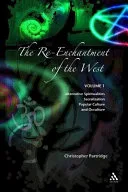
The Re-Enchantment of the West
 80
80

The Re-Enchantment of the West
Christopher Partridge's "The Re-Enchantment of the West" offers a robust counter-narrative to the entrenched secularization thesis. The book's strength lies in its comprehensive overview of emergent spiritualities, meticulously detailing their sociological underpinnings and historical trajectories. Partridge avoids facile dismissals, instead engaging seriously with the diverse expressions of contemporary spiritual seeking. One particularly incisive section discusses the "therapeutic turn" in modern spirituality, highlighting how personal well-being and psychological healing have become central tenets for many new movements. However, the sheer breadth of the subject matter means some areas receive less depth than might be desired. The focus remains primarily on sociological analysis, occasionally leaving the deeper philosophical or experiential dimensions of these movements less explored. Ultimately, the work serves as an indispensable primer for understanding the shifting spiritual landscape of the late 20th and early 21st centuries.
📝 Description
80
### What It Is Christopher Partridge's "The Re-Enchantment of the West" examines the resurgence of spiritual and religious practices outside mainstream institutions in contemporary Western societies. Published in 2005, the work challenges the long-held 'secularization thesis' which posited a decline in religious belief and practice due to modernization. Partridge offers a detailed sociological and historical analysis of emergent spiritualities, exploring their diversity and impact.
### Who It's For This book is intended for scholars of religion, sociology, and cultural studies, as well as individuals interested in the evolution of contemporary spirituality. It appeals to readers seeking to understand the complex landscape of New Religious Movements (NRMs), alternative spiritual paths, and the ongoing dialogue between secularism and belief systems in the West.
### Historical Context The early 2000s saw a burgeoning academic interest in the "spiritual but not religious" phenomenon. Partridge's work emerged within a discourse that debated the continued relevance of traditional religion against a backdrop of increasing globalization and the rise of New Age thought. Key sociological analyses of NRMs from scholars like Eileen Barker were influential, as was the ongoing critique of the secularization thesis by figures such as Peter L. Berger and David Martin.
### Key Concepts Central to Partridge's argument is the concept of "re-enchantment," suggesting that despite secularizing trends, Western societies are witnessing a renewal of magical, mystical, and spiritual orientations. The book scrutinizes the characteristics of these emergent forms, including their therapeutic orientations, focus on personal experience, and often eclectic blending of traditions, contrasting them with more institutionalized religious structures.
💡 Why Read This Book?
• Gain a nuanced understanding of how contemporary Western societies are experiencing a resurgence of spiritual practices outside traditional religious frameworks, as detailed in Partridge's analysis of "re-enchantment." • Grasp the sociological dynamics of New Religious Movements (NRMs) and alternative spiritualities, moving beyond simplistic explanations of secularization based on the book's examination of post-2000 spiritual trends. • Appreciate the critical debate surrounding the secularization thesis, learning how scholars like Partridge challenge the notion of a solely disenchanted West by referencing early 21st-century spiritual phenomena.
⭐ Reader Reviews
Honest opinions from readers who have explored this book.
❓ Frequently Asked Questions
What is the primary argument of Christopher Partridge's "The Re-Enchantment of the West"?
The book argues against the secularization thesis, proposing instead that Western societies are undergoing a "re-enchantment" characterized by the rise of diverse new religious and alternative spiritual movements.
When was "The Re-Enchantment of the West" first published?
The book was first published on March 4, 2005, reflecting academic and social trends at the turn of the 21st century.
What academic disciplines does this book engage with?
It primarily engages with sociology and religious studies, analyzing emergent spiritualities through a sociological lens.
Does the book focus only on traditional religions?
No, it specifically focuses on "new forms of religion and alternative spiritualities" that have emerged outside of established, institutionalized religious structures.
What is the "secularization thesis" that Partridge discusses?
The secularization thesis is the idea that Western societies are becoming increasingly secular, with a decline in religious belief and practice due to modernization and rationalization.
Who is the intended audience for "The Re-Enchantment of the West"?
The book is aimed at scholars of religion and sociology, as well as anyone interested in understanding contemporary spiritual trends and their societal impact.
🔮 Key Themes & Symbolism
Challenging Secularization
Partridge directly confronts the long-standing "secularization thesis," which predicted the decline of religion in modern, rationalized societies. He presents evidence of widespread "re-enchantment," demonstrating that spiritual seeking and novel religious formations are not only surviving but thriving, albeit in diverse and often unconventional forms, particularly in the West post-2000.
Emergent Spiritualities
The work meticulously catalogues and analyzes the diverse landscape of "new forms of religion and alternative spiritualities." This includes examining movements often labeled as New Age, neo-paganism, and various forms of esoteric practice, highlighting their unique characteristics, evolution, and significance in the contemporary spiritual marketplace.
Sociological Analysis of Religion
Applying sociological frameworks, Partridge explores the social structures, beliefs, and practices of these emergent spiritual groups. The book guides readers through debates in the sociology of religion, offering tools to understand how these spiritualities function within society and what their rise signifies for the future of belief.
The Therapeutic Turn
A significant aspect explored is the increasing focus on personal well-being, psychological healing, and self-transformation within many contemporary spiritual paths. Partridge examines how the "therapeutic" impulse has become intertwined with spiritual pursuits, often overshadowing traditional theological concerns.
💬 Memorable Quotes
“The West is not becoming less religious, but differently religious.”
— This core idea suggests that religious impulse persists, but manifests in varied, often non-institutionalized ways, challenging the simplistic notion of a purely secular future.
“The secularization thesis has been too simplistic.”
— Partridge critiques the idea that modernization inevitably leads to the eradication of religious sentiment, highlighting the adaptive and evolving nature of spiritual expression.
“New Religious Movements offer alternative frameworks for meaning.”
— This highlights the function of emergent spiritualities in providing existential answers and community for individuals disillusioned with or excluded from traditional structures.
“Personal experience is paramount in contemporary spirituality.”
— The emphasis on subjective spiritual experience over dogma or institutional authority is a defining characteristic of many modern spiritual paths analyzed in the book.
“The spiritual marketplace is diverse and dynamic.”
— This points to the eclectic and consumerist nature of modern spirituality, where individuals often select and combine beliefs and practices from various traditions.
🌙 Esoteric Significance
Tradition
While not strictly an esoteric text itself, "The Re-Enchantment of the West" functions as a critical sociological examination of movements often situated within esoteric traditions. It analyzes how Hermeticism, Neo-Paganism, Wicca, and other esoteric paths are reconfiguring themselves and gaining adherents in the contemporary West, departing from purely historical or academic treatments to engage with their lived reality and social impact.
Symbolism
The book implicitly engages with the symbolism inherent in emergent spiritualities. For instance, it discusses how symbols of nature, healing, and self-divinity, prevalent in many New Age and Neo-Pagan groups, function to create meaning and identity for practitioners. The reinterpretation of ancient archetypes and symbols in modern contexts is central to this re-enchantment.
Modern Relevance
Contemporary thinkers and practitioners exploring the sociology of alternative spiritualities, the impact of globalization on belief systems, and the phenomenon of the "spiritual but not religious" frequently cite Partridge's work. His analysis provides a foundational understanding for scholars of modern Paganism, esoteric studies, and the evolving landscape of Western spirituality.
👥 Who Should Read This Book
• Academics and students of sociology of religion: Gain a comprehensive overview and critical analysis of contemporary spiritual trends and their societal implications, moving beyond outdated secularization models. • Researchers of New Religious Movements (NRMs): Understand the diverse characteristics, growth patterns, and sociological functions of emergent spiritualities in the West since the late 20th century. • Individuals exploring alternative spiritual paths: Find a structured, analytical framework for understanding the broader context and social dynamics of contemporary esoteric, New Age, and neo-pagan practices.
📜 Historical Context
Published in 2005, "The Re-Enchantment of the West" arrived at a crucial juncture in the study of religion and secularization. The late 20th century had seen sustained academic debate about the "death of God" and the inexorable rise of secular modernity, often summarized by the secularization thesis. However, the visible persistence and diversification of religious and spiritual movements, particularly in Western societies, began to challenge this narrative. Partridge's work engaged directly with scholars like Bryan Wilson, who championed the secularization thesis, and contributed to a growing body of literature questioning its universality. Figures like Eileen Barker, with her studies on new religious movements, provided empirical groundwork for understanding these phenomena. The book emerged in an intellectual climate where the increasing visibility of the "spiritual but not religious" demographic demanded a more nuanced sociological explanation.
📔 Journal Prompts
The concept of "re-enchantment" versus secularization.
Sociological analysis of the "therapeutic turn" in contemporary spirituality.
The evolution of New Religious Movements (NRMs) in the West.
Personal spiritual practices and their connection to broader societal trends.
Critiques of the secularization thesis in religious studies.
🗂️ Glossary
Secularization Thesis
The theory positing that modernization inevitably leads to a decline in religious belief and practice, and the privatization of religion.
Re-enchantment
The resurgence of magical, mystical, and spiritual orientations in contemporary Western societies, challenging the notion of a purely secularized world.
Emergent Spiritualities
New forms of religious and spiritual expression that arise outside of established, institutionalized religious traditions.
New Religious Movements (NRMs)
Groups that have emerged relatively recently, often characterized by distinct beliefs and practices that differ significantly from mainstream religions.
Therapeutic Turn
The increasing emphasis on psychological healing, personal well-being, and self-transformation within many contemporary spiritual and religious movements.
Spiritual but Not Religious (SBNR)
A growing demographic identifying with spiritual beliefs and practices outside the context of organized religious institutions.
Esotericism
Systems of thought and practice concerned with hidden knowledge, often involving mystical, magical, and occult traditions, frequently drawing on ancient wisdom.