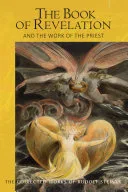
The Book of Revelation
 73
73

The Book of Revelation
Rudolf Steiner's "The Book of Revelation" is less an exegesis and more a spiritual science projection onto John's Apocalypse. Steiner bypasses conventional scholarly debate, instead offering a reading rooted in what he termed direct spiritual perception. His interpretation of the "beast" as a symbol of materializing spiritual forces, rather than an earthly tyrant, is particularly striking. The lectures, given in 1924, reflect a specific moment when esoteric thought was attempting to provide alternative cosmologies to emerging modernity. A limitation for the uninitiated is Steiner's dense, specialized vocabulary and reliance on Anthroposophical concepts, which can make sections on spiritual hierarchies challenging without prior grounding. However, his vivid descriptions of the "New Jerusalem" as a future state of human consciousness offer a compelling, if demanding, vision.
Steiner's work here provides a unique, internalised perspective on a text often externalized into prophecy.
📝 Description
73
Rudolf Steiner lectured on the Apocalypse of John in 1924, reinterpreting its visions.
Rudolf Steiner's "The Book of Revelation" presents an esoteric interpretation of the Apocalypse of John, diverging from conventional theological readings. Steiner viewed the text not as historical prophecy but as a direct portrayal of spiritual realities accessible through inner experience. He argued that John's symbolic language literally depicts spiritual hierarchies, cosmic processes, and the development of human consciousness. The lectures compiled here aim to clarify these spiritual events and their importance for humanity's path.
This work is suited for readers interested in Anthroposophy, Steiner's spiritual philosophy, or those open to a non-traditional approach to Christian mysticism. It will appeal to individuals seeking to understand the cosmic dimensions of human evolution and the spiritual forces influencing material existence. Those already familiar with Steiner's other writings will find this a notable extension of his ideas on spiritual beings and cosmic cycles.
Steiner's lectures on Revelation stem from 1924, a time of heightened interest in spiritual movements following World War I. While traditional scholarship focused on historical criticism, Steiner offered an interpretation based on his developed spiritual perception. This approach contrasted with the era's prevailing rationalism and materialism. His work stands apart within early 20th-century esoteric thought, offering a unique perspective on Christian mystical texts through the lens of Anthroposophy.
💡 Why Read This Book?
• Understand the "Woman Clothed with the Sun" not as a historical figure, but as a depiction of the evolution of consciousness, offering a new lens on feminine spiritual principles. • Grasp Steiner's concept of spiritual hierarchies and their influence on earthly events, moving beyond literal interpretations of Revelation's symbolic figures. • Explore the "New Jerusalem" as a future state of human spiritual development, providing a practical esoteric goal for humanity's evolution.
⭐ Reader Reviews
Honest opinions from readers who have explored this book.
❓ Frequently Asked Questions
What is Rudolf Steiner's main argument about the Book of Revelation?
Steiner argues that John's Apocalypse describes ongoing spiritual realities and cosmic processes, not literal future events. He interprets its symbols as direct representations of spiritual beings and the evolution of human consciousness, accessible through spiritual perception.
How does Steiner's interpretation differ from traditional theological readings?
Traditional readings often focus on historical fulfillment and speculative prophecy. Steiner, however, claims direct spiritual insight, viewing Revelation as a map of spiritual evolution and the inner life, rather than a historical timeline.
When were these lectures on Revelation delivered?
The lectures that form the basis of this book were delivered by Rudolf Steiner in the year 1924.
What is the 'New Jerusalem' according to Steiner?
In Steiner's view, the "New Jerusalem" represents a future stage of humanity's spiritual development and the Earth itself, transformed through conscious spiritual evolution and the influence of higher beings.
Is prior knowledge of Anthroposophy required to understand this book?
While not strictly required, familiarity with Rudolf Steiner's Anthroposophy is highly beneficial, as the book utilizes its specific terminology and conceptual framework for interpreting the Apocalypse.
What does Steiner mean by 'spiritual perception' in relation to Revelation?
Steiner uses 'spiritual perception' to describe a cultivated inner faculty allowing direct experience and cognition of the spiritual world, which he believed was the source of his understanding of Revelation's symbols.
🔮 Key Themes & Symbolism
Spiritual Beings and Hierarchies
Steiner presents the figures and events in Revelation as manifestations of spiritual beings, or hierarchies, that interact with the human and earthly realms. He moves beyond seeing these as mere symbolic representations, instead detailing their active roles in cosmic and human evolution. For instance, he discusses the influence of spiritual adversaries alongside benevolent spiritual forces, framing the Apocalypse as a depiction of the cosmic struggle influencing human destiny and consciousness.
Evolution of Consciousness
A central theme is the evolution of human consciousness as depicted through Revelation's imagery. Steiner interprets visions like the "Woman Clothed with the Sun" as representing stages in the development of human spiritual awareness, particularly the emergence of the Christ impulse. The "New Jerusalem" is portrayed not as a physical city, but as the future state of a spiritually awakened humanity and a transformed Earth.
Inner Experience vs. External Prophecy
Steiner fundamentally reframes the Book of Revelation from a predictive text about external events to a description of inner spiritual realities and processes. He emphasizes that the visions are accessible through direct spiritual perception, contrasting this with historical or theological interpretations. This approach encourages readers to seek the spiritual dynamics within themselves and the cosmos, rather than searching for literal historical fulfillments.
The Christ Impulse in Revelation
Steiner identifies the core of Revelation's message as the working of the Christ impulse throughout cosmic and human history. He explains how this impulse is depicted through various symbolic events and figures, guiding humanity's evolution from material entanglement towards spiritual freedom. This perspective highlights Revelation's role in understanding the spiritual significance of Christ's incarnation and ongoing cosmic activity.
💬 Memorable Quotes
“The Apocalypse of John is not a prophecy in the ordinary sense.”
— This statement encapsulates Steiner's core thesis: that Revelation should not be read as a literal prediction of future historical events, but as a depiction of spiritual realities and cosmic processes.
“The beasts in Revelation represent spiritual beings influencing earthly evolution.”
— This paraphrased concept highlights Steiner's reinterpretation of the Apocalyptic beasts, viewing them not as literal monsters but as symbolic representations of spiritual forces actively shaping human and planetary destiny.
“The New Jerusalem signifies a future state of humanity's spiritual development.”
— This captures Steiner's esoteric understanding of the New Jerusalem, presenting it as an inner, spiritual reality and the culmination of human spiritual evolution, rather than an external, physical location.
“Spiritual perception is the key to understanding John's visions.”
— This emphasizes Steiner's belief that the true meaning of Revelation is revealed not through intellectual analysis alone, but through the cultivation of inner, spiritual faculties capable of directly perceiving higher realities.
“The visions describe the spiritual battle for the human soul.”
— This interpretation frames Revelation's dramatic imagery as a reflection of the ongoing inner struggle within each individual between spiritual aspiration and materialistic forces.
🌙 Esoteric Significance
Tradition
Steiner's work on Revelation fits within the Western esoteric tradition, particularly Christian Gnosticism and Hermeticism, but is fundamentally rooted in his unique spiritual science, Anthroposophy. He departs from traditional Gnostic views by emphasizing the positive, evolutionary role of the Christ impulse and the material world's potential for spiritual transformation, rather than a dualistic escape. His method of spiritual perception and detailed cosmology of spiritual hierarchies form a distinct lineage branching from earlier esoteric movements.
Symbolism
Key symbols like the "Dragon" are reinterpreted by Steiner as representing forces of materialism and spiritual obstruction that seek to impede human evolution. The "Seven Seals" are not merely stages of a future prophecy but represent cosmic and spiritual processes that gradually unfold through history and within human consciousness. The "New Jerusalem" symbolizes the ultimate goal of spiritualized Earth and humanity, a state of conscious co-creation with divine forces.
Modern Relevance
Contemporary Anthroposophists and individuals interested in spiritual psychology and esoteric Christianity draw heavily on Steiner's interpretation. His ideas influence modern approaches to understanding consciousness, the spiritual dimensions of social and ecological issues, and the inner meaning of religious texts. Thinkers in fields like biodynamic agriculture and Waldorf education, stemming from Anthroposophy, indirectly engage with the cosmic perspectives Steiner articulated in works like this.
👥 Who Should Read This Book
• Students of Rudolf Steiner's Anthroposophy seeking a deeper understanding of his cosmology and spiritual interpretation of biblical texts. • Individuals interested in comparative religion and esoteric approaches to the Book of Revelation, looking beyond traditional theological exegesis. • Seekers of spiritual meaning who wish to explore the Apocalypse as a map of inner transformation and cosmic evolution, rather than historical prophecy.
📜 Historical Context
Rudolf Steiner delivered the lectures forming "The Book of Revelation" in 1924, a period marked by widespread interest in spiritualism and esoteric philosophies following the First World War. While mainstream theology engaged with historical-critical methods, Steiner offered a counter-narrative through his spiritual science, or Anthroposophy. His approach to the Apocalypse diverged sharply from contemporary scholarly interpretations that focused on eschatological timelines or symbolic allegories. Unlike, for example, the more Theosophical interpretations emerging from figures like Helena Blavatsky, Steiner's work emphasized the Christ impulse and specific stages of human consciousness evolution. The reception of Steiner's ideas, while influential within esoteric circles, remained largely outside academic theological discourse, positioning his work as a distinct and often challenging alternative to prevailing intellectual currents of the early 20th century.
📔 Journal Prompts
The spiritual battles described in Revelation, as interpreted by Steiner, and their reflection in personal challenges.
The symbolism of the "New Jerusalem" and its potential realization in contemporary life.
The "Woman Clothed with the Sun" as an archetype of evolving consciousness.
How Steiner's concept of spiritual hierarchies might inform one's view of unseen forces.
The transformation of the "Dragon's" influence through spiritual insight.
🗂️ Glossary
Spiritual Science (Anthroposophy)
Rudolf Steiner's term for a rigorous, empirical study of the spiritual world accessible through cultivated inner faculties, distinct from religious dogma or materialistic science.
Spiritual Hierarchies
Orders of spiritual beings (e.g., Angels, Archangels, Thrones) that Steiner described as actively involved in the governance of the cosmos and the evolution of humanity.
Christ Impulse
In Anthroposophical terms, the specific spiritual force initiated by the incarnation, life, death, and resurrection of Jesus Christ, seen as central to Earth's and humanity's spiritual evolution.
Evolution of Consciousness
The process by which human consciousness develops and transforms over time, influenced by spiritual forces and cosmic events, as described by Steiner.
New Jerusalem
Steiner's interpretation of the biblical New Jerusalem not as a physical city, but as a future state of spiritualized Earth and humanity.
Spiritual Perception
The faculty, cultivated through specific inner training, that allows direct experience and cognition of the spiritual world, according to Steiner.
Materializing Forces
Spiritual influences or beings that Steiner believed worked to strengthen the material aspect of existence, often in opposition to spiritual development.