The Apocalypse of Adam

 71
71

The Apocalypse of Adam
Charles W. Hedrick's scholarly presentation of The Apocalypse of Adam is invaluable for its meticulous attention to the text's Gnostic framework. The work clearly delineates Adam's awakening, a compelling narrative arc that contrasts sharply with orthodox Genesis accounts. Hedrick’s introduction effectively contextualizes the text within the Nag Hammadi discoveries and the broader Gnostic landscape. A notable strength is the detailed analysis of the Sethian elements, tracing the lineage of true knowledge. However, the dense academic prose, while necessary for scholarly rigor, may present a barrier for the casual reader unfamiliar with Gnostic terminology. The interpretation of the 'Son of Man' as a salvific figure, distinct from the Christ of orthodox Christianity, is particularly illuminating. This is a critical resource for understanding a vital, non-canonical scripture.
📝 Description
71
The Apocalypse of Adam is a Gnostic text from the 3rd or 4th century CE.
This work recounts Adam's experiences from creation, presenting a perspective that differs from biblical accounts. Purportedly spoken by Adam, it details his awakening to a divine reality beyond the material world. The text offers an alternative cosmology, questioning orthodox views on early human history and divine interaction. It reinterprets the Genesis story, depicting Adam as a developing consciousness rather than a mere recipient of divine command. The narrative highlights the role of a 'Son of Man' figure in Adam's eventual understanding and salvation from the cosmos.
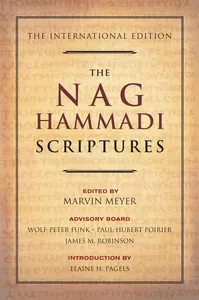
Its inclusion in the Nag Hammadi library, found in Egypt in 1945, is how it has survived. This collection preserved many Gnostic and Hermetic writings, offering a window into diverse religious thought in the Roman East. The period saw a rise in groups developing their own scriptures to explain complex theological systems, often involving a lesser creator god and a hidden, true divinity.
Emerging from the intellectual ferment of early Gnosticism in the 3rd or 4th century CE, The Apocalypse of Adam articulates a worldview distinct from emerging orthodox Christianity. Gnostic traditions often posited a dualistic cosmology, distinguishing between a flawed material creation and a supreme, unknowable God. This text reflects that framework, detailing a path to liberation from the dominion of lesser divine powers, the Archons, through gnosis or knowledge.
💡 Why Read This Book?
• Gain an alternative creation myth: Understand the Gnostic reinterpretation of Adam's story and the Genesis narrative, offering a unique perspective on early human origins and divine interaction not found in canonical texts. • Explore Sethian Gnosticism: Learn about the specific Sethian tradition, its cosmology, and its emphasis on the lineage of Adam through Seth, as detailed in this text. • Understand the Archons: Grasp the Gnostic concept of Archons, the malevolent or ignorant rulers of the material world, and their role in obscuring true divine knowledge, a key theme in the Apocalypse of Adam.
⭐ Reader Reviews
Honest opinions from readers who have explored this book.
❓ Frequently Asked Questions
When was The Apocalypse of Adam discovered?
The Apocalypse of Adam was discovered in 1945 as part of the Nag Hammadi library, a collection of ancient Gnostic texts found near the town of Nag Hammadi in Upper Egypt.
What is the primary language of The Apocalypse of Adam?
The text itself is a Coptic translation of an earlier Greek original, reflecting the linguistic landscape of early Christian Egypt.
Who is the 'Son of Man' in The Apocalypse of Adam?
In this Gnostic text, the 'Son of Man' is a salvific figure who guides Adam towards enlightenment and reveals the true, transcendent God, distinct from the creator deity of the material world.
How does The Apocalypse of Adam differ from the Book of Genesis?
Unlike Genesis, which presents a divinely ordained creation and fall, The Apocalypse of Adam portrays Adam as an awakening consciousness manipulated by ignorant Archons, eventually guided by a higher divine principle.
What is the significance of Seth in Gnostic traditions like this one?
Seth is often presented in Sethian Gnosticism as the progenitor of a spiritual lineage that possesses true divine knowledge, a counterpoint to the lineage of Cain in canonical narratives.
Is The Apocalypse of Adam considered canonical scripture?
No, The Apocalypse of Adam is considered a Gnostic apocryphon and is not part of the canon of any major religious tradition, including canonical Christianity.
🔮 Key Themes & Symbolism
Adam's Awakening Consciousness
The text presents Adam not merely as the first man, but as a nascent consciousness gradually realizing its true divine origin. This awakening is triggered by the 'light-giving' knowledge that allows him to perceive the limitations and ignorance of the material world and its creators, the Archons. This theme subverts the traditional narrative of the Fall, reframing it as an epistemological shift towards true gnosis.
The Archons and False Divinity
A central tenet explored is the Gnostic concept of the Archons, lesser divine beings who govern the material cosmos. They are depicted as ignorant or malevolent entities who created the physical world and seek to keep humanity bound by illusion and forgetfulness of their divine spark. The Apocalypse of Adam details their role in Adam's initial creation and subsequent manipulation.
Sethian Lineage and True Gnosis
The text emphasizes the Sethian tradition, tracing a lineage of spiritual understanding through Adam's son Seth. This lineage is portrayed as the bearer of true knowledge (gnosis) and the recipient of divine revelation, contrasting with the flawed creation and governance of the Archons. The 'Son of Man' acts as a divine messenger to this lineage, facilitating escape from the material prison.
Alternative Cosmology
The Apocalypse of Adam offers a radical departure from mainstream cosmologies, presenting a dualistic view where the material world is a flawed creation distinct from a higher, true spiritual realm. It outlines a complex hierarchy of divine beings, including Aeons and emanations, and posits a salvific plan for humanity to transcend the Demiurge's creation.
💬 Memorable Quotes
“He revealed to me the generation of the archons and their false creation.”
— This statement encapsulates the core revelatory moment for Adam, where he gains insight into the illusory nature of the material world and the deceptive origins of its rulers, the Archons.
“I am Adam, the first man, and I came from the light.”
— This declaration asserts Adam's divine provenance, aligning him with the true spiritual light rather than the flawed material creation attributed to the Demiurge and Archons.
“The Son of Man came to me and showed me the way.”
— This highlights the salvific role of the 'Son of Man' figure, who acts as a divine guide, illuminating the path to liberation from ignorance and the material realm for Adam.
“They made me eat from the tree of knowledge of their evil.”
— This paraphrased concept refers to Adam's initial deception, where the knowledge imparted by the Archons was not true gnosis but a tool of their control, leading him astray from the divine.
“The aeons are the true powers, and the archons are their servants.”
— This interpretation clarifies the Gnostic hierarchy, positioning the Aeons as higher, true divine emanations, with the Archons being subordinate and often misguided entities within the created order.
🌙 Esoteric Significance
Tradition
This text is firmly rooted in the Sethian Gnostic tradition, a significant branch of early Gnosticism that venerated Seth, Adam's third son, as a progenitor of enlightened humanity. Sethian Gnosticism posits a complex cosmology involving a transcendent, unknowable God, emanations (Aeons), and a flawed creator (Demiurge) responsible for the material world. The Apocalypse of Adam fits within this framework by presenting Adam's awakening and the subsequent revelation of true knowledge, often mediated through figures connected to Seth’s lineage.
Symbolism
Key symbols include the 'Tree of Knowledge of their evil,' representing the deceptive, Archon-imposed understanding of the material world, contrasted with true Gnosis. The 'Son of Man' functions as a potent symbol of divine salvation and enlightenment, a revealer of the true God who guides humanity out of the Archons' dominion. The 'light' itself symbolizes divine origin and true spiritual awareness, which Adam gradually reclaims.
Modern Relevance
Contemporary esoteric practitioners and scholars of comparative religion continue to draw on texts like The Apocalypse of Adam for their insights into dualistic philosophies and alternative spiritual narratives. Its exploration of consciousness, liberation from perceived material constraints, and the concept of hidden knowledge resonates with modern Gnostic revivalists, Hermeticists, and those interested in the psychological underpinnings of spiritual awakening.
👥 Who Should Read This Book
• Scholars of Gnosticism and Early Christianity: Researchers seeking primary source material to understand Sethian Gnostic beliefs, cosmology, and their divergence from orthodox Christian thought will find this text essential. • Students of Comparative Religion: Individuals interested in exploring non-canonical religious narratives and the diversity of ancient spiritual thought will benefit from its unique perspective on creation and salvation. • Esoteric Practitioners: Those exploring themes of consciousness, liberation from material illusions, and the pursuit of hidden knowledge will find conceptual parallels and historical context within this work.
📜 Historical Context
The Apocalypse of Adam emerged from the fertile ground of early Gnosticism, a diverse spiritual movement flourishing in the 2nd and 3rd centuries CE, particularly in Roman Egypt. This era was marked by intense intellectual and religious ferment, with various groups interpreting Jewish and Christian traditions through a dualistic lens. Gnostics like those associated with the Sethian tradition, to which this text likely belongs, produced their own scriptures to articulate their distinct cosmologies and soteriologies. The text was likely composed in Greek and later translated into Coptic. Its survival is largely due to its inclusion in the Nag Hammadi library, discovered in 1945, which offered unprecedented access to Gnostic literature previously known only through the refutations of its opponents, such as Irenaeus. The Nag Hammadi library’s discovery fundamentally reshaped scholarly understanding of early Christianity and Gnosticism, challenging earlier assumptions about the monolithic nature of nascent Christianity and the prevalence of Gnostic thought.
📔 Journal Prompts
Adam's realization of the Archons' false creation.
The role of the 'Son of Man' in revealing true divinity.
Contrasting Sethian lineage with canonical biblical genealogies.
The symbolism of the 'light' in reclaiming divine origin.
Reinterpreting the Genesis narrative through a Gnostic lens.
🗂️ Glossary
Archons
In Gnosticism, these are malevolent or ignorant cosmic rulers, often associated with the creator of the material universe (the Demiurge), who seek to keep humanity bound to the material realm and ignorant of the true divine.
Gnosis
Esoteric knowledge, often of a spiritual or mystical nature, that provides salvation or liberation from the material world. It is typically revealed rather than empirically acquired.
Aeons
Divine emanations or beings within the Gnostic cosmology, originating from the supreme, transcendent God. They inhabit the Pleroma (fullness) and represent various divine attributes or principles.
Demiurge
The creator of the material universe in Gnostic thought, often depicted as ignorant of, or hostile to, the true, supreme God. The Archons are typically seen as his subordinates.
Sethian Gnosticism
A major branch of Gnosticism that venerated Seth, Adam's third son, as a spiritual ancestor and revealer of true knowledge, often contrasting his lineage with that of Cain.
Pleroma
The spiritual realm or 'fullness' inhabited by the supreme God and the Aeons in Gnostic cosmology, contrasted with the flawed material world.
Son of Man
A salvific figure in The Apocalypse of Adam who reveals the true God and the path to liberation to Adam, distinct from the Christological figure in orthodox Christianity.