Spiritualism and Necromancy
 73
73

Spiritualism and Necromancy
Morrison's "Spiritualism and Necromancy" offers a fascinating, albeit polemical, snapshot of mid-19th century religious anxieties. The text's strength lies in its unvarnished depiction of Methodist opposition to Spiritualism, presenting arguments that were prevalent among conservative religious factions of the era. It’s a valuable primary source for understanding the demonological framework used to debunk spiritualist claims. However, its historical accuracy regarding the phenomena it critiques is often suspect, colored by its unwavering theological agenda. The sections discussing the supposed mechanisms of demonic possession via spiritualist practices, while illustrative of the period's fears, lack empirical grounding. The work's value is primarily as a historical document of religious contention, not as an objective analysis of spiritual phenomena. It serves as a stark reminder of how belief systems shape the interpretation of the unknown.
📝 Description
73
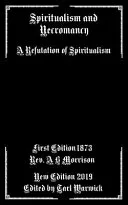
Published in 2019, A. B. Morrison's "Spiritualism and Necromancy" refutes the 19th-century Spiritualist movement.
A. B. Morrison's "Spiritualism and Necromancy" was originally published in 2019, presenting a forceful critique of the mid-19th century Spiritualist movement. Written through the lens of Methodist doctrine, the book directly challenges the assertions of mediums and clairvoyants. Morrison scrutinizes their supposed interactions with the spirit world, aiming to reveal these occurrences as potential demonic deceptions rather than authentic spiritual contact.
The volume speaks to occult historians, demonologists, and students of 19th-century religious thought. Researchers examining historical opposition to Spiritualism or seeking primary source material on early modern demonology from a specific theological standpoint will find it valuable. It also appeals to readers interested in how religious dogma intersected with emerging supernatural claims during this era.
The mid-19th century witnessed a significant rise in Spiritualism, spurred by events like the Fox sisters' claims in 1848. This period saw widespread fascination with the afterlife, leading to numerous séances and attempts at spirit communication. Morrison's work emerged as a counterpoint, confronting these phenomena within the established framework of Methodist theology.
This work sits within the tradition of counter-occult literature, specifically religious responses to emergent spiritualist phenomena in the 19th century. It reflects a theological effort to explain and condemn practices perceived as dangerous or heretical. The book engages with debates surrounding the nature of spirits, divine versus infernal influence, and the boundaries of acceptable religious experience, contrasting them with established Christian orthodoxy.
💡 Why Read This Book?
• Learn about the specific Methodist theological arguments deployed against the Spiritualist movement in the 1840s and 1850s, providing a unique counterpoint to contemporary spiritualist literature. • Understand the historical perception of demonology and spirit interaction as presented by a particular religious sect, offering insight into how perceived supernatural events were categorized and condemned. • Gain an appreciation for the historical context of the Spiritualist movement by examining the religious opposition it faced, which shaped public discourse and belief in the mid-19th century.
⭐ Reader Reviews
Honest opinions from readers who have explored this book.
❓ Frequently Asked Questions
What is the main argument of "Spiritualism and Necromancy"?
The book argues that Spiritualist phenomena, such as mediumship and clairvoyance, are not genuine communications with the dead but rather deceptions orchestrated by demonic entities, viewed from a strict Methodist perspective.
When was "Spiritualism and Necromancy" first published?
The text's first known publication date is 2019-01-29, though it reflects mid-19th century writings and arguments.
Who is the author, A. B. Morrison?
A. B. Morrison is the author of this mid-19th century critique of Spiritualism, presented here with a 2019 publication date, representing a specific theological viewpoint of the era.
What historical period does this book cover?
The book addresses the mid-19th century, a period marked by the rise of Spiritualism and intense debate over the nature of spirit communication and religious orthodoxy.
Is this book a spiritualist text or a critique of it?
It is a critique of Spiritualism, written from the perspective of the Methodist Church during the mid-19th century, aiming to refute spiritualist claims.
What is the book's stance on demonology?
The work presents demonology as a crucial interpretive framework for understanding spiritualist phenomena, positing that alleged spirit communications are often manifestations of demonic influence.
🔮 Key Themes & Symbolism
Theological Refutation of Spiritualism
This theme explores how the book systematically dismantles Spiritualist claims using Methodist doctrine as its primary weapon. It scrutinizes the very nature of spirits, mediums, and purported communication, framing any deviation from orthodox Christian belief as a gateway for infernal deception. The work highlights the theological chasm between established religious practice and the emergent, often unorthodox, spiritualist movement of the mid-19th century.
Demonology as Interpretive Lens
The text employs a robust demonological framework to interpret phenomena associated with Spiritualism. It posits that spirits encountered through mediums are not deceased loved ones but malevolent entities. This section focuses on how the author identifies signs of demonic influence, the perceived dangers of necromancy, and the theological imperative to discern between divine and diabolical manifestations.
Critique of Mediumship and Clairvoyance
Central to the book is its direct assault on the credibility of spiritualist mediums and clairvoyants. It questions their motives, their purported abilities, and the spiritual implications of their practices. The work argues that these individuals, consciously or unconsciously, facilitate the work of darker forces, thereby misleading adherents away from salvation and true spiritual understanding.
Spiritual Warfare and Discernment
This theme examines the book's portrayal of a spiritual battlefield where believers must constantly exercise discernment. It outlines the perceived threats to the soul posed by engaging with Spiritualism and offers theological guidance on maintaining spiritual purity. The work emphasizes the importance of adhering to orthodox teachings as a shield against spiritual corruption.
💬 Memorable Quotes
Direct passages from the work, attributed to the author.
“The spirits summoned by mediums are not the departed, but instruments of the Adversary.”
— This core assertion frames the book's entire argument: any spiritual manifestation outside established religious channels is inherently suspect and likely demonic in origin, reflecting a strict theological boundary.
“The claims of Spiritualism contradict fundamental tenets of Christian theology regarding the afterlife.”
— This interpretation captures the essence of the book's refutation, emphasizing its reliance on established religious doctrine to invalidate the new spiritualist movement's claims about communication with the deceased.
“The Methodist Church warns against practices that mimic true divine communion but serve infernal ends.”
— This interpretation reflects the author's concern that Spiritualism mimics genuine spiritual experiences while actually serving the purposes of malevolent forces, a key point of theological contention.
💡 Key Ideas
Editorial paraphrase of the work's core concepts — not direct quotes.
Mediumship opens a door that ought to remain shut, inviting peril instead of comfort.
This paraphrased concept highlights the author's view that engaging with spiritualist practices is a dangerous act, akin to unlocking a forbidden passage that leads to spiritual harm rather than connection.
Clairvoyance is often a veil for deception, not a window into truth.
This paraphrased concept directly challenges the purported abilities of clairvoyants, suggesting their visions are not genuine insights but rather carefully constructed falsehoods designed to mislead.
🌙 Esoteric Significance
Tradition
While not strictly adhering to a specific esoteric lineage like Hermeticism or Gnosticism, this work engages with the broader occult tradition's interest in spirit communication and demonology. Its significance lies in representing a highly orthodox, religiously-grounded opposition to emergent occult practices of the 19th century. It serves as a historical counterpoint, illustrating the theological arguments used to police the boundaries of acceptable spiritual inquiry.
Symbolism
The primary symbolic conflict in the text is between 'light' (divine truth, orthodox faith) and 'darkness' (demonic deception, forbidden knowledge). Spirits are depicted not as neutral entities but as either angelic or demonic, a binary that simplifies the spiritual landscape. The act of 'mediumship' itself becomes a symbol of transgression, representing a dangerous crossing of boundaries between the living and the dead, and between divine and infernal realms.
Modern Relevance
Contemporary occultists and scholars of esoteric history find value in "Spiritualism and Necromancy" for its historical perspective on demonology and religious opposition to occultism. Modern practitioners of spirit work or those exploring historical witchcraft traditions may reference its arguments to understand the opposition their practices historically faced. It provides a stark example of how fear and theological dogma shaped early discussions of the supernatural.
👥 Who Should Read This Book
• Students of 19th-century religious history interested in the backlash against Spiritualism, gaining insight into the theological objections raised by conservative denominations. • Occult historians and demonologists seeking primary source material on historical interpretations of spirit phenomena and the demonological frameworks used to debunk them. • Comparative religion scholars examining the intersection of established religious doctrine and emergent spiritual movements, understanding how belief systems react to novel claims.
📜 Historical Context
The mid-19th century, particularly the period following 1848, witnessed an explosion of interest in Spiritualism, fueled by events like the Fox sisters' alleged communications in Hydesville. This era was a fertile ground for exploring the boundaries between life and death, religion and the supernatural. "Spiritualism and Necromancy" emerged within this charged atmosphere as a staunch counter-argument, deeply rooted in the Methodist Church's conservative theological stance. Contemporaries like figures within the Catholic Church also voiced strong opposition, often framing Spiritualism as a dangerous delusion or demonic influence. The work's fervent tone reflects the intense spiritual and intellectual currents of the time, where established religious authorities grappled with new phenomena challenging their doctrines and societal influence.
📔 Journal Prompts
The Methodist critique of Spiritualism: How does Morrison's interpretation of 'demonic deception' differ from modern occult understandings of shadow work?
Discernment of spirits: Reflect on the author's binary of divine versus infernal influence and your own framework for evaluating spiritual encounters.
Mediumship as transgression: Consider the historical fear of opened 'doors' to the spirit world presented in the text.
The theological refutation: Analyze the specific arguments used by Morrison against clairvoyance and mediumship.
Historical context of the Fox sisters: How did the societal reception of phenomena like those attributed to the Fox sisters shape religious responses?
🗂️ Glossary
Spiritualism
A religious movement prominent in the mid-19th century that asserted the possibility of communicating with the spirits of the dead, often through mediums.
Necromancy
A form of magic focused on the evocation of the spirits of the dead, either to gain knowledge or to use them to influence the living. In this context, it's viewed pejoratively as demonic.
Medium
An individual believed to be able to mediate communication between the living and the spirits of the dead.
Clairvoyance
The purported ability to perceive events or gain information about the past, present, or future in a way that the normal senses cannot provide. Critiqued as demonic in the text.
Demonology
The study of demons or beliefs about demons. In this work, it's used as a framework to interpret Spiritualist phenomena as demonic activity.
Methodist Church
A Protestant Christian denomination originating from Methodism, known for its emphasis on personal experience of God's saving grace and social reform. The text reflects a conservative, fire-and-brimstone theological viewpoint common in the mid-19th century.
Adversary
A term often used in Christian theology to refer to Satan or the Devil, the chief demonic entity opposing God and humanity. Morrison uses this to identify the source of 'false' spiritual phenomena.