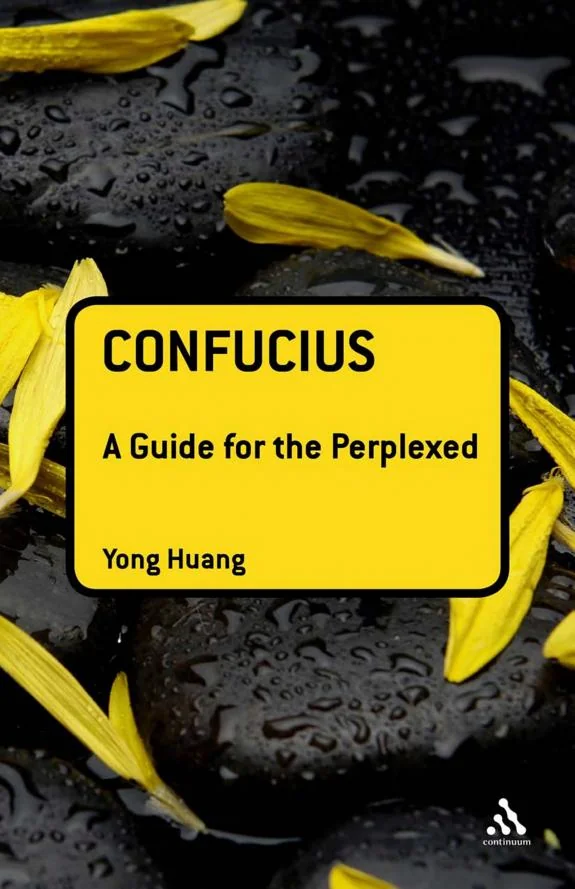
Confucius: A Guide for the Perplexed
 78
78

Confucius: A Guide for the Perplexed
Yong Huang's 'Confucius: A Guide for the Perplexed' tackles a formidable task: making the Sage of China accessible to a Western audience. The author succeeds admirably in demystifying concepts like Ren and Li, presenting them not as archaic relics but as vital ethical frameworks. Huang's clear exposition of the Junzi ideal, the cultivated individual, is particularly effective, grounding abstract principles in the pursuit of personal and societal betterment. A notable strength is the book's consistent effort to draw parallels between ancient Chinese ethics and contemporary Western concerns, a delicate balancing act performed with considerable skill. However, the text occasionally leans towards an overly academic tone, which, while precise, might deter readers seeking a more spiritually or existentially charged encounter with Confucianism. The section on the rectification of names, while crucial, could benefit from more varied examples to illustrate its practical application beyond mere linguistic accuracy. Ultimately, Huang provides a competent and necessary primer for those encountering Confucius for the first time.
📝 Description
78
### What It Is Confucius: A Guide for the Perplexed by Yong Huang offers a structured examination of the philosophy of Kong Fuzi (Confucius), aiming to clarify his teachings for an audience unfamiliar with classical Chinese thought. The book systematically presents the core tenets of Confucianism, focusing on ethical cultivation, social harmony, and the role of the sage in governance. It addresses common points of confusion, such as the perceived conflict between Confucianism and other philosophical schools or its application in modern contexts.
### Who It's For This volume is designed for individuals seeking a foundational understanding of Confucian thought without prior extensive study. It is particularly suited for students of philosophy, comparative religion, and East Asian studies, as well as general readers interested in the origins of ethical systems that have shaped global cultures. Those perplexed by the enduring influence of Confucius or seeking to integrate his ideas into contemporary life will find this a valuable resource.
### Historical Context Yong Huang's work situates Confucius within the Spring and Autumn period of Chinese history (771–476 BCE), a time of significant political fragmentation and intellectual ferment. Confucius, born in 551 BCE, emerged as a response to this era's disorder, advocating for a return to Zhou dynasty ideals of ritual (li) and benevolence (ren). His philosophy developed alongside other influential schools, such as Daoism, which offered alternative visions of societal order and individual conduct.
### Key Concepts The book elaborates on central Confucian principles including Ren (benevolence, humaneness), Yi (righteousness), Li (rites, propriety), Zhi (wisdom), and Xin (trustworthiness). It explains the concept of Junzi, the ideal person who embodies these virtues, and the importance of filial piety (Xiao) in establishing a moral foundation. The text also addresses the rectification of names (Zhengming), the idea that words should correspond to reality, especially in social and political discourse.
💡 Why Read This Book?
• Gain clarity on the core principles of Ren and Li, understanding their significance beyond mere ritual and exploring how these concepts inform ethical decision-making in personal and public life, as detailed in Huang's systematic presentation. • Grasp the concept of the Junzi, Confucius's ideal of the cultivated person, and learn how this model of moral development, central to the Analects, can be applied to personal growth and leadership today. • Understand the historical milieu of Confucius's life and teachings, situating his philosophy within the Spring and Autumn period (771–476 BCE) and recognizing its enduring relevance in shaping East Asian societal structures.
⭐ Reader Reviews
Honest opinions from readers who have explored this book.
❓ Frequently Asked Questions
What historical period did Confucius live in, and why is it important?
Confucius lived during China's Spring and Autumn period (771–476 BCE), a time marked by political instability and warfare. This context fueled his emphasis on moral governance and social harmony as a remedy for the era's disorder.
What does 'Ren' mean in Confucian philosophy?
'Ren' (仁) is a fundamental Confucian concept often translated as benevolence, humaneness, or goodness. It signifies the ideal relationship between people, emphasizing empathy, compassion, and altruism as the foundation of ethical conduct.
How does 'Li' relate to Confucian ethics?
'Li' (禮) encompasses rites, rituals, propriety, and social etiquette. It provides the structured framework through which Ren is expressed, guiding individuals on how to behave appropriately in various social contexts to maintain harmony.
Who is the 'Junzi' in Confucianism?
The 'Junzi' (君子) is the ideal person or 'gentleman' in Confucian thought. It represents someone who has cultivated virtues like Ren, Yi, and Li, embodying moral excellence and serving as a role model for others.
Is Confucianism a religion or a philosophy?
Confucianism is primarily understood as a philosophy and ethical system, focusing on practical morality, social order, and good governance rather than on theology or supernatural worship, although it incorporates respect for Heaven and ancestors.
What is the 'rectification of names' (Zhengming)?
The rectification of names, or Zhengming (正名), is the Confucian principle that names and titles should accurately reflect reality. For instance, a ruler should truly act as a ruler, and a father as a father, to ensure social order.
🔮 Key Themes & Symbolism
The Cultivation of Virtue
Huang meticulously unpacks the core virtues central to Confucianism: Ren (benevolence), Yi (righteousness), Li (rites/propriety), Zhi (wisdom), and Xin (trustworthiness). The text explains how these are not static qualities but are cultivated through consistent practice and self-reflection. The ideal of the Junzi (君子), the superior person, is presented as the embodiment of these virtues, achieved through diligent ethical training and adherence to social norms.
Social Harmony and Governance
A significant focus is placed on Confucius's vision for an ordered society. The book details how personal cultivation is intrinsically linked to public order. Concepts like filial piety (Xiao) and the rectification of names (Zhengming) are explored as foundational elements for ethical leadership and stable governance, aiming to create a harmonious state through moral example rather than coercion.
Confucianism's Enduring Relevance
Yong Huang consistently bridges the gap between ancient Chinese thought and contemporary global concerns. The work highlights how Confucian principles offer valuable perspectives on modern challenges, from ethical leadership in business to interpersonal relationships. It argues for the universal applicability of Confucius's ethical framework, demonstrating its continued importance for individuals and societies worldwide.
The Sage and the Ideal Society
The text examines the role of the sage, or the ideal moral exemplar, in Confucian thought. Confucius himself is presented not just as a teacher but as a model. The book explores how aspiring to the 'Way' (Dao) of the sage, characterized by wisdom and ethical integrity, is key to transforming oneself and, by extension, society, echoing the pedagogical aims of The Analects.
💬 Memorable Quotes
“The superior person understands righteousness; the small person understands profit.”
— This aphorism, attributed to Confucius, highlights a fundamental ethical dichotomy. It contrasts the moral compass of an evolved individual, guided by principles of justice and duty, with that of a lesser person driven solely by self-interest and material gain.
“To learn and not to think is a waste. To think and not to learn is a danger.”
— This highlights the Confucian emphasis on the balance between theoretical knowledge and practical application. Genuine understanding requires both the acquisition of information and the critical processing of that information through reflection and analysis.
“Do not worry about not being known; worry about what you are.”
— This quote underscores the Confucian focus on inner cultivation over external recognition. True worth lies in moral character and virtuous action, not in fame or reputation, advocating for self-improvement as the primary pursuit.
“The superior person is modest in his speech, but exceeds in his actions.”
— This illustrates the ideal of the Junzi, emphasizing that genuine virtue is demonstrated through deeds rather than boastful words. It reflects a core Confucian value where substantive ethical conduct takes precedence over superficial pronouncements.
“What you do not wish for yourself, do not do to others.”
— This is a foundational ethical principle, often referred to as the Silver Rule. It serves as a direct guide for interpersonal conduct, promoting empathy and reciprocity as the basis for harmonious social relations.
🌙 Esoteric Significance
Tradition
While Confucianism is primarily an ethical and philosophical system, its emphasis on cosmic harmony, the sage's role as a mediator between Heaven and Earth, and the importance of ritual (li) align it with certain esoteric traditions that seek order and balance in the universe. Its focus on self-cultivation and achieving a perfected state of being can be viewed through an esoteric lens as a path to spiritual realization, akin to Gnostic or Hermetic ideals of achieving gnosis or divine union.
Symbolism
Key symbols in Confucianism include the 'Dragon' (Long), representing power, strength, and good fortune, often associated with the Emperor and cosmic forces. The 'Bamboo' symbolizes resilience and integrity, bending without breaking, reflecting the ideal character of the Junzi. 'Water' is also significant, representing adaptability, purity, and the ceaseless flow of the Dao, embodying a natural principle that humanity should emulate.
Modern Relevance
Contemporary thinkers and movements in East Asian philosophy, as well as global ethics, continue to draw from Confucianism. Its emphasis on social responsibility, ethical governance, and the cultivation of character remains relevant for discussions on leadership, education, and building harmonious societies. Neo-Confucianism, a revival and reinterpretation of classical Confucian thought, also influences modern scholarship and practice, demonstrating its persistent intellectual vitality.
👥 Who Should Read This Book
• Students of comparative philosophy and world religions seeking to understand a foundational ethical system that has shaped East Asian culture for millennia. • Leaders and aspiring leaders interested in ethical governance models and the principles of moral cultivation for effective decision-making. • Individuals exploring personal development and character building, looking for time-tested frameworks on virtues like benevolence, righteousness, and propriety.
📜 Historical Context
Confucius (Kong Fuzi) lived from 551 to 479 BCE, during China's tumultuous Spring and Autumn period. This era saw the fragmentation of the Zhou Dynasty, leading to widespread political instability and conflict among feudal states. Confucius emerged as a philosopher and educator seeking to restore moral order and social harmony, drawing inspiration from the perceived golden age of the early Zhou Dynasty. His teachings, compiled in The Analects, offered a vision of governance based on ethical leadership, ritual propriety (li), and humaneness (ren), contrasting sharply with the prevailing realpolitik and the burgeoning ideas of thinkers like Laozi from the Daoist school. While Confucius faced considerable political setbacks in his lifetime, his ideas gained significant traction during the Han Dynasty (206 BCE – 220 CE), becoming a cornerstone of Chinese imperial ideology and education.
📔 Journal Prompts
The cultivation of Ren: how does one practice humaneness in daily interactions?
Reflect on the concept of the Junzi and your personal path toward moral excellence.
The role of Li in maintaining social order: where are rituals most needed today?
Analyze the principle of Zhengming and its implications for contemporary discourse.
Consider the balance between learning and thinking, as discussed in the text.
🗂️ Glossary
Ren (仁)
The core Confucian virtue, often translated as benevolence, humaneness, or goodness. It signifies empathy, compassion, and altruism, forming the foundation of ethical relationships.
Li (禮)
Encompasses rites, rituals, propriety, etiquette, and social norms. Li provides the structured framework for expressing Ren and maintaining social harmony.
Yi (義)
Righteousness or justice. It refers to acting according to what is morally right and proper, often involving a sense of duty and fairness.
Zhi (智)
Wisdom or knowledge. In Confucianism, it refers not just to intellectual capacity but to the practical wisdom gained through experience and ethical reflection.
Xin (信)
Trustworthiness or faithfulness. It is the virtue of being reliable, sincere, and keeping one's word, essential for building strong relationships and social order.
Junzi (君子)
The ideal person or 'superior man' in Confucian thought. A Junzi embodies virtues like Ren and Li, demonstrating moral excellence and serving as a role model.
Xiao (孝)
Filial piety; respect and obedience towards one's parents and elders. It is considered a fundamental virtue and the basis for broader social order.














![The Byrhtferth's Manuscript (MS 17) † Saint John’s College † Oxford † [1111]](/img/thumb/the-byrhtferth-s-manuscript-ms-17-saint-john-s-college-oxford-1111-the-monk-byrhtferth.webp)
