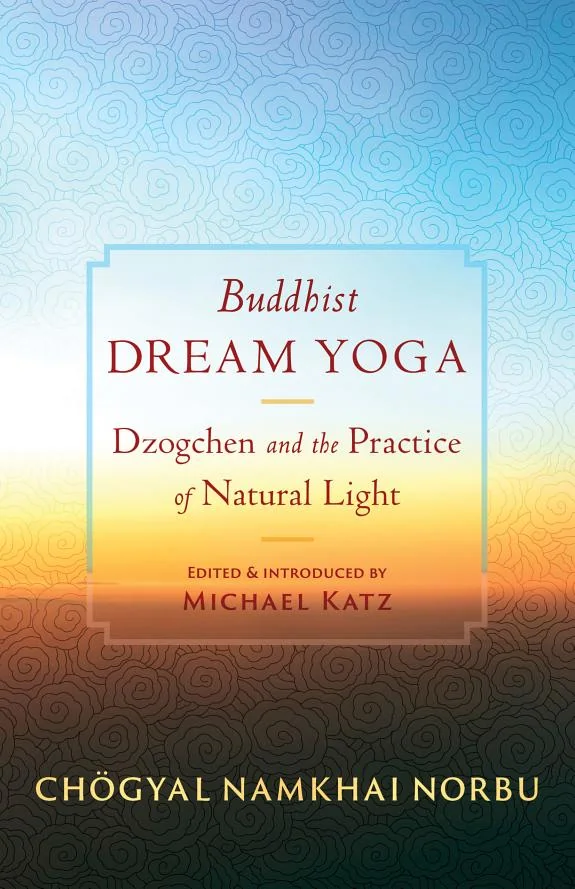
Buddhist Dream Yoga
 74
74

Buddhist Dream Yoga
Chögyal Namkhai Norbu's Buddhist Dream Yoga offers a compelling, direct approach to dream practice rooted in the Dzogchen tradition. Unlike Western popularizations of lucid dreaming, Norbu emphasizes integrating dream awareness into a broader path of self-realization. The strength of the text lies in its clear, unadorned instruction, directly transmitting authentic teachings. A limitation, however, is that the depth of the Dzogchen context might require prior familiarity with Buddhist philosophy for full comprehension. The section detailing the transformation of dream imagery provides particularly potent, actionable guidance for practitioners. This book serves as an indispensable guide for those seeking authentic Tibetan Buddhist dream practices.
📝 Description
74
### What It Is Buddhist Dream Yoga presents practical exercises derived from the Dzogchen tradition, focusing on developing awareness during sleep and dream states. It aims to integrate this awareness into all waking moments, extending self-observation beyond ordinary consciousness. The text offers methods for transforming dream experiences into opportunities for spiritual growth and self-understanding. It moves beyond mere lucidity, emphasizing a deeper engagement with the dreamscape.
### Who It's For This work is intended for practitioners of Tibetan Buddhism, particularly those interested in the Dzogchen path, seeking to deepen their contemplative practice. It will also appeal to advanced students of consciousness studies and anyone exploring non-Western methods for understanding the mind, sleep, and dreams. Individuals aiming to enhance self-awareness and gain clarity throughout their daily and nightly experiences will find value here.
### Historical Context Chögyal Namkhai Norbu, a prominent master in the Dzogchen tradition, published this work, building upon centuries of Tibetan Buddhist teachings on dream yoga. His lineage traces back to masters like Jigme Lingpa and Longchenpa. The book emerged in the late 20th and early 21st centuries, a period when Western interest in Tibetan Buddhism and consciousness exploration surged. It offered a more direct transmission of Dzogchen principles compared to earlier, more generalized introductions to Tibetan meditation.
### Key Concepts The core of Buddhist Dream Yoga lies in cultivating continuous awareness. This involves recognizing the dream state as a manifestation of mind, inseparable from waking consciousness. Practices focus on transforming potentially disturbing dream elements into symbols of insight and on maintaining presence even amidst the disorienting nature of dreams. The goal is not just to remember dreams but to actively engage with them as a path to realizing the nature of reality.
💡 Why Read This Book?
• Learn specific Dzogchen exercises for transforming dream states, moving beyond simple lucidity to deeper self-discovery, as outlined by Chögyal Namkhai Norbu. • Understand the Dzogchen view of consciousness and how it applies to sleep and dream phenomena, offering insights unavailable in secular dream analysis. • Gain practical methods for maintaining awareness throughout the 24-hour cycle, a core principle of the Dzogchen path, as presented in the text.
⭐ Reader Reviews
Honest opinions from readers who have explored this book.
❓ Frequently Asked Questions
What is Dzogchen Dream Yoga?
Dzogchen Dream Yoga is a set of practices within the Dzogchen tradition of Tibetan Buddhism designed to develop clarity and awareness during sleep and dream states, integrating this insight into waking life.
How does Buddhist Dream Yoga differ from Western lucid dreaming techniques?
While Western lucid dreaming often focuses on control and exploration, Buddhist Dream Yoga emphasizes transforming dream experiences for spiritual realization and recognizing the nature of mind.
Who was Chögyal Namkhai Norbu?
Chögyal Namkhai Norbu (1938–2018) was a prominent master of the Dzogchen tradition, known for his extensive teachings and efforts to make these profound practices accessible in the West.
What are the benefits of practicing Dream Yoga?
Practicing Dream Yoga can enhance self-awareness, cultivate equanimity, and provide direct insight into the nature of consciousness and reality, extending spiritual practice into sleep.
Is prior meditation experience necessary for Buddhist Dream Yoga?
While not strictly required, some familiarity with basic meditation and Buddhist concepts can be highly beneficial for grasping the subtle nuances of the Dzogchen Dream Yoga practices.
When was Buddhist Dream Yoga first published?
The book 'Buddhist Dream Yoga' by Chogyal Namkhai Norbu and Jamgon Mipham was first published on January 21, 2025.
🔮 Key Themes & Symbolism
Awareness in Sleep
The text meticulously outlines methods to maintain a continuity of consciousness even during the deepest stages of sleep. It posits that sleep is not an absence of mind but a different state of awareness that can be utilized for spiritual development. By transforming the experience of sleep, practitioners can prevent the dissipation of awareness and use this 'down time' for profound insight, a concept central to Dzogchen's integration of all states of being.
Dream Transformation
Buddhist Dream Yoga provides techniques for actively engaging with and transforming dream content. Instead of passively experiencing dreams, practitioners learn to recognize dream phenomena as manifestations of mind. Disturbing or mundane dream elements can be reframed as opportunities for insight, symbols of inner states, or pathways to understanding the illusory nature of perceived reality, a key tenet of non-dual awareness.
Integration of States
A fundamental theme is the seamless integration of waking, dreaming, and sleeping states. The book teaches how practices developed in dreams can be carried into waking life, and vice versa, fostering a unified and continuous practice. This integration aims to dissolve the perceived boundaries between ordinary consciousness and deeper realities, leading to a holistic realization of one's true nature throughout all moments.
Dzogchen Principles
The teachings are firmly rooted in the Dzogchen (Great Perfection) tradition of Tibetan Buddhism. This includes concepts like rigpa (pristine awareness), the nature of mind as luminous and empty, and the view that ultimate reality is inherently present. Dream Yoga, in this context, is not an isolated practice but an integral part of the broader Dzogchen path towards liberation and enlightenment.
💬 Memorable Quotes
“Clarity within the sleep and dream states.”
— This concise phrase encapsulates the core objective of the practice: to maintain and enhance conscious awareness during nocturnal experiences, transforming them into opportunities for insight.
“Guiding dream states that are part of a broader system.”
— This highlights that Dream Yoga is not an end in itself but a component of a comprehensive spiritual path, emphasizing its integrated role within a larger framework of practice and realization.
“Enhancing self-awareness throughout all moments of the day and night.”
— This points to the ultimate goal of the practice: a continuous, unbroken state of mindfulness and presence that permeates both waking consciousness and the states of sleep and dreaming.
“Beyond the practices of lucid dreaming.”
— This signifies the text's departure from superficial or purely experiential approaches to dreams, indicating a deeper, more philosophical and soteriological dimension to the teachings presented.
“Rooted in the tradition of Dzogchen.”
— This anchors the presented exercises within a specific, ancient lineage of Tibetan Buddhism, assuring readers of the authenticity and profound depth of the practices offered.
🌙 Esoteric Significance
Tradition
This work is deeply rooted in the Nyingma school of Tibetan Buddhism, specifically within the Dzogchen (Great Perfection) tradition. Dzogchen is considered the pinnacle of the Mahayana and Vajrayana paths, focusing on direct realization of the primordial state of awareness (rigpa). Dream Yoga, as presented here, is not merely a technique but an integral part of the Dzogchen path, aimed at dissolving the illusion of duality and recognizing the luminous, empty nature of mind during all states of experience.
Symbolism
Key symbols include the dream itself, representing the illusory and fluid nature of perceived reality, and the transformation of dream figures or environments, which symbolize the practitioner's ability to transmute negative emotions and mental obscurations into wisdom. Light is also a crucial motif, often associated with the luminous clarity of primordial awareness (rigpa) that persists even within the darkness of sleep and the ephemeral nature of dreams.
Modern Relevance
Contemporary thinkers and practitioners in consciousness studies, transpersonal psychology, and mindfulness-based approaches are increasingly drawing on Tibetan Buddhist contemplative techniques. Works like Buddhist Dream Yoga offer sophisticated frameworks for understanding altered states of consciousness, the nature of subjective experience, and the potential for integrating spiritual practice into everyday life, influencing fields beyond traditional Buddhism.
👥 Who Should Read This Book
• Advanced practitioners of Tibetan Buddhism, particularly those within the Dzogchen lineage seeking to deepen their understanding and application of dream yoga principles. • Students of consciousness studies and comparative religion interested in exploring non-Western methods for investigating the mind during sleep and dream states. • Individuals seeking practical, authentic techniques for enhancing self-awareness and spiritual insight that extend beyond conventional waking meditation practices.
📜 Historical Context
Chögyal Namkhai Norbu's work on Buddhist Dream Yoga emerged during a period of intense Western engagement with Tibetan Buddhism, particularly following the exodus of Tibetan lamas after the 1959 Chinese invasion. Published posthumously in 2025, it draws upon a rich lineage of Dzogchen masters like Jigme Lingpa and Longchenpa, who articulated profound teachings on consciousness and dream states centuries prior. This period saw a proliferation of introductory texts on Tibetan Buddhism, yet Norbu's work, alongside that of contemporaries like Chögyam Trungpa and the Dalai Lama, offered more direct transmissions of advanced practices. Unlike the more generalized mindfulness or Tibetan yoga texts gaining popularity, Norbu's focus on the specific mechanics of dream manipulation for spiritual insight provided a distinct offering. The reception within academic circles and among practitioners generally praised its authenticity and practical applicability, though its deep roots in Dzogchen philosophy meant it was best appreciated by those with some existing grounding in Buddhist thought.
📔 Journal Prompts
The transformation of dream imagery into symbols of insight.
Maintaining awareness during sleep, as distinct from waking mindfulness.
The integration of dream experiences into the broader Dzogchen path.
Recognizing the luminous nature of mind within the dream state.
The relationship between ordinary sleep and the potential for spiritual realization.
🗂️ Glossary
Dzogchen
Meaning 'Great Perfection,' Dzogchen is the highest and most profound teaching within the Nyingma school of Tibetan Buddhism, emphasizing direct realization of one's primordial, innate awareness (rigpa).
Rigpa
Pristine, primordial awareness; the fundamental, non-dual nature of mind that is empty, luminous, and unimpeded. It is the ultimate ground of being in Dzogchen.
Dream Yoga (Milam)
A specific set of contemplative practices within Tibetan Buddhism designed to cultivate awareness and insight during the dream state, integrating it into the overall path of spiritual development.
Luminous Mind
Refers to the innate clarity and knowing quality of consciousness, which is not extinguished during sleep or dreams but manifests in different ways.
Non-duality
The philosophical and experiential understanding that denies the fundamental separation between subject and object, self and other, or reality and illusion.
Vajrayana
The 'Diamond Vehicle' or 'Thunderbolt Vehicle,' the esoteric branch of Mahayana Buddhism that includes tantric practices and is prominent in Tibetan Buddhism.
Clarity
In the context of dream yoga, clarity refers to the state of wakefulness and lucidity within the dream state, allowing for conscious awareness and intentionality.