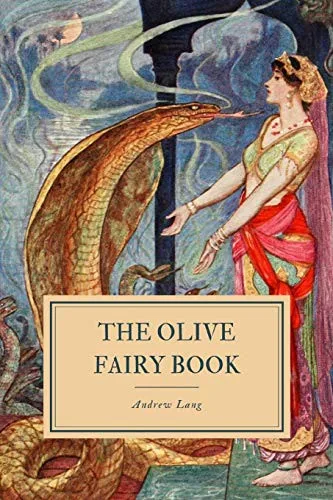
The Olive Fairy Book (Complete & Unabridged)
 80
80

The Olive Fairy Book (Complete & Unabridged)
Andrew Lang's compilation in The Olive Fairy Book offers a genuine immersion into the bedrock of fairy lore, eschewing modern embellishments for the raw, often stark, narratives that have echoed through generations. The strength lies in its sheer breadth of sources, presenting tales less commonly encountered than those by the Brothers Grimm or Perrault. However, the collection's unvarnished nature can also be its limitation; some stories carry a didacticism or a degree of violence that might surprise contemporary readers accustomed to gentler retellings. The tale of "The Boy Who Was Afraid of Nothing" exemplifies this, showcasing a protagonist whose bravery is tested in ways that feel both primal and instructional. For those seeking the untamed roots of popular stories, this book provides an invaluable, albeit sometimes challenging, look at the oral traditions that underpin our modern fairy tales.
📝 Description
80
Andrew Lang's Olive Fairy Book, published in 1940, collected global fairy tales for a modern audience.
Andrew Lang compiled The Olive Fairy Book in 1940, gathering fairy tales from various global traditions. This collection, part of his larger Fairy Book series, includes stories originally intended for children but also contains archetypal imagery and narrative structures that appeal to adult readers interested in folklore and mythology. Lang's aim was to preserve these traditional tales, collecting them before they faded from oral circulation or were significantly altered by modernization.
The book is suited for folklorists, scholars of comparative mythology, and anyone who values the foundational narratives that shape cultural understanding. It offers readers the chance to encounter original story forms that have been retold many times. Those interested in the psychological dimensions of fairy tales, the work of folklorists like Joseph Jacobs, or the history of children's literature will find it valuable. It appeals to readers who enjoy stories that reflect historical beliefs and imaginative expression.
The compilation emerged during a period of keen interest in folklore and national identity, particularly in the late 19th and early 20th centuries. As societies changed, scholars and collectors worked to document oral traditions. Lang, a Scottish poet and anthropologist, worked with his wife Leonora Alleyne and others to gather tales from Europe and beyond. This effort engaged with the growing field of folklore studies, influenced by figures like the Brothers Grimm and Charles Perrault, and contributed to a cultural movement focused on preserving national heritage through storytelling.
Andrew Lang's fairy book compilations, including The Olive Fairy Book, arose from a late 19th and early 20th-century scholarly interest in folklore and comparative mythology. This period saw a concerted effort to document and preserve oral traditions, which were seen as repositories of cultural memory and psychological insight. Lang's work, alongside that of contemporaries like the Brothers Grimm and Charles Perrault, engaged with the idea that these tales carried universal patterns and archetypal imagery. While presented for children, the underlying structures and symbolism resonated with adult readers seeking to understand the roots of human imagination and belief systems, connecting them to a broader, often unarticulated, stream of collective consciousness.
💡 Why Read This Book?
• Gain insight into the archetypal structure of hero's journeys as depicted in tales like "The Dragon Prince," understanding how these narratives have informed countless subsequent stories. • Explore the symbolic language of folklore, examining motifs such as the transformation of the humble or the consequences of broken promises, as seen in "The Princess in the Suitcase." • Appreciate the historical context of folklore collection, recognizing Andrew Lang's role in preserving these narratives for a 1940s audience and beyond, a practice vital to understanding cultural heritage.
⭐ Reader Reviews
Honest opinions from readers who have explored this book.
❓ Frequently Asked Questions
When was The Olive Fairy Book first published?
The Olive Fairy Book was first published in 1940, as part of Andrew Lang's extensive series of fairy tale collections.
What kind of stories are included in The Olive Fairy Book?
The book includes a diverse range of fairy tales and folk stories collected from various global traditions, focusing on traditional narratives rather than modern adaptations.
Who is Andrew Lang and why is he known for fairy tales?
Andrew Lang (1844-1912) was a Scottish poet, folklorist, and anthropologist who compiled and published numerous collections of fairy tales, known as the 'Fairy Books,' which became highly influential.
Is The Olive Fairy Book suitable for young children?
While intended for children, some stories contain themes and situations that are more direct and less sanitized than modern children's literature, making them potentially more suitable for older children or adults interested in folklore.
What makes The Olive Fairy Book different from other fairy tale collections?
Its strength lies in its broad range of sources, often featuring lesser-known tales and presenting them in a less edited form than some other popular collections, reflecting the specific traditions from which they were drawn.
Are the stories in The Olive Fairy Book original or retellings?
The stories are compilations and retellings of traditional folk tales and fairy tales gathered from various cultures and regions by Andrew Lang and his collaborators.
🔮 Key Themes & Symbolism
Archetypal Journeys and Trials
The collection is rich with narratives that follow the classic hero's journey. Characters, often starting from humble or disadvantaged positions, are propelled into quests that test their courage, wit, and moral fortitude. These trials frequently involve supernatural elements, such as encountering magical creatures or overcoming curses. The overarching theme is one of transformation through adversity, where the protagonist's character is forged and refined by the challenges they face, ultimately leading to a reward or a return to a changed state. The structure of these journeys mirrors ancient initiation rites and psychological development patterns.
The Interplay of Magic and Morality
Magic in these tales is not merely decorative; it is an active force that shapes events and often serves as a catalyst for moral lessons. Whether it's a benevolent fairy godmother offering aid or a malevolent sorcerer enacting curses, magical interventions underscore the consequences of actions, both good and ill. The stories frequently explore themes of justice, where virtue is ultimately rewarded and wickedness is punished, sometimes through supernatural means. This highlights a worldview where the spiritual or magical realm is inextricably linked to the ethical order of the world.
Cultural Preservation Through Storytelling
Andrew Lang's compilation effort, culminating in works like The Olive Fairy Book, represented a significant undertaking in preserving global folklore. By gathering tales from diverse oral traditions, he sought to document and share narratives that might otherwise have been lost to time or altered by modernization. These stories act as cultural artifacts, offering insights into the beliefs, values, and social structures of the societies from which they originated. The act of collecting and publishing these tales in 1940 served to solidify their place in literary history and make them accessible to a wider audience.
The Nature of Transformation
A pervasive theme across many stories is transformation, both external and internal. Characters may undergo literal metamorphoses, such as being turned into animals or objects, only to be restored to their true form. More subtly, the narratives explore the psychological transformation that occurs as protagonists learn, grow, and overcome their fears or flaws. This arc of change, often facilitated by magical elements or arduous experiences, underscores the potential for personal evolution and the attainment of wisdom or maturity through life's narrative arc.
💬 Memorable Quotes
Direct passages from the work, attributed to the author.
“The stories often depict a clear distinction between good and evil, with virtue typically rewarded and wickedness punished.”
— This highlights the didactic nature of many traditional fairy tales, serving as moral instruction within narrative structures. The clarity of these moral lines reflects older societal norms and a desire to impart ethical frameworks through engaging stories.
“Magical objects and enchantments play a central role in advancing the plot and resolving conflicts.”
— This emphasizes the function of the supernatural in folklore as a narrative engine. Magic is not arbitrary but often serves to test protagonists or provide them with the means to overcome insurmountable obstacles, reflecting a belief in forces beyond human control.
“Many tales feature protagonists who begin perilous journeys, facing various challenges and ultimately achieving their goals.”
— This points to the prevalence of the hero's journey archetype. The narrative structure of the quest is central, symbolizing personal growth, the overcoming of internal and external obstacles, and the eventual attainment of a desired outcome or self-knowledge.
“The collection draws from a wide array of international folklore, offering diverse cultural perspectives.”
— This underscores the scope of Andrew Lang's compilation efforts. By including tales from various regions, the book provides a comparative view of human storytelling traditions and shared thematic elements across different cultures.
“Characters often encounter wise figures or helpful creatures who offer guidance or assistance.”
— This highlights the role of mentors and allies in traditional narratives. These characters serve to guide the protagonist, providing necessary information or aid that is critical for their success, mirroring the importance of guidance in real-world development.
🌙 Esoteric Significance
Tradition
While not explicitly aligned with a single esoteric tradition like Hermeticism or Kabbalah, The Olive Fairy Book functions as a repository of primal mythopoetic narratives. These tales tap into the collective unconscious, a concept later explored by Carl Jung. They represent a form of pre-rational, symbolic language that underlies many esoteric systems. The stories' archetypal figures and transformative plotlines can be interpreted through psychological and spiritual lenses, revealing universal patterns of initiation, shadow work, and individuation relevant to paths focused on inner development.
Symbolism
The olive branch itself is a potent symbol of peace, wisdom, and reconciliation across numerous ancient cultures, including Greek mythology. In the context of the book's title, it suggests a collection that offers not just adventure but also the potential for harmony and understanding through narrative. Other recurring symbols include enchanted forests (representing the unknown or the subconscious), talking animals (embodiments of instinctual wisdom or hidden aspects of the self), and trials of virtue (representing the ethical challenges inherent in spiritual growth).
Modern Relevance
Modern practitioners of depth psychology, particularly those influenced by Jungian analysis, find in these tales invaluable case studies of archetypal patterns. Storytellers and mythologists continue to draw inspiration from Lang's collections for contemporary works. Furthermore, contemporary esotericists interested in the roots of archetypal psychology and symbolic language often reference these stories as foundational narratives that illustrate universal spiritual and psychological truths, applicable to personal growth and understanding the human psyche.
👥 Who Should Read This Book
• Scholars of comparative mythology and folklore seeking a broad collection of traditional narratives beyond the most commonly cited sources. • Individuals interested in the psychological underpinnings of storytelling and archetypal patterns, particularly those familiar with Jungian concepts. • Readers who appreciate historical children's literature and wish to engage with the original forms of stories that have shaped Western culture.
📜 Historical Context
Andrew Lang's 'Fairy Books' series, including The Olive Fairy Book which saw its first publication in 1940, emerged from a late Victorian and Edwardian fascination with folklore and national identity. This period witnessed a surge in the collection and academic study of oral traditions, spurred by figures like the Brothers Grimm and later scholars. Lang, a polymath with interests in anthropology and literature, aimed to create a comprehensive collection of fairy tales from around the world, collaborating with his wife Leonora Alleyne and others. His work stood alongside other contemporary efforts to codify and popularize folklore. While the Brothers Grimm focused heavily on German tales and Charles Perrault on French courtly versions, Lang sought a broader, more international scope. The reception of these collections was largely positive, cementing their place in children's literature, though some contemporary critics noted the varying literary quality and the inclusion of tales that were perhaps more stark than previously common in English-language children's books.
📔 Journal Prompts
The symbolism of the olive branch in "The Olive Fairy Book" and its connection to peace and wisdom.
Reflect on the recurring motif of transformation experienced by characters like the protagonist in "The Dragon Prince."
Analyze the narrative function of magic and enchantment in resolving conflicts within the collected tales.
Consider the moral lessons conveyed through the clear distinctions between good and evil presented in these stories.
Examine the role of mentors and wise figures, such as those appearing in "The Princess in the Suitcase," in guiding protagonists.
🗂️ Glossary
Archetype
A universal, inherited pattern of thought or imagery derived from the experience of the human race, often found in myths, folklore, and dreams. Examples include the hero, the wise old man, and the trickster.
Collective Unconscious
A term coined by Carl Jung, referring to a part of the unconscious mind derived from ancestral memory and experience, common to all humankind. It is the source of archetypes.
Folklore
The traditional beliefs, customs, and stories of a community, passed through the generations by word of mouth. It encompasses myths, legends, fairy tales, proverbs, and rituals.
Hero's Journey
A narrative pattern identified by Joseph Campbell, describing the typical stages of a hero's adventure, including departure, initiation, and return. It is a fundamental structure in mythology and storytelling.
Mythopoetic
Pertaining to the creation or interpretation of myths. It describes language, narratives, or artistic expressions that are rich in symbolic meaning and evoke a sense of the mythic.
Symbolism
The use of symbols to represent ideas or qualities. In folklore and esoteric studies, objects, characters, or events often carry deeper, multi-layered meanings beyond their literal interpretation.
Initiation Rite
A ceremony or ritual marking an important stage in someone's life, especially the change from childhood to adulthood. In esoteric contexts, it refers to formal processes of spiritual or magical learning and progression.
🔮 Readers Also Liked
Browse all →









More by Andrew Lang
All books →


More Free Occult Philosophy Books
View all →