The chakras

 77
77

The chakras
Leadbeater's "The Chakras" remains a significant, if controversial, text within esoteric literature. Its strength lies in its meticulous, almost clinical, cataloging of each chakra's attributes – from the number of petals on the Sahasrara to the specific vibrations associated with the Vishuddha. This level of detail offers a concrete framework for contemplation, moving beyond vague notions of energy centers. However, the work is undeniably a product of its time and the Theosophical milieu, presenting a singular, authoritative interpretation that can feel rigid. For instance, the descriptions of the Ajna chakra's connection to clairvoyance and telepathy, while influential, often overshadow other interpretations of its role in intuition and wisdom. The text's reliance on specific color correspondences and petal counts, while internally consistent, may not align with other yogic traditions. Leadbeater's "The Chakras" provides a detailed map, but readers should be aware they are viewing the territory through a specific, Theosophical lens.
📝 Description
77
Charles Leadbeater's "The Chakras" was first published in 1927, detailing seven subtle energy centers.
Published in 1927, "The Chakras" by Charles Leadbeater describes the seven primary energy centers within the human body. Leadbeater maps these locations, specifying their colors, associated sounds, and the psychological and spiritual roles they play. He proposes that these chakras act as connections between the physical and astral bodies, shaping consciousness, health, and spiritual growth.
This book is aimed at students of esoteric subjects, particularly those familiar with Theosophy or Western interpretations of yogic and Tantric traditions. It offers a systematic look at these internal energy structures, which are often only briefly mentioned elsewhere. The work provides a specific framework for understanding personal energetic anatomy.
"The Chakras" emerged from the Theosophical Society's work in the early 20th century, a time of great interest in Eastern philosophies in the West. The book reflects the era's attempt to blend ancient spiritual ideas with emerging scientific and psychological thought. Its descriptions draw from the Theosophical view of subtle bodies and different planes of existence.
Charles Leadbeater's work on chakras is situated within the Theosophical movement of the early 20th century. This tradition sought to synthesize Eastern esoteric philosophies with Western occultism and a developing understanding of consciousness. Leadbeater's detailed descriptions of the chakras, their colors, sounds, and functions, are presented through the lens of Theosophical cosmology, including concepts of subtle bodies and planes of existence. The book reflects an effort to systematize and present these esoteric teachings to a Western audience interested in spiritual development and the nature of subtle energies.
✍️ Author
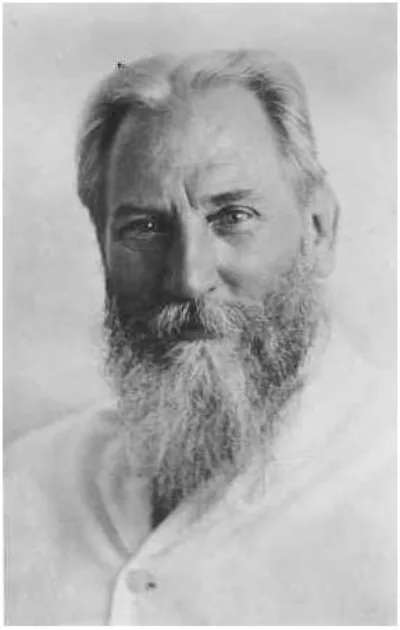
Charles Webster Leadbeater
Charles Webster Leadbeater was a British occultist and prominent member of the Theosophical Society.
Theosophist
💡 Why Read This Book?
• Gain a detailed, systematic understanding of the seven primary chakras, including their specific number of petals, colors, and associated Sanskrit seed syllables, as described by Leadbeater in his 1927 publication. • Explore the Theosophical perspective on the flow of prana and the potential awakening of kundalini, as presented in the text, to contextualize modern energy work. • Understand the foundational Theosophical framework for subtle anatomy that influenced many subsequent Western esoteric authors and practices concerning spiritual development.
⭐ Reader Reviews
Honest opinions from readers who have explored this book.
❓ Frequently Asked Questions
What is the historical significance of Charles Leadbeater's "The Chakras"?
Published in 1927, Leadbeater's "The Chakras" was a seminal work that detailed the subtle energy centers within the human body, heavily influenced by Theosophy and yogic traditions, making these concepts accessible to a Western esoteric audience.
How does Leadbeater describe the Ajna chakra?
Leadbeater associates the Ajna chakra, or 'third eye,' with intuition, clairvoyance, and telepathic abilities, describing it as having two petals and an indigo color, and linking it to the pineal gland.
What is Kundalini according to "The Chakras"?
In Leadbeater's work, Kundalini is described as a coiled, dormant spiritual energy located at the base of the spine (Muladhara chakra), which, when awakened, ascends through the Sushumna to energize the higher chakras.
Are the descriptions in "The Chakras" universally accepted in all spiritual traditions?
No, Leadbeater's work presents a specific Theosophical interpretation. While influential, it differs in detail from descriptions found in traditional Indian yogic texts or other esoteric systems regarding the number of chakras, their colors, and functions.
What is the Muladhara chakra?
The Muladhara, or root chakra, is the first of the seven primary chakras according to Leadbeater. It is located at the base of the spine, associated with the color red, and governs grounding, security, and physical survival.
Where can I find "The Chakras" by C.W. Leadbeater?
As an older work, "The Chakras" by Charles Webster Leadbeater is often available in public domain collections and through various online archives of esoteric literature.
🔮 Key Themes & Symbolism
The Seven Primary Chakras
The book meticulously details seven principal chakras, positing them as vital energetic centers within the human subtle body. Each chakra, from the Muladhara at the base to the Sahasrara at the crown, is assigned specific characteristics: a color spectrum (e.g., violet for the crown), a number of lotus petals (e.g., four for the root), and a corresponding Sanskrit seed-syllable (bija mantra). Leadbeater explains their function in governing physical, emotional, and spiritual aspects of human experience, serving as conduits for life force (prana).
Kundalini and Sushumna
A central theme is Kundalini, the dormant serpentine energy coiled at the base of the spine. Leadbeater describes its potential for awakening and ascent through the central energetic channel, the Sushumna, which runs parallel to the physical spine. This ascent is portrayed as a crucial process for spiritual evolution, with each chakra acting as a gateway or station along the path, requiring purification and activation for higher consciousness.
Subtle Anatomy and Planes
Leadbeater's work is grounded in the Theosophical concept of multiple planes of existence and subtle bodies (etheric, astral, mental). The chakras are presented as the nexus points where these different levels intersect within the physical form. The book elaborates on the etheric body's structure and its relationship to the physical, with the chakras acting as energetic vortexes that draw energy from higher planes and distribute it throughout the organism.
Color, Sound, and Vibration
The book emphasizes the sensory correspondences of each chakra, particularly their associated colors and sounds. Leadbeater links specific hues (like the orange of the Svadhisthana or the green of the Anahata) and vocalizations or seed syllables to the vibrational frequencies of each energy center. This connection suggests that working with these specific colors and sounds can influence and balance the chakras, thereby impacting the individual's well-being and consciousness.
💬 Memorable Quotes
“The chakras are vortices of energy...”
— This paraphrased concept highlights the fundamental nature of chakras as dynamic energy centers, not static points, emphasizing their active role in the flow and transformation of subtle energies within the body.
“The Kundalini lies coiled like a serpent...”
— This imagery, central to the concept of Kundalini, suggests a potent, latent force residing at the base of the spine, capable of awakening and 'uncoiling' to initiate profound spiritual transformation.
“Each chakra has a definite number of petals...”
— This statement points to the structured nature of the chakra system as described by Leadbeater, where specific numerical and symbolic attributes, like the 'petals,' are assigned to each energy center, providing a detailed map for study.
“The Sushumna is the main channel...”
— This paraphrased idea emphasizes the Sushumna's role as the primary conduit for spiritual energy, essential for the ascent of Kundalini and the activation of the higher chakras in the process of enlightenment.
“Color is the manifestation of vibration...”
— This reflects Leadbeater's view that the colors associated with the chakras are not merely visual but are direct expressions of their unique energetic frequencies and qualities.
🌙 Esoteric Significance
Tradition
This work is firmly rooted in the Theosophical tradition, emerging from the efforts of figures like Helena Blavatsky and further developed by Leadbeater and Annie Besant. It adapts and systematizes concepts from Hindu yogic and Tantric traditions, presenting them within a Western esoteric framework that emphasizes subtle anatomy, planes of consciousness, and spiritual evolution through disciplined energetic work.
Symbolism
Key symbols include the lotus flower, with each chakra depicted as having a specific number of petals representing its complexity and energetic facets. The serpent (Kundalini) is another potent symbol, signifying dormant spiritual power. Colors are also symbolic, with specific hues like red (Muladhara) or blue (Vishuddha) representing the vibrational quality and function of each energy center.
Modern Relevance
Leadbeater's detailed descriptions of the chakras have profoundly influenced modern yoga, New Age spirituality, and various forms of energy healing. Contemporary practices often draw directly from his color correspondences, petal counts, and the concept of Kundalini ascent, making his work a foundational text for many seeking to understand and work with the body's energetic system.
👥 Who Should Read This Book
• Students of Theosophy and early 20th-century esoteric movements seeking primary source material on subtle anatomy. • Aspiring practitioners of yoga and meditation who wish to understand the energetic basis of the chakra system from a specific Western interpretive lens. • Comparative religion scholars interested in how Eastern concepts were adapted and disseminated within Western esoteric contexts.
📜 Historical Context
Charles Leadbeater's "The Chakras" arrived in 1927 amidst a fervent period of Western engagement with Eastern spirituality, particularly within the Theosophical Society, of which Leadbeater was a prominent figure. The early 20th century saw a surge in attempts to synthesize esoteric traditions with emerging scientific and psychological paradigms. Leadbeater's work drew heavily on yogic and Tantric concepts but filtered them through a Theosophical lens, focusing on a detailed, almost anatomical, description of subtle energy centers. This approach contrasted with more philosophical or devotional interpretations prevalent in India. Contemporaries like Alice Bailey, also a Theosophist, were producing extensive works on related esoteric subjects during this era, though often with different emphases. While highly influential within esoteric circles, Leadbeater's interpretations, particularly his detailed descriptions of subtle bodies and clairvoyant observations, were not universally accepted and sometimes met with skepticism even within broader spiritual movements.
📔 Journal Prompts
The description of the Manipura chakra's role in personal power.
The symbolic meaning of the Sahasrara chakra's thousand petals.
Leadbeater's explanation of the connection between the Ajna chakra and intuition.
The potential dangers associated with premature Kundalini awakening.
The relationship between the Anahata chakra and emotional balance.
🗂️ Glossary
Chakra
From Sanskrit, meaning 'wheel' or 'vortex.' In esoteric traditions, these are centers of subtle energy located within the human body, believed to influence physical, emotional, and spiritual states.
Kundalini
A primal spiritual energy, often depicted as a coiled serpent, believed to reside at the base of the spine. Its awakening and ascent through the central channel are central to many yogic and tantric paths.
Prana
The vital life force or energy that permeates all living beings and the universe. It is believed to flow through channels in the subtle body and is influenced by breath and consciousness.
Sushumna
The central energetic channel in the subtle body, running along the spinal column. It is considered the primary pathway for the ascent of Kundalini energy.
Bija Mantra
Sanskrit 'seed syllables' or single-syllable sounds associated with specific chakras. Chanting these mantras is believed to activate and balance the corresponding energy center.
Etheric Body
The subtle energetic counterpart to the physical body, believed to be composed of etheric matter. It is thought to contain the nadis (energy channels) and chakras.
Muladhara
The first primary chakra, located at the base of the spine. It is associated with grounding, security, and the element earth.