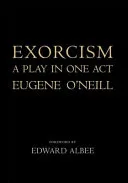
Exorcism
 82
82

Exorcism
Eugene O'Neill's "Exorcism," a play resurrected from near-total obscurity, presents a raw, almost brutal, examination of a young artist's descent into psychological torment. The drama’s power lies in its unflinching portrayal of internal struggle, where the spectral presence of a dead mother becomes a tangible manifestation of guilt and inherited trauma. The recovered typescript, complete with O'Neill's own annotations, offers a rare glimpse into the playwright's creative process and his deliberate decision to withdraw the work. A particular strength is the play's visceral atmosphere; O'Neill conjures a suffocating dread that permeates the stage, making Stephen's internal landscape chillingly palpable. However, the work’s starkness can also be its limitation. The relentless psychological pressure, while effective, offers little respite and can feel claustrophobic to the modern reader accustomed to more narrative resolution. The rediscovery of this 1920 piece, and its subsequent publication, fills a significant gap in O'Neill's canon, revealing an early, potent exploration of themes he would later revisit with greater nuance. "Exorcism" stands as a potent, albeit difficult, testament to O'Neill's early daring.
📝 Description
82
Eugene O'Neill's 1920 drama "Exorcism" was ordered destroyed by the author shortly after its debut.
Eugene O'Neill's "Exorcism," first staged in 1920, is a play about a young poet named Stephen tormented by his deceased mother. He struggles with pervasive guilt and alienation, confronting his internal demons through a confrontational style that departed from typical theatrical conventions of the time. The play remained unseen for decades after O'Neill himself attempted to suppress it, which only added to its mystique as a lost work.
This drama is for those interested in the experimental side of early 20th-century American theater and the psychological aspects of spiritual distress. Scholars of O'Neill, particularly his lesser-known or suppressed works, will find value here. Students of existential themes, internal conflict, and the dramatic representation of the supernatural will also find "Exorcism" a significant subject. The story of this rediscovered text itself adds another layer of interest for those fascinated by literary history.
Emerging in the post-World War I era, a time marked by increased interest in psychoanalysis and spiritualism, "Exorcism" reflects a cultural moment grappling with the subconscious and the breakdown of traditional values. O'Neill's attempt to bury the play suggests its themes of internal conflict and the supernatural were challenging to the prevailing sensibilities. It stands as a testament to the era's artistic boundary pushing, where dramatists like O'Neill addressed darker psychological states and existential questions, often through unconventional means.
💡 Why Read This Book?
• Gain insight into Eugene O'Neill's early, suppressed dramatic output, specifically understanding his 1920 attempt with "Exorcism" to confront themes of familial guilt and psychological haunting. • Explore the symbolic representation of internal conflict, where the spectral mother functions as a concrete manifestation of the protagonist Stephen's psychological burdens. • Appreciate the historical context of early 20th-century American theatre and O'Neill's personal decision to withdraw the play, offering a unique perspective on artistic censorship and reception.
⭐ Reader Reviews
Honest opinions from readers who have explored this book.
❓ Frequently Asked Questions
When was Eugene O'Neill's play "Exorcism" first performed?
Eugene O'Neill's "Exorcism" was first performed in 1920. However, production was shortly thereafter canceled by O'Neill himself, and extant copies were ordered destroyed.
How was the lost play "Exorcism" rediscovered?
The play was believed lost until O'Neill's second wife retained a copy. This copy was later passed to screenwriter Philip Yordan, and in 2011, Yordan's widow discovered the typescript with O'Neill's edits.
What is the central theme of Eugene O'Neill's "Exorcism"?
The central theme revolves around a young poet named Stephen, who is tormented by the spectral presence of his deceased mother, representing his overwhelming guilt and internal psychological struggles.
Why did Eugene O'Neill want "Exorcism" destroyed?
The exact reasons remain speculative, but it is believed O'Neill found the play too stark, too personal, or perhaps inconsistent with his evolving artistic vision following its initial 1920 production.
What makes the discovered typescript of "Exorcism" significant?
The typescript's significance lies in its completeness and, crucially, the presence of O'Neill's own handwritten edits. This provides direct insight into his revisions and intentions for the play.
Who discovered the rediscovered typescript of "Exorcism"?
The typescript was discovered in early 2011 by the widow of screenwriter and producer Philip Yordan, to whom O'Neill's second wife had given a retained copy of the play.
🔮 Key Themes & Symbolism
Internalized Guilt and Trauma
The play presents guilt not as an abstract concept but as a palpable, spectral entity. The apparition of the deceased mother functions as a projection of the protagonist Stephen's profound sense of self-blame and unresolved familial issues. O'Neill uses this supernatural element to dramatize the psychological burden carried by individuals, suggesting that the most terrifying demons are often those we harbor within ourselves. The "exorcism" is therefore an internal battle against the self, a struggle for liberation from the haunting memories and perceived failures that define one's inner landscape.
The Artist and Psychological Distress
"Exorcism" explores the fraught relationship between artistic creation and mental anguish. The protagonist, Stephen, is a poet, and his creative output seems intertwined with his psychological deterioration. The play posits that the artistic temperament, while capable of great expression, may also be more susceptible to the crushing weight of internal conflict. O'Neill, himself a figure who wrestled with his own demons and the demands of his art, uses Stephen's plight to examine how personal suffering can fuel, and be fueled by, creative endeavors, blurring the lines between inspiration and torment.
Suppressed Works and Artistic Integrity
The very history of "Exorcism"—its 1920 debut, O'Neill's immediate suppression, and its ninety-year disappearance—speaks volumes about artistic integrity and the pressures faced by creators. The playwright's decision to order the destruction of copies suggests a deep dissatisfaction or a desire to distance himself from the work, perhaps due to its raw subject matter or its perceived artistic shortcomings at the time. Its rediscovery and eventual publication challenge notions of artistic finality, offering a unique case study in the lifecycle of a play and the author's control (or lack thereof) over their legacy.
Spectral Presence and Memory
The play masterfully employs the motif of a spectral presence to represent the inescapable power of memory and the past. The ghost of Stephen's mother is not merely a plot device but a constant, oppressive reminder of his history, his perceived failings, and his emotional entanglements. This spectral manifestation underscores how unresolved past events can continue to exert influence in the present, shaping an individual's reality and hindering their ability to move forward. It highlights the psychological weight of grief and the enduring impact of familial relationships, even beyond death.
💬 Memorable Quotes
Direct passages from the work, attributed to the author.
“The apparition of his mother haunts him.”
— This concise statement expresses the core supernatural element driving the protagonist's psychological crisis. It highlights how internal guilt and past trauma manifest externally, becoming a tangible torment.
“The play was ordered destroyed shortly after its 1920 debut.”
— This factual statement emphasizes the controversial nature and O'Neill's strong reaction to his own work, framing "Exorcism" as a deliberately suppressed piece of theatrical history.
“The recovered text includes O'Neill's own edits.”
— This highlights the significance of the rediscovered typescript, indicating that the published version offers direct insight into the playwright's revisions and intended refinements for the drama.
“The drama explores the poet's internal torment.”
— This interpretation focuses on the psychological depth of the play, suggesting that the narrative prioritizes the character's inner world and emotional landscape over external action.
💡 Key Ideas
Editorial paraphrase of the work's core concepts — not direct quotes.
Stephen struggles with overwhelming guilt.
This paraphrase points to the central emotional conflict of the play. The drama explores the suffocating nature of guilt, particularly when it is deeply internalized and leads to self-destructive behavior.
🌙 Esoteric Significance
Tradition
While not strictly adhering to a single esoteric lineage, "Exorcism" appeals to Western psychological traditions that explore the inner landscape and the power of the subconscious. It aligns with concepts found in depth psychology, where unresolved issues and repressed emotions can manifest as internal "entities." The play's focus on the spectral manifestation of guilt and trauma echoes Gnostic ideas of inner demons or the influence of negative psychic forces within the individual psyche.
Symbolism
The spectral mother is a primary symbol, representing internalized guilt, unresolved familial bonds, and the oppressive weight of the past. The setting, often claustrophobic and mirroring the protagonist's mental state, symbolizes the inescapable nature of his internal prison. The act of writing itself, as pursued by the protagonist Stephen, can symbolize a desperate attempt to process or exorcise these inner demons, though it proves insufficient.
Modern Relevance
Contemporary explorations of mental health, trauma, and the impact of family dynamics on psychological well-being draw parallels to "Exorcism." Thinkers and practitioners in fields like psychodrama, narrative therapy, and trauma-informed care might find the play's dramatization of internal conflict a compelling case study. Furthermore, modern horror and psychological thrillers often employ similar techniques of externalizing internal psychological states, a path O'Neill pioneered with such stark intensity.
👥 Who Should Read This Book
• Students of Eugene O'Neill's dramatic canon, particularly those interested in his early, experimental, and suppressed works, will find this a crucial addition to understanding his development. • Readers fascinated by the psychological drama and the literary exploration of guilt, trauma, and the subconscious will appreciate the play's unflinching intensity. • Scholars of early 20th-century American theatre and literature, examining the period's artistic boundaries and O'Neill's role in pushing them, will benefit from this rediscovered work.
📜 Historical Context
Eugene O'Neill's "Exorcism" emerged in 1920, a year marked by a vibrant, often turbulent, American cultural landscape. The aftermath of World War I fueled a search for new meanings, while the burgeoning influence of Freudian psychoanalysis brought the subconscious to the forefront of intellectual and artistic inquiry. O'Neill himself was a prominent figure, having just seen the successful debut of "The Emperor Jones" that same year. "Exorcism," however, represented a more direct confrontation with psychological distress and familial specters, themes that perhaps proved too raw or challenging for its time. Its subsequent suppression by O'Neill, who ordered all copies destroyed, suggests a clash with prevailing artistic norms or personal artistic convictions. This period also saw the rise of theatrical modernism, with playwrights like Eugene O'Neill and Elmer Rice experimenting with form and content, pushing the boundaries of what could be represented on stage, often in contrast to more traditional theatrical fare.
📔 Journal Prompts
Stephen's spectral mother as a manifestation of guilt.
The relationship between artistic creation and psychological torment in "Exorcism."
O'Neill's decision to suppress the play after its 1920 debut.
The symbolic weight of the play's setting.
Analyzing the "exorcism" as an internal, psychological process.
🗂️ Glossary
Spectral Mother
A ghostly or apparition-like manifestation of the protagonist Stephen's deceased mother, serving as a potent symbol of his internalized guilt and unresolved familial trauma.
Psychological Torment
Intense mental suffering and distress, often stemming from internal conflicts, guilt, or unresolved emotional issues, which is central to the protagonist's experience in the play.
Suppressed Work
A piece of art, like "Exorcism," that an author or artist deliberately withdraws from public view or orders destroyed, often due to personal dissatisfaction or perceived controversy.
1920 Debut
Refers to the initial, brief public staging of "Exorcism" in 1920, after which Eugene O'Neill took steps to remove it from circulation.
Philip Yordan
A notable screenwriter and producer who came into possession of a copy of "Exorcism" from O'Neill's second wife, playing an important role in its eventual rediscovery.
Typescript
An original typed copy of a manuscript, in this case, "Exorcism," significant because the rediscovered version contained handwritten edits by Eugene O'Neill himself.
Internal Conflict
A struggle within a character's mind, often between opposing desires, duties, or emotions, which is the primary driving force of the drama in "Exorcism."