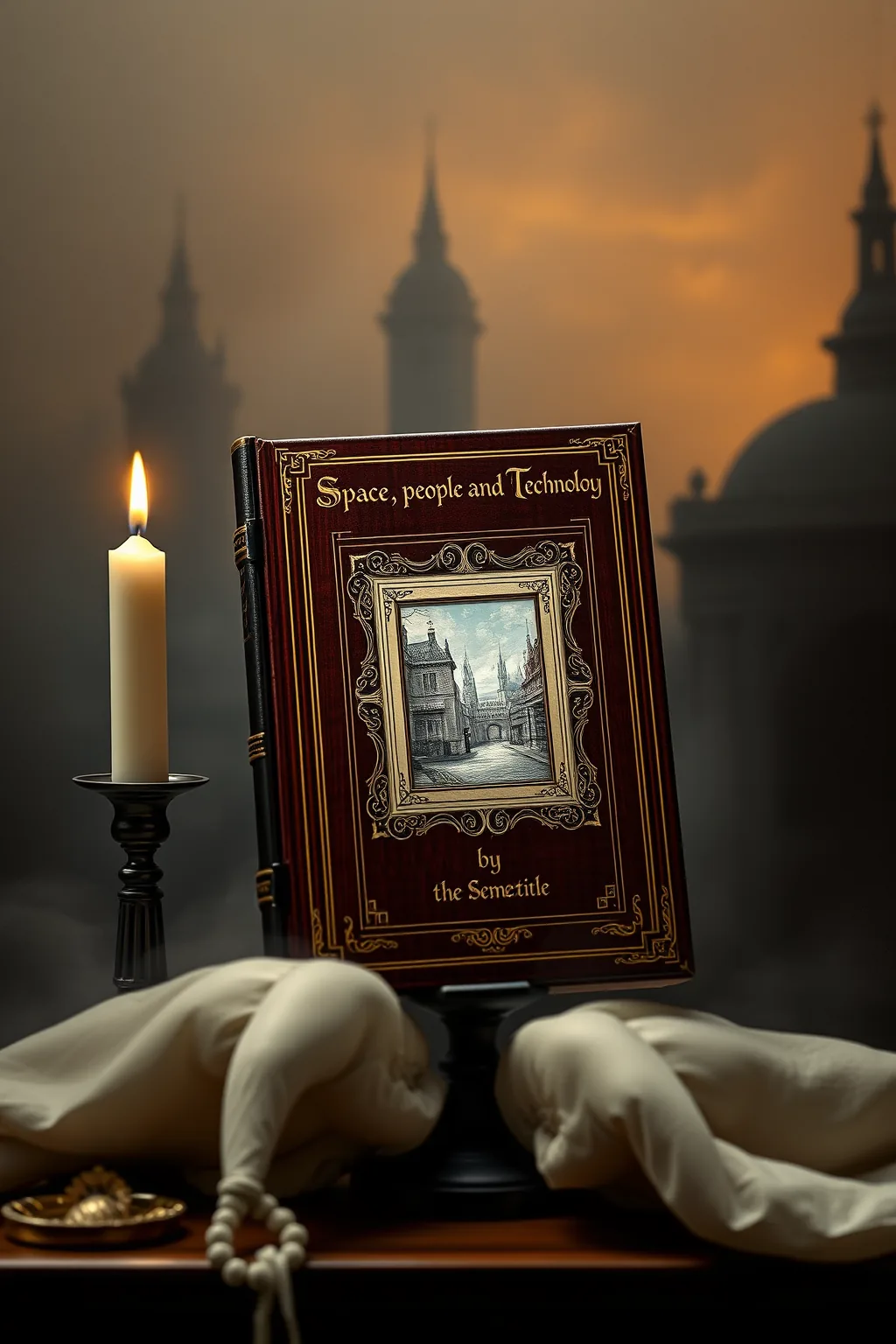
Space, people and technology - Reclaiming the narrative on cities
 83
83

Space, people and technology - Reclaiming the narrative on cities



Evander Ashcroft (Alchemy & Hermeticism Editor) — This anonymous tome is a revelation for initiates of urban hermeticism. It masterfully dissects the power of narrative not as mere discourse, but as a potent force shaping the material plane. The author, through insightful, albeit uncredited, wisdom, guides us to understand how shifting the symbolic language of our cities can unlock new dimensions of human potential and technological application. It’s a rare work that bridges the gap between the abstract principles of occult philosophy and the tangible realities of urban development. Esoteric scholars and forward-thinking city planners will find profound resonance within these pages, revealing the hidden levers of change in our concrete jungles.
📝 Description
83
Delve into the veiled architecture of our metropolises with 'Space, People and Technology: Reclaiming the Narrative on Cities.' This profound text unearths the hidden currents that shape our urban realities, revealing how the very stories we tell about our built environments dictate their form, influence human consciousness, and steer technological evolution. It's an alchemical exploration for those who understand that cities are not mere collections of bricks and mortar, but living, breathing entities shaped by collective belief and symbolic resonance. For the discerning seeker, the scholar of urban esoterica, or the practitioner aiming to manifest a more enlightened future, this book offers a potent key. It challenges the superficial understanding of urban planning, inviting readers to perceive the deeper energetic patterns and transformative potential inherent in spatial design. Uncover the lost language of cities and learn to rewrite their destinies, fostering spaces that resonate with purpose, harmony, and liberated possibility. This work is a beacon for those ready to engage with the metaphysical dimensions of our terrestrial habitations, moving beyond mundane pragmatism to embrace the visionary power of narrative.
💡 Why Read This Book?
This book is essential for anyone seeking to understand the unseen forces that govern our cities. It offers a unique lens through which to view urban transformation, emphasizing the power of narrative and symbolism. Ideal for seekers of hidden knowledge, scholars of esoteric urbanism, and practitioners aiming to consciously shape built environments.
⭐ Reader Reviews
Honest opinions from readers who have explored this book.
❓ Frequently Asked Questions
What is the primary thesis of this book?
The book argues that the narratives we construct around our cities profoundly influence their spatial design, the behavior of their inhabitants, and the direction of technological development. It calls for a conscious reshaping of these narratives to foster positive change.
Who is the intended audience for this book?
This book is for built environment professionals, urban planners, architects, social scientists, philosophers, and anyone interested in the deeper, often overlooked, influences on city development, particularly those with an esoteric or metaphysical inclination.
How does the book connect technology to urban narratives?
It posits that technological choices are not purely rational but are deeply embedded within existing narratives. By altering these foundational stories, we can steer technology towards more humanistic and sustainable outcomes.
Is this book a practical guide to city planning?
While it offers profound insights that can inform practical application, it is primarily a philosophical and theoretical exploration. It aims to shift perspectives rather than provide step-by-step instructions.
Why is the author anonymous?
The anonymity of the author may suggest a focus on the universality of the message, emphasizing that the wisdom transcends individual identity, or perhaps a deliberate choice to focus on the ideas themselves, allowing them to resonate without the weight of a specific personality.
🔮 Key Themes & Symbolism
The Alchemical City: Narrative as Transmutation
This theme explores how narrative functions as a powerful alchemical agent in the shaping of urban spaces. Just as alchemists sought to transmute base metals into gold, this book suggests that by consciously transforming the stories we tell about our cities—their histories, their futures, their very identities—we can transmute their physical and social structures. It delves into the symbolic language of urbanism, arguing that the metaphors, vocabularies, and representations employed by professionals hold immense power to invoke new imaginaries and broaden the scope of what is deemed possible in urban development. This is about understanding cities not just as material constructs, but as living tapestries woven from collective consciousness and belief systems, ripe for conscious transformation.
Spatial Consciousness and the Collective Unconscious
This section delves into the profound connection between spatial configurations and the collective unconscious, a concept resonant with Jungian psychology and deeper esoteric traditions. It posits that the layout, design, and symbolic resonance of our cities can either suppress or awaken latent potentials within humanity. The book invites readers to consider how built environments can act as conduits, either fostering fragmentation and alienation or promoting harmony and interconnectedness. It explores the idea that by consciously designing spaces that align with archetypal patterns and the subtle energies of human experience, we can tap into a deeper wellspring of creativity, intuition, and collective wisdom, thereby fostering environments that nurture rather than stifle human development.
Reclaiming the Visionary Blueprint: Technology and Intent
Here, the focus shifts to the intricate dance between technology and human intention within the urban landscape. The text critiques the unexamined embrace of technology, suggesting that its deployment is often driven by prevailing narratives rather than a deeper, intentional vision for human flourishing. It calls for a re-evaluation of our relationship with technology, urging professionals to imbue its application with conscious purpose. By understanding the narrative underpinnings of technological choices, we can begin to steer innovation towards outcomes that are not only efficient but also ethically resonant and spiritually enriching. This theme is a call to reclaim the power to envision and implement technologies that serve a higher purpose, fostering a future where human well-being and planetary harmony are paramount.
💬 Memorable Quotes
“The narrative is the hidden architect of the built world.”
— This quote highlights the central thesis that the stories and beliefs we hold about our environment are the unseen forces that shape its physical reality, dictating its form and function.
“To change the city, we must first change the language we use to describe it.”
— This emphasizes the transformative power of language and metaphor. Altering our vocabulary and descriptive methods can unlock new possibilities and perceptions for urban evolution.
“Technology bows to the story we tell it.”
— This profound statement suggests that technological development is not autonomous but is guided by the prevailing narratives and intentions embedded within society, implying a need for conscious direction.
“Every street corner holds an unwritten prophecy.”
— This evocative phrase speaks to the latent potential and future possibilities inherent in urban spaces, waiting to be realized through conscious narrative and design choices.
“We build not just structures, but psychic landscapes.”
— This quote expands the understanding of urban development beyond the material, asserting that cities profoundly influence our inner states and collective consciousness.
🌙 Esoteric Significance
Tradition
This work draws implicitly from traditions that explore the power of consciousness and symbolism in shaping reality, including hermetic philosophy, Jungian archetypal psychology, and certain strains of Western esotericism. It resonates with the hermetic principle of 'As Above, So Below,' suggesting a direct correlation between the spiritual or conceptual realm (narrative, imagination) and the material realm (the built environment). The focus on hidden influences and transformative potential aligns with the alchemical pursuit of spiritual and material perfection.
Symbolism
Key symbols at play include the city itself as a macrocosm reflecting the human psyche, the 'narrative' as the architect's blueprint or the magician's spell, and 'technology' as a tool that can either amplify or distort inherent potentials. The act of 'reclaiming' the narrative signifies a conscious act of will and discernment, akin to an initiate reclaiming lost wisdom or a magician mastering their craft to manifest a desired outcome.
Modern Relevance
In an age saturated with complex urban challenges—from housing crises and social inequality to climate change and digital saturation—this book's emphasis on narrative offers a potent, albeit unconventional, tool. By understanding how our collective stories shape these issues, we can begin to consciously craft new narratives that foster empathy, promote sustainable practices, and guide technological development toward more humane ends. Its relevance lies in empowering individuals and communities to become active co-creators of their urban futures, rather than passive recipients of predetermined paths.
👥 Who Should Read This Book
This book is a vital resource for a diverse readership. **Beginners** seeking to understand the deeper, often unseen, forces shaping their daily urban experiences will find an accessible entry point into philosophical urbanism. **Scholars** of urban planning, sociology, and cultural studies will discover a fresh, interdisciplinary perspective that challenges conventional paradigms. **Seekers** interested in the intersection of consciousness, symbolism, and the material world will find profound resonance with its esoteric underpinnings. **Practitioners** in architecture, design, and community development are urged to engage with this text to unlock more potent and transformative methods for creating spaces that truly serve humanity.
📜 Historical Context
Emerging from an era increasingly grappling with the social and environmental consequences of rapid urbanization and technological advancement, 'Space, People and Technology' reflects a growing intellectual current seeking to move beyond purely empirical or technocratic approaches to urbanism. The late 20th and early 21st centuries witnessed a surge in critical theory, post-structuralism, and a renewed interest in the humanities' role in understanding complex societal issues. This book aligns with that trajectory, offering a perspective that acknowledges the profound influence of meaning-making, symbolism, and subjective experience on the material world. It stands as a testament to the evolving discourse that recognizes the limitations of solely quantitative analysis in addressing the multifaceted challenges of contemporary urban life, seeking instead to integrate philosophical and even spiritual dimensions into the conversation.
📔 Journal Prompts
What dominant narratives shape the city you inhabit? How do these narratives manifest in its physical form and social dynamics?
Identify a specific urban space. What alternative narratives could be woven around it to transform its perceived purpose or atmosphere?
How has a particular piece of technology influenced your experience of a city, and what underlying narrative might have driven its development?
Reflect on a time when a story, film, or piece of art significantly altered your perception of a place. How did this shift in narrative impact your experience?
Consider the concept of 'reclaiming the narrative.' What personal or collective power do you possess to influence the stories that define our built environments?
🗂️ Glossary
Narrative
In this context, narrative refers to the overarching stories, beliefs, metaphors, and vocabularies that shape our understanding and perception of urban spaces, influencing design decisions and human behavior.
Built Environment
Encompasses all human-made surroundings that provide the setting for human activity, including buildings, infrastructure, and public spaces.
Spatial Transformation
The process of altering the physical form, organization, and meaning of urban spaces, often driven by changes in social, economic, or ideological factors.
Imaginaries
Collective visions and mental constructs that shape how people conceive of possible futures and realities, particularly in relation to urban development and technological advancement.
Esoteric
Relating to or accessible only by a small number of people with specialized knowledge or interest; dealing with hidden meanings or spiritual truths.