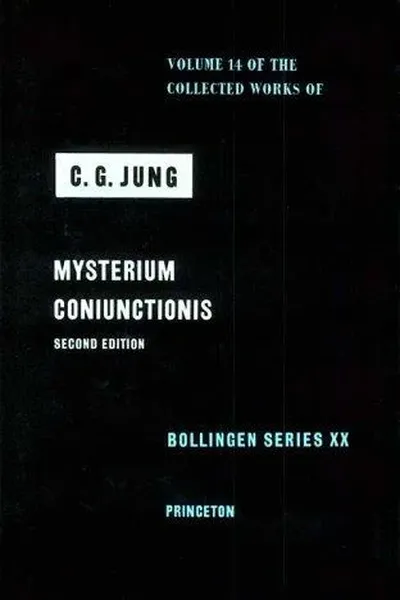
On the nature of the psyche

 74
74

On the nature of the psyche
Jung's *On the Nature of the Psyche* offers a dense but indispensable map of the inner world. While the prose can be challenging, demanding careful attention, its value lies in the sheer originality of Jung's conceptual framework. The exploration of the collective unconscious and its archetypal inhabitants provides a compelling alternative to purely biological or sociological explanations of human motivation. However, the work’s highly theoretical nature and occasional reliance on abstract metaphysical speculation can be a hurdle for those accustomed to empirical psychology. A particularly illuminating section details the concept of the Shadow, emphasizing its necessity for individuation rather than mere suppression. For anyone seeking to understand the deeper currents of the human mind, this book remains a vital, if demanding, resource.
📝 Description
74
### What It Is This collection presents Carl Gustav Jung's seminal explorations into the architecture of the human psyche, originally published in 1969. It is not a simple self-help manual but a rigorous academic inquiry into the unconscious mind, its structures, and its symbolic language. Jung posits the psyche as a dynamic system, constantly striving for balance and wholeness through a process he termed individuation.
### Who It's For Scholars of depth psychology, students of comparative mythology, and serious practitioners of esoteric traditions will find this work foundational. It is for those who seek to understand the archetypal patterns underlying human behavior and the symbolic currents that shape our inner and outer lives. Readers must be prepared for dense theoretical material and a departure from conventional psychological frameworks.
### Historical Context Published in the post-war era, Jung's work emerged from a milieu where psychoanalysis, initially dominated by Freud's libido theory, was expanding. Jung’s own split from Freud in 1913 over the nature of psychic energy and the collective unconscious marked a significant divergence. This period saw increasing interest in non-Western philosophies and a growing acceptance of the symbolic dimensions of human experience, moving beyond purely materialistic explanations.
### Key Concepts The book systematically introduces and elaborates on Jung's unique conceptual apparatus. This includes the collective unconscious, a reservoir of latent psychic structures inherited by all humanity; archetypes, universal patterns of imagery and instinctual behavior such as the Shadow, Anima/Animus, and the Self; and the process of individuation, the lifelong journey of psychological integration and self-realization. Jung also details the function of dreams, active imagination, and synchronicity as vital expressions of the psyche's inner workings.
💡 Why Read This Book?
• Gain an understanding of the collective unconscious, a concept introduced by Jung that posits a shared psychic inheritance across humanity, distinct from personal experience. • Explore the archetype of the Self, a central motif in Jung's work representing wholeness and the ultimate goal of individuation, a process detailed throughout the text. • Learn about synchronicity, a principle of acausal connection that Jung developed to explain meaningful coincidences, a concept first elaborated in his later works.
⭐ Reader Reviews
Honest opinions from readers who have explored this book.
❓ Frequently Asked Questions
When was Carl Gustav Jung's 'On the Nature of the Psyche' first published?
The work was first published in 1969, reflecting decades of Jung's research and theoretical development in analytical psychology.
What is the 'collective unconscious' as described by Jung?
Jung's collective unconscious is a deeper layer of the psyche, distinct from the personal unconscious, containing inherited, universal patterns of thought and imagery known as archetypes.
What is Jung's concept of 'individuation'?
Individuation is the psychological process of integrating the conscious and unconscious aspects of the self to achieve wholeness and self-realization, a lifelong journey Jung extensively explored.
How does Jung view the role of dreams?
Jung saw dreams as vital messages from the unconscious, offering compensatory perspectives and symbolic guidance towards psychological balance and self-understanding.
What are 'archetypes' in Jungian psychology?
Archetypes are universal, archaic patterns and images that derive from the collective unconscious and are the psychic counterpart of instinct. Examples include the Mother, the Hero, and the Shadow.
Is this book suitable for beginners in psychology?
While foundational, the book is dense and theoretical, best suited for those with some prior exposure to psychological concepts or a strong interest in esoteric thought.
🔮 Key Themes & Symbolism
Archetypal Structures
This theme centers on Jung's concept of archetypes, which he proposed as universal, innate psychic dispositions that structure human experience. These are not inherited ideas but rather innate tendencies to perceive, feel, and act in certain ways, manifesting in myths, symbols, and dreams across cultures. The book details figures like the Shadow, Anima/Animus, and the Wise Old Man as expressions of these fundamental patterns of the collective unconscious, influencing individual consciousness and behavior profoundly.
Individuation Process
The core of Jung's therapeutic and philosophical project is individuation, the lifelong process of psychological differentiation and integration. It involves becoming one's true, whole self by consciously confronting and integrating unconscious material, including repressed aspects (the Shadow) and contrasexual elements (Anima/Animus). The goal is not perfection but wholeness, a state where the conscious ego is in dynamic balance with the vast unconscious, guided by the archetype of the Self.
The Collective Unconscious
Jung posited the collective unconscious as a distinct psychic layer shared by all humanity, comprising inherited structures and potentials. Unlike the personal unconscious, which holds repressed individual experiences, the collective unconscious contains archetypes that manifest universally in symbols, myths, and dreams. This concept provides a framework for understanding commonalities in human behavior and belief systems across diverse cultures and historical periods.
Symbolism and Meaning
The book emphasizes the crucial role of symbols in expressing the dynamics of the unconscious. Jung viewed symbols not as fixed signs but as fluid, multi-layered expressions of psychic realities that cannot be fully articulated in rational terms. Dreams, fantasies, and active imagination are primary channels through which these symbols emerge, offering vital clues to the psyche's quest for meaning and integration.
💬 Memorable Quotes
“The psychological reason for the existence of the shadow is that man is confronted with the same moral problem in every situation.”
— This highlights Jung's view that confronting one's darker, repressed aspects (the Shadow) is not merely an unpleasant task but a fundamental moral imperative for psychological development and self-awareness.
“We are today so given to the prejudice of the intellect that we have forgotten that the intellect is itself an organ of the psyche.”
— Jung here critiques the overemphasis on rational thought in modern society, reminding readers that the intellect is just one faculty of the psyche, and neglecting others can lead to imbalance.
“The whole point of the individuation process is to come to terms with the unconscious.”
— This encapsulates the central aim of Jung's work: that true self-realization involves a conscious engagement with and integration of the unconscious elements of the psyche.
“The greatest and indeed the most fundamental problem of psychopathology is the problem of meaning.”
— Jung suggests that a lack of meaning or purpose is a significant source of psychological distress, and finding meaning is crucial for mental health and well-being.
“Synchronicity is an acausal connecting principle.”
— This defines Jung's concept of synchronicity, which describes meaningful coincidences that occur without a discernible causal link, suggesting an underlying order in the universe.
🌙 Esoteric Significance
Tradition
Jung's work draws heavily from and significantly reinterprets elements of Western esoteric traditions, including Gnosticism, Hermeticism, and alchemy, alongside Eastern philosophies like Buddhism and Taoism. While not strictly adhering to any single lineage, he synthesized their symbolic language and transformative goals into his analytical psychology. His concept of individuation can be seen as a modern psychological interpretation of ancient paths to spiritual realization and wholeness.
Symbolism
Key symbols explored include the mandala, representing wholeness and the Self, often appearing in dreams and active imagination as a unifying motif. The alchemical process, with its stages of transformation (nigredo, albedo, rubedo), is interpreted by Jung as a symbolic representation of psychological integration. The archetype of the Shadow, representing the repressed, darker aspects of the personality, is another central symbol whose integration is vital for individuation.
Modern Relevance
Contemporary movements in transpersonal psychology, depth psychotherapy, and various forms of spiritual but not religious (SBNR) practice owe a substantial debt to Jung's concepts. His exploration of archetypes, the unconscious, and symbolic meaning continues to inform therapeutic approaches, myth criticism, and the search for meaning in a secularized world. Thinkers and practitioners in Jungian analysis, archetypal psychology, and even some branches of consciousness studies directly engage with his foundational ideas.
👥 Who Should Read This Book
• Students of analytical psychology and depth psychology seeking to grasp Jung's core concepts like the collective unconscious and archetypes. • Scholars of comparative religion and mythology interested in the psychological underpinnings of universal symbols and narrative structures. • Individuals on a personal growth path who wish to understand the symbolic language of their own unconscious through dreams and introspection.
📜 Historical Context
Carl Gustav Jung's *On the Nature of the Psyche*, first published in 1969, emerged in a post-World War II intellectual climate marked by a growing disillusionment with purely materialistic explanations and a renewed interest in the subjective and symbolic dimensions of human experience. Jung's work stood in contrast to the prevailing Freudian psychoanalysis, having diverged significantly after his 1913 split with Freud. While Freud focused primarily on repressed sexuality as the root of neurosis, Jung expanded the concept of the unconscious to include a collective layer populated by archetypes. This era also saw the influence of thinkers like Mircea Eliade and Joseph Campbell, who explored comparative mythology and religious phenomenology, providing fertile ground for Jung's ideas. The reception of Jung's work was often polarized, with some academic circles dismissing it as mystical or unscientific, while others embraced its depth and breadth, particularly within burgeoning fields like depth psychology and existentialism.
📔 Journal Prompts
The archetype of the Shadow: its manifestations in your personal experience.
Reflect on recurring symbols in your dreams and their potential meanings.
The concept of synchronicity: instances of meaningful coincidence in your life.
The process of individuation: current challenges and steps towards wholeness.
The nature of the collective unconscious: connections to universal human themes.
🗂️ Glossary
Archetype
Universal, archaic patterns and images that derive from the collective unconscious and are the psychic counterpart of instinct. They influence how we perceive the world and behave.
Collective Unconscious
A layer of the unconscious psyche that is not individual but universal, shared by all humans, containing archetypes derived from ancestral experience.
Individuation
The psychological process of integrating the conscious and unconscious aspects of the personality to achieve wholeness and self-realization.
Shadow
The unconscious, often repressed, aspects of the personality that the conscious ego does not identify with. Integration of the Shadow is key to individuation.
Anima/Animus
The contrasexual aspect of the psyche: the Anima is the feminine element in the male psyche, and the Animus is the masculine element in the female psyche.
Self
The archetype of wholeness, representing the totality of the psyche, conscious and unconscious. It is the goal of the individuation process.
Synchronicity
A principle of acausal connection, describing meaningful coincidences that occur between inner psychic states and outer physical events.