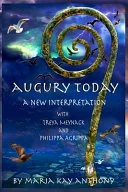
Augury Today - a New Interpretation
 81
81

Augury Today - a New Interpretation
Maria Anthony's "Augury Today" attempts to demystify a practice often shrouded in superstition, framing it instead as an exercise in applied naturalism. The strength of the work lies in its clear delineation between observation and prediction, urging readers to see augury as a method of informed deduction. Anthony compellingly argues that the augur's skill is akin to a naturalist's, deciphering the 'signs, or omens' of the sky. However, the book sometimes struggles to fully bridge the gap between its practical interpretation and the deeply ingrained spiritual context of ancient augury. While the illustration of a Roman augur consulting the heavens is visually striking, the text could benefit from more detailed examples of specific deductions made in antiquity, moving beyond the general principle. The work is a valuable primer for those seeking a secular understanding of augury, but may leave practitioners accustomed to traditional interpretations wanting more.
📝 Description
81
Maria Anthony's 2023 'Augury Today' reinterprets Roman bird divination as a system of natural observation.
Augury Today, by Maria Anthony, offers a new look at the ancient practice of interpreting omens, specifically through bird behavior. Anthony argues that augury was less about supernatural messages and more about a careful system of observing and deducing meaning from the natural world. The book focuses on how to develop sharp observation skills, patience, and introspection to find significant signs in one's surroundings. It draws parallels between the historical role of the augur and modern practices of mindful awareness.
This book is for people interested in esoteric practices, natural philosophy, and historical divination. It presents a grounded, non-superstitious way to understand these methods. Readers will find connections to ancient Roman religion, mindfulness, and how past cultures understood natural events. The book is 65 pages long and includes illustrations, making it suitable for newcomers to the subject as well as those already familiar with divination.
This work places augury within a broader esoteric tradition that values direct observation of the natural world for insight. Unlike practices focused solely on internal states or esoteric texts, augury, as presented here, connects the practitioner to external phenomena. It aligns with traditions that see the universe as a text to be read, emphasizing skills like attentiveness and pattern recognition. The book positions this ancient discipline as a practical method for understanding subtle cues, relevant to contemporary interests in intuition and ecological awareness.
💡 Why Read This Book?
• Gain a practical framework for interpreting natural signs, moving beyond superstition to informed deduction, as detailed in the book's focus on "informed deductions" from observing the natural world. • Understand the historical role of augury in Roman society, recognizing its function as a state institution influencing decisions around 3rd century BCE, not merely fortune-telling. • Cultivate enhanced observational skills and introspection, learning to perceive meaningful patterns in everyday life by adopting the augur's patient study approach.
⭐ Reader Reviews
Honest opinions from readers who have explored this book.
❓ Frequently Asked Questions
What is the primary difference between traditional augury and the interpretation presented in Augury Today?
Augury Today frames augury as a practice of informed deduction based on observing the natural world, rather than a supernatural or mystical method of fortune-telling. It emphasizes keen observation and introspection over divination.
Who was Maria Anthony, and when was Augury Today first published?
Maria Anthony is the author of Augury Today. The book was first published on August 5, 2025, offering a contemporary look at the ancient practice.
What kind of illustrations are included in the book?
The book is fully illustrated, providing visual aids to help readers understand the concepts and methods of augury as presented by Maria Anthony.
How long is Augury Today, and is it suitable for beginners?
At 65 pages, Augury Today is a concise guide. Its accessible approach and focus on practical observation make it suitable for beginners interested in esoteric practices and natural philosophy.
Does the book discuss the religious significance of augury in ancient Rome?
While emphasizing observation, the book acknowledges the historical context of augury. It touches upon the belief that birds offered insights into the will of the gods, situating the practice within its ancient Roman religious framework.
Can anyone learn to be an augur according to this book?
Yes, Maria Anthony suggests that with patience, study, and introspection, anyone can learn to be an augur. The book aims to equip readers with the necessary observational skills and mindset.
🔮 Key Themes & Symbolism
Observation as Deduction
The book reframes augury from mere prediction to a rigorous practice of observing natural phenomena, particularly avian behavior, and drawing informed conclusions. It champions the idea that understanding the 'signs, or omens' requires developing sharp observational faculties akin to a naturalist. This approach moves augury away from supernatural claims and grounds it in a philosophy of attentive engagement with the world, suggesting that patterns in nature hold inherent meaning accessible through careful study and introspection.
The Augur's Mindset
Anthony emphasizes that becoming an augur involves cultivating specific mental disciplines: patience, dedicated study, and deep introspection. This internal cultivation is presented as crucial for discerning the will of the gods or simply understanding the world's subtle communications. The work suggests that this disciplined mindset is not exclusive to ancient practitioners but can be developed by modern individuals seeking to enhance their awareness and connection to their environment.
Nature as a Source of Insight
Central to Augury Today is the belief that creatures of the sky, like birds, offer useful insights. The book explores how these natural elements can serve as conduits for understanding larger cosmic or divine intentions. It encourages readers to view the natural world not as a backdrop, but as an active participant in communicating information, accessible to those willing to learn its language through diligent observation and reflection.
Distinguishing Augury from Fortune-Telling
A significant theme is the clear separation of augury from simplistic fortune-telling. Anthony argues that true augury involves analytical interpretation of observed events, not arbitrary pronouncements of future events. This distinction highlights augury as an intellectual pursuit that requires skill and knowledge, positioning it as a precursor to scientific observation rather than a form of occult magic.
💬 Memorable Quotes
Direct passages from the work, attributed to the author.
“Birds, as creatures of the sky, can provide insights into the will of the gods.”
— This foundational statement captures the ancient premise of augury, suggesting a belief in a divine communication channel through avian activity, which the book then seeks to interpret through a more rational lens.
“Augury is more about making informed deductions based on observations of the natural world than it is about fortune-telling or supernatural forces.”
— This is a core reinterpretation offered by Anthony, shifting the focus from mystical divination to a practical, observational discipline grounded in empirical evidence from nature.
“Augurs employ their observational skills to understand signs, or omens.”
— This highlights the practical methodology of the augur, emphasizing the active role of observation in identifying and interpreting meaningful patterns within the environment.
“With patience, study and introspection, anyone can learn to be an augur.”
— This encourages readers by suggesting that the skills required for augury are attainable through personal development and dedicated practice, making the ancient art accessible today.
“The book is 65 pages, and is fully illustrated.”
— This factual statement conveys the book's concise and visually supported format, indicating an accessible and engaging presentation of its subject matter.
🌙 Esoteric Significance
Tradition
Augury, as presented in "Augury Today," can be seen as a precursor to certain Hermetic and Natural Magic traditions. While not explicitly Kabbalistic or Gnostic, its emphasis on discerning divine will through observable phenomena aligns with the Hermetic principle of 'As Above, So Below.' It shares with Renaissance natural magic a focus on understanding and interacting with the forces of nature, albeit with a more structured, observational methodology rather than purely sympathetic magic.
Symbolism
The primary symbols in augury are the birds themselves and their observed behaviors (flight patterns, vocalizations, feeding habits), which are interpreted as 'signs, or omens.' The sky serves as the celestial canvas upon which these divine messages are written. The augur's sacred space (the 'templum') also symbolizes a controlled, divinely ordained observational field, representing the intersection of the earthly and the divine for interpretation.
Modern Relevance
Contemporary interest in mindfulness, deep ecology, and secular spirituality finds echoes in "Augury Today's" reinterpretation. Thinkers and practitioners focusing on ecological awareness, intuitive development, and nature-based spirituality may draw parallels to the augur's attentive observation. The book's demystification of ancient practices also appeals to modern Esotericism seeking grounded, historical approaches divorced from purely supernatural claims.
👥 Who Should Read This Book
• Students of ancient Roman history and religion seeking to understand the practical application and societal role of augury beyond superficial descriptions. • Individuals interested in comparative divination systems who want to explore a less mystical, more observational approach to interpreting natural signs. • Aspiring practitioners of natural magic or mindfulness who wish to cultivate heightened observational skills and a deeper connection to the natural world through historical frameworks.
📜 Historical Context
Augury held significant sway in ancient Rome, functioning as a vital state institution from its early republican days. The practice, believed to have been codified by figures like Marcus Terentius Varro, served to ascertain divine will before any major civic or military undertaking. Its roots trace back to Etruscan traditions, demonstrating a long-standing practice in the Italian peninsula. By the late Republic and into the Empire, augury was intertwined with political power, with colleges of augurs wielding considerable influence. While pagan practices waned, the intellectual framework of interpreting natural signs persisted in various forms. The work of Cicero, who wrote extensively on the subject in works like 'De Divinatione,' provides critical contemporary commentary, often debating its philosophical validity against Stoic rationalism. Despite later philosophical critiques and the eventual rise of Christianity, the concept of observing nature for meaning left an indelible mark on Western thought.
📔 Journal Prompts
Reflect on a specific bird or natural sign you have observed recently. What deductions could be made?
Consider the concept of 'informed deductions' from the natural world. How does this differ from random guessing?
Analyze the role of 'patience, study, and introspection' in your own learning processes.
How does the idea of 'signs, or omens' manifest in modern life, outside of traditional augury?
Explore the distinction between observing natural phenomena and attributing supernatural significance.
🗂️ Glossary
Augury
The practice of interpreting omens, particularly through the observation of bird behavior, to understand divine will or predict future events.
Signs, or Omens
Observable natural phenomena, such as bird movements or calls, that are interpreted as carrying significant meaning or indication.
Informed Deductions
Conclusions drawn based on careful observation and analysis of natural events, rather than on superstition or guesswork.
Introspection
The examination or observation of one's own mental and emotional processes, crucial for developing self-awareness and interpretive skill.
Natural World
The physical environment and all living things, considered as the source of observable phenomena and potential omens.
Divination
The practice of seeking knowledge of the future or the unknown by supernatural means; contrasted with augury's observational approach.
Avian Behavior
The actions and reactions of birds, including their flight patterns, vocalizations, and social interactions, as observed in augury.
This book appears in 1 collection
🔮 Readers Also Liked
Browse all →









From the “Augury” Collection
View all →








More Free Occult Philosophy Books
View all →