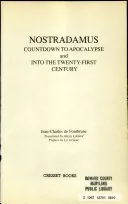
Nostradamus, countdown to Apocalypse

 74
74

Nostradamus, countdown to Apocalypse
Jean-Charles de Fontbrune's "Nostradamus, Countdown to Apocalypse" offers a dense, almost scholarly, attempt to impose order on the famously opaque quatrains of Nostradamus. De Fontbrune's strength lies in his meticulous cross-referencing of verses and his ambition to construct a coherent, chronological narrative from the prophecies. He succeeds in presenting a case for a structured prophetic timeline, a feat few interpreters achieve with such apparent rigor. However, the book's limitation is its inherent subjectivity. While de Fontbrune anchors his interpretations to specific historical events, the leap from a coded verse to a definitive future prediction remains an act of faith rather than demonstrable fact. The section detailing the 'Great Cataclysm' offers a compelling, if unsettling, vision, but it relies heavily on the reader accepting de Fontbrune's interpretive framework wholesale. This is a work for those already inclined to believe in the predictive power of Nostradamus, offering a detailed, if speculative, roadmap for their convictions.
📝 Description
74
Jean-Charles de Fontbrune's 1983 book attempts a systematic decryption of Nostradamus's prophecies.
Published in 1983, Nostradamus, Countdown to Apocalypse offers an extensive look at the prophecies attributed to Michel de Nostredame. Jean-Charles de Fontbrune moves beyond simple presentation of the quatrains, instead aiming for a systematic decryption and interpretation. His work connects these verses to specific historical events and suggests potential future occurrences.
De Fontbrune's method is analytical. He searches for chronological order and patterns within Nostradamus's cryptic writings. The book addresses readers interested in apocalyptic literature and prophetic traditions. It is especially suited for those who study esoteric history and figures whose pronouncements have influenced cultural anxieties. Individuals curious about the intersection of history, esotericism, and speculation about the future will find much to consider.
This book emerged in the early 1980s, a time when global political tensions fueled a renewed interest in Nostradamus. Many interpretations of prophetic texts sought to align them with contemporary events. De Fontbrune's work participated in this discourse, providing a structured, though speculative, framework for understanding the prophecies. It positions itself within a tradition of esotericism focused on decoding future events through cryptic verse.
💡 Why Read This Book?
• Learn how Jean-Charles de Fontbrune attempts to chronologically order Nostradamus's quatrains, a specific interpretive method that provides a structured approach to prophecy. • Understand de Fontbrune's interpretation of key figures and events, such as the 'Great Antichrist,' which offers a concrete example of esoteric exegesis. • Gain insight into the reception of Nostradamus's work in the early 1980s, a specific period of heightened interest in apocalyptic predictions.
⭐ Reader Reviews
Honest opinions from readers who have explored this book.
❓ Frequently Asked Questions
What is the primary focus of Jean-Charles de Fontbrune's "Nostradamus, Countdown to Apocalypse"?
The book's primary focus is the systematic decryption and chronological interpretation of Nostradamus's quatrains, linking them to historical events and speculative future occurrences.
When was "Nostradamus, Countdown to Apocalypse" originally published?
The book was first published in 1983, a period of significant interest in prophetic literature.
Does the book offer specific predictions for the future?
Yes, the book attempts to interpret Nostradamus's verses as predictions for future events, including potential cataclysms and the emergence of significant figures.
Who was Michel de Nostredame?
Michel de Nostredame, known as Nostradamus, was a 16th-century French astrologer and physician reputed to have written prophecies foretelling future events.
What is the 'Great Antichrist' mentioned in the book?
The 'Great Antichrist' is a recurring theme in apocalyptic prophecies, often interpreted as a malevolent figure or force that will precede a period of great tribulation, which de Fontbrune seeks to identify within Nostradamus's work.
Is this book suitable for beginners in Nostradamus studies?
The book is detailed and assumes some familiarity with Nostradamus's quatrains, but its structured approach can be beneficial for serious students of the subject.
🔮 Key Themes & Symbolism
Chronological Interpretation
De Fontbrune's central thesis is that Nostradamus's quatrains are not random but form a coherent chronological sequence of events. He meticulously attempts to align specific verses with known historical occurrences, from the French Revolution to World Wars, arguing for a divine or at least highly ordered prophetic structure. This approach seeks to move beyond generalized interpretations to a more precise, dateable prophetic timeline.
Apocalyptic Figures
The work engages deeply with the archetypal figures of apocalyptic prophecy, particularly the 'Great Antichrist' and the 'King of Terror.' De Fontbrune identifies these figures within the quatrains, suggesting they represent specific historical individuals or forces destined to play pivotal roles in future global conflicts and societal collapse. This theme reflects a long-standing tradition of interpreting prophecies through the lens of eschatology.
Decryption of Quatrains
A significant portion of the book is dedicated to the process of deciphering the often-obscure language and symbolism of Nostradamus's four-line poems. De Fontbrune employs linguistic analysis, historical context, and cross-referencing between quatrains to unlock their supposed hidden meanings. The method aims to reveal specific predictions about political upheavals, natural disasters, and the ultimate fate of humanity.
Future Cataclysms
The 'Countdown' aspect of the title points to the book's focus on impending global crises. De Fontbrune extrapolates from the prophecies to outline a potential sequence of catastrophic events, including widespread warfare, environmental disasters, and societal breakdown. This theme taps into enduring anxieties about the end of times and the potential for humanity's self-destruction.
💬 Memorable Quotes
“Nostradamus's quatrains possess a hidden order.”
— This interpretation suggests de Fontbrune's core belief: that the prophecies are not chaotic but intentionally structured, forming a discernible timeline of future events waiting to be unlocked through careful study.
“The Great Antichrist will emerge from the East.”
— This paraphrased concept highlights de Fontbrune's attempt to pinpoint the origin and nature of a prophesied antagonist, linking a specific directional clue from the quatrains to a geopolitical context.
“A great king will be born near Italy.”
— This concept illustrates de Fontbrune's method of mapping prophetic verses to specific geographical locations and notable individuals, suggesting a concrete prediction about a future leader's origins.
“The prophecies chart a path towards inevitable destruction.”
— This interpretation reflects the book's overarching theme of an apocalyptic countdown, where the verses are seen as delineating a series of escalating crises leading to a final cataclysm.
“Cross-referencing quatrains reveals hidden connections.”
— This highlights de Fontbrune's analytical technique, emphasizing his belief that the true meaning of individual verses is illuminated when they are studied in relation to one another.
🌙 Esoteric Significance
Tradition
This work fits within the Western esoteric tradition of prophetic interpretation, specifically focusing on the lineage of channeling and deciphering divinely or cosmically inspired pronouncements. It draws upon the historical precedent set by Nostradamus himself, who operated within a Renaissance milieu where astrology and divination were integrated into intellectual life. De Fontbrune's method can be seen as an attempt to update these ancient practices for a modern, scientific age, seeking empirical validation for prophetic claims.
Symbolism
Key symbols de Fontbrune analyzes include animalistic imagery often associated with destructive forces (e.g., 'the great beast,' 'the eagle') and celestial events (e.g., eclipses, comets) which Nostradamus frequently used to mark significant temporal junctures. These symbols, within the esoteric tradition, often represent archetypal forces of chaos and transformation, or specific astrological configurations believed to influence earthly events, marking periods of great upheaval.
Modern Relevance
De Fontbrune's meticulous, albeit speculative, approach to interpreting Nostradamus continues to influence contemporary discussions on prophecy and eschatology. Modern internet forums, self-published works, and even some fringe academic discussions on historical prophecy reference his chronological interpretations. His attempt to create a verifiable timeline from cryptic verses resonates with those seeking concrete evidence of prophetic accuracy in an age of information overload and existential uncertainty.
👥 Who Should Read This Book
• Students of Western esotericism interested in the history of prophecy and divination, seeking to understand how figures like Nostradamus are interpreted. • Researchers of apocalyptic literature and cultural anxieties, particularly those examining how end-times narratives have evolved from the Renaissance to the late 20th century. • Enthusiasts of historical cryptography and pattern recognition, who appreciate attempts to decode complex, multi-layered texts like Nostradamus's quatrains.
📜 Historical Context
Jean-Charles de Fontbrune's "Nostradamus, Countdown to Apocalypse" emerged in 1983, a period marked by Cold War anxieties and a broader cultural fascination with end-times prophecies. The era saw a surge in literature interpreting Nostradamus, often seeking to align his 16th-century verses with contemporary geopolitical events, particularly the nuclear standoff between the US and USSR. De Fontbrune's work stood out for its ambitious attempt to create a precise chronological framework for the prophecies, a more structured approach than many of his contemporaries. This period also saw continued interest in Theosophy and other esoteric movements that often incorporated prophetic traditions into their worldviews. While not directly engaging with academic historians, de Fontbrune's book contributed to a popular discourse that often ran parallel to, or in reaction against, more rationalist interpretations of history and prophecy.
📔 Journal Prompts
The chronological ordering of Nostradamus's quatrains proposed by de Fontbrune.
The symbolic meaning of the 'Great Antichrist' within de Fontbrune's interpretive framework.
De Fontbrune's method for cross-referencing quatrains.
The historical events de Fontbrune links to the quatrains.
The concept of a 'countdown' to apocalypse as presented in the book.
🗂️ Glossary
Quatrain
A stanza of four lines, specifically referring to the four-line verses composed by Nostradamus, which form the basis of his prophecies.
Great Antichrist
A figure appearing in apocalyptic Christian theology and prophecy, often seen as a powerful, malevolent entity or force preceding the end times, which interpreters like de Fontbrune seek to identify.
King of Terror
Another apocalyptic figure or event referenced in some prophetic traditions, often associated with a period of intense suffering and destruction preceding a divine intervention or final judgment.
Decryption
The process of deciphering or decoding a message or text, in this context, referring to de Fontbrune's efforts to reveal the hidden meanings within Nostradamus's cryptic verses.
Eschatology
The branch of theology and philosophy concerned with the study of final events of history, or the ultimate destiny of humanity and the world, often involving concepts of apocalypse and the end times.
Chronological Interpretation
An interpretive method that seeks to arrange prophetic verses or events in a specific sequence according to time, establishing a timeline of predicted occurrences.
Renaissance
The historical period in Europe roughly from the 14th to the 17th century, characterized by a revival of classical art, architecture, and literature, during which Nostradamus lived and wrote.