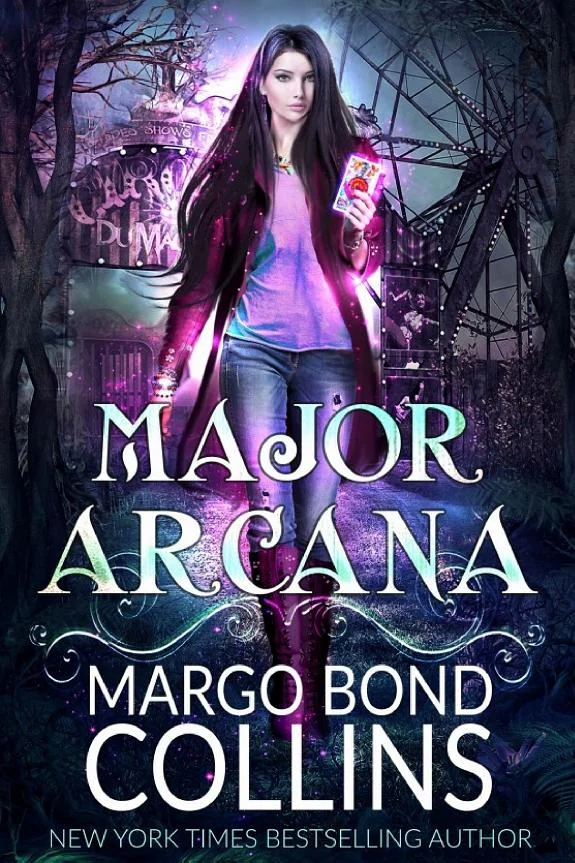
Major Arcana
 76
76

Major Arcana
Margo Bond Collins’ Major Arcana offers a charming, if somewhat predictable, exploration of a teenage fortune teller finding love and a deeper connection to her craft. The central premise – a carnival fortune teller discovering new magic through a townie romance – is engaging. Collins’ strength lies in her ability to portray the initial spark between the protagonist and her love interest, making their interactions feel genuine. However, the narrative’s reliance on familiar tropes within the YA romance and esoteric fiction genres means that some plot points feel less surprising than they might. A particularly well-handled moment involves the protagonist interpreting the Wheel of Fortune card not just as fate, but as a catalyst for her own agency. Ultimately, Major Arcana delivers a sweet, accessible story for those seeking a light touch of tarot-infused romance.
📝 Description
76
Margo Bond Collins' 2017 novel, Major Arcana, uses tarot cards to explore a young fortune teller's life.
In 2017, Margo Bond Collins published Major Arcana, a story centered on a young fortune teller whose life changes through her experiences with tarot cards. The narrative unfolds within the vibrant setting of a traveling carnival, where she forms a connection with a local man. This relationship introduces a new layer of magic to her existing divination practice, moving beyond simple fortune-telling into something more personal and transformative. The book focuses on how the symbolism of the Major Arcana cards is interpreted through the protagonist's personal experiences and relationships. It examines themes of fate, self-understanding, and the surprising ways enchantment can appear in ordinary circumstances. The story is driven by its characters and their development, weaving a magical element into their everyday lives.
Published in 2017, Major Arcana engages with the long history of cartomancy, a practice that saw significant formalization in the 19th century. While drawing on the rich symbolic language of the Major Arcana, the novel offers a contemporary, character-focused interpretation. It connects this tradition to modern sensibilities, viewing tarot not just as a predictive tool but as a means for personal insight and magical manifestation within everyday life.
💡 Why Read This Book?
• You will learn how the symbolism of the Major Arcana tarot deck can be interpreted through the lens of personal relationships, as seen in the protagonist’s evolving understanding of her cards. • You will feel the unique blend of carnival atmosphere and romantic awakening, experiencing a narrative that captures the magic of unexpected connections. • You will gain insight into how contemporary fiction reinterprets traditional divination tools, specifically how Margo Bond Collins uses the tarot in a 2017 setting to explore self-discovery.
⭐ Reader Reviews
Honest opinions from readers who have explored this book.
❓ Frequently Asked Questions
What is the significance of the title 'Major Arcana' in the book?
The title refers to the 22 trump cards of a tarot deck. In the book, these cards are central to the protagonist's fortune-telling practice and her personal journey of discovery and magic.
Who is the author Margo Bond Collins?
Margo Bond Collins is an author known for her work in the young adult and new adult genres, often incorporating elements of fantasy, romance, and paranormal themes.
When was 'Major Arcana' by Margo Bond Collins first published?
The book 'Major Arcana' by Margo Bond Collins was first published on November 25, 2017.
What kind of magic is explored in this book?
The magic explored is subtle and tied to intuition, fate, and the symbolic language of tarot cards. It manifests as a deeper understanding and connection to the cards and the world around the protagonist.
Is this book part of a series?
While not explicitly stated as a series in the provided information, the narrative focuses on a specific period in the protagonist's life and her relationship with tarot, making it potentially standalone.
What is the primary setting of the book?
The primary setting is a traveling carnival, providing a vibrant and somewhat transient backdrop for the protagonist's life and the development of her story and relationships.
🔮 Key Themes & Symbolism
Tarot as a Living Oracle
The book presents the Major Arcana not as static symbols but as dynamic tools that respond to the user's life and emotional state. The protagonist's journey illustrates how tarot readings can evolve with personal growth, particularly influenced by her burgeoning relationship. This perspective moves beyond simple prediction, emphasizing tarot's role in self-reflection and understanding, aligning with modern approaches that see cards as guides rather than rigid pronouncements.
Carnival Life and Liminality
The traveling carnival serves as more than just a backdrop; it embodies a liminal space—a threshold between worlds and identities. This transient setting mirrors the protagonist's own state of flux as she navigates adolescence and discovers new aspects of herself. The constant movement and the eclectic community within the carnival contribute to an atmosphere where the extraordinary feels possible, making it fertile ground for the story's magical elements.
Destiny vs. Agency
A core tension in Major Arcana is the interplay between predetermined fate and individual choice. The tarot cards, often seen as indicators of destiny, become instruments through which the protagonist learns to assert her own agency. The narrative suggests that while certain paths may be indicated, the power to shape one's future lies in understanding and acting upon the guidance received, a common theme in esoteric thought.
The Magic of Connection
Beyond the mystical symbolism of the cards, the book highlights the potent magic found in human connection. The protagonist's relationship with the townie becomes a catalyst for her own magical awakening, suggesting that love and genuine interaction can unlock hidden potentials. This theme underscores the idea that profound change and insight often arise from interpersonal bonds.
💬 Memorable Quotes
Direct passages from the work, attributed to the author.
“She realized the cards weren't just showing her what might happen; they were reflecting what she felt.”
— This interpretation highlights a shift in the protagonist's understanding of tarot, moving from passive prediction to active self-awareness. It suggests the cards act as a mirror to internal states, empowering the reader to connect their emotions to symbolic meanings.
“He didn't see the tarot cards; he saw the girl holding them.”
— This highlights a key relationship dynamic. It signifies the townie's ability to see beyond the protagonist's role as a fortune teller, recognizing her as an individual and suggesting a connection based on genuine perception rather than her mystical abilities.
“The Wheel of Fortune spun, but she felt like she was finally the one turning the crank.”
— This is an interpretation of the Wheel of Fortune card's meaning within the narrative. It signifies the protagonist's growing sense of control and personal power, demonstrating her shift from being subject to fate to actively influencing her own destiny.
“Even under the garish carnival tent, a quiet magic bloomed between them.”
— This phrase speaks to the emergence of romance and connection amidst an unusual setting. It suggests that magic isn't confined to grand mystical events but can be found in the subtle, developing intimacy between two people.
💡 Key Ideas
Editorial paraphrase of the work's core concepts — not direct quotes.
The carnival lights blurred, just like the lines between her old life and whatever came next.
This quote captures the transitional phase of the protagonist's life. The visual of blurred carnival lights mirrors her uncertainty and the merging of past experiences with future possibilities, emphasizing a key moment of change.
🌙 Esoteric Significance
Tradition
The work engages loosely with the Western esoteric tradition, particularly its cartomantic aspects. While not adhering to a specific lineage like Hermeticism or Kabbalah, it draws upon the established symbolic framework of the tarot's Major Arcana. The narrative departs from more academic or ritualistic traditions by focusing on the intuitive and relational interpretation of cards, emphasizing personal experience over dogmatic adherence.
Symbolism
Central to the symbolism are the Major Arcana cards themselves. The Fool represents new beginnings and leaps of faith, often linked to the protagonist's initial entry into the carnival. The High Priestess might symbolize hidden knowledge and intuition, reflecting her developing psychic abilities. The Wheel of Fortune signifies cycles of fate and change, directly relating to the narrative's exploration of destiny and personal agency.
Modern Relevance
In contemporary esoteric circles, Major Arcana appeals to modern interpretations of tarot that prioritize psychological insight and personal empowerment over fortune-telling. Thinkers and practitioners interested in the intersection of spirituality, psychology, and popular culture find value in how the book makes tarot accessible. It aligns with the trend of using tarot as a tool for self-discovery and mindfulness, popular in fields like New Age spirituality and modern witchcraft.
👥 Who Should Read This Book
• Young adult readers interested in contemporary romance with a touch of the mystical will appreciate the protagonist's journey. • Tarot enthusiasts seeking modern, character-driven interpretations of the Major Arcana will find relatable themes and fresh perspectives. • Readers curious about the intersection of carnival life, self-discovery, and subtle magic will be drawn to the book's unique atmosphere.
📜 Historical Context
When Margo Bond Collins' Major Arcana was published in 2017, the range of esoteric literature was experiencing a notable resurgence, particularly among younger demographics. This period saw increased interest in practices like tarot, astrology, and witchcraft, often filtered through contemporary fiction and online communities. While occult traditions have historical roots stretching back centuries, with figures like Eliphas Lévi shaping modern magical thought in the 19th century, the 2017 publication places Collins' work within a modern context. It engages with a popular, accessible form of divination that contrasts with the more rigid, academic approaches to esotericism found in earlier periods. The Hermetic Order of the Golden Dawn, founded in the late 19th century, significantly codified tarot symbolism, but Collins' narrative focuses on personal interpretation rather than strict adherence to established systems, reflecting a broader cultural trend towards personalized spirituality.
📔 Journal Prompts
The protagonist's evolving relationship with her tarot cards.
Reflections on the symbolic meaning of the Wheel of Fortune in your own life.
The liminal space of the traveling carnival and its effect on identity.
How the character of the townie influenced the protagonist's perception of magic.
Interpreting the concept of 'new magic' through the lens of personal connection.
🗂️ Glossary
Major Arcana
The set of 22 trump cards in a standard tarot deck, representing significant life lessons, archetypal themes, and major turning points in a person's journey.
Tarot Cards
A deck of cards used for divination, spiritual guidance, and psychological exploration. Each card carries symbolic imagery intended to provide insight into questions posed by the reader.
Fortune Teller
An individual who claims to predict future events or reveal hidden knowledge, often through methods such as tarot reading, palmistry, or astrology.
Carnival
A traveling entertainment event featuring rides, games, food stalls, and performers. It often serves as a backdrop for stories involving transient communities and a sense of wonder.
Townie
A colloquial term for a person who lives in a particular town or area, often used in contrast to someone who is visiting or temporarily residing there, such as a carnival worker.
Divination
The practice of seeking knowledge of the future or the unknown by supernatural means. Tarot reading is a common form of divination.
Esoteric
Intended for or likely to be understood by only a small number of people with a specialized knowledge or interest.
This book appears in 1 collection
🔮 Readers Also Liked
Browse all →

From the “Major Arcana” Collection
View all →
More Free Occult Philosophy Books
View all →