Coastal Ghosts
 76
76

Coastal Ghosts
Nancy Rhyne’s Coastal Ghosts offers a compelling compendium of spectral encounters from the southeastern seaboard. The strength of the work lies in its straightforward presentation of diverse accounts, ranging from fleeting apparitions to persistent poltergeist activity, grounded in specific locales like the Outer Banks or Savannah. Rhyne avoids overly dramatic embellishment, allowing the strangeness of the reported events to speak for itself. A notable passage details the alleged hauntings at the Battery in Charleston, linking spectral sightings to the city's layered history. However, the book's limitation is its reliance on anecdotal evidence without critical deconstruction; the reader is left to weigh the veracity of each tale independently. Despite this, Coastal Ghosts serves as a valuable archive of Southern spectral lore.
📝 Description
76
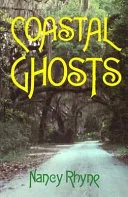
Nancy Rhyne's 1989 book, Coastal Ghosts, collects paranormal accounts from the American Southeast.
Coastal Ghosts compiles anecdotal accounts of paranormal events and unexplained phenomena along the coasts of North Carolina, South Carolina, and Georgia. Rhyne gathered these stories from local lore, historical records, and personal testimonies, presenting them as factual occurrences without scientific explanation. The book emerged in 1989, a time of heightened public interest in the paranormal, following trends from the 1970s and 80s that saw a rise in books and television programs about UFOs, hauntings, and cryptids. This period also witnessed a surge in collections of regional folklore aimed at preserving local legends.
The narratives in Coastal Ghosts frequently address residual hauntings, where past events are thought to repeat, and intelligent hauntings, where spirits seem to interact with the living. Old plantations, lighthouses, and maritime sites are common settings, suggesting a link between historical trauma, the natural environment, and spectral manifestations. The appearance of apparitions often connects to local tragedies or significant historical events, grounding the supernatural in historical context. The book appeals to those interested in folklore, regional ghost stories, and anecdotal evidence of the unexplained, particularly within the context of the American South.
Published in 1989, Coastal Ghosts taps into a long-standing fascination with hauntings and local spectral history, a tradition evident in folklore collections worldwide. It sits within a genre that documents alleged supernatural encounters, often linking them to specific locations and historical events. While not strictly a theoretical work on occultism, its focus on unexplained phenomena and eyewitness accounts aligns with an interest in the liminal spaces between the known and the unknown, a common thread in esoteric traditions that explore consciousness and reality beyond conventional understanding.
💡 Why Read This Book?
• Understand the spectral folklore of the American South, learning about specific hauntings tied to the region's maritime history and antebellum past. • Explore the concept of residual energy and intelligent hauntings as presented through tales from North Carolina, South Carolina, and Georgia. • Gain insight into the cultural landscape of the late 20th century, when regional ghost stories like those collected by Nancy Rhyne gained wider recognition.
⭐ Reader Reviews
Honest opinions from readers who have explored this book.
❓ Frequently Asked Questions
What specific regions of the United States does Coastal Ghosts cover?
Coastal Ghosts focuses exclusively on the Atlantic coastal regions of three states: North Carolina, South Carolina, and Georgia. The narratives are tied to specific locales within these states.
When was Coastal Ghosts first published?
The book was first published in 1989. This places its collection and presentation of ghost stories within the late 20th-century interest in paranormal phenomena and folklore.
What types of paranormal events are featured in Coastal Ghosts?
The book features a variety of purported paranormal events, including apparitions, unexplained noises, poltergeist activity, and other mysterious happenings often associated with historical sites and maritime locations.
Does Nancy Rhyne offer explanations for the phenomena in Coastal Ghosts?
Nancy Rhyne primarily presents the tales as reported, focusing on the anecdotal evidence. The book does not typically offer definitive scientific or supernatural explanations, leaving interpretation to the reader.
Are the stories in Coastal Ghosts based on historical events?
Many stories in Coastal Ghosts are linked to historical events, locations, or figures from the coastal regions of North Carolina, South Carolina, and Georgia. The book often connects spectral accounts to local history and tragedy.
Who is the intended audience for Coastal Ghosts?
The intended audience includes enthusiasts of ghost stories, folklore, regional history, and the paranormal, particularly those interested in the American South and its spectral legends.
🔮 Key Themes & Symbolism
Maritime Hauntings
A significant theme in Coastal Ghosts is the spectral activity associated with maritime environments. Tales frequently emerge from lighthouses, shipwrecks, and coastal towns, suggesting a deep connection between the sea, historical tragedies, and lingering spirits. The vastness and mystery of the ocean itself seem to lend themselves to tales of the unexplained, with apparitions often linked to drowning victims or those lost at sea. These narratives tap into a primal fear and fascination with the unknown depths and the history held within the ocean's embrace.
Residual Energy and Historical Echoes
The book explores the concept of residual hauntings, where past events are believed to imprint themselves onto locations, replaying endlessly. Many stories in Coastal Ghosts feature spectral phenomena that seem less like sentient spirits and more like elements of historical moments, particularly those marked by tragedy or intense emotion. This theme emphasizes how places, especially those with a dense history like antebellum plantations or old forts, can retain energetic imprints of significant human experiences.
Southern Gothic Spectralism
Coastal Ghosts taps into the rich tradition of Southern Gothic literature and folklore. The tales often feature decaying plantations, atmospheric landscapes, and a sense of lingering past that pervades the present. The spectral encounters are frequently interwoven with themes of history, memory, and the unresolved traumas of the region, such as slavery and civil conflict. This creates a combination of the supernatural and the deeply historical, characteristic of the Southern Gothic sensibility.
Lighthouse Apparitions
A recurring motif within the collection involves hauntings specifically tied to lighthouses along the Carolina and Georgia coasts. These isolated structures, often sites of solitary vigils and potential maritime disasters, become focal points for spectral encounters. The keepers themselves, or those lost to the sea nearby, are frequently cited as the source of reported phenomena. The symbolism of the lighthouse—a clear source of safety amidst danger—contrasts poignantly with the tales of its spectral inhabitants.
💬 Memorable Quotes
Direct passages from the work, attributed to the author.
“The old lighthouse keeper's shadow still walks the lantern room.”
— This exemplifies the theme of residual hauntings, suggesting that a former inhabitant's presence or actions are perpetually re-enacted within the lighthouse structure, a common occurrence in coastal spectral lore.
“Whispers from the marshlands carry tales of those lost to the tide.”
— This highlights the connection between the natural, often perilous, environment and spectral phenomena, implying that the very landscape holds the memories and spectral elements of past tragedies.
“A spectral carriage rattles down the old plantation road.”
— This points to the persistence of historical events and social structures, suggesting that spectral manifestations in former plantation settings often echo the era's way of life, including its modes of transport.
“The air grows cold where the ship went down.”
— This describes a physical sensation associated with paranormal activity, often interpreted as a sign of a spectral presence or residual energy tied to a specific tragic event, like a maritime disaster.
“They say the sounds are the elements of the battle.”
— This connects unexplained auditory phenomena directly to historical conflicts, suggesting that the energetic imprint of significant, often violent, events can manifest audibly in the present day.
🌙 Esoteric Significance
Tradition
Coastal Ghosts does not align with a specific esoteric tradition like Hermeticism or Kabbalah. Instead, it operates within the broader domain of folklore and anecdotal supernatural accounts. Its significance lies in its documentation of regional spectral beliefs, which can be seen as a form of vernacular spirituality or localized paranormal belief systems. These stories, while not systematized occult teachings, often touch upon universal themes of life, death, memory, and the perceived continuity of consciousness beyond physical existence.
Symbolism
Key symbols often appear implicitly: the sea represents the subconscious, the unknown, and the boundary between worlds; lighthouses symbolize guidance but also isolation and perpetual watchfulness, often becoming sites of spectral sentinels; old plantations and historical sites symbolize the weight of the past and unresolved historical trauma, which manifest as lingering spectral energies.
Modern Relevance
The work remains relevant for contemporary folklorists, paranormal investigators, and enthusiasts of regional ghost lore. It serves as a primary source for understanding spectral beliefs in the American South during the late 20th century. Its anecdotal approach finds echoes in modern online paranormal communities and a continued public fascination with localized hauntings and the spectral history of specific places.
👥 Who Should Read This Book
• Students of American folklore and regional ghost stories will find a valuable collection of documented spectral accounts from the Southeast. • Enthusiasts of the paranormal interested in maritime lore and hauntings tied to coastal environments will appreciate the specific focus on lighthouses and shipwrecks. • Readers interested in Southern history and culture, particularly how historical events and trauma are believed to manifest supernaturally, will find compelling narratives.
📜 Historical Context
Published in 1989, Nancy Rhyne's Coastal Ghosts emerged during a period of significant popular engagement with the paranormal and folklore. The late 1980s saw a continued interest in ghost stories, fueled by television programs and a burgeoning market for regional occult and unexplained phenomena literature. This era was characterized by a desire to document local legends and historical oddities, often presented as authentic accounts. Rhyne's work aligns with a broader trend of regional cultural preservation, seeking to capture anecdotal evidence of the supernatural before it faded from oral tradition. While not directly engaging with academic parapsychology or occult societies, the book contributed to a general cultural fascination with hauntings and spectral lore, existing alongside more scholarly explorations of American folklore and history.
📔 Journal Prompts
The spectral carriage on the plantation road: reflections on historical echoes.
Lighthouse keeper's shadow: consider the symbolism of isolated vigilance.
Marshland whispers: what narratives does the landscape hold?
Cold spots and residual energy: interpret physical manifestations of the unseen.
The sounds of battle: analyze auditory hauntings tied to historical conflict.
🗂️ Glossary
Residual Haunting
A type of paranormal phenomenon where a location is believed to retain an energetic imprint of past events, causing them to repeat or appear as spectral replays without conscious intelligence.
Intelligent Haunting
A paranormal occurrence attributed to a sentient spirit or entity that appears to interact consciously with the living, often displaying awareness and responsiveness.
Apparition
A ghostly image or manifestation of a person, typically seen as a visual hallucination or spectral form.
Poltergeist Activity
A type of paranormal disturbance characterized by physical phenomena such as loud noises, moving objects, and unexplained disturbances, often attributed to an unseen entity.
Vernacular Spirituality
Religious or spiritual beliefs and practices that are developed and maintained within local communities, often distinct from formal or institutionalized religions.
Maritime Lore
A body of stories, legends, and traditions related to the sea, seafaring, and coastal life, often including tales of shipwrecks, sea creatures, and ghostly vessels.
Southern Gothic
A genre of literature and film that uses the American South as its setting and explores themes of decay, the grotesque, and the supernatural, often with a sense of lingering historical trauma.