Nostradamus, historien et prophète
 73
73

Nostradamus, historien et prophète
Jean-Charles de Fontbrune’s *Nostradamus, historien et prophète* attempts a scholarly reintegration of the famed seer into his 16th-century context, a welcome shift from sensationalist interpretations. The book’s strength lies in its detailed analysis of Nostradamus’s linguistic and astrological methods, particularly how Fontbrune connects the quatrains to specific astronomical configurations from the period. However, the text occasionally feels dense, and the author’s own interpretive framework, while rigorous, can sometimes obscure the primary source material rather than illuminate it. A particularly compelling section discusses Nostradamus’s use of anagrams, revealing a deliberate obfuscation that challenges simple readings of his prophecies. While Fontbrune provides a solid historical grounding, the sheer weight of his analytical apparatus might prove challenging for the casual reader seeking straightforward exposition. This work is best suited for those prepared for a deep, academic dive into the mechanics of Nostradamus's prophetic art.
📝 Description
73
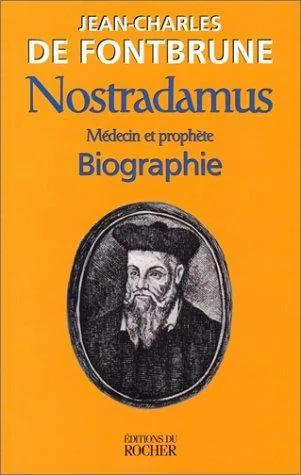
Jean-Charles de Fontbrune published Nostradamus, historien et prophète in 1985, examining the seer's life and writings.
Published in 1985, Jean-Charles de Fontbrune's Nostradamus, historien et prophète examines Michel de Nostredame, the 16th-century apothecary and seer. The book places Nostradamus within his historical and intellectual surroundings, looking at his writings, especially the *Centuries*, not simply as predictions but as products of Renaissance thought, medical ideas, and astrological systems of his time. Fontbrune seeks to clarify Nostradamus's work by connecting it to his life and the era he inhabited.
This study is for those interested in esotericism, historical divination, and Renaissance studies. It will attract readers curious about the background of prophetic traditions and Nostradamus's specific methods. Those preferring a critical assessment over sensationalism, and who value scholarly examination of original texts, will find this book valuable. It also speaks to researchers studying the impact of astrological and alchemical thought on early modern Europe. Fontbrune's work appeared during a time of renewed interest in esoteric subjects, with a move toward more academic study of occult history.
Fontbrune's study situates Nostradamus within the history of Western esotericism, a tradition that often blends astrology, alchemy, and prophecy. The book emerged in the 1980s, a period where academic interest in such subjects grew, moving beyond earlier speculative approaches. Nostradamus himself wrote during the volatile period between the Reformation and the Scientific Revolution, a time when astrological and occult beliefs were still integrated with intellectual life, despite growing scientific inquiry. The book examines his *Centuries*, published in 1555, considering them within this complex historical and intellectual climate.
💡 Why Read This Book?
• Gain insight into the specific astrological methods Nostradamus employed, understanding how celestial alignments in the 16th century informed his quatrains, as detailed in Fontbrune's analysis of his ephemerides. • Learn about Nostradamus's use of linguistic techniques like anagrams, moving beyond superficial interpretations to grasp the deliberate complexity he introduced into his prophetic writings. • Understand Nostradamus within the intellectual currents of the Renaissance, appreciating how his work reflects contemporary views on history, astrology, and classical sources, rather than isolating him as a singular phenomenon.
⭐ Reader Reviews
Honest opinions from readers who have explored this book.
❓ Frequently Asked Questions
When was Nostradamus, historien et prophète originally published?
The original publication date for Jean-Charles de Fontbrune's "Nostradamus, historien et prophète" was 1985, marking a significant effort to provide a scholarly context for the seer's work.
What is the primary focus of Fontbrune's book on Nostradamus?
Fontbrune's book focuses on situating Nostradamus within his historical and intellectual milieu of the 16th century, analyzing his prophecies as products of Renaissance thought and astrological practices rather than solely as predictive statements.
Does the book discuss Nostradamus's astrological charts?
Yes, the work explores Nostradamus's use of ephemerides and astrological data, connecting specific astronomical configurations to the content and timing of his quatrains, providing a framework for understanding his prophetic system.
What makes this book different from other Nostradamus interpretations?
This book distinguishes itself by offering a critical, historically grounded analysis, moving away from sensationalism. It examines Nostradamus's linguistic techniques and intellectual influences, presenting him as a product of his era.
Who is the author, Jean-Charles de Fontbrune?
Jean-Charles de Fontbrune was a noted researcher and author specializing in the study of Nostradamus, known for his detailed analyses that sought to contextualize the prophet's work within historical and scientific frameworks of his time.
🔮 Key Themes & Symbolism
Nostradamus's Historical Milieu
This theme explores Michel de Nostredame not as an isolated oracle, but as a figure deeply embedded in the intellectual and social range of 16th-century France. Fontbrune situates him amidst the religious ferment of the Reformation and the nascent stirrings of scientific inquiry. The book emphasizes how Nostradamus’s medical training, his engagement with classical texts, and the prevailing astrological worldview directly informed his quatrains. It highlights the period's fascination with fate and prophecy, contrasting it with emerging rationalism. This contextualization is crucial for understanding the genesis and reception of his prophetic works during his lifetime.
Astrology and Prophetic Language
A central theme is the intricate relationship between astrology and Nostradamus's prophetic language. Fontbrune meticulously examines how Nostradamus utilized astrological ephemerides – tables of celestial positions – as a foundational element for his predictions. The book deciphers the complex interplay between astronomical events and the cryptic verses he composed. It reveals how astrological symbolism and terminology are woven into the fabric of the quatrains, suggesting that understanding the celestial mechanics of the era is key to unlocking deeper layers of meaning within his prophecies.
The Quatrain as a Literary Device
Fontbrune analyzes the four-line stanza, or quatrain, not merely as a vehicle for prediction but as a sophisticated literary and symbolic construct. The work explores Nostradamus's masterful use of ambiguity, anagrams, neologisms, and multilingual wordplay. This deliberate obfuscation served multiple purposes: to disguise potentially dangerous prophecies, to engage the intellect of the reader, and perhaps to reflect the complex, multi-layered nature of reality itself. Understanding the quatrain’s structure and linguistic intricacies is presented as essential for any serious study of Nostradamus’s prophetic output.
Renaissance Worldview and Cycles
This theme investigates how Nostradamus’s prophecies reflect a Renaissance understanding of history and time. Fontbrune highlights the era's belief in cyclical patterns – the idea that future events often echo or mirror past occurrences. Nostradamus’s work is presented as an attempt to map these cycles, drawing heavily on classical mythology, biblical narratives, and historical precedents. The book examines how this cyclical perspective, combined with an astrological framework, shaped Nostradamus’s vision of unfolding human destiny, portraying history as a grand, recurring drama.
💬 Memorable Quotes
Direct passages from the work, attributed to the author.
“Nostradamus's quatrains are not simple prophecies but complex symbolic equations.”
— This interpretation suggests that the verses are designed to be decoded, requiring an understanding of symbolic language, historical context, and astrological principles, rather than being straightforward literal predictions.
“The ephemerides were the true bedrock of Nostradamus's predictive science.”
— This highlights the crucial role of astrological data in Nostradamus's system, positioning the precise astronomical calculations of his time as the fundamental basis upon which his prophetic pronouncements were constructed.
“Language itself becomes a veil and a key in Nostradamus's writing.”
— This concept points to the deliberate use of ambiguity, anagrams, and obscure phrasing, suggesting that Nostradamus employed linguistic complexity both to conceal and, for the initiated, to reveal his insights.
“He was an apothecary, a physician, and a seer, all intertwined.”
— This interpretation emphasizes the complex nature of Nostradamus, suggesting that his roles as a healer and an astrologer were not separate but were integrated aspects of his understanding and practice.
💡 Key Ideas
Editorial paraphrase of the work's core concepts — not direct quotes.
To understand the future, Nostradamus looked to the patterns of the past.
This paraphrase captures the cyclical view of history prevalent in the Renaissance and embraced by Nostradamus, indicating his belief that historical epochs and events tend to repeat themselves.
🌙 Esoteric Significance
Tradition
Fontbrune's work engages with the Western Hermetic tradition, particularly its Renaissance manifestation, which sought to synthesize classical wisdom, Neoplatonism, Kabbalah, and astrology. Nostradamus, though not strictly a Kabbalist, drew on the era's syncretic intellectual climate. His use of astrological correspondences and symbolic language aligns with Hermetic principles of macrocosm reflecting microcosm. The book positions Nostradamus not as a lone prophet but as a practitioner operating within a lineage of seers and interpreters who believed in an underlying cosmic order accessible through study and divine inspiration.
Symbolism
Central symbols explored include celestial bodies and astrological configurations, which Nostradamus used as a direct language for his prophecies, linking terrestrial events to cosmic influences. The quatrain itself, as a four-line symbolic unit, becomes a motif representing structured prophecy. Furthermore, the book touches upon classical and biblical allegories that Nostradamus recontextualized, using ancient narratives as archetypal frameworks for future unfolding events, thereby imbuing his predictions with layers of mythological and historical resonance.
Modern Relevance
Contemporary esoteric practitioners and scholars of divination continue to draw on Fontbrune's meticulous research. His work provides a foundational text for those interested in historical methods of prophecy and the intersection of astrology with esoteric thought. Modern astrologers and occult historians may reference Fontbrune's analysis when discussing the lineage of predictive arts or exploring the symbolic language of historical prophetic figures. The book's emphasis on textual and contextual analysis remains relevant for critical engagement with esoteric traditions in the 21st century.
👥 Who Should Read This Book
• Students of Renaissance history and intellectual currents: Those seeking to understand the cultural and scientific milieu that produced figures like Nostradamus, appreciating the blend of medicine, astrology, and prophecy. • Esoteric researchers and practitioners: Individuals interested in the historical development of divination, particularly astrological prophecy and symbolic interpretation, who want a scholarly approach to Nostradamus's methods. • Comparative religion scholars: Researchers examining prophetic traditions across different eras and cultures, looking for detailed case studies on how specific historical contexts shape religious and divinatory expression.
📜 Historical Context
Jean-Charles de Fontbrune's *Nostradamus, historien et prophète*, first published in 1985, emerged during a burgeoning academic interest in occult and esoteric traditions. The mid-1980s saw a shift towards more rigorous historical analysis of figures like Nostradamus, moving beyond sensationalism. Nostradamus himself lived and worked in the turbulent 16th century, a period marked by the religious schisms of the Protestant Reformation and the Italian Wars. His *Centuries*, first published in 1555, appeared in an era where print dissemination was rapidly expanding, making his work accessible yet also subject to scrutiny by religious and secular authorities. Contemporary figures like John Calvin condemned such prophecies, while others saw them as divine insights. Unlike the more mystical or purely predictive interpretations that would later dominate, Fontbrune's work sought to ground Nostradamus in the specific medical, astrological, and humanist intellectual currents of the Renaissance, engaging with scholars like Frances Yates who explored similar connections between magic, science, and the era's worldview.
📔 Journal Prompts
Nostradamus's use of anagrams as a symbolic equation.
The influence of 16th-century astrological ephemerides on prophetic writing.
Interpreting the quatrain structure as a deliberate device.
The historical context of the Protestant Reformation and its impact on prophecy.
Examining cyclical views of history in Renaissance thought.
🗂️ Glossary
Quatrain
A stanza consisting of four lines, widely used by Nostradamus in his prophetic works. Each quatrain typically contains a cryptic prediction or observation.
Centuries
The primary collection of Nostradamus's prophecies, organized into groups of one hundred quatrains. The first edition was published in 1555.
Ephemerides
Tables or charts containing the computed positions of celestial bodies (planets, stars, etc.) for specific dates and times, used extensively by astrologers and by Nostradamus.
Anagram
A word or phrase formed by rearranging the letters of another word or phrase. Nostradamus employed anagrams to obscure meanings or create wordplay within his quatrains.
Renaissance Humanism
An intellectual movement during the Renaissance that emphasized the study of classical literature, philosophy, and history, focusing on human potential and achievements.
Reformation
The 16th-century religious movement that led to the establishment of Protestant churches, challenging the authority of the Roman Catholic Church and causing significant societal upheaval.
Almanac
A publication containing astronomical information, such as tide tables and the positions of the sun and moon, often including weather forecasts and other miscellaneous data. Nostradamus produced several almanacs.
🔮 Readers Also Liked
Browse all →









More by Jean-Charles de Fontbrune
All books →




More Free Occult Philosophy Books
View all →