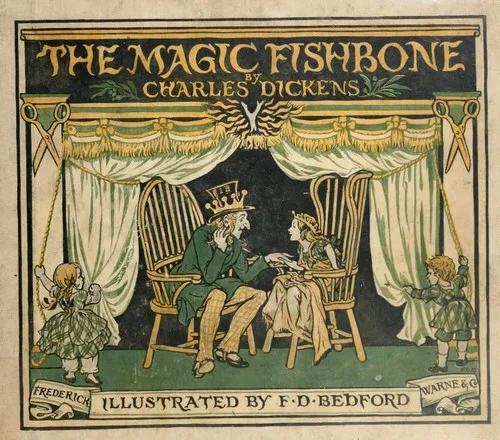
Magic Fishbone
 83
83

Magic Fishbone
Dickens' 'Magic Fishbone' presents a curious diversion, a brief foray into the realm of the miraculous that feels plucked from a forgotten fairy tale. The premise—a magical fishbone granting wishes—is established with disarming simplicity, allowing the narrative to focus on the ensuing domestic upheaval. Its strength lies in its unadorned allegorical quality, depicting how even benevolent desires can unravel ordinary existence. However, the tale's brevity can also be its limitation; the rapid escalation and resolution of the family's fortunes feel somewhat abrupt, leaving little room for deeper contemplation of the magical mechanics or their lasting impact. The scene where the stolen jewel is returned, highlighting the disruption of societal order, is particularly striking in its understated portrayal of consequence. It's a minor work, certainly, but one that offers a peculiar charm and a subtle commentary on the nature of wishing.
📝 Description
83
Charles Dickens's 'Magic Fishbone' was first published in 1921.
This short allegorical tale by Charles Dickens depicts a family whose fortunes change after acquiring a magical fishbone. The narrative unfolds with a dreamlike atmosphere, examining how wishes can disrupt ordinary life. The story questions the true value of instant fulfillment, showing how desires can lead to unexpected and chaotic outcomes when magical power enters the mundane world.
While appearing simple, the tale hints at deeper metaphysical possibilities. It engages with the potent, yet unpredictable, nature of desire itself. The fishbone serves as a direct channel for wishes, but its function underscores the disruptive potential of sudden magical infusion into everyday existence.
Published in 1921, 'Magic Fishbone' appeared during a time when spiritualism and occult interests were heightened, particularly after World War I. This period saw increased metaphysical inquiry, influenced by movements such as Theosophy and renewed attention to ancient mystery traditions. The story's fantastical elements resonate with this cultural atmosphere of exploring the unknown and the potential for unseen forces to impact human lives.
💡 Why Read This Book?
• You will gain a unique perspective on the disruptive power of sudden wish fulfillment, as illustrated by the chaotic events following the family's acquisition of the magic fishbone. • You will encounter a concise example of early 20th-century allegorical storytelling, specifically how the year 1921 saw a blend of traditional narrative with fantastical elements. • You will explore the symbolic weight of the magical fishbone itself, a motif representing both immense possibility and the potential for unintended societal or personal upheaval.
⭐ Reader Reviews
Honest opinions from readers who have explored this book.
❓ Frequently Asked Questions
What is the primary theme of Charles Dickens' 'Magic Fishbone'?
The primary theme is the nature of wish fulfillment and its often chaotic consequences. The magic fishbone grants desires, but the story illustrates how even positive wishes can disrupt the established order and personal lives.
When was 'Magic Fishbone' by Charles Dickens first published?
Although Charles Dickens wrote 'The Magic Fishbone' in 1868, it was first published posthumously in 1921 as part of a collection, distinguishing it from his earlier serialized works.
What kind of literary genre does 'Magic Fishbone' belong to?
'Magic Fishbone' is best described as a short allegorical tale or a fairy tale for adults. It uses a fantastical premise to explore moral and social themes in a concise narrative.
Does 'Magic Fishbone' contain any specific esoteric or mystical interpretations?
While not explicitly part of a formal esoteric tradition, the tale's exploration of wish-granting objects and the disruption of reality can be interpreted through the lens of magical thinking and the psychology of desire.
Who are the main characters in 'Magic Fishbone'?
The main characters are the King, the Princess Alicia, and the King’s good fairy. The family is also central, experiencing the direct impact of the magical fishbone.
What is the significance of the King's good fairy in the story?
The King's good fairy provides the magical fishbone, initiating the central conflict. Her role highlights the introduction of supernatural aid into a mundane situation, driving the plot forward.
🔮 Key Themes & Symbolism
The Unpredictability of Wishes
The narrative centers on the granting of wishes via a magical fishbone, a concept that directly engages with themes of desire and its manifestation. The story highlights how the acquisition of the fishbone, initially a solution to the family's poverty, leads to a cascade of increasingly bizarre and disruptive events. This explores the idea that wishes, when granted literally and without consideration for broader context, can unravel the fabric of ordinary life, affecting social order and personal relationships in unexpected ways.
Domestic Disruption and Social Order
The tale meticulously details the impact of the magical fishbone on the King's domestic life and, by extension, the wider social order. The King's desire to marry the Princess Alicia and his subsequent acquisition of the fishbone lead to the theft of jewels and the King's imprisonment. This demonstrates how the introduction of potent magic, even for seemingly noble or personal reasons, can create significant upheaval, challenging established norms and the natural progression of events.
Allegory and Fairy Tale Structure
Published in 1921, 'Magic Fishbone' employs the structure of a fairy tale to convey its allegorical message. The presence of a King, a Princess, and a magical artifact like the fishbone are classic fairy tale elements. However, Dickens uses these tropes to comment on human desire and the consequences of unchecked ambition or wish fulfillment, presenting a narrative that is both enchanting and cautionary. The simple yet profound nature of the wish-granting mechanism serves as a vehicle for exploring deeper psychological and societal commentary.
The Nature of Gratification
This short work implicitly questions the ultimate value of instant gratification. The King's wish for wealth and status, facilitated by the magical fishbone, brings temporary solutions but ultimately leads to complications and a disruption of his intended path. The narrative suggests that true satisfaction or resolution might not come from immediate wish fulfillment but from navigating life's challenges through more conventional means, or at least with greater foresight.
💬 Memorable Quotes
Direct passages from the work, attributed to the author.
“The King’s good fairy… gave him a present, which she recommended him to take great care of, and put it into his pocket.”
— This marks the important moment of magical intervention. The 'good fairy' introduces the potent artifact, the fishbone, into the King's life, initiating the chain of events that will unfold.
“When the King had got the fishbone in his pocket, he found himself in a state of great comfort.”
— This illustrates the immediate psychological effect of possessing the magical item. The mere presence of the fishbone brings a sense of relief and security, even before its powers are fully utilized.
“He wished for a great dish of fish, and it was instantly before him.”
— This is a direct demonstration of the fishbone's power. The King's first wish is for sustenance, a basic need, which is met instantaneously, showcasing the literal and immediate nature of the magic.
“He wished that the Princess Alicia would fall in love with him… and she did.”
— This wish moves beyond material needs to interpersonal desire. The instantaneous success highlights the potentially problematic nature of magically compelling affection, bypassing genuine connection.
💡 Key Ideas
Editorial paraphrase of the work's core concepts — not direct quotes.
The King was in a state of great anxiety...
This line immediately establishes the core problem: the King's distress over his financial and marital situation. It sets the stage for the introduction of a magical solution, highlighting his desperation.
🌙 Esoteric Significance
Tradition
While not directly aligned with a specific formal esoteric tradition like Hermeticism or Kabbalah, 'Magic Fishbone' engages with universal archetypes found across many mystical systems. The concept of a magical object that grants wishes is a common motif in folklore and occult traditions, representing a direct conduit to manifesting desire. It touches upon themes explored in various magical practices concerning the power of intention and the potential dangers of uncontrolled manifestation, echoing concerns about the misuse of magical power found in grimoires and ceremonial magic texts.
Symbolism
The titular 'Magic Fishbone' serves as a primary symbol, representing the potent, yet often unpredictable, force of desire and manifestation. Its ability to grant wishes instantly speaks to the idea of a direct link between thought and reality, a concept central to many manifestation practices. The stolen jewels and the King's subsequent imprisonment symbolize the disruption of natural order and the karmic or consequential fallout that can arise from magically obtained gains, hinting at the necessity of balance and ethical consideration in any form of wish-granting.
Modern Relevance
Contemporary practices focused on manifestation, law of attraction, and the psychology of desire can find parallels in 'Magic Fishbone.' The story serves as an allegorical cautionary tale about the potential pitfalls of unchecked wishing and the importance of understanding the full consequences of our desires. Thinkers and practitioners in fields exploring subconscious desires and the power of belief systems might draw upon the narrative's exploration of how easily external magical intervention can lead to unforeseen complications, underscoring the need for self-awareness and responsibility.
👥 Who Should Read This Book
• Students of literary allegory and folklore seeking concise examples of wish-fulfillment narratives and their symbolic interpretations. • Readers interested in the cultural milieu of the early 20th century (circa 1921), exploring how fantastical tales reflected societal interests in the mystical and the supernatural. • Individuals drawn to explorations of desire and consequence, who appreciate narratives that use simple premises to comment on deeper psychological or social dynamics.
📜 Historical Context
Charles Dickens' 'Magic Fishbone,' though written around 1868, found its first publication in 1921, placing it within a fascinating cultural moment. The early 20th century was an era marked by the aftermath of World War I and a widespread societal questioning of established norms, leading to increased interest in alternative spiritualities and metaphysical exploration. Movements like Theosophy, founded by Helena Blavatsky, were gaining traction, offering frameworks for understanding hidden realities. This period also saw a resurgence of interest in folklore and fairy tales, often reinterpreted through psychological or symbolic lenses. The publication of 'Magic Fishbone' in 1921 occurred during this fertile ground for the mystical and the allegorical, where traditional narrative forms could be infused with deeper, often esoteric, meanings. Its whimsical yet cautionary tale about wish fulfillment likely resonated with a public seeking both escapism and a deeper understanding of desire's complexities.
📔 Journal Prompts
The King's initial anxiety and his subsequent comfort upon receiving the magic fishbone. Explore the psychological shift.
The disruption caused by the stolen jewels and the King's imprisonment. Reflect on the consequences of magical intervention.
The role of the King’s good fairy in providing the fishbone. Consider the nature of such benevolent yet disruptive aid.
Princess Alicia's instantaneous fall in love. Analyze the implications of magically compelled affection.
The resolution achieved through the fishbone versus the potential for a natural resolution. What does this suggest about desire?
🗂️ Glossary
Magic Fishbone
A supernatural artifact that grants wishes to its possessor. In the story, it is the primary mechanism through which the King attempts to solve his problems, leading to both fulfillment and chaos.
King
The central male protagonist of the story who desires wealth and marriage. His actions, driven by wish fulfillment, propel the narrative and illustrate the consequences of magical intervention.
Princess Alicia
The object of the King's affection and desire. Her role highlights the theme of love and marriage being influenced or compelled by magical means.
King's good fairy
A supernatural benefactor who provides the King with the magic fishbone. This character represents external aid and the introduction of magical forces into the narrative.
Allegory
A story, poem, or picture that can be interpreted to reveal a hidden meaning, typically a moral or political one. 'Magic Fishbone' uses fantastical elements to convey a message about desire and consequence.
Wish Fulfillment
The satisfaction of a desire through imagining its attainment. The story directly explores the literal and often problematic fulfillment of wishes.
Domestic Upheaval
Significant disruption or disturbance within a household or family life. The story depicts how the magic fishbone causes such upheaval for the King and his court.
🔮 Readers Also Liked
Browse all →








More by Charles Dickens
All books →




More Free Occult Philosophy Books
View all →