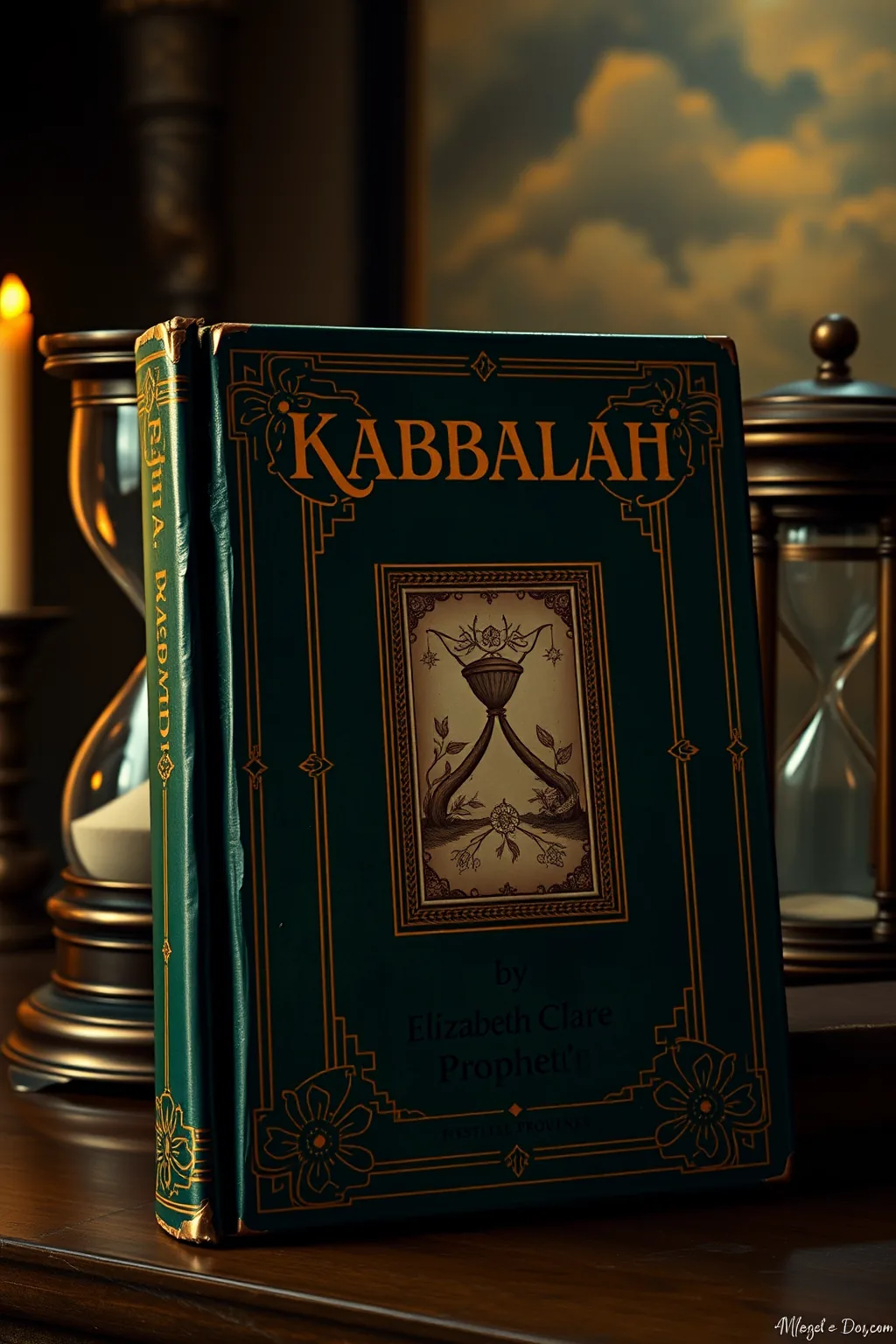
Kabbalah
 78
78

Kabbalah
Prophet's "Kabbalah" attempts to distill a profound and ancient system into digestible prose, a feat it achieves with mixed success. The strength lies in its ambitious scope, bringing concepts like the ten Sefirot and the nature of the divine Ein Sof to a readership often unacquainted with Jewish mystical texts. However, the work sometimes simplifies the intricate philosophical and theological debates inherent in Kabbalistic scholarship, potentially flattening the nuanced interpretations found in earlier sources like the Zohar. A passage discussing the "lower" Sefirot as reflecting divine attributes in the material world, while illustrative, could benefit from more rigorous engagement with the ethical and cosmological implications that medieval Kabbalists debated extensively. It serves as an introductory primer, but serious students will need to consult primary texts and more specialized commentaries.
📝 Description
78
Elizabeth Clare Prophet's 1997 book, "Kabbalah," aims to make Jewish mysticism accessible.
Published in 1997, Elizabeth Clare Prophet's "Kabbalah" serves as an introduction to the mystical tradition of Kabbalah. Prophet's stated goal was to simplify its complex ideas for a wider audience interested in spiritual matters. The book covers key texts and concepts that have influenced esoteric thought over many centuries.
This work is intended for individuals curious about the spiritual foundations of Western thought. It offers an alternative for those who find scholarly texts on Kabbalah challenging. Readers will find discussions on the nature of God, the creation of the universe, and the path of human spiritual development within a mystical framework.
Prophet wrote "Kabbalah" during a period of renewed interest in esoteric traditions in the late 20th century. While drawing on Kabbalistic ideas, her interpretation often incorporates elements from her own spiritual teachings. This places her work within the broader currents of modern Western esotericism.
Prophet's "Kabbalah" engages with Jewish mysticism, a tradition with roots stretching back to medieval Spain and earlier. This esoteric current focuses on understanding the divine through symbolic interpretation of scripture and contemplation of creation. It often involves concepts like divine emanations, hidden meanings in language, and paths to spiritual union. Prophet's approach, while rooted in these ideas, also reflects the New Age milieu of the late 20th century, a time when various spiritual traditions were synthesized and reinterpreted for contemporary seekers.
💡 Why Read This Book?
• Gain an introduction to the foundational concepts of the Kabbalah, such as the Tree of Life and the ten Sefirot, presented in Prophet's unique spiritual interpretive framework. • Understand the symbolic meanings of Hebrew letters as discussed in the book, providing a pathway to perceiving their creative and spiritual power. • Explore the concept of Ein Sof and the divine emanations as presented by Prophet, offering a specific lens through which to view the relationship between the Infinite and the manifested universe.
⭐ Reader Reviews
Honest opinions from readers who have explored this book.
❓ Frequently Asked Questions
When was Elizabeth Clare Prophet's "Kabbalah" first published?
Elizabeth Clare Prophet's "Kabbalah" was first published in 1997. This edition sought to make complex Kabbalistic ideas accessible to a wider audience interested in spiritual and esoteric studies.
What is the Tree of Life in Kabbalah?
The Tree of Life is a central symbolic diagram in Kabbalah, representing the structure of creation and the divine emanations (Sefirot) through which God manifests. Prophet's work explores its significance.
Does this book explain the Zohar?
While Prophet's "Kabbalah" discusses concepts found in Kabbalistic literature, its primary focus is on presenting these ideas through her own teachings. It may not offer a deep exegesis of the Zohar itself.
What are the Sefirot?
The Sefirot are the ten divine emanations or attributes described in Kabbalah. Prophet's book details their order and significance in the divine unfolding of creation.
Is this book suitable for beginners in mysticism?
Yes, the book is generally considered suitable for beginners due to its accessible language and structured approach to complex Kabbalistic themes. It aims to demystify the subject.
What is Ein Sof?
Ein Sof, meaning 'Without End' or 'Infinite,' refers to the concept of God in Kabbalah as an unknowable, absolute divine essence before any manifestation. Prophet's work addresses this concept.
🔮 Key Themes & Symbolism
The Tree of Life
The central organizing principle of Kabbalistic cosmology, the Tree of Life, is presented as a map of creation and divine consciousness. Prophet's work details its ten Sefirot (emanations) and 22 paths, explaining how they represent the stages of divine outflow and the potential for human spiritual ascent. It's depicted not just as a static diagram but as a dynamic process through which the Infinite manifests in the finite world, offering a framework for understanding spiritual evolution.
Divine Emanations (Sefirot)
The ten Sefirot are explained as divine attributes or vessels through which the boundless light of Ein Sof (the Infinite) is expressed and channeled into creation. Prophet's text explores each Sefirah, such as Keter (Crown), Chokmah (Wisdom), Binah (Understanding), Chesed (Mercy), and Gevurah (Judgment), detailing their unique qualities and their interconnected roles in the divine and human realms. Understanding these emanations is key to grasping the Kabbalistic view of God's relationship with the world.
Symbolism of Hebrew Letters
The book explores the esoteric significance of the Hebrew alphabet, a core element of Kabbalistic study. Each letter is presented as carrying profound spiritual meaning and a unique creative force. Prophet's interpretation highlights how these letters are not merely linguistic symbols but fundamental building blocks of reality, through which the divine will is expressed and the cosmos is formed. This perspective invites a deeper contemplation of sacred language.
Spiritual Ascent and Practical Kabbalah
Beyond theoretical exposition, "Kabbalah" touches upon the practical application of its principles for personal transformation. It discusses the idea of spiritual ascent, whereby an individual can consciously work through the levels of the Tree of Life to achieve greater union with the divine. This aspect emphasizes Kabbalah not just as a system of knowledge, but as a path for self-realization and the refinement of the soul.
💬 Memorable Quotes
Direct passages from the work, attributed to the author.
“The Infinite is beyond all comprehension, yet its emanations are knowable.”
— This statement captures a fundamental Kabbalistic paradox: the absolute unknowability of God's essence (Ein Sof) contrasted with the possibility of understanding the divine through its manifest attributes (Sefirot).
“Each Hebrew letter is a spark of divine energy.”
— This interpretation emphasizes the active, creative power attributed to the Hebrew alphabet in Kabbalah, suggesting that letters are not passive symbols but conduits for spiritual force.
“The Tree of Life is the blueprint of creation.”
— This highlights the Tree of Life's role as a foundational schematic, illustrating the divine order and structure through which the universe was formed and continues to exist.
“The path of Kabbalah is a journey of returning to the source.”
— This conveys the ultimate goal of Kabbalistic practice: a spiritual homecoming, a process of the soul rejoining its divine origin through mystical knowledge and inner transformation.
💡 Key Ideas
Editorial paraphrase of the work's core concepts — not direct quotes.
Through understanding the Sefirot, we understand God's relationship with humanity.
This paraphrase points to the Sefirot as the primary means by which Kabbalists comprehend divine action and interaction within the created world and in relation to human experience.
🌙 Esoteric Significance
Tradition
This work aligns with the Western Esoteric tradition, specifically drawing from the Kabbalistic lineage. It interprets Kabbalistic concepts through a lens that emphasizes divine revelation and spiritual attainment, a characteristic found in various modern esoteric movements. While rooted in Jewish mysticism, Prophet's presentation often incorporates elements from her own spiritual teachings, extending its reach into broader New Age and metaphysical circles.
Symbolism
The book highlights central Kabbalistic symbols. The Tree of Life is presented as a cosmic map detailing the emanations of God, crucial for understanding the structure of reality and spiritual progression. The ten Sefirot are explained as divine attributes or vessels, representing the outflow of divine energy. Additionally, the esoteric significance of Hebrew letters is explored, viewing them as fundamental building blocks of creation imbued with creative power.
Modern Relevance
Prophet's "Kabbalah" continues to be relevant for contemporary practitioners and students of Western esotericism who seek accessible introductions to Kabbalistic ideas. Its approach influences modern interpretations of spiritual psychology and self-help, where Kabbalistic symbols are often used to explore personal growth and consciousness. Thinkers and groups within the broader New Age and spiritual development communities may draw upon its foundational explanations.
👥 Who Should Read This Book
• Aspiring students of Western Esotericism: Individuals new to mystical traditions seeking a foundational understanding of Kabbalistic concepts like the Tree of Life and Sefirot. • Seekers of spiritual meaning: Those interested in exploring the divine nature, creation, and the human soul's journey through a non-dogmatic, interpretive lens. • Readers exploring comparative mysticism: Individuals interested in how Jewish mystical ideas have been adapted and interpreted within broader spiritual and metaphysical frameworks.
📜 Historical Context
Elizabeth Clare Prophet's "Kabbalah," published in 1997, entered a spiritual landscape where esoteric traditions, including Kabbalah, were experiencing renewed interest, partly fueled by the New Age movement. This period saw a proliferation of books attempting to reinterpret ancient mystical systems for modern audiences, often blending them with contemporary psychological and spiritual concepts. Prophet's work emerged within this context, positioning itself as a guide to Kabbalistic thought. While academic scholarship on Jewish mysticism, represented by scholars like Gershom Scholem who revolutionized the field in the mid-20th century, continued to explore the historical and textual complexities of Kabbalah, popular works like Prophet's aimed for a more devotional and experiential approach. This created a dynamic where distinct interpretations of Kabbalah coexisted, one rooted in rigorous scholarship and the other in spiritual revelation and personal interpretation.
📔 Journal Prompts
The divine emanations (Sefirot) as presented in the book: which attribute feels most challenging to grasp?
The symbolic role of Hebrew letters: what creative force might they represent in your own life?
The Tree of Life as a map: how does its structure mirror stages of personal growth or understanding?
Reflecting on Ein Sof: what does the concept of the unknowable Infinite evoke for you?
The practical Kabbalah: how can understanding divine order influence daily actions?
🗂️ Glossary
Ein Sof
The Kabbalistic term for the 'Infinite' or 'Endless,' referring to God in God's absolute, unknowable essence before any manifestation or creation.
Sefirot
The ten divine emanations or attributes through which God, as Ein Sof, reveals and creates the universe. They form the structure of the Tree of Life.
Tree of Life
A central diagram in Kabbalah, depicting the ten Sefirot and their interconnections, representing the divine structure of creation and the path of spiritual ascent.
Keter
The first Sefirah, often translated as 'Crown,' representing the highest point of divine will and potential, the closest emanation to Ein Sof.
Chokmah
The second Sefirah, 'Wisdom,' seen as the primordial spark of divine intelligence and creative impulse that flows from Keter.
Binah
The third Sefirah, 'Understanding' or 'Intelligence,' often viewed as the active principle that shapes and contains the boundless energy of Chokmah.
Tzimtzum
A Kabbalistic concept describing the 'contraction' or 'withdrawal' of the divine light to make space for creation, a necessary act for the existence of a finite universe.
🔮 Readers Also Liked
Browse all →







More by Elizabeth Clare Prophet
All books →




More Free Occult Philosophy Books
View all →