Fallen Angels and the Orgins of Evil
 71
71

Fallen Angels and the Orgins of Evil
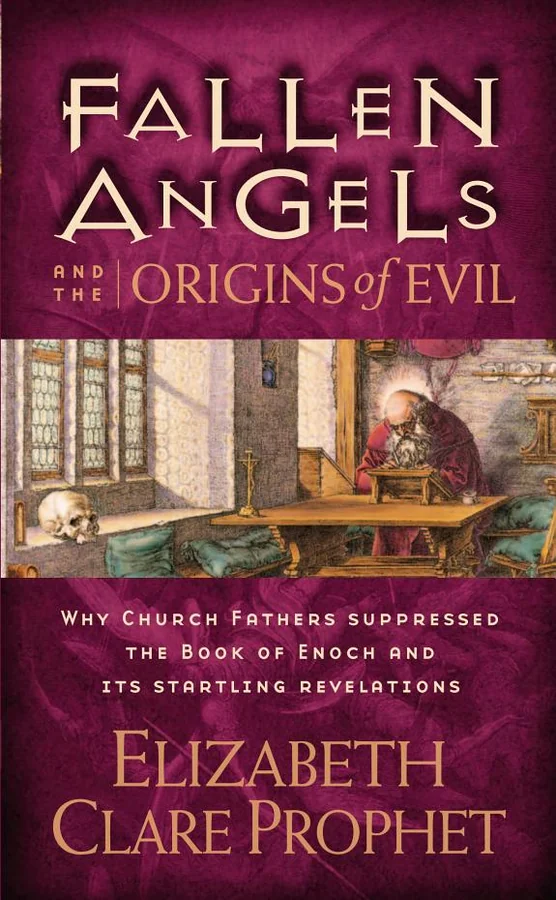
Elizabeth Clare Prophet's examination of the Book of Enoch offers a determined effort to reclaim a text long relegated to the esoteric fringe. The work is commendable for its meticulous tracing of the manuscript's rediscovery in 1773, providing a solid historical anchor. However, the author's interpretation of Enoch's mysteries, particularly concerning the origins of evil and fallen angels, tends towards a specific, pre-existing doctrinal framework, which may not satisfy readers seeking a purely academic or neutral analysis. The section discussing the Watchers' descent and its consequences is particularly vivid, though its spiritual implications are presented with an authorial certainty that borders on dogma. Prophet’s conviction is palpable, but it occasionally overshadows a more critical engagement with alternative interpretations. It is a useful, if biased, primer for those already aligned with certain prophetic traditions.
📝 Description
71
Elizabeth Clare Prophet's 1973 work examines the Book of Enoch's suppression and rediscovery.
This book revisits the Book of Enoch, a text largely absent from mainstream religious canons. It details the 1773 discovery of three copies in Ethiopia, which challenged prevailing academic and theological views. Prophet aims to reassess the Book of Enoch's historical and religious significance.
The work traces the Book of Enoch's path from its early circulation to its exclusion from canonical scriptures. It investigates the reasons for its marginalization, presenting it as an important document for understanding the evolution of ideas about fallen angels and cosmic order. The book scrutinizes the theological and cosmological systems within the Book of Enoch, focusing on tales of angelic rebellion, their effects on humanity, and subsequent divine judgment. It also addresses the book's distinct views on cosmology, angelology, and the problem of evil.
This study fits within the Gnostic and esoteric Christian traditions that often engage with texts outside the recognized biblical canon. The Book of Enoch, with its complex angelology and cosmology, was a significant source for these traditions, influencing their understanding of the spiritual hierarchy, the nature of good and evil, and the history of divine intervention in human affairs. Prophet's work situates this ancient text within a lineage of esoteric inquiry that seeks alternative interpretations of religious history and cosmology.
💡 Why Read This Book?
• Understand the historical circumstances surrounding the 1773 rediscovery of the Book of Enoch in Ethiopia, offering a unique perspective on textual preservation. • Explore the specific theological controversies that led to the Book of Enoch's exclusion from many biblical canons, providing insight into early religious debates. • Examine the book's detailed accounts of the Watchers and their interactions with humanity, offering a foundational text for understanding Gnostic and dualistic cosmologies.
⭐ Reader Reviews
Honest opinions from readers who have explored this book.
❓ Frequently Asked Questions
When was the Book of Enoch rediscovered?
The Book of Enoch was rediscovered in 1773 by a Scottish explorer in Ethiopia, bringing to light three copies of the ancient manuscript after centuries of being largely unknown in the Western world.
What is the primary focus of Elizabeth Clare Prophet's book?
Prophet's work primarily examines the Book of Enoch, its controversial history, and its revelations concerning fallen angels and the origins of evil.
Why was the Book of Enoch considered 'lost' or banned?
It was excluded from the biblical canon by early Church councils and subsequently suppressed, leading to its de facto 'loss' in Western traditions, though it survived in Ethiopian churches.
What are the 'Watchers' mentioned in the Book of Enoch?
The Watchers are a class of angels in the Book of Enoch who descended to Earth, cohabited with human women, and taught forbidden knowledge, leading to corruption and divine judgment.
Does this book present a specific theological interpretation?
Yes, Elizabeth Clare Prophet's interpretation aligns with certain spiritual and prophetic traditions, offering insights from her specific doctrinal viewpoint on the Enochian texts.
What historical period does the Book of Enoch cover?
While its origins are debated, the Book of Enoch deals with events from antediluvian times (before the Great Flood) up through apocalyptic visions of the future.
🔮 Key Themes & Symbolism
The Watchers' Rebellion
The central narrative revolves around the transgressions of the Watchers, a group of angels who descended from heaven. This section details their pact to teach forbidden knowledge, including metallurgy, sorcery, and astrology, to humanity. Their illicit unions with human women produced giants, further corrupting the Earth. This theme explores the cosmic implications of angelic disobedience and its role in introducing sin and violence into the world, as described in the pre-Flood era.
Cosmic Judgment and Revelation
Prophet's analysis highlights the Book of Enoch's extensive prophecies and apocalyptic visions. It focuses on the divine judgment meted out against the fallen angels and the corrupt human lineage they spawned. The work interprets Enoch's celestial journeys as revealing divine plans for cosmic order, the fate of souls, and the ultimate triumph of righteousness, providing a framework for understanding early Jewish eschatology.
Apocryphal Textual History
This theme addresses the book's unique historical trajectory. It details the manuscript's survival within Ethiopian Orthodox tradition and its dramatic rediscovery in 1773, contrasting with its suppression in Western Christianity. The work emphasizes the theological reasons for its exclusion from canonical scripture and the debates surrounding its authenticity and authority.
The Nature of Evil
The book probes the origins of evil not as an abstract philosophical concept, but as a consequence of specific supernatural events and choices. It posits that the actions of the fallen angels were the primary catalyst for the pervasive wickedness described in early biblical narratives, offering a detailed, mythopoeic explanation for the presence of malevolence in the created order.
💬 Memorable Quotes
Direct passages from the work, attributed to the author.
“The Book of Enoch was denounced, banned, and 'lost' for over a thousand years.”
— This highlights the historical suppression of the text, emphasizing its controversial status and the effort required for its eventual rediscovery in 1773.
“A Scottish explorer discovered three copies in Ethiopia.”
— This specific factual detail pinpoints the moment of rediscovery and the geographical origin of the surviving manuscripts, crucial for understanding the book's textual lineage.
“This book examines the controversy surrounding The Book of Enoch.”
— This indicates the work's critical approach, focusing on the historical and theological disputes that have surrounded the Book of Enoch's acceptance and interpretation.
“sheds new light on Enoch's forbidden mysteries.”
— This suggests the book aims to explain complex or hidden aspects of the Book of Enoch, particularly those related to cosmology and angelology.
“The origins of evil are explored through angelic transgression.”
— This interpretation points to the book's central thesis regarding the source of malevolence, linking it directly to the actions of specific supernatural entities described in Enoch.
🌙 Esoteric Significance
Tradition
This work engages with the Judeo-Christian esoteric tradition, specifically drawing from apocryphal and pseudepigraphal literature. It aligns with lineages that explore Gnostic and Kabbalistic concepts of divine emanations, angelic hierarchies, and the spiritual mechanics of creation and fall. Prophet's approach often incorporates elements of modern prophecy and spiritual dictation, extending the tradition beyond purely textual exegesis into direct revelation.
Symbolism
Key symbols include the 'Watchers,' representing fallen divine beings whose actions corrupt the material plane; the 'Giants' (Nephilim), born of these unions, symbolizing the monstrous consequences of forbidden mixing; and celestial journeys, representing visionary access to divine knowledge and cosmic structures. These symbols collectively articulate a cosmology where spiritual purity and divine law are paramount, and their violation leads to chaos and judgment.
Modern Relevance
Contemporary esoteric practitioners and scholars of comparative religion continue to draw upon the Book of Enoch, often via works like Prophet's, for its unique cosmology and angelology. It informs discussions on ancient alien theories, the nature of evil, and alternative biblical interpretations. Thinkers within certain New Age and spiritualist circles utilize its narratives to understand spiritual warfare and the evolution of consciousness.
👥 Who Should Read This Book
• Students of comparative religion and biblical apocrypha seeking to understand texts excluded from mainstream canons. • Esoteric practitioners interested in angelology, demonology, and the origins of evil from a non-traditional perspective. • Readers drawn to prophetic literature and channeled works who wish to explore Prophet's interpretation of ancient revelations.
📜 Historical Context
Elizabeth Clare Prophet's work emerges in an era where interest in apocryphal texts and alternative religious histories has grown significantly since the mid-20th century, fueled partly by Theosophical and New Age movements. The Book of Enoch itself, though largely absent from Western Christian discourse after the early centuries CE, maintained a canonical status within the Ethiopian Tewahedo Orthodox Church. Its rediscovery in 1773 by James Bruce marked a turning point, prompting scholarly engagement and esoteric fascination. Contemporaries like Helena Blavatsky, founder of Theosophy, explored similar themes of ancient wisdom and hidden spiritual lineages, though Prophet’s approach is more explicitly prophetic and channeled. The text’s exclusion from the biblical canon, a process solidified by figures like St. Athanasius in the 4th century, created a vacuum that works like Prophet's seek to fill, reinterpreting its narratives within frameworks of cosmic battles and divine plans.
📔 Journal Prompts
The Watchers' pact and its forbidden teachings.
Enoch's visions of cosmic judgment.
The significance of the Nephilim in the narrative.
The historical controversy surrounding the Book of Enoch's acceptance.
Personal reflections on the introduction of evil into the world.
🗂️ Glossary
Book of Enoch
An ancient Jewish religious work, traditionally ascribed to Enoch, the great-grandfather of Noah, consisting of five distinct parts and notable for its influence on early Christian and Jewish thought.
Watchers
A class of angels in the Book of Enoch who transgressed divine law by descending to Earth, mating with human women, and teaching forbidden knowledge.
Nephilim
The offspring of the Watchers and human women, described in the Book of Enoch as giants who brought violence and destruction upon the Earth.
Apocrypha
Biblical writings not included in the canonical Old Testament or New Testament, often containing historical, legendary, or theological material from the Second Temple period.
Eschatology
The branch of theology concerned with death, judgment, and the final destiny of the soul and of humankind; the study of end times.
Angelology
The study of angels, their nature, rank, and functions within religious and mythological systems.
Pseudepigrapha
Ancient books purporting to be by a biblical figure but actually dating from a much later period, often containing apocalyptic or wisdom literature.
This book appears in 1 collection
🔮 Readers Also Liked
Browse all →









From the “Angels” Collection
View all →

More Free Occult Philosophy Books
View all →