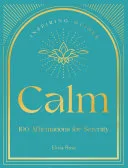
Calm
 77
77

Calm
Elicia Rose Trewick’s *Calm: 100 Affirmations for Serenity* offers a straightforward, modern take on a long-standing self-improvement technique. Its primary strength lies in its accessibility; the affirmations are contemporary and avoid overly spiritual or archaic language, making them approachable for a wide audience. The organization, presenting 100 distinct statements, provides ample material for daily practice. A notable passage, focusing on self-compassion through repeated affirmations, highlights the book’s potential to shift internal dialogues. However, the work could benefit from more explicit guidance on integrating these affirmations into deeper meditative practices, rather than presenting them solely as standalone statements. The book’s brevity might also leave some readers wishing for more extensive theoretical grounding. Ultimately, *Calm* serves as a well-structured, practical toolkit for cultivating positive self-regard.
📝 Description
77
Elicia Rose Trewick published Calm: 100 Affirmations for Serenity in 2022.
Calm is a collection of 100 affirmations designed to promote serenity and emotional well-being. The book structures the use of positive self-talk to encourage personal growth. It offers readers practical tools to improve mental clarity and build emotional resilience.
This work is for anyone interested in self-help, mindfulness, and how language shapes our inner experience. Readers seeking simple ways to foster a more positive self-image will find its exercises directly helpful. The book aims to assist individuals in cultivating a calmer internal state through consistent practice.
The core idea is that regular positive self-affirmation can alter one's mindset and emotional reactions. It suggests a link between internal dialogue and external circumstances. Trewick's book promotes using affirmations deliberately to counteract negative thoughts and create a more peaceful inner world.
The practice of affirmations has historical roots in early 20th-century New Thought, notably championed by figures like Émile Coué. Trewick's 2022 publication engages with contemporary discussions on mental wellness and self-care. It builds on psychological research concerning cognitive behavioral therapy and positive reinforcement, aligning with modern interest in mindfulness.
💡 Why Read This Book?
• You will learn to integrate affirmations, as presented in Trewick's 2022 work, into your daily routine to foster a more positive internal dialogue, directly impacting your emotional state. • You will gain practical techniques for building self-compassion, drawing from the specific affirmations designed to counter self-criticism found within the book. • You will discover how the deliberate use of language, as detailed in the 100 affirmations, can actively contribute to personal growth and mental clarity, offering a tangible method for self-improvement.
⭐ Reader Reviews
Honest opinions from readers who have explored this book.
❓ Frequently Asked Questions
When was 'Calm: 100 Affirmations for Serenity' first published?
The book 'Calm: 100 Affirmations for Serenity' by Elicia Rose Trewick was first published on September 20, 2022, making it a recent addition to the self-help and esoteric literature landscape.
What is the primary goal of the affirmations in Elicia Rose Trewick's book?
The primary goal is to harness the power of positive thinking to uplift, encourage, and inspire the reader, guiding them toward personal growth and a greater sense of serenity through consistent practice.
How does 'Calm' relate to historical self-help practices?
It builds upon traditions like New Thought and the efficacy of positive self-talk, popularized in the early 20th century, but presents them with modern language and an accessible format for contemporary readers.
Is this book suitable for beginners in mindfulness?
Yes, the book is highly suitable for beginners as it offers clear, actionable affirmations and emphasizes the importance of speaking positively to oneself, a foundational aspect of many mindfulness practices.
What is the core message regarding self-talk in this book?
The core message is that the way we speak to ourselves profoundly matters. Regular implementation of positive affirmations and meditations, as presented in the book, can significantly impact one's life and well-being.
Can these affirmations be used for meditation?
While the book focuses on affirmations, the principles of repetition and focused intent are fundamental to meditation, suggesting that these affirmations can indeed be incorporated into meditative practices for enhanced effect.
🔮 Key Themes & Symbolism
Power of Affirmative Language
The central theme is the potent effect of positive self-dialogue. Trewick emphasizes that the consistent repetition of carefully chosen phrases can actively reshape one's perception and emotional landscape. The book posits that by consciously directing our internal narrative through affirmations, we can counteract ingrained negative thought patterns, foster self-belief, and cultivate a more optimistic outlook. This theme is explored through 100 distinct affirmations, each designed to address different facets of personal well-being and growth.
Personal Growth Through Self-Talk
Calm positions self-talk not merely as an internal monologue but as a crucial tool for deliberate personal development. The book argues that the way individuals articulate their thoughts and beliefs about themselves directly influences their capacity for growth, resilience, and achievement. By engaging with the affirmations, readers are encouraged to view their inner voice as a collaborator in their journey towards self-improvement, moving from passive acceptance of thoughts to active cultivation of empowering beliefs.
Cultivating Serenity and Well-being
Beyond mere positive thinking, the book aims to foster a profound sense of inner peace and well-being. The affirmations are curated to promote calmness, reduce anxiety, and enhance emotional stability. Trewick suggests that a consistent practice, as outlined in the 100 affirmations, can lead to a more balanced and serene state of mind, enabling individuals to navigate life's challenges with greater equanimity and inner strength, thereby improving overall quality of life.
Mindfulness and Intentionality
The practice of using affirmations, as presented in Calm, is intrinsically linked to mindfulness and intentionality. The book implicitly encourages readers to be present with their thoughts and to consciously choose the mental states they wish to cultivate. Each affirmation serves as a focal point for mindful attention, guiding the reader to direct their energy and intention towards desired outcomes, fostering a sense of agency over one's mental and emotional experience.
💬 Memorable Quotes
Direct passages from the work, attributed to the author.
“The way we speak to ourselves matters.”
— This concise statement captures the core philosophy of the book, highlighting the wide impact of internal dialogue on our overall well-being and personal development. It serves as the foundational premise for the use of affirmations.
“Positive affirmations... can have a wide impact on our lives.”
— This emphasizes the transformative potential of consistent affirmative practice. It suggests that these statements are not mere platitudes but active agents capable of instigating significant, positive changes in an individual's life circumstances and internal state.
“Harnessing the power of positive thinking to uplift, encourage, and inspire.”
— This describes the intended function of the affirmations within the book. It frames them as tools to actively access and utilize positive mental energy for the purpose of emotional elevation and motivation.
“These uplifting, inspiring, and motivational statements...”
— This phrase describes the nature of the affirmations provided. It underscores their positive and encouraging qualities, positioning them as catalysts for mental and emotional upliftment.
“The book incorporates original, modern, and charming...”
— This suggests that the affirmations are newly created and presented in a contemporary, appealing style, differentiating them from older or more traditional affirmations and making them relatable.
🌙 Esoteric Significance
Tradition
While not explicitly tied to a single historical esoteric lineage like Hermeticism or Kabbalah, *Calm* draws from the broader spiritual-psychological tradition of mind-body connection and the power of intention. This tradition echoes principles found in New Thought, Theosophy, and various forms of Western esotericism that emphasize the creative power of thought and the potential for individuals to shape their reality through internal focus and directed will.
Symbolism
The book primarily uses the 'word' and 'statement' as its core symbolic tools, rather than visual symbols. The affirmation itself acts as a potent mantra or sigil – a condensed form of intent designed to imprint itself upon the subconscious. The act of repetition imbues these verbal constructs with power, functioning similarly to how sacred utterances or divine names are employed in other esoteric traditions to invoke specific energies or states of being.
Modern Relevance
The principles underlying *Calm* are highly relevant to contemporary self-help movements, positive psychology, and mindfulness-based interventions. Thinkers and practitioners in fields like neuro-linguistic programming (NLP) and positive psychology, as well as wellness coaches and therapists utilizing CBT techniques, often incorporate similar affirmation-based strategies. The book's modern, secular approach makes its core message accessible to a wide audience seeking practical tools for emotional regulation and personal development.
👥 Who Should Read This Book
• Individuals seeking to cultivate a more positive self-image and reduce self-criticism, who will find the 100 distinct affirmations provide ample material for daily practice. • Beginners interested in mindfulness and mental wellness, as the book offers accessible, actionable techniques for improving inner dialogue without complex jargon. • Those exploring the intersection of psychology and spirituality, who may appreciate how the book modernizes ancient concepts of mind-over-matter for contemporary application.
📜 Historical Context
Elicia Rose Trewick's *Calm: 100 Affirmations for Serenity* (2022) emerges within a renewed global interest in mental wellness and mindfulness practices, a trend amplified in the wake of the early 2020s. This contemporary focus builds upon a long history of self-help and positive psychology. The concept of affirmations itself gained prominence with figures like Émile Coué in the early 20th century, whose autosuggestion techniques influenced the New Thought movement. While Coué’s methods focused on conscious repetition, Trewick’s work is situated within a broader landscape that includes cognitive behavioral therapy (CBT) and modern positive psychology, fields that scientifically validate the impact of thought patterns on emotional states. Unlike the more mystical or overtly spiritual approaches found in earlier esoteric texts, Trewick’s work offers accessible, secularized affirmations, reflecting a contemporary desire for practical, evidence-informed self-improvement tools. Its publication in 2022 places it alongside countless contemporary authors and online platforms dedicated to mental well-being, such as those inspired by figures like Louise Hay, who also championed affirmations.
📔 Journal Prompts
Reflection on the concept of 'self-talk' as presented in the book.
How can the affirmation 'I am at peace' be integrated into moments of stress?
Identify one limiting belief that needs to be addressed by positive affirmations.
Consider the 'uplifting, encouraging, and inspiring' nature of the statements.
What personal growth areas can be targeted by consistent affirmation practice?
🗂️ Glossary
Affirmation
A positive statement, typically phrased in the present tense, designed to challenge and overcome self-sabotaging and negative thoughts. It is used repeatedly to encourage positive changes in one's thinking and behavior.
Positive Thinking
A mental attitude that focuses on the good and expects positive outcomes. In the context of the book, it's about actively cultivating optimistic thoughts through structured methods like affirmations.
Personal Growth
The ongoing process of self-improvement and self-actualization. It involves developing one's potential, skills, and overall well-being through conscious effort and learning.
Serenity
A state of being calm, peaceful, and untroubled. The book aims to guide readers toward achieving this state through the practice of affirmations.
Mindful Book
Refers to a book that incorporates principles of mindfulness, encouraging readers to be present and aware, often through practices like meditation or focused self-reflection, as suggested by the affirmations.
Internal Dialogue
The conversation that occurs within one's own mind. The book emphasizes the importance of consciously managing this internal dialogue to foster positivity.
Self-Talk
The internal monologue or internal narrative that individuals have with themselves. The book posits that positive self-talk is crucial for mental health and growth.