Judy Garland and the Hoodoo Costume
 71
71

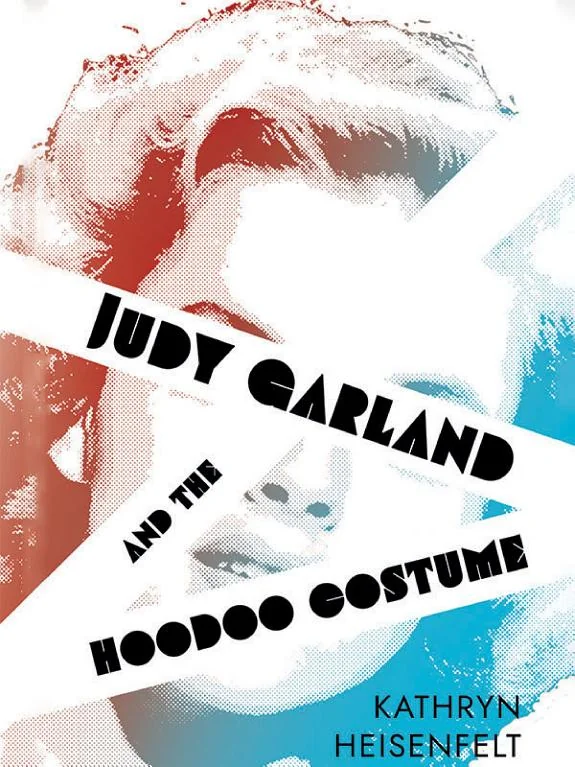
Judy Garland and the Hoodoo Costume
Heisenfelt's "Judy Garland and the Hoodoo Costume" offers a peculiar, if somewhat underdeveloped, premise. The initial encounter at the costume shop, particularly the description of the "beautiful white gown" that unnerves the owner, possesses a genuine atmospheric quality. It hints at a deeper, perhaps occult, significance tied to the object and its intended recipient. However, the plot's pivot towards a kidnapping mystery, while intended to escalate stakes, feels somewhat conventional and detracts from the more intriguing esoteric underpinnings suggested early on. The work's exploration of Judy Garland as a nexus of public myth and potential hidden involvement is its strongest suit, though it occasionally feels like it's reaching for deeper meaning without fully grounding it in the narrative's magical framework. A more sustained focus on the symbolic weight of the costume and its connection to hoodoo practices, rather than a standard thriller plot, might have elevated the piece. Still, it presents an interesting speculative concept for those who enjoy fictionalized encounters between icons and the uncanny.
📝 Description
71
Kathryn Heisenfelt's 2019 novel places Judy Garland in a mysterious costume shop.
Kathryn Heisenfelt's "Judy Garland and the Hoodoo Costume" begins in the mid-20th century, following Judy Garland on a Christmas errand in a northern city. Her task leads her to an unusual costume rental shop where a striking white gown and its unsettling proprietor draw her into a situation far more complex than a simple delivery. The narrative unfolds from this encounter, weaving celebrity mystique with occult undertones.
The book appeals to readers interested in the intersection of pop culture and esoteric fiction. It blends historical figures with speculative elements, examining how public personas might connect with hidden lore. Fans of Judy Garland may find a fresh perspective on her image, while those curious about the symbolic weight of clothing and subtext will find much to consider. The story uses the mid-century Hollywood era, a time of intense star fascination, as a backdrop for its speculative elements.
This novel engages with the idea of costumes as more than fabric; they are presented as conduits for identity, intent, and even spiritual influence. The 'hoodoo' element suggests a connection to folk magic and spiritual practices, potentially imbuing the central gown with specific energies. The book also touches on how public figures, particularly celebrities, can become focal points for cultural projections and energetic attention, reinterpreting their public image through an esoteric framework.
💡 Why Read This Book?
• Gain insight into the symbolic power of costumes, particularly how Heisenfelt depicts the "beautiful white gown" as more than fabric, but as a potential conduit or focal point for hidden energies, a concept explored within the narrative. • Understand the speculative intersection of celebrity mythos and esoteric influence, as the book positions Judy Garland within a narrative that probes how public figures might become enmeshed in occult mysteries. • Explore the thematic resonance of "hoodoo" as a folk magic system, examining how Heisenfelt might integrate its principles into a contemporary mystery centered around a famous personality and an unusual artifact.
⭐ Reader Reviews
Honest opinions from readers who have explored this book.
❓ Frequently Asked Questions
What is the central mystery in "Judy Garland and the Hoodoo Costume"?
The central mystery begins when Judy Garland agrees to deliver a Christmas gift for a friend, leading her to a costume rental company where she encounters a peculiar white gown and a disturbed owner, drawing her into a situation that may involve kidnapping.
When was "Judy Garland and the Hoodoo Costume" first published?
The book was first published on July 13, 2019.
Who is the author of "Judy Garland and the Hoodoo Costume"?
The author is Kathryn Heisenfelt.
What genre does "Judy Garland and the Hoodoo Costume" fall into?
It is categorized under Esoteric literature, blending elements of mystery, speculative fiction, and occult themes.
Does the book focus on actual historical events involving Judy Garland?
No, the book uses Judy Garland as a fictional character within a speculative narrative, blending her public persona with an imagined encounter involving occult elements and a mystery.
What role does the "hoodoo costume" play in the story?
The "hoodoo costume," specifically a striking white gown, appears to be central to the mystery. It unnerves the owner and draws Judy Garland into a situation with potentially occult or magical implications.
🔮 Key Themes & Symbolism
The Symbolic Garment
The narrative foregrounds a specific "beautiful white gown" within the costume rental shop, presenting it as an object imbued with significance beyond its material form. This garment becomes a focal point, unsettling the owner and drawing Judy Garland into its orbit. The work explores how clothing can act as a repository for intention, memory, or even esoteric energies, suggesting that the "hoodoo costume" is not merely an artifact but a catalyst for unfolding events and hidden truths.
Celebrity as Occult Nexus
Positioning Judy Garland, a figure of immense public adoration and cultural impact, within a narrative of occult mystery is a central theme. The book speculates on how such widespread fame might create a potent energetic or symbolic nexus, attracting or entangling the individual in forces not visible to the general public. It plays with the idea that the public persona can become a mask that conceals or attracts deeper, perhaps magical, currents.
Mystery and Esoteric Entanglement
The story uses a kidnapping mystery as a vehicle to explore esoteric entanglement. The "hoodoo costume" and the disturbed owner act as initial triggers, pulling Judy Garland into a situation that transcends a simple crime. The work suggests that mundane mysteries can often have deeper, hidden roots in occult practices or symbolic occurrences, especially when a prominent cultural figure becomes involved.
Perception and Disturbance
A key element is the owner's profound disturbance when Judy Garland points out the white gown. This highlights the theme of perception—what is seen versus what is known or felt. The owner's reaction suggests a hidden knowledge or a psychic sensitivity to the gown's true nature, contrasting with Judy's initial, more conventional observation, thereby underscoring how esoteric awareness can differ dramatically from ordinary perception.
💬 Memorable Quotes
Direct passages from the work, attributed to the author.
“The owner is deeply disturbed when Judy points it out.”
— This brief observation captures the immediate introduction of unease and the uncanny. It suggests a hidden history or power associated with the gown, immediately signaling that the narrative will venture beyond simple plot mechanics into a field of deeper, perhaps occult, significance.
“Judy notices a beautiful white gown that seems out of keeping with the other costumes”
— This highlights the garment as an anomaly, a symbol of purity or otherworldliness amidst the mundane or theatrical. Its distinctiveness marks it as a potential locus of power or a significant artifact within the story's esoteric framework.
“The gift is delivered to a costume rental company”
— This seemingly innocuous detail serves as the narrative's inciting incident. It places Judy Garland in a specific, charged environment where ordinary tasks can intersect with the extraordinary, setting the stage for the unfolding mystery and esoteric elements.
“As a favor to the owner, Judy agrees to deliver the dress to its rightful owner...”
— This action propels Judy Garland directly into the heart of the unfolding mystery. It demonstrates her character's willingness to engage with the unknown, driven by a sense of obligation, which is crucial for her subsequent entanglement with the esoteric elements.
“...and quickly finds herself embroiled in a mystery that may include kidnapping.”
— This phrase signifies the escalation of the plot from a simple errand to a dangerous situation. It bridges the gap between the initial esoteric intrigue and a more conventional thriller element, suggesting a complex interplay of forces at play.
🌙 Esoteric Significance
Tradition
This work can be seen as engaging with contemporary esoteric fiction that borrows from various traditions, including folk magic and possibly Western esotericism, without strictly adhering to one lineage. The mention of "hoodoo" points to African diasporic spiritual practices, while the focus on a celebrity and a mysterious object might draw parallels to more modern occult fiction that explores symbols of power and influence in secular contexts.
Symbolism
The primary symbols are the "beautiful white gown" and the "costume rental company." The gown, often associated with purity, weddings, or spectral figures, is presented as out of place, suggesting it carries a significant, perhaps unsettling, spiritual or magical charge. The costume company itself symbolizes a place where identities are temporarily adopted, a potent setting for exploring the layers of persona and the potential for hidden selves or influences to manifest.
Modern Relevance
The book's exploration of celebrity as a focal point for symbolic narratives and hidden forces appeals to contemporary interest in the occult lives of famous individuals. Thinkers and practitioners exploring the intersection of pop culture, mythology, and esotericism, as well as those interested in the symbolic power of everyday objects and clothing, might find this work a compelling, albeit fictionalized, case study.
👥 Who Should Read This Book
• Readers interested in speculative fiction that blends celebrity biography with occult themes, particularly those intrigued by how public figures might interact with hidden spiritual currents. • Enthusiasts of mystery narratives who appreciate a unique twist, seeking stories where the "whodunit" element is intertwined with symbolic objects and potentially magical influences. • Students of cultural studies and esoteric symbolism who are exploring how modern icons and artifacts can be reinterpreted through a lens of deeper, hidden meanings and esoteric lore.
📜 Historical Context
Published in 2019, Kathryn Heisenfelt's "Judy Garland and the Hoodoo Costume" emerges in an era marked by a resurgence of interest in esoteric traditions and a fascination with the symbolic lives of cultural icons. While the book itself is contemporary, it taps into the mid-20th century cultural landscape where Hollywood stars like Judy Garland held immense sway, becoming archetypes in the public consciousness. This period, roughly the 1940s-1960s, saw burgeoning interest in fields like parapsychology and comparative religion, though often segregated from mainstream discourse. The work implicitly engages with the legacy of figures like Aleister Crowley and the broader occult revival, juxtaposing them with the sanitized image of Hollywood. Unlike the more academic explorations of mythopoetics in figures like Joseph Campbell, Heisenfelt's approach is fictionalized, embedding esoteric concepts within a narrative framework. The book does not reference a specific reception event but operates within a cultural milieu where speculative fiction often probes the hidden lives of celebrities, a trend amplified by the internet age.
📔 Journal Prompts
The unsettling nature of the "beautiful white gown," as perceived by the costume shop owner.
Judy Garland's role as an unwitting participant in an esoteric mystery.
The symbolic significance of a costume rental company in a narrative involving hidden forces.
The transition from a simple Christmas gift delivery to a potentially dangerous situation.
Interpreting the "hoodoo" element within the context of a celebrity-focused mystery.
🗂️ Glossary
Hoodoo Costume
Refers to a specific white gown in the narrative that is implied to have connections to hoodoo, a system of folk magic and spiritual practice with African diasporic roots. It suggests the costume carries a particular spiritual or magical significance beyond its appearance.
Costume Rental Company
The setting where Judy Garland encounters the mysterious white gown. It functions as a symbolic space where identities are stored and potentially imbued with various energies or histories, serving as a catalyst for the story's unfolding mystery.
Esoteric
Pertaining to or dealing with the complex or arcane. In literature, it suggests themes related to hidden knowledge, spiritual practices, occultism, or mystical experiences beyond conventional understanding.
White Gown
A central symbolic object in the narrative. Its whiteness suggests purity, spirit, or a spectral presence, while its placement in a costume shop and the owner's disturbance imply a deeper, possibly unsettling, esoteric significance.
Northern City
The setting for Judy Garland's winter visit. Such locations can often be imbued with symbolic weight in literature, suggesting isolation, introspection, or a stark contrast to warmer, more familiar climes, potentially enhancing the mysterious atmosphere.
Christmas Gift
The initial catalyst for Judy Garland's presence in the story. While seemingly mundane, its delivery leads her to the key encounter with the "hoodoo costume," highlighting how ordinary errands can intersect with extraordinary circumstances.
Proprietor
The owner of the costume rental company. Their disturbed reaction to the white gown is a key indicator of the story's descent into mystery and the occult, signaling that the garment possesses an unusual or dangerous quality.
This book appears in 1 collection
🔮 Readers Also Liked
Browse all →









From the “Hoodoo” Collection
View all →






More Free Occult Philosophy Books
View all →