American Voudou
 71
71

American Voudou
Rod Davis's "American Voudou" offers a much-needed corrective to the often lurid and misinformed narratives surrounding this complex spiritual tradition. Rather than succumbing to sensationalism, Davis grounds his exploration in diligent research, presenting Voudou not as a monolithic entity, but as a dynamic, syncretic faith shaped by diaspora and adaptation. He effectively highlights the internal logic and sophisticated cosmology of Voudou practitioners. A notable strength lies in his detailed exposition of the *lwa*, explaining their distinct characteristics and roles within the pantheon, moving beyond simplistic good-vs.-evil dichotomies. However, the work occasionally feels more like a comprehensive catalog than a deeply interpretive study, sometimes lacking a pronounced authorial voice in its later sections. A passage detailing the ritual significance of specific offerings, for instance, is meticulously researched but could benefit from more interpretive depth.
Ultimately, "American Voudou" serves as a vital, fact-rich resource for understanding a profoundly influential religious system.
📝 Description
71
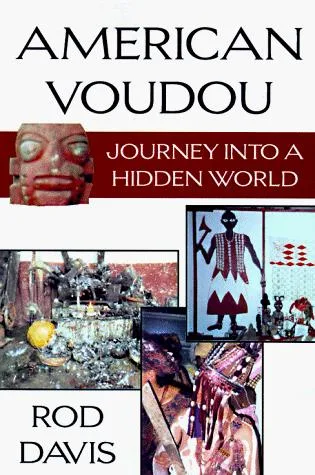
Rod Davis's 1999 book, American Voudou, moves beyond sensationalism to detail syncretic African diaspora religious practices.
Published in 1999, Rod Davis's American Voudou examines the syncretic religious practices that developed within the African diaspora in the Americas. The book moves beyond sensationalized portrayals to offer a scholarly yet accessible look at Voudou's evolution as it adapted to new environments and belief systems. Davis details the spirit pantheons, ritual structures, and cosmological frameworks that define this tradition.
This work is valuable for students of comparative religion, scholars of African American studies, and practitioners seeking a deeper understanding of Voudou. It appeals to those interested in the resilience of spiritual traditions under colonial pressures and the creative ways faith adapts. Individuals looking to move past stereotypes and engage with a complex spiritual system will find this book particularly useful. Davis places American Voudou within post-Columbian religious history, charting its course from West African roots through Caribbean and North American manifestations.
The text covers concepts such as *lwa* (spirits or deities), *hounfor* (temples or ritual spaces), and the roles of the *houn'gan* (priest) and *mambo* (priestess). It discusses the significance of drumming, dance, and trance states in spiritual communication. The book also addresses Voudou's perception by external religious and governmental authorities, acknowledging influences from Catholicism, Indigenous spiritualities, and socio-political conditions.
American Voudou stands as a significant scholarly examination of a spiritual tradition born from the forced migrations and cultural collisions of the Atlantic world. It details how African cosmological beliefs and practices, including those from Dahomey and Kongo, merged with elements of Catholicism and Indigenous American traditions. This syncretism produced unique systems of spirit veneration and ritual practice, adapted to the specific social and political landscapes of the Caribbean and North America. The book illuminates the resilience and creative adaptation of these traditions under duress.
💡 Why Read This Book?
• Gain a nuanced understanding of the *lwa* hierarchy and their specific domains, moving beyond simplistic Western interpretations of deities and spirits. • Comprehend the historical trajectory of Voudou from its West African origins through its syncretic development in the Americas, particularly post-1492. • Appreciate the intricate roles of the *houn'gan* and *mambo* within Voudou communities, understanding their spiritual and social authority.
⭐ Reader Reviews
Honest opinions from readers who have explored this book.
❓ Frequently Asked Questions
When was Rod Davis's "American Voudou" first published?
Rod Davis's "American Voudou" was first published in 1999, offering a detailed examination of the religion during a period of increased scholarly and public interest in African diasporic traditions.
What is the primary focus of "American Voudou"?
The book focuses on the syncretic religious practices of Voudou that developed in the Americas, detailing its spirit pantheons, rituals, and cosmology, while aiming to provide an accurate portrayal beyond stereotypes.
Does "American Voudou" discuss the role of priests and priestesses?
Yes, the work extensively discusses the roles of the *houn'gan* (priest) and *mambo* (priestess), highlighting their spiritual and community leadership within Voudou practice.
Are the spirits (lwa) in Voudou explained in the book?
Absolutely. "American Voudou" provides detailed explanations of the *lwa*, the distinct deities and spirits within the Voudou pantheon, their characteristics, and their functions in rituals and cosmology.
What historical influences are explored in "American Voudou"?
The book explores influences from West African spiritual traditions, Catholicism, and Indigenous American beliefs, tracing how these synthesized to form American Voudou in response to diaspora and new environments.
Is "American Voudou" suitable for beginners to the study of religion?
Yes, while scholarly, the book is written to be accessible to those new to Voudou or comparative religion, providing a solid foundation for understanding its complex history and practices.
🔮 Key Themes & Symbolism
Syncretism and Adaptation
Davis meticulously details how Voudou, originating from West African spiritual systems, absorbed and reinterpreted elements from Catholicism and Indigenous American beliefs. This syncretism was not passive; it was an active process of adaptation driven by the socio-historical pressures of the diaspora, particularly in the Caribbean and North America. The book illustrates how the *lwa* came to be associated with Catholic saints, creating a spiritual language that could navigate colonial oppression and maintain cultural continuity. This theme underscores Voudou's resilience and its capacity for creative spiritual synthesis.
The Lwa Pantheon
A central focus of "American Voudou" is the intricate pantheon of *lwa*. Davis moves beyond simplistic categorizations, presenting these spirits as complex intermediaries between the human and divine. The work explores the distinct personalities, domains, and relationships of various *lwa*, such as Papa Legba, Erzulie Freda, and Ogou. Understanding the *lwa* is crucial to grasping Voudou cosmology, as they govern different aspects of life, from love and prosperity to war and healing. Their depiction is vital to the ritual life and spiritual worldview of practitioners.
Ritual and Community
The book emphasizes that Voudou is a lived, embodied practice. Davis describes the essential components of Voudou ritual, including the use of drumming, chanting, dance, and trance states to facilitate communication with the *lwa*. He elucidates the significance of the *hounfor* (temple) as a sacred space and the vital roles of the *houn'gan* and *mambo* as spiritual leaders and custodians of tradition. These rituals are not mere performances but are integral to community cohesion, spiritual healing, and maintaining the connection between the visible and invisible worlds.
Perception and Misconception
Davis confronts the pervasive negative stereotypes and sensationalism that have long surrounded Voudou in Western discourse. He distinguishes the authentic practice from the misrepresentations often fueled by colonial histories and media portrayals. By presenting a scholarly and respectful account, the book aims to clarify Voudou, highlighting its ethical frameworks, its therapeutic dimensions, and its importance as a legitimate spiritual path for its adherents. This theme is critical for fostering a more accurate and informed public understanding.
💬 Memorable Quotes
Direct passages from the work, attributed to the author.
“The cosmology of Voudou is not a static inheritance but a living, evolving system.”
— This statement emphasizes the dynamic nature of Voudou, highlighting that its spiritual framework is continuously shaped by the experiences and adaptations of its practitioners, rather than being a fixed, unchanging doctrine.
“The *lwa* are not simply figures of worship but active participants in the lives of the community.”
— This interpretation underscores the functional aspect of the *lwa* within Voudou practice, positioning them as relational entities deeply involved in the daily concerns, challenges, and spiritual well-being of the adherents.
“Syncretism in Voudou represents a powerful act of cultural survival and spiritual creativity.”
— This highlights that the blending of different religious elements in Voudou was a deliberate strategy for preserving African spiritual heritage under duress, demonstrating ingenuity and resilience in the face of assimilation pressures.
“Understanding Voudou requires moving beyond the sensationalism often presented in popular media.”
— This points to the critical need to approach Voudou with an open mind, distinguishing between its authentic practices and the often inaccurate or fear-mongering portrayals found in external sources.
“The *hounfor* serves as a microcosm of the cosmos for the practitioner.”
— This suggests that the ritual space of the Voudou temple is imbued with profound symbolic meaning, acting as a sacred locus where the spiritual and earthly realms converge and are actively engaged.
🌙 Esoteric Significance
Tradition
While not strictly adhering to a single Western esoteric lineage like Hermeticism or Kabbalah, "American Voudou" engages with themes central to comparative esoteric studies. It examines a living religious tradition that, like many esoteric systems, emphasizes direct experience of the divine, complex cosmologies, and the manipulation of spiritual forces. Voudou's emphasis on intermediaries (*lwa*), ritual efficacy, and altered states of consciousness aligns with broader esoteric interests in bridging the material and spiritual worlds, albeit through a distinct cultural lens.
Symbolism
The book highlights potent symbols within Voudou. The *veve*, intricate geometric designs drawn on the ground, serve as visual representations and gateways for the *lwa*, acting as symbolic anchors for spirit manifestation. The serpent, often associated with *Damballa Wedo*, symbolizes creation, wisdom, and healing, reflecting ancient chthonic and life-affirming energies. The color symbolism, such as white for purity and peace or red and blue for passion and spirituality, also plays a central role in ritual communication and understanding the attributes of specific *lwa*.
Modern Relevance
Contemporary practitioners and scholars of Afro-Caribbean spirituality, as well as those interested in comparative religion and embodied spiritual practices, continue to draw on Davis's work. His detailed account of Voudou's historical development and its core tenets provides a valuable reference point for understanding modern Voudou communities and their ongoing engagement with globalized spiritual landscapes. Thinkers exploring themes of cultural resilience, post-colonial spirituality, and the intersection of magic and religion find "American Voudou" an essential resource.
👥 Who Should Read This Book
• Students of African diasporic religions seeking an authoritative overview of Voudou's history, beliefs, and practices. • Comparative religion scholars interested in syncretism and the evolution of spiritual traditions outside mainstream Western frameworks. • Individuals seeking to understand Voudou beyond sensationalized stereotypes, aiming for a respectful and informed perspective on this complex faith.
📜 Historical Context
Rod Davis's "American Voudou," published in 1999, emerged during a period of increasing academic and public engagement with African diasporic religions. Its appearance offered a scholarly counterpoint to the sensationalized and often demonized portrayals of Voudou prevalent in Western culture since at least the early 20th century. The book situates Voudou within the broader context of post-Columbian religious formation, tracing its roots from West African traditions through its complex syncretic evolution in the Americas. Key contemporaries engaging with similar themes in religious studies and anthropology include scholars like Maya Deren, whose key work "Divine Horsemen: The Living Gods of Haiti" (1953) also explored Haitian Vodou. Davis's work contributes to a growing body of literature that sought to legitimize and understand these traditions on their own terms, moving away from colonialist perspectives and engaging with the lived realities of practitioners.
📔 Journal Prompts
The role of the *lwa* as intermediaries in Voudou cosmology.
The significance of syncretism in preserving African spiritual traditions.
How the *hounfor* functions as a sacred space for ritual practice.
The distinction between authentic Voudou and popular misconceptions.
The historical development of Voudou in the American diaspora.
🗂️ Glossary
Lwa
Spirits or deities in the Voudou pantheon, acting as intermediaries between humanity and the supreme creator God (Bondye). Each *lwa* has unique characteristics, domains, and associations.
Bondye
The supreme creator God in Voudou, often seen as distant and uninvolved in daily human affairs, thus necessitating communication through the *lwa*.
Houn'gan
A male priest in Voudou, responsible for leading rituals, performing ceremonies, and guiding the community's spiritual life.
Mambo
A female priestess in Voudou, holding similar responsibilities to the *houn'gan* in leading rituals and community spiritual guidance.
Hounfor
A Voudou temple or sacred space where rituals and ceremonies are conducted. It is considered a consecrated area for communion with the *lwa*.
Veve
Intricate symbolic designs drawn on the ground, typically using cornmeal or ash, which serve as the specific emblem or 'flag' of a particular *lwa* during ceremonies.
Syncretism
The blending of different religious beliefs and practices, particularly evident in Voudou through the integration of West African traditions with elements of Catholicism and Indigenous American faiths.
🔮 Readers Also Liked
Browse all →









More by Rod Davis
All books →
More Free Occult Philosophy Books
View all →