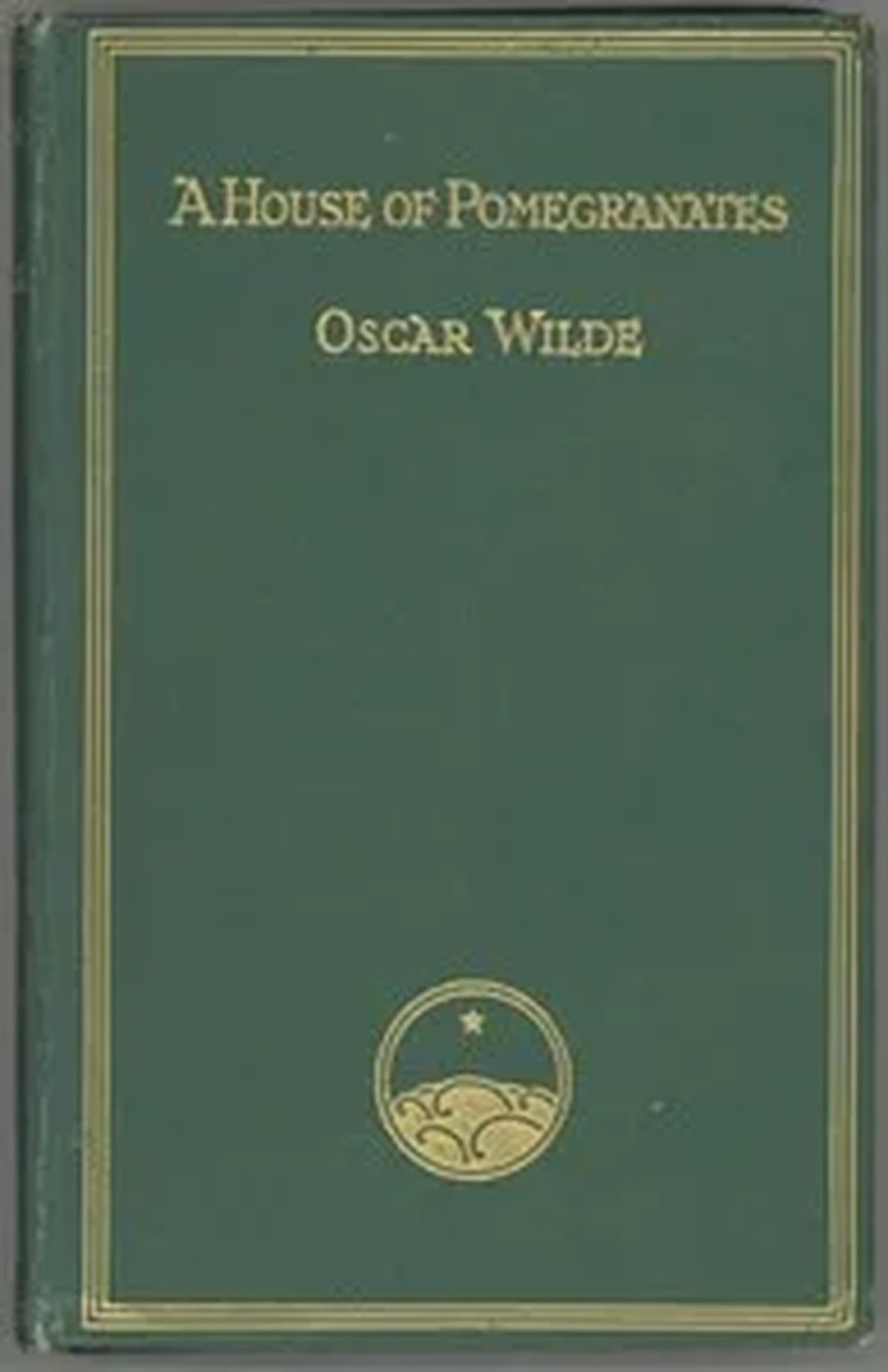
A House of Pomegranates
 80
80

A House of Pomegranates
Wilde's "A House of Pomegranates" presents a peculiar challenge for the modern reader: its exquisite beauty is often inseparable from its profound sadness. The collection's strength lies in Wilde's unparalleled command of language, crafting sentences that shimmer with an almost alchemical precision. Consider the tale of "The Birthday of the Infanta," where the deformed dwarf's love for the princess, a love he believes reciprocated, culminates in his tragic demise upon realizing he was merely an object of her amusement. This narrative thread, illustrating the devastating gap between idealized perception and harsh reality, is masterfully executed. However, the very density of Wilde's aestheticism can, at times, feel like a gilded cage. The relentless pursuit of stylistic perfection occasionally overshadows emotional immediacy, leaving the reader admiring the artistry from a slight remove. The work's enduring power rests on its melancholic exploration of beauty's ephemeral nature and the often-unseen costs of devotion.
This collection offers a potent, albeit somber, reflection on the human condition through the lens of stylized fantasy.
📝 Description
80
Oscar Wilde published "A House of Pomegranates" in 1892, a collection of four fairy tales.
Oscar Wilde's "A House of Pomegranates" is a quartet of fairy tales, first issued in 1892. These are not children's stories; rather, they are elaborate allegories rich with decadent aesthetics. Wilde employs ornate prose, drawing from classical mythology and biblical accounts to construct settings that feel both recognizable and entirely new. The tales examine beauty, love, sacrifice, and suffering.
This collection will appeal to readers who appreciate highly stylized language and complex thematic explorations disguised as fairy tales. It is particularly suited for those interested in the Decadent movement and late Victorian literature. Those seeking simple narratives should look elsewhere; these stories require careful attention and reward readers who engage with their dense symbolism and somber moods.
Published during the twilight of the 19th century, "A House of Pomegranates" emerged from a period of artistic and intellectual upheaval. Wilde, a central figure in the Decadent movement, reacted against Victorian moralism and utilitarianism by prioritizing aestheticism and subjective experience. This collection, with its focus on beauty and artifice, contrasts with the social realism of contemporaries. Its reception was mixed, with praise for its artistry alongside criticism for perceived amorality.
💡 Why Read This Book?
• Learn about the Decadent movement's aesthetic philosophy by examining Wilde's deliberate rejection of Victorian moralizing in "The Young King," where beauty is paramount over ethical considerations. • Experience the symbolic weight of sacrificed innocence through the narrative of "The Doormat" in "The Fisherman and His Soul," understanding its allegorical representation of lost purity for worldly gain. • Gain insight into the complex relationship between art and suffering, as depicted in "The Nightingale and the Rose," where the bird's death provides the material for an artificial rose, highlighting the often-unseen cost of beauty.
⭐ Reader Reviews
Honest opinions from readers who have explored this book.
❓ Frequently Asked Questions
When was Oscar Wilde's "A House of Pomegranates" first published?
Oscar Wilde's "A House of Pomegranates" was first published in 1892. The edition referenced here, however, is from 1923, placing it within a later period of its circulation and critical reception.
Are these fairy tales suitable for children?
No, these tales are not intended for children. They feature complex themes, sophisticated language, and often explore dark or melancholic subjects unsuitable for young audiences.
What literary movement is "A House of Pomegranates" associated with?
The collection is strongly associated with the Decadent movement, of which Oscar Wilde was a leading figure. Its emphasis on aestheticism, artifice, and subjective experience is characteristic of this literary period.
What are the main themes explored in the book?
Key themes include the nature of beauty, the sacrifices made in its pursuit, the contrast between illusion and reality, the complexities of love, and the pervasive presence of sorrow and suffering.
How does "A House of Pomegranates" differ from traditional fairy tales?
Unlike traditional fairy tales that often offer clear moral lessons and happy endings, Wilde's stories are allegorical, filled with intricate symbolism, and frequently conclude with tragic or bittersweet resolutions.
What is the significance of the title "A House of Pomegranates"?
The title itself evokes a sense of alluring mystery and hidden depths, much like the fruit of the pomegranate, which has ancient mythological associations with Persephone and the underworld, suggesting themes of duality and the perilous nature of desire.
🔮 Key Themes & Symbolism
The Peril of Beauty
Wilde constantly examines beauty not as a simple aesthetic quality, but as a powerful, often destructive force. In "The Young King," the protagonist's obsession with creating the most beautiful garments, regardless of the suffering they inflict, leads to a divine judgment. This theme explores how the pursuit of ideal beauty can become a moral failing, demanding sacrifices that transgress ethical boundaries and ultimately isolate the seeker. The tales suggest that true beauty may lie not in outward appearance but in inner truth, a concept often tragically overlooked by Wilde's characters.
Illusion vs. Reality
A recurring motif is the stark contrast between characters' perceptions and the underlying truths of their situations. "The Birthday of the Infanta" presents a poignant example, where a deformed jester believes he has found love and acceptance, only to discover he was merely a source of amusement for a cruel princess. This theme highlights the pain of disillusionment and the often-unseen suffering caused by societal artifice or self-deception. Wilde uses these narratives to question the reliability of appearances and the profound emotional cost when illusions shatter.
The Nature of Sacrifice
Sacrifice is explored in its many forms, from the innocent to the transactional. In "The Nightingale and the Rose," a nightingale sacrifices its life to provide a red rose for a student's beloved, a sacrifice ultimately unappreciated. Conversely, "The Fisherman and His Soul" depicts a man sacrificing his soul for a mermaid, only to find his worldly desires lead to spiritual emptiness. These narratives question the value and purpose of sacrifice, suggesting that true worth lies not in the act itself but in what is being sacrificed for and its ultimate consequence.
Love and Suffering
Wilde intricately links the experiences of love and suffering, often portraying them as inseparable. Characters who seek profound or idealized love frequently encounter immense pain, isolation, or betrayal. The purity of love is often corrupted by external forces or internal flaws, leading to tragic outcomes. This theme examines the melancholic aspects of human connection, suggesting that the capacity for deep feeling inherently exposes one to profound sorrow, a sentiment that pervades the collection's atmosphere.
💬 Memorable Quotes
Direct passages from the work, attributed to the author.
“Beauty is a form of genius -- it is one of the things which are most convertible into a man's own property.”
— This aphorism, often attributed to Wilde and reflecting the ethos of his work, suggests that beauty is not merely superficial but an intrinsic quality that can be possessed and leveraged, akin to intellectual brilliance.
“He was ugly, and he had never known it.”
— This simple, stark observation from "The Birthday of the Infanta" powerfully introduces the theme of unawareness of one's own perceived flaws, setting the stage for tragic self-discovery and the cruelty of those who perceive differently.
“He had sacrificed his soul for love, and he had gained nothing.”
— This interpretive summary from "The Fisherman and His Soul" expresses the story's moral, illustrating the futility of exchanging spiritual integrity for worldly affections that ultimately prove hollow and unsatisfying.
💡 Key Ideas
Editorial paraphrase of the work's core concepts — not direct quotes.
For the senses, scroll and colour, and sound and scent, are the gates of the soul. ... the soul is the prisoner of the body.
This quote highlights a central tension in Wilde's thought: the value placed on sensory experience as a pathway to understanding, countered by the idea that the physical body can be a limitation, trapping the more refined spirit.
The world is a stage, and the stage is the world.
This paraphrased concept emphasizes Wilde's fascination with artifice and performance, suggesting that the boundaries between fabricated reality (the stage) and lived experience (the world) are fluid and interchangeable.
🌙 Esoteric Significance
Tradition
While not strictly adhering to a single esoteric lineage, Wilde's work taps into Gnostic and Neoplatonic themes. The emphasis on a higher, often unattainable, spiritual or aesthetic ideal that clashes with the material world echoes Gnostic dualism, where the material realm is seen as flawed or illusory. The exploration of beauty and its corrupting potential also touches upon Hermetic ideas concerning the manipulation of forces and the consequences of seeking forbidden knowledge or experiences.
Symbolism
The pomegranate itself is a potent symbol, famously associated with Persephone's descent into the underworld and her subsequent binding to it, representing duality, hidden knowledge, and the perilous nature of desire. In Wilde's tales, it signifies a gateway to complex, often sorrowful, truths. Other symbols include the nightingale (representing pure artistic sacrifice) and the mermaid (embodying an alluring but ultimately destructive, non-human ideal that lures man away from spiritual grounding).
Modern Relevance
Contemporary practitioners of aesthetic spirituality and certain branches of modern occultism find resonance in Wilde's exploration of beauty as a transformative, albeit dangerous, force. His work continues to inform discussions on the relationship between art, ethics, and personal liberation, influencing thinkers and artists who seek to challenge conventional norms and explore the liminal spaces between the sacred and the profane, the real and the imagined.
👥 Who Should Read This Book
• Students of Decadent literature and late Victorian aesthetics seeking to understand Wilde's artistic philosophy through his own narrative creations. • Readers interested in allegorical storytelling and symbolic analysis who appreciate tales that invite multiple interpretations beyond their surface narrative. • Comparative literature scholars examining the intersection of fairy tale traditions with modern aestheticism and psychological depth in storytelling.
📜 Historical Context
Oscar Wilde's "A House of Pomegranates," first published in 1892, is a significant artifact of the Decadent movement. Emerging in the late Victorian era, this literary and artistic current reacted against the perceived moralism and utilitarianism of the age, prioritizing aestheticism, artificiality, and subjective experience. Wilde, alongside contemporaries like Aubrey Beardsley, championed the idea of 'art for art's sake.' The collection's ornate prose, focus on beauty, and exploration of complex psychological states stood in stark contrast to the burgeoning social realism championed by writers like George Gissing. While celebrated by avant-garde circles, the work was also met with criticism for its perceived lack of conventional morality and its exoticism. Its publication followed Wilde's earlier success with "The Picture of Dorian Gray" (1890), further cementing his reputation as a controversial but influential figure.
📔 Journal Prompts
The Young King's pursuit of beauty: reflect on an instance where aesthetic ideals conflicted with ethical responsibilities.
The symbolism of the pomegranate: explore its connection to desire and consequence in your own life.
The Birthday of the Infanta's stark reality: consider moments where perceived affection masked indifference.
The sacrifice of the Nightingale: analyze the cost and value of artistic creation in your experience.
The Fisherman's choice: examine the trade-offs between spiritual fulfillment and worldly desires.
🗂️ Glossary
Aestheticism
An art movement and literary philosophy of the late 19th century that championed 'art for art's sake,' prioritizing beauty and sensory form over moral or didactic purposes.
Decadence
A literary and artistic movement associated with Aestheticism, characterized by its focus on artificiality, morbidity, sensory experience, and a rejection of traditional Victorian values.
Allegory
A narrative in which characters, events, and settings represent abstract qualities or ideas, conveying a deeper, often moral or spiritual, meaning.
Gnosticism
A diverse set of religious and philosophical systems that emerged in the early Christian era, emphasizing secret knowledge (gnosis) for salvation and often viewing the material world as flawed or evil.
Neoplatonism
A philosophical system derived from Plato, emphasizing a transcendent, perfect, and unchanging reality (the One) from which all existence emanates.
Artifice
The quality of being clever, skillfully made, or ingenious; in a literary context, it often refers to elaborate or sophisticated construction, sometimes to the point of seeming unnatural.
Symbolism
The use of symbols—objects, people, or actions—to represent abstract ideas or qualities, enriching the meaning and depth of a literary work.
🔮 Readers Also Liked
Browse all →







More by Oscar Wilde
All books →



More Free Occult Philosophy Books
View all →