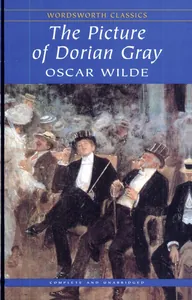
The Picture of Dorian Gray

 71
71

The Picture of Dorian Gray
Wilde’s exploration of aestheticism and its potential for moral decay is undeniably potent, even if its execution occasionally falters under the weight of its own epigrams. The novel’s strength lies in its audacious premise: a life lived in pursuit of sensation, mirrored by a decaying portrait. The dialogue, particularly Lord Henry Wotton’s pronouncements, crackles with a cynical wit that both seduces and repels. However, the pacing can feel uneven, with extended philosophical discussions sometimes overshadowing Dorian's actual character development. A particularly striking passage occurs when Dorian, contemplating his portrait, realizes its capacity to absorb his sins, a moment where the supernatural conceit vividly illustrates the novel's central anxieties about hidden corruption. The work’s enduring power resides in its unflinching look at the Faustian bargain of eternal youth and beauty. It serves as a stark, if stylized, warning against the consequences of a life divorced from conscience.
📝 Description
71
Oscar Wilde's 1890 novel, *The Picture of Dorian Gray*, examines the cost of eternal youth.
First appearing in 1890, Oscar Wilde's only novel is a Gothic tale of vanity and its consequences. It tells the story of Dorian Gray, a young man whose portrait ages and decays in his place as he pursues a life of pleasure and sin without apparent personal cost. The narrative follows Dorian through a series of experiences and conversations, detailing his moral decline and his futile attempts to avoid the repercussions of his actions.
The novel delves into the relationship between beauty and morality, suggesting that while art may exist outside of ethical judgment, human conduct, especially when driven by a desire for perpetual youth or sensory gratification, carries unavoidable moral weight. The theme of the double, represented by Dorian and his portrait, is crucial, symbolizing a fractured self and the inescapable nature of one's deeds.
Wilde's novel emerged during a period when occult and spiritualist interests were gaining traction in Britain, alongside the Aesthetic Movement's focus on art's sensory and symbolic dimensions. While not overtly occult, the story taps into a fascination with hidden selves, the power of the image to absorb sin, and the potential for forbidden knowledge and experience to corrupt. The idea of a magical object bearing the burden of a soul's corruption resonates with older traditions concerning talismans and the darker aspects of symbolic representation.
💡 Why Read This Book?
• Gain insight into the Aesthetic Movement's philosophy by examining its application through the lens of Dorian's pursuit of beauty and pleasure, as detailed in the 1890 publication context. • Understand the symbolic representation of the soul's corruption via the aging portrait, a central motif that offers a unique visual metaphor for moral decay. • Contemplate the nature of art and morality as presented through Lord Henry Wotton's influential, often hedonistic, philosophies, which were controversial in Victorian London.
⭐ Reader Reviews
Honest opinions from readers who have explored this book.
❓ Frequently Asked Questions
When was The Picture of Dorian Gray first published?
The Picture of Dorian Gray was first published in the August 1890 issue of Lippincott's Monthly Magazine, a British edition of an American periodical.
What is the main theme of The Picture of Dorian Gray?
The main theme revolves around the consequences of vanity and hedonism, exploring the relationship between beauty, youth, and morality, and the idea that a life lived purely for sensation can lead to moral and spiritual decay.
Who are the main characters in The Picture of Dorian Gray?
The primary characters are Dorian Gray, a handsome young man; Lord Henry Wotton, a witty and cynical aristocrat who influences Dorian; and Basil Hallward, the artist who paints Dorian's portrait.
What is the significance of the portrait in the novel?
The portrait serves as a magical mirror reflecting Dorian's sins and the passage of time, aging and becoming hideous with each transgression while Dorian himself remains ageless and beautiful.
Was The Picture of Dorian Gray controversial when it was released?
Yes, it was highly controversial upon its initial publication in 1890 due to its perceived decadence, hedonistic philosophy, and homoerotic undertones, leading to calls for censorship.
What is Aestheticism, and how does it relate to the book?
Aestheticism, or the "art for art's sake" movement, emphasized beauty and artistic form over moral or didactic purposes. The novel engages with this philosophy, particularly through Lord Henry's influence on Dorian's pursuit of beauty and experience.
🔮 Key Themes & Symbolism
The Aesthetic Ideal
The novel critically examines the Aesthetic Movement's tenet of "art for art's sake." Lord Henry champions a life devoted to beauty and sensory experience, advocating for the pursuit of pleasure above all else. This ideal, however, becomes a justification for moral laxity. The work questions whether art can truly be divorced from life and ethics, especially when the pursuit of aesthetic perfection leads to the degradation of the soul, as demonstrated by Dorian's literal and figurative corruption.
The Double and Hidden Selves
The central motif of the portrait functioning as a magical double is a potent symbol of the psyche's duality. Dorian maintains a flawless exterior while his soul, externalized onto the canvas, bears the grotesque marks of his vices. This concept speaks to the hidden life, the secret sins and desires that individuals conceal from society and perhaps even from themselves, suggesting that such repression inevitably corrupts.
Faustian Bargain and Consequences
The narrative carries the Faust legend, where a character trades their soul for worldly desires—in Dorian's case, eternal youth and beauty. The portrait serves as the physical manifestation of this pact. The novel meticulously details the Faustian bargain's inevitable cost: not immediate damnation, but a slow spiritual decay and an inability to find genuine happiness or fulfillment, underscoring that actions, however hidden, have profound consequences.
Art, Morality, and Influence
Wilde probes the complex interplay between artistic creation, moral responsibility, and the power of influence. Basil Hallward's art captures not just Dorian's beauty but, through Dorian's perception, becomes a vessel for his sins. Lord Henry's philosophical pronouncements act as a corrupting force, shaping Dorian's worldview and actions. The book questions whether an artist or thinker is culpable for the moral trajectory of those they influence or inspire.
💬 Memorable Quotes
Direct passages from the work, attributed to the author.
“The only way to get rid of a temptation is to yield to it.”
— This aphorism, uttered by Lord Henry, captures the hedonistic philosophy that drives Dorian's descent. It suggests that resisting pleasure only amplifies its allure, promoting a life of unrestrained indulgence as the only path to freedom from desire.
“Behind every beautify there is a hidden sadness.”
— This interpretation reflects the novel's exploration of the superficiality of beauty and youth. It implies that outward perfection often masks inner turmoil, decay, or the weight of accumulated sins, a concept made literal by Dorian's portrait.
“I am much afraid that I am a rather vain creature.”
— This self-observation by Dorian, early in the narrative, foreshadows his ultimate downfall. It marks a recognition, however slight, of his vanity—the very trait that Lord Henry exploits and that fuels his pact with the portrait.
“The canvas began to wrinkle and yellow with age.”
— This describes the physical manifestation of Dorian's pact. While he remains youthful, the portrait ages and disfigures, becoming a repository for the sins and moral decay Dorian chooses to ignore in himself.
“There is hardly anything in the world less consoling than the sight of a person who has done wrong.”
— This sentiment, attributed to Dorian's internal reflections, highlights the profound psychological burden of guilt. It suggests that even the pursuit of pleasure cannot ultimately erase the discomfort and alienation that comes from moral transgression.
🌙 Esoteric Significance
Tradition
While not explicitly aligned with a single esoteric lineage, *The Picture of Dorian Gray* speaks to Gnostic themes of the fallen soul and the illusory nature of the material world. The pursuit of eternal youth and beauty can be seen as a perversion of spiritual enlightenment, seeking transcendence through superficial means rather than inner transformation. The novel critiques a form of worldliness that mirrors the materialist philosophies Gnosticism sought to overcome, highlighting the danger of mistaking sensory experience for true spiritual awakening.
Symbolism
The Portrait is the paramount symbol, functioning as the 'shadow self' or 'astral body' that bears the imprint of all transgressions, a concept found in various occult traditions. Dorian's eternal youth represents the illusion of the physical self, disconnected from spiritual consequence. The locked room where the portrait is kept signifies the hidden psyche, the repressed subconscious where sins are stored and fester, unseen by the outer world but powerfully shaping the individual.
Modern Relevance
Contemporary discussions around identity, the curated self on social media, and the pursuit of eternal youth echo Dorian's plight. Thinkers in transhumanism and those exploring the ethics of artificial intelligence and consciousness sometimes reference the novel's themes of decoupling physical form from consequence. Modern psychological and philosophical circles continue to dissect its exploration of narcissism, the id, and the Faustian bargain in the context of contemporary anxieties about authenticity and superficiality.
👥 Who Should Read This Book
• Students of Victorian literature and the Aesthetic Movement: To understand the cultural context and artistic philosophies that shaped late 19th-century Britain and Wilde's place within it. • Practitioners of Hermetic philosophy and occult studies: To analyze the novel's symbolic explorations of the shadow self, hidden corruption, and the consequences of Faustian bargains. • Readers interested in philosophical fiction: To engage with a narrative that uses a compelling plot to explore profound questions about beauty, morality, sin, and the nature of the soul.
📜 Historical Context
Oscar Wilde's *The Picture of Dorian Gray* emerged in 1890, a period when Victorian England grappled with rigid social mores and burgeoning artistic freedoms. The novel's publication in *Lippincott's Monthly Magazine* immediately ignited controversy, with critics decrying its perceived immorality and decadent themes. This reaction was symptomatic of a broader cultural tension between traditional values and the rising Aesthetic Movement, championed by figures like Walter Pater, which advocated "art for art's sake." Wilde, a leading proponent of Aestheticism, pushed boundaries with his exploration of hedonism and the corrupting influence of beauty. The backlash was severe, leading to a revised and expanded book edition in 1891. Wilde's own trials and imprisonment for "gross indecency" in 1895, though occurring later, indelibly shaped the public's perception of the novel and its author, often conflating the work's themes with Wilde's personal life.
📔 Journal Prompts
Dorian Gray's portrait as a repository of sins.
The influence of Lord Henry Wotton's epigrams on Dorian's life choices.
Reflect on the concept of the 'double' as depicted by Dorian and his painting.
Basil Hallward's artistic creation and its moral implications.
The allure and danger of pursuing sensory experience above all else.
🗂️ Glossary
Aestheticism
An art movement and theory emphasizing beauty and artistic form over moral or social commentary. Its slogan was 'art for art's sake,' championed by figures like Oscar Wilde and Walter Pater.
Hedonism
The ethical theory that pleasure (in the sense of the satisfaction of desires) is the highest good and proper aim of human life. Lord Henry Wotton embodies a form of intellectual hedonism.
Gothic Novel
A genre characterized by elements of horror, mystery, and romance, often featuring dark settings, supernatural events, and psychological dread. Dorian Gray employs many Gothic tropes.
Epigram
A concise, witty, and often paradoxical statement or saying. Lord Henry Wotton is known for his numerous epigrams throughout the novel.
Faustian Bargain
A pact made with the devil or a supernatural entity, typically in exchange for knowledge, power, or worldly pleasures, famously depicted in Goethe's Faust. Dorian's arrangement with his portrait mirrors this.
Homoeroticism
A form of sexual desire or attraction between men. While not explicit, elements of homoerotic subtext were noted and controversial in the novel's 1890 publication.
Decadence
A literary and artistic movement characterized by a fascination with the artificial, the morbid, and the exotic, often seen as a reaction against naturalism and a symptom of societal decline.
🔮 Readers Also Liked
Browse all →









More by Oscar Wilde
All books →



More Free Occult Philosophy Books
View all →