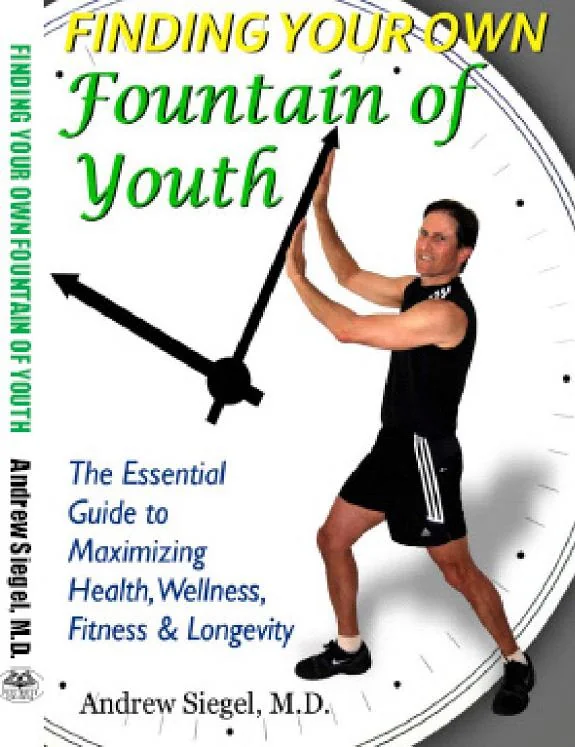
Finding Your Own Fountain of Youth: The Essential Guide to Maximizing Health, Wellness, Fitness & Longevity
 73
73

Finding Your Own Fountain of Youth: The Essential Guide to Maximizing Health, Wellness, Fitness & Longevity
The anonymous author of "Finding Your Own Fountain of Youth" approaches longevity not as a medical problem to be solved, but as an art to be cultivated. Its strength lies in its comprehensive scope, touching upon diet, exercise, mental discipline, and spiritual practice without privileging one over the others. The discussion on "conscious aging," for instance, offers a refreshing perspective, framing the later stages of life as an opportunity for profound growth rather than decline. However, the work's primary limitation is its lack of specific, verifiable mechanisms for the "vital force" it champions, leaving some sections feeling more aspirational than prescriptive. A passage detailing the synergy between mindful breathing exercises and cellular regeneration, while evocative, lacks the empirical grounding one might expect. Despite this, the book serves as a valuable philosophical primer on a life well-lived. It presents a compelling case for integrated self-care.
📝 Description
73
This book argues that sustained health comes from balancing physical, mental, and spiritual well-being.
The book "Finding Your Own Fountain of Youth" examines how to extend human vitality by looking at the connection between physical, mental, and spiritual health. It moves past simple fixes to explain the core ideas behind maintaining good health over time. The text offers practical advice for readers who want to improve their longevity and quality of life. It is for people questioning standard health advice and interested in self-improvement, the philosophy of wellness, and applying older ideas to today's problems. Both newcomers to holistic health and experienced individuals can find useful information within its pages. The book addresses those who want to actively manage their aging process.
The ideas in this book connect to a long history of thought about health and flourishing, drawing parallels with ancient Greek concepts like hygieia and eudaimonia. It also touches on the Renaissance interest in rejuvenation and the study of the human body. The work can be seen as a modern expression of enduring wisdom about the connection between body, mind, and spirit, a subject explored by Renaissance alchemists and later by thinkers during the early 20th century's esoteric revival.
💡 Why Read This Book?
• You will learn to conceptualize aging as an active, mindful process, moving beyond passive acceptance, as detailed in the "conscious aging" sections. • Gain a deeper understanding of "vital force," an energetic principle central to the book's holistic health model, providing an esoteric framework for vitality. • Discover practical strategies for "holistic integration" by harmonizing physical, mental, and spiritual practices, as outlined throughout the guide's core tenets.
⭐ Reader Reviews
Honest opinions from readers who have explored this book.
❓ Frequently Asked Questions
What is the central philosophy behind 'Finding Your Own Fountain of Youth'?
The book's central philosophy posits that true longevity and optimal health stem from a holistic integration of physical, mental, and spiritual well-being, viewing vitality as an energetic principle rather than solely a biological function.
Does the book offer specific dietary recommendations?
While it discusses the importance of nutrition for sustaining vitality, the focus is on general principles of balanced, life-affirming eating rather than rigid, specific meal plans. It emphasizes food as fuel for the body's energetic systems.
How does 'conscious aging' differ from traditional views of aging?
'Conscious aging' reframes the aging process as an opportunity for growth and wisdom, encouraging active engagement with life's later stages rather than passive decline, emphasizing mental and spiritual development.
Is this book about the mythical Fountain of Youth?
The title is metaphorical. The book uses the 'Fountain of Youth' concept to represent the pursuit of enduring health and vitality through practical, integrated lifestyle choices, not a literal magical source.
What is 'vital force' according to this text?
'Vital force' is presented as an inherent energetic principle animating living beings, directly influencing health, resilience, and lifespan. Maintaining and enhancing this force is key to the book's longevity strategy.
Can readers expect scientific studies cited within the book?
The work draws more from philosophical and esoteric traditions concerning health and longevity than from contemporary scientific studies. Its approach is holistic and principles-based, rather than evidence-based in a strictly clinical sense.
🔮 Key Themes & Symbolism
Vital Force Cultivation
The book posits an unseen 'vital force' as the wellspring of health and longevity, akin to the ancient Greek concept of *pneuma* or the Ayurvedic *prana*. It argues that this force can be actively cultivated and strengthened through specific practices. This involves not just physical nourishment but also mental focus and spiritual attunement. The work explores how modern lifestyles can deplete this force and offers counter-strategies rooted in ancient wisdom, suggesting that a conscious effort to nurture this energetic essence is paramount for extending a vibrant life.
Conscious Aging as Growth
Rejecting the notion of aging as mere decline, the text champions 'conscious aging' as a phase of heightened awareness and profound personal development. This perspective encourages individuals to embrace the later stages of life with intention, viewing them as opportunities for spiritual insight and the integration of life's experiences. It advocates for practices that foster mental clarity and emotional resilience, ensuring that longevity is accompanied by wisdom and a continued zest for living, rather than physical or mental deterioration.
Holistic Integration Principles
A central to the book is the principle of 'holistic integration,' asserting that physical health, mental acuity, and spiritual connection are inseparable components of enduring wellness. It critiques approaches that compartmentalize these aspects, arguing for a unified system of self-care. The work details how disciplines such as mindful movement, focused meditation, and contemplative practices synergize to enhance overall vitality, creating a robust foundation for a long and fulfilling existence.
Perennial Wisdom for Modernity
The book positions its guidance within a tradition of perennial wisdom, suggesting that fundamental truths about health and longevity have been recognized across diverse cultures and eras. It bridges ancient philosophies—from Hellenistic ideas on *eudaimonia* to early 20th-century esoteric thought—with contemporary challenges. The aim is to provide a framework that is both timeless in its principles and relevant to the practical needs of individuals living in the modern world seeking to maximize their lifespan and well-being.
💬 Memorable Quotes
Direct passages from the work, attributed to the author.
“The body is a vessel for the spirit; its enduring health is a reflection of the care given to both.”
— This statement underscores the book's core thesis of interconnectedness. It suggests that physical well-being is not an isolated pursuit but is intrinsically linked to mental and spiritual states, implying that true longevity requires attention to all three aspects.
“To seek youth is to seek vitality; to seek vitality is to seek balance.”
— This concise aphorism expresses the book's philosophy. It reframes the common desire for youth into a pursuit of fundamental life energy ('vitality'), which is then identified as being achievable through the cultivation of equilibrium across various life domains.
“Aging is not a surrender, but a transformation of awareness.”
— This highlights the 'conscious aging' theme, presenting the aging process not as a passive decline but as an active, potentially enriching phase of life. It encourages a shift in perspective towards growth and wisdom.
“The energetic currents within us ebb and flow; conscious direction can ensure they sustain, not deplete.”
— This refers to the concept of 'vital force,' suggesting that this life energy is dynamic and can be influenced. It implies that through intentional practices, individuals can learn to manage their internal energy for sustained health.
“True longevity is measured not in years alone, but in the richness of experience within those years.”
— This emphasizes the qualitative aspect of a long life, arguing that mere extension of lifespan is insufficient. The focus is on living vibrantly and meaningfully, aligning with the book's holistic approach to health and wellness.
🌙 Esoteric Significance
Tradition
This work draws heavily from the Hermetic and vitalistic traditions, which posit an underlying energetic principle (like *pneuma* or *anima mundi*) governing life. It aligns with perennial philosophies that suggest universal laws of health and longevity have been understood across various esoteric lineages. Unlike purely alchemical texts focused on physical transmutation, this guide emphasizes the practical application of these energetic principles for personal well-being and extended vitality, viewing the body as a microcosm reflecting cosmic order.
Symbolism
The 'Fountain of Youth' itself serves as a potent symbol of perpetual renewal and the quest for enduring vitality, a motif found in various mythologies and alchemical allegories. The concept of 'vital force' represents the unseen energetic currents that animate existence, akin to the alchemical idea of the *prima materia* or the life-giving spirit. The integration of mind, body, and spirit can be symbolized by the equilateral triangle, representing the harmonious balance required for sustained health and longevity.
Modern Relevance
Contemporary wellness movements, particularly those focusing on holistic health, biohacking, and mind-body practices, echo the principles laid out in this guide. Thinkers in fields like integral theory and consciousness studies often explore similar concepts of interconnectedness and energetic balance. Practices such as mindfulness meditation, yoga, and breathwork, now mainstream, find their philosophical underpinnings in the vitalistic and spiritual traditions discussed, demonstrating the enduring appeal of these ancient ideas for modern self-cultivation.
👥 Who Should Read This Book
• Individuals seeking to move beyond conventional health advice towards a more integrated, holistic approach to well-being and aging. • Students of esoteric philosophy and perennial wisdom interested in how ancient concepts of vitality apply to modern life. • Those actively engaged in self-improvement and personal development who wish to explore the connection between mental, spiritual, and physical health for longevity.
📜 Historical Context
The intellectual milieu from which "Finding Your Own Fountain of Youth" likely emerged is one deeply influenced by the late 19th and early 20th-century esoteric revival. Thinkers like Helena Blavatsky and the Theosophical Society were popularizing concepts of ancient wisdom and hidden energies, while figures such as Rudolf Steiner explored the spiritual dimensions of human health. This era saw a resurgence of interest in Hermeticism, Gnosticism, and Eastern philosophies, often synthesized into new frameworks for understanding life, consciousness, and well-being. The work implicitly engages with the health reform movements of the time, which, while often focused on hygiene and diet, also contained undercurrents of vitalistic philosophy. It stands in contrast to the burgeoning scientific materialism of the period, which tended to view the body purely through a mechanistic lens. While direct commentary from contemporaries is absent, the book's themes echo the broader search for meaning and vitality that characterized this period of significant intellectual and spiritual exploration.
📔 Journal Prompts
Reflect on your personal understanding of 'vital force' and its current state within you.
How does the concept of 'conscious aging' challenge your current perceptions of growing older?
Identify one practice from the 'holistic integration' theme you can implement this week.
Consider the 'Fountain of Youth' as a metaphor for your personal longevity goals.
Map the connections between your physical health and your mental/spiritual state.
🗂️ Glossary
Vital Force
An inherent, unseen energetic principle animating all living beings, considered by the text to be the fundamental basis of health, resilience, and lifespan. Its cultivation is key to longevity.
Conscious Aging
A perspective that reframes the aging process not as decline but as an opportunity for heightened awareness, wisdom, and continued personal growth, emphasizing active engagement.
Holistic Integration
The principle that physical, mental, and spiritual aspects of human existence are interconnected and must be harmonized to achieve optimal health and enduring vitality.
Hygieia
The ancient Greek concept of health, encompassing not just the absence of disease but a state of physical, mental, and moral well-being and flourishing (eudaimonia).
Eudaimonia
A Greek philosophical concept often translated as 'flourishing' or 'living well,' encompassing a state of deep contentment, purpose, and well-being that extends beyond mere happiness.
Perennial Wisdom
The idea that there exists a set of universal spiritual or philosophical truths that are common to all religions and cultures throughout history.
Energetic Currents
Refers to the dynamic flow of 'vital force' within an individual, which can be influenced and directed through conscious practices for the maintenance of health.
This book appears in 1 collection
🔮 Readers Also Liked
Browse all →









From the “Fountain of Youth” Collection
View all →




More Free Occult Philosophy Books
View all →