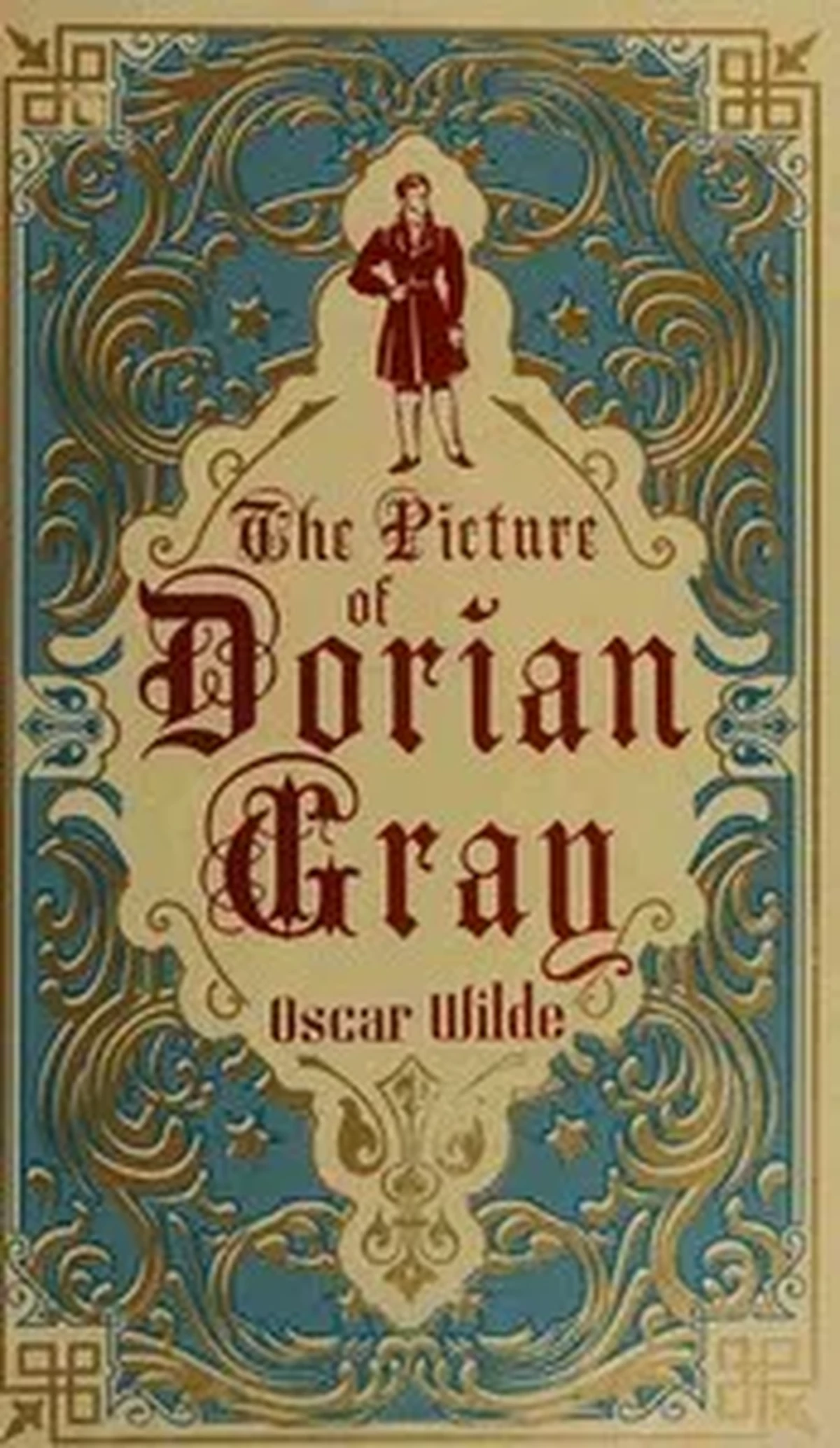
The Picture of Dorian Gray
 75
75

The Picture of Dorian Gray
Wilde's exploration of a Faustian bargain, manifested through a portrait that ages in lieu of its owner, remains potent. The novel excels in its epigrammatic wit, particularly through the character of Lord Henry Wotton, whose pronouncements on life and pleasure are both seductive and chilling. The chilling transformation of Dorian Gray, from innocent youth to a man consumed by his hidden iniquities, is masterfully depicted. However, the novel's explicit engagement with its darker themes can sometimes feel less like a narrative exploration and more like a philosophical exposition, occasionally slowing the pace. The scene where Dorian destroys Basil Hallward, his portrait's creator, is a stark illustration of the psychological toll his pact has taken. Ultimately, *The Picture of Dorian Gray* is a cautionary fable on the price of vanity and the inescapable nature of one's soul.
📝 Description
75
Oscar Wilde's only novel, first appearing in 1890, examines the dark side of beauty.
Oscar Wilde's novel, *The Picture of Dorian Gray*, tells the story of a young man whose portrait ages and shows the effects of his sins while he remains eternally young. The narrative follows Dorian's path into a life of vice, influenced by the cynical Lord Henry Wotton.
Published during a time of strict social rules and emerging artistic ideas, the book caused a stir. Its look at amoral aesthetics and hints of homosexuality led to accusations of obscenity. Wilde's stance on art for art's sake clashed with the moral focus of many other writers of the period.
The book discusses the idea that art exists solely for beauty, separate from any moral judgment. It also uses the idea of a double, common in Gothic stories, where the painting becomes Dorian's hidden, sinful self. The novel shows how outward beauty can hide inner rot and the risks of giving in to constant pleasure.
This novel engages with occult themes through its depiction of a supernatural pact. Dorian Gray's portrait acts as a magical object, absorbing the visual signs of his moral decay while he pursues pleasure without consequence. This reflects a Faustian bargain, a common trope in esoteric literature where an individual trades their soul or moral integrity for worldly gain, in this case, eternal youth and beauty. The book explores the idea of hidden selves and the consequences of a life lived solely for sensory experience, touching on themes of hidden corruption and the price of forbidden knowledge.
💡 Why Read This Book?
• Understand the core tenets of Aestheticism as presented through Lord Henry Wotton's philosophy, learning how art and beauty were re-evaluated in the late Victorian era. • Analyze the symbolic function of the portrait, grasping its role as a manifestation of Dorian's corrupted psyche and the consequences of his Faustian wish made in 1890. • Examine the Victorian cultural anxieties surrounding morality and art, recognizing how Wilde's novel challenged the era's prudish sensibilities and its reception.
⭐ Reader Reviews
Honest opinions from readers who have explored this book.
❓ Frequently Asked Questions
When was The Picture of Dorian Gray first published?
The Picture of Dorian Gray was first published in Lippincott's Monthly Magazine in 1890, before a revised and expanded version appeared in book form in 1891.
Who are the main characters in The Picture of Dorian Gray?
The principal characters are Dorian Gray, the beautiful young man; Lord Henry Wotton, his cynical and influential mentor; and Basil Hallward, the artist who paints Dorian's portrait.
What is the main theme of The Picture of Dorian Gray?
The central theme is the corrupting influence of vanity and hedonism, exploring the Faustian bargain where external beauty is maintained at the cost of the soul's moral decay.
What is Aestheticism and how does it relate to the book?
Aestheticism is an art movement promoting 'art for art's sake.' Lord Henry Wotton embodies this, influencing Dorian to prioritize beauty and sensory experience above all else, leading to moral consequences.
Was The Picture of Dorian Gray controversial?
Yes, the novel was highly controversial upon its release in 1890 due to its perceived immorality, decadent themes, and veiled references to homosexuality, leading to obscenity charges against Wilde.
What does the portrait symbolize?
The portrait symbolizes Dorian Gray's soul and conscience. While Dorian remains physically young and beautiful, the painting visibly deteriorates, bearing the marks of his sins and inner corruption.
🔮 Key Themes & Symbolism
The Corruption of Innocence
The novel meticulously charts Dorian Gray's transformation from an innocent, naive young man into a morally bankrupt hedonist. Under Lord Henry Wotton's influence, Dorian embraces a life dedicated to pleasure and sensation, believing his beauty and youth can shield him from consequence. This pursuit leads him to commit increasingly heinous acts, all while his physical appearance remains untouched, leaving the visible degradation to his portrait.
Aestheticism and Morality
Wilde uses the character of Lord Henry to champion the philosophy of Aestheticism, famously summarized as 'art for art's sake.' This ideology suggests that art should not serve a moral purpose, and that beauty is the ultimate value. The novel probes the dangerous implications of this philosophy when applied to life, questioning whether a life devoid of moral consideration can truly be beautiful or fulfilling.
The Double Life
Dorian Gray lives a life of outward respectability and exquisite beauty, while secretly indulging in a hidden world of vice and depravity. His portrait becomes the repository of his sins, a grotesque mirror of his true self. This duality highlights the Victorian era's fascination with hidden lives and the societal pressure to maintain a facade of virtue, regardless of inner reality.
The Faustian Bargain
The core of the narrative revolves around a pact, not explicitly made with a devil but implicitly granted by a wish: Dorian wishes his portrait would age and bear the marks of his sins, while he remains eternally young. This mirrors the Faust legend, where a protagonist trades their soul for worldly desires. The novel explores the inevitable spiritual cost of such a bargain.
💬 Memorable Quotes
Direct passages from the work, attributed to the author.
“The only way to get rid of a temptation is to yield to it.”
— This epigram from Lord Henry Wotton expresses the hedonistic philosophy central to Dorian's downfall. It suggests that resisting pleasure only amplifies desire, advocating for immediate gratification as the only path to freedom, regardless of moral implications.
“Beauty is the only thing that time cannot harm. ... Philosophy can explain everything, but it cannot explain the beauty of a flower.”
— Lord Henry articulates here the supremacy of beauty over intellect or moral reasoning. This reflects the Aesthetic movement's focus on sensory experience and the belief that beauty possesses an inherent, enduring value that transcends transient concerns.
“There is hardly one large brushstroke in the whole picture. Every touch has its meaning. This is not the work of a schoolboy.”
— Basil Hallward speaks of his own meticulous artistry in painting Dorian's portrait. This highlights the contrast between the deliberate, meaningful creation of art and Dorian's increasingly chaotic, meaningless pursuit of pleasure, foreshadowing the portrait's role as a record of his soul.
“It was the face of his soul.”
— This description of the portrait, after Dorian has begun his descent, signifies the complete merging of his outward appearance with his inner corruption. The painting is no longer just a representation but the actual embodiment of his morally ruined self.
“I am much afraid that I am beginning to understand the dangerous side of that remark.”
— Dorian utters this as he begins to grasp the implications of Lord Henry's philosophies. It marks a turning point where the abstract intellectualism of Aestheticism starts to translate into a tangible, perilous path for his own life and morality.
🌙 Esoteric Significance
Tradition
While not overtly tied to a specific esoteric lineage, *The Picture of Dorian Gray* speaks to Gnostic themes of hidden knowledge and the corrupting nature of the material world. The idea of a perfect exterior masking an inner void or fallen state aligns with Gnostic dualism. The novel can be seen as a modern allegory exploring the peril of prioritizing the ephemeral (physical beauty) over the eternal (spiritual integrity), a concept central to many mystical traditions.
Symbolism
The portrait itself is a potent symbol of the alchemical concept of the 'prima materia' or the shadow self, representing the hidden, debased aspects of the psyche that are denied conscious acknowledgment. The contrast between Dorian's unchanging beauty and the portrait's decay mirrors the alchemical process of transformation, albeit in a dark, corrupted form where spiritual purification is replaced by moral rot. The motif of the yellow book, a gift from Lord Henry, symbolizes corrupting knowledge and forbidden texts that lead the initiate astray.
Modern Relevance
Contemporary thinkers exploring transhumanism and the ethics of artificial intelligence find parallels in Dorian's desire to transcend natural limitations, albeit through immoral means. The novel's examination of curated online identities and the performance of self in the digital age also offers a relevant lens. Furthermore, modern psychological discourse on narcissism and the dangers of unchecked ego gratification reflects the novel's critique of Dorian's self-absorption.
👥 Who Should Read This Book
• Students of Victorian literature and the Decadent movement, seeking to understand the era's artistic and social critiques through a seminal, controversial work. • Readers interested in philosophical explorations of beauty, morality, and the nature of the soul, particularly those examining the potential pitfalls of Aestheticism. • Aspiring writers and artists grappling with the relationship between life, art, and personal integrity, offering a cautionary tale about the consequences of separating ethics from creative pursuits.
📜 Historical Context
The late Victorian era, particularly the 1890s, was a crucible of artistic and social change. Amidst strict moral codes and burgeoning industrialization, movements like Aestheticism and Decadence emerged, challenging conventional values. Oscar Wilde, a leading figure in this milieu, published *The Picture of Dorian Gray* in 1890. This period saw intense debate about the role of art in society, with figures like John Ruskin championing moral utility in art, a view directly opposed by Wilde's "art for art's sake" ethos. The novel's overt exploration of hedonism and its veiled homosexual themes made it a lightning rod for controversy. It was later used as evidence in Wilde's infamous 1895 obscenity trials, leading to his imprisonment and cementing the book's reputation as transgressive.
📔 Journal Prompts
The portrait's physical decay as a record of Dorian's soul.
Lord Henry Wotton's philosophy of life and its seductive power.
Basil Hallward's artistic creation and its ultimate fate.
The societal pressures and hidden vices of Victorian London.
The temptation to prioritize external beauty over inner substance.
🗂️ Glossary
Aestheticism
An art movement and philosophy emphasizing 'art for art's sake,' prioritizing beauty and form over moral or didactic purposes. It influenced late 19th-century art, literature, and design.
Decadence
A late 19th-century literary and artistic movement characterized by a rejection of traditional values, an emphasis on artificiality, and an exploration of taboo subjects, often with a focus on sensory experience and moral ambiguity.
Hedonism
The ethical belief that pleasure or happiness is the highest good and the proper aim of human life. In the novel, it is pursued without regard for moral consequences.
Doppelgänger
A concept, often from German folklore and literature, referring to a ghostly or identical double of a living person. In the novel, the portrait functions as Dorian's corrupted doppelgänger.
Epigram
A witty, concise, and often paradoxical statement or saying. Lord Henry Wotton's dialogue is frequently composed of epigrams.
Faustian Bargain
A pact where an individual trades their soul or moral integrity to achieve worldly desires, often associated with the legend of Faust who made a deal with the devil.
Gothic Literature
A genre characterized by elements of horror, death, and romance, often featuring dark settings, supernatural events, and psychological terror. *Dorian Gray* shares many of these elements.
This book appears in 1 collection
🔮 Readers Also Liked
Browse all →








From the “Immortality” Collection
View all →





More Free Occult Philosophy Books
View all →