The Amorous Lyric as Mystical Language
 79
79

The Amorous Lyric as Mystical Language



Marcus Thorne (Esoteric Sciences Reviewer) — In 'The Amorous Lyric as Mystical Language,' Smirna Si masterfully dissects the profound spiritual underpinnings of Sufi poetry. Si's erudition shines as she illuminates how the language of love, often perceived as secular, serves as a sophisticated conduit for divine yearning and ecstatic union. The work is an indispensable resource for those seeking to grasp the esoteric insights embedded within Sufi traditions, revealing the poet's heart as a microcosm of the cosmos. Its strength lies in its ability to demystify complex spiritual concepts, making them accessible to both seasoned practitioners and curious newcomers to Sufism. A truly illuminating contribution to mystical literature.
📝 Description
79
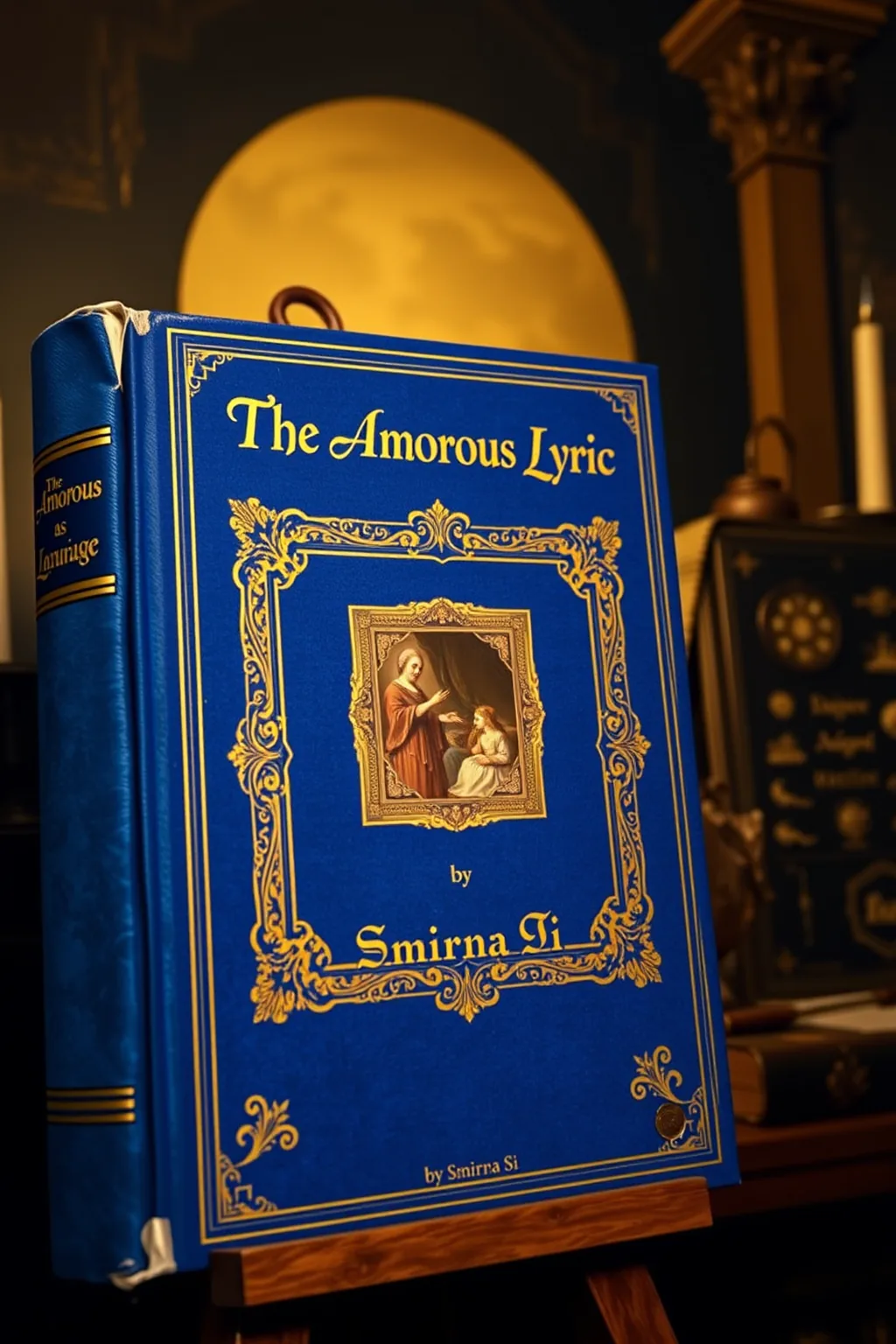
Smirna Si's 2013 book argues the amorous lyric serves as mystical language.
Smirna Si's work examines the Sufi tradition, positing the amorous lyric as a form of spiritual communication. The book details how the language of human love, with its desires and longings, functions as a coded system for the soul's ultimate reunion with the Divine. Si analyzes the hidden layers within Sufi poetry, showing how metaphors and phrases act as pathways to deeper thought and ecstatic awareness.
This text is intended for those seriously pursuing spiritual understanding, academic study, or anyone interested in the mystical aspects of human expression. It provides a philosophical basis for grasping the spiritual dimensions inherent in our ways of speaking and writing. The original notes of Cyrus Ali Zrgar illuminate the text, adding further depth to Si's analysis of this unique spiritual path.
This book is situated within the esoteric tradition of Sufism, a mystical branch of Islam. Sufism often uses poetry and music to express the direct, experiential knowledge of God. The concept of 'divine intoxication' and the soul's passionate yearning for the Beloved are central themes. Si's work connects these traditional Sufi ideas to the specific form of the amorous lyric, viewing it not merely as a literary genre but as a functional language for achieving spiritual states.
💡 Why Read This Book?
For seekers yearning to understand the soul’s passionate quest for the Divine, this book offers a profound key. It reveals how the language of love, desire, and rapture in Sufi poetry serves as a sacred map to spiritual union. Ideal for those drawn to mysticism, contemplative practices, and the rich tapestry of Sufi wisdom, it provides deep insights into veiled meanings and esoteric symbolism.
⭐ Reader Reviews
Honest opinions from readers who have explored this book.
❓ Frequently Asked Questions
What is the primary focus of this book?
The book primarily focuses on how the language of amorous poetry, particularly within the Sufi tradition, functions as a mystical language to express the soul's profound yearning for divine union and spiritual ecstasy.
Is prior knowledge of Sufism required to read this book?
While prior knowledge can enhance the reading experience, Smirna Si's clear and evocative prose makes the concepts accessible to newcomers. The book serves as an excellent introduction to Sufi mystical thought through its unique lens.
What kind of reader will benefit most from this book?
This book is ideal for spiritual seekers, students of comparative religion and mysticism, poets, and anyone interested in the intersection of love, language, and the divine. It appeals to both academic scholars and devoted practitioners.
How does the book connect earthly love with divine love?
It posits that earthly love, with its intense emotions of longing, desire, and devotion, is a potent metaphor and a stepping stone towards understanding the even more profound and all-encompassing nature of divine love in Sufi cosmology.
What is the role of Cyrus Ali Zrgar's original notes?
Cyrus Ali Zrgar's original notes provide a foundational layer of insight and context, enriching Smirna Si's analysis by offering direct historical and philosophical perspectives that deepen the reader's understanding of the subject matter.
🔮 Key Themes & Symbolism
The Divine Beloved and the Lover's Yearning
This theme explores the central Sufi concept of the Divine Beloved, the ultimate object of the soul's affection and devotion. It explores how the amorous lyric becomes the primary vehicle through which the mystic articulates their intense longing, their burning desire, and their ecstatic surrender to this Divine presence. The language of earthly love—its passion, its pain, its devotion—is reinterpreted as a sacred code, a symbolic expression of the soul’s journey towards annihilation in the Divine and its subsequent eternal communion.
Symbolism and Metaphor in Sufi Verse
The book meticulously examines the wide range of symbolism and metaphor employed in Sufi poetry. It reveals how seemingly conventional expressions of love, wine, intoxication, and union are imbued with profound spiritual significance. The 'cupbearer' may represent the spiritual guide, 'wine' the divine intoxication, and 'union' the ultimate ecstatic experience of oneness with God. Understanding these veiled meanings is crucial for unlocking the esoteric dimensions of Sufi devotional literature, transforming it from mere romantic verse into a roadmap for spiritual ascent.
Ecstasy and Divine Intoxication
A core tenet explored is the concept of ecstatic spiritual experience, often described as divine intoxication. The amorous lyric serves not only to express this state but also to evoke it in the reader. The passionate rhythms, the hyperbolic expressions of love, and the imagery of overwhelming rapture all contribute to a vicarious experience of the mystic's journey. This theme highlights how the very form and content of the lyric are designed to transport the soul beyond the confines of the mundane and into the boundless ocean of Divine presence.
💬 Memorable Quotes
Direct passages from the work, attributed to the author.
“Love’s whisper is the soul’s truest prayer.”
— This suggests that the profound, intimate expressions of love are not merely human emotions but are intrinsically connected to the deepest spiritual yearnings of the soul, echoing the divine call.
“In the lover's lament, the universe finds its voice.”
— This highlights how individual spiritual suffering and longing, when articulated through the language of love, can resonate with universal truths and the cosmic desire for unity.
“The veil of passion conceals the face of the Beloved.”
— This implies that the very intensity of earthly desire, when directed towards the Divine, can paradoxically obscure direct perception, yet also serve as the pathway to ultimately unveiling the Divine essence.
“Each verse a step, each stanza a breath closer to the Source.”
— This metaphor illustrates how the structured progression of mystical poetry guides the reader on a spiritual journey, with each element of the text marking progress towards ultimate spiritual realization.
“Intoxication is not an escape, but an arrival.”
— This redefines spiritual ecstasy not as a flight from reality, but as a profound homecoming, an arrival into a deeper, more authentic state of being through divine union.
🌙 Esoteric Significance
Tradition
This work is deeply embedded within the esoteric tradition of Sufism, the mystical dimension of Islam. Sufism emphasizes direct, experiential knowledge of God, often achieved through practices like meditation, chanting, and the cultivation of divine love. The amorous lyric is a core part of Sufi spiritual expression, serving as a coded language to convey the soul's journey from separation to union with the Divine Beloved, a path of intense devotion, self-annihilation, and ecstatic realization.
Symbolism
The symbolism within Sufi amorous lyrics is multi-layered. The 'Beloved' represents the Divine, while the 'lover' is the soul. Concepts like 'wine' symbolize divine intoxication and spiritual ecstasy, the 'tavern' the place of spiritual gathering, and 'union' the ultimate goal of annihilation of the ego in God. Other symbols include the 'rose' for divine beauty, the 'nightingale' for the soul's yearning, and the 'veil' for the barriers separating the seeker from direct perception of the Divine.
Modern Relevance
In an age often characterized by secularism and disconnection, the amorous lyric as mystical language offers a powerful reminder of the enduring human need for spiritual seeking and profound connection. It provides a framework for understanding how intense human emotions, particularly love and longing, can be channeled towards spiritual growth and the pursuit of ultimate meaning. The book's insights are relevant for contemporary seekers exploring mindfulness, contemplative practices, and alternative paths to spiritual fulfillment, demonstrating that the language of the heart remains a potent conduit to the sacred.
👥 Who Should Read This Book
This book is a valuable collection for various readers. **Spiritual Seekers** will find it an useful guide to understanding the passionate language of devotion and the path to divine union. **Scholars of Mysticism and Religious Studies** will appreciate its in-depth analysis of Sufi literature and esoteric symbolism, providing a rich resource for academic research. **Practitioners of Contemplative Arts and Poetry** will discover new dimensions of expression and inspiration, learning how to imbue their own creative endeavors with spiritual depth. Even **Beginners** curious about the intersection of love, poetry, and spirituality will find Smirna Si's accessible yet profound exploration a captivating and enriching introduction.
📜 Historical Context
Smirna Si's 'The Amorous Lyric as Mystical Language' emerges from a rich historical tradition deeply rooted in the spiritual and literary heritage of Sufism, particularly its flourishing periods in Persia and the broader Islamic world. The 11th to 15th centuries witnessed an explosion of Sufi poetry, with figures like Rumi, Hafiz, and Attar creating masterpieces that wove together profound theological concepts with intensely personal expressions of love and longing. This era was characterized by a dynamic interplay between orthodox religious scholarship and mystical experientialism, where poets often served as spiritual guides, their verses acting as sermons and meditations. The work also reflects the broader philosophical currents of Neoplatonism and Gnosticism that influenced early Islamic thought, emphasizing emanation, the soul's journey, and the quest for divine knowledge. By revisiting these foundational texts and insights, Si connects the historical practice of Sufi poetry to timeless human aspirations for transcendence and union, showing its enduring relevance.
📔 Journal Prompts
Reflect on a time you felt intense longing. How might this longing be interpreted as a spiritual quest?
Explore a piece of poetry or song that evokes strong emotions for you. What hidden meanings might it hold beyond its surface narrative?
Consider the concept of the 'Divine Beloved.' What attributes do you associate with this entity, and how does the language of earthly love help or hinder your understanding?
Write a short piece using amorous language to describe your relationship with nature, art, or knowledge.
How can the practice of 'annihilation of the ego' be understood through the lens of passionate devotion and surrender in relationships?
🗂️ Glossary
Sufism
The mystical dimension of Islam, focused on the direct experience of God through love, asceticism, and spiritual practices aimed at purifying the heart and soul.
Beloved
In Sufi mysticism, the Divine Essence or God, the ultimate object of the soul's love, longing, and devotion.
Fana
A Sufi term meaning 'annihilation' or 'extinction,' referring to the dissolution of the ego or individual self in the Divine presence.
Ishq
An Arabic and Persian term signifying passionate, divine love, often characterized by intense longing and devotion towards the Beloved.
Ghazal
A poetic form common in Sufi literature, typically dealing with themes of love, longing, and spiritual yearning, often employing amorous imagery.
This book appears in 2 collections
🔮 Readers Also Liked
Browse all →






More by Smirna Si
All books →
From the “Christian Mysticism” Collection
View all →






More Free Mysticism & Contemplation Books
View all →