Persecution and circumspection of Shattari Sufism
 81
81

Persecution and circumspection of Shattari Sufism



Evander Ashcroft, Alchemy & Hermeticism Editor – Smirna Si's "Persecution and Circumspection of Shattari Sufism" is a vital contribution to the esoteric canon. Si meticulously chronicles the challenges faced by the Shattari order, revealing their ingenious methods of preserving sacred knowledge and spiritual integrity. The text is rich with insights into their contemplative practices and the symbolic language that sustained them. For practitioners and scholars alike, this work offers a profound understanding of resilience in esoteric traditions. It highlights the universal struggle for spiritual autonomy and the enduring strength found within disciplined contemplation. This is essential reading for anyone seeking to understand the deeper currents of Islamic mysticism.
📝 Description
81
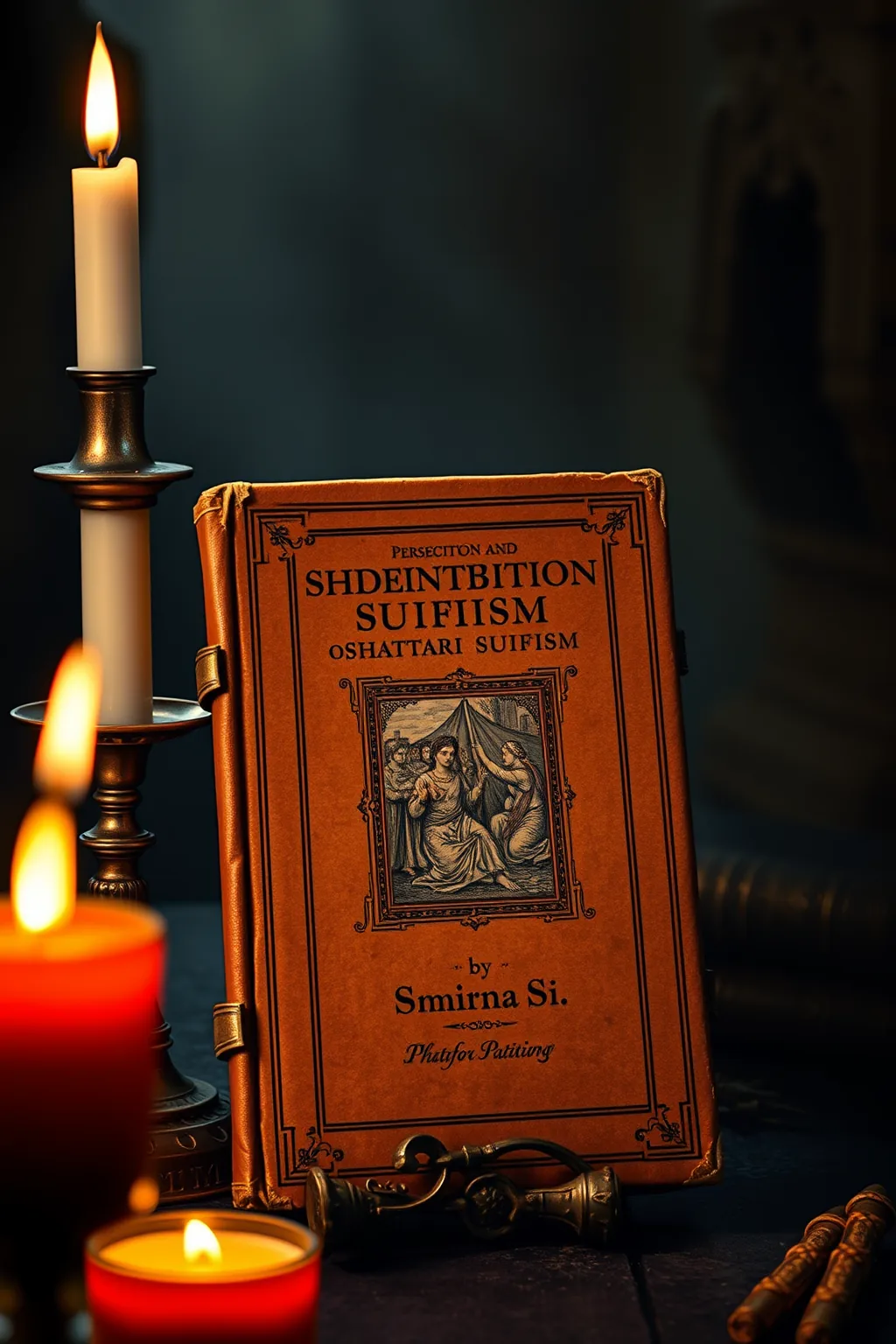
Smirna Si's "Persecution and circumspection of Shattari Sufism" details the tradition's survival under pressure.
This book examines the Shattari Sufi order, a spiritual path that faced significant external pressures. Smirna Si traces the tradition's history, detailing its unique spiritual practices, complex symbolic language, and the philosophical ideas that supported its adherents. The work goes beyond a simple historical record; it investigates the ways Shattari Sufis maintained their hidden knowledge and devotional practices during periods of persecution.
Si highlights the order's ability to preserve its teachings across generations, demonstrating a deep resilience. The writing style creates a sense of focused contemplation and intellectual seriousness. It is intended for individuals interested in Sufi thought, students of mysticism, and those who study contemplative practices. The book considers the philosophical importance of sustaining faith and knowledge inwardly, even when faced with external opposition. It addresses the relationship between mystical traditions and the social forces that influence their development.
Shattari Sufism belongs to the broader Sufi tradition within Islam, which focuses on the mystical path to divine knowledge. This specific order, as detailed by Smirna Si, developed distinct methods of spiritual discipline and symbolic interpretation. The book situates Shattari practices within the historical context of Islamic mysticism, showing how such traditions adapt and endure when confronting political or social challenges. It illustrates a common dynamic in esoteric traditions: the need for discretion and internal fortification when external recognition or acceptance is limited.
💡 Why Read This Book?
Uncover the hidden resilience of a profound Sufi tradition. This work illuminates how esoteric knowledge is preserved through adversity, offering vital lessons in spiritual fortitude and contemplation. Ideal for seekers of deep mystical truths, scholars of comparative religion, and practitioners who find inspiration in the enduring power of faith against external pressures.
⭐ Reader Reviews
Honest opinions from readers who have explored this book.
❓ Frequently Asked Questions
What is Shattari Sufism?
Shattari Sufism is an esoteric branch of Islamic mysticism known for its emphasis on inner transformation and the transmission of spiritual knowledge through secret lineages and practices. It often involved veiled teachings to protect its core tenets.
What challenges did Shattari Sufism face?
The Shattari order encountered periods of persecution and scrutiny from dominant religious and political authorities, necessitating circumspection and the development of strategies to safeguard their unique spiritual heritage and practices.
What are the core themes explored in this book?
The book delves into themes of spiritual resilience, the preservation of esoteric knowledge, the philosophical implications of persecution, and the intricate symbolism employed by Shattari Sufis in their contemplative path.
Who is the intended audience for this work?
This book is intended for scholars of Islamic mysticism, students of comparative religion, spiritual seekers interested in Sufism, and practitioners of contemplative traditions seeking to understand historical examples of spiritual resilience.
Does the book offer practical guidance for modern practitioners?
While primarily a historical and philosophical exploration, the book offers profound insights into the principles of spiritual perseverance and the importance of inner cultivation, which can be deeply inspiring and applicable to modern contemplative practices.
🔮 Key Themes & Symbolism
Resilience of Esoteric Traditions
This theme examines the remarkable ability of esoteric Sufi orders, like the Shattari, to endure and preserve their core teachings and practices in the face of external pressures, including persecution and societal disapproval. It highlights the adaptive strategies, symbolic language, and internal strength that allowed this knowledge to be transmitted across generations, underscoring the enduring human quest for spiritual truth even when challenged by the temporal world. The focus is on the 'how' and 'why' of their survival, offering profound lessons in spiritual fortitude.
The Veil of Hidden Knowledge
This theme looks at the concept of 'hidden knowledge' within esoteric traditions, particularly as practiced by the Shattari Sufis. It explores why certain spiritual insights were deliberately veiled or transmitted through secret channels, often as a protective measure against misunderstanding, exploitation, or outright suppression. The exploration includes the symbolic language, allegorical narratives, and initiatory pathways that served as conduits for this sacred wisdom, emphasizing the disciplined approach required to access and safeguard such profound truths.
Circumspection as Spiritual Discipline
The concept of 'circumspection' is explored not merely as a tactic for survival but as an integral spiritual discipline within Shattari Sufism. This theme investigates how a cautious and discerning approach to outward expression and interaction became a form of inner cultivation. It examines how outward restraint fostered inner awareness, deepened contemplation, and strengthened the commitment to the esoteric path, demonstrating that sometimes, silence and careful observation are the most potent forms of spiritual action and protection.
💬 Memorable Quotes
Direct passages from the work, attributed to the author.
“Silence is the guardian of the sacred flame.”
— This aphorism emphasizes the importance of discretion and inner contemplation in protecting one's spiritual path and esoteric knowledge from external interference or misunderstanding.
“The outward form may bend, but the inner essence endures.”
— This highlights the resilience of spiritual traditions, suggesting that while external practices or appearances might change to adapt to difficult circumstances, the core spiritual reality and truth remain intact and unfaltering.
“To see the unseen is the art of the circumspect soul.”
— This points to the esoteric ability to perceive subtle spiritual realities and hidden meanings, emphasizing that such perception is cultivated through a disciplined, cautious, and inwardly focused approach to life.
“The path to illumination is often paved with the stones of perseverance.”
— This metaphor suggests that achieving spiritual enlightenment or deep understanding is not a passive process but requires sustained effort, dedication, and the overcoming of obstacles along the way.
💡 Key Ideas
Editorial paraphrase of the work's core concepts — not direct quotes.
The deepest wells of truth are often found beneath the harshest terrains.
This quote suggests that profound spiritual insights and hidden knowledge are often discovered or preserved through challenging circumstances, implying that adversity can be a catalyst for spiritual growth and the revelation of deeper truths.
🌙 Esoteric Significance
Tradition
This work is deeply rooted in the Sufi tradition, a mystical branch of Islam that seeks direct experiential knowledge of God. Specifically, it explores the Shattari order, a lineage known for its subtle teachings and emphasis on inner transformation through practices that often involved veiled symbolism and a cautious approach to external engagement. It represents a significant thread within the broader range of Islamic esotericism, highlighting its unique methods of spiritual cultivation and knowledge transmission.
Symbolism
The Shattari tradition, as explored in this text, employs rich and often layered symbolism to convey esoteric truths. This can include the use of allegorical language, numerical symbolism, and the interpretation of natural phenomena as reflections of divine realities. These symbols act as keys, unlocking deeper meanings for initiated practitioners and safeguarding sacred knowledge from those unprepared to receive it, forming a crucial element of their spiritual pedagogy and protective circumspection.
Modern Relevance
In an age often characterized by rapid information exchange and external validation, the Shattari Sufis' emphasis on inner cultivation, circumspection, and the preservation of sacred knowledge offers profound relevance. Their journey illustrates the enduring importance of disciplined contemplation, the power of inner resilience against external pressures, and the value of safeguarding profound truths. This work serves as a reminder that true spiritual understanding often requires patience, discernment, and a commitment to inner work, principles that resonate deeply in contemporary spiritual seeking.
👥 Who Should Read This Book
Scholars of Islamic studies and comparative religion will find a meticulously researched account of a significant, yet often overlooked, Sufi lineage. Spiritual seekers yearning for deeper mystical insights will be drawn to the exploration of hidden knowledge and contemplative practices. Practitioners of esoteric traditions will appreciate the insights into spiritual resilience and the art of preserving sacred wisdom. For anyone interested in the dynamic interplay between faith, philosophy, and societal forces, this book offers a compelling and useful perspective on the enduring power of the spiritual path.
📜 Historical Context
Smirna Si's work emerges from a wide range of Islamic intellectual and spiritual history, specifically focusing on the period when various Sufi orders navigated complex socio-political landscapes. The Shattari tradition, like many other esoteric groups, existed within an environment where religious orthodoxy often coexisted with, and sometimes contested, mystical interpretations and practices. This era saw the flourishing of diverse philosophical schools and contemplative paths, but also instances of intense scrutiny and persecution directed at those who deviated from established norms. The need for 'circumspection' arose from these pressures, compelling Sufis to develop subtle methods of teaching, veiled symbolism, and discreet community organization to preserve their lineages and ensure the continuity of their spiritual heritage against the backdrop of prevailing religious and political authorities.
📔 Journal Prompts
Reflect on a time when you felt the need for 'circumspection' in your spiritual or personal life. What was the situation, and what did you learn?
How does the concept of 'hidden knowledge' resonate with your understanding of spiritual growth and personal development?
Consider the idea of resilience in the face of adversity. What strategies have you employed, or could you employ, to maintain your spiritual path when facing challenges?
What symbols or allegories in your own life or spiritual practice help you to understand deeper truths?
Explore the balance between outward expression and inner cultivation in your spiritual journey. Where do you find this balance, and where could it be strengthened?
🗂️ Glossary
Sufism
The mystical dimension of Islam, focused on direct experiential knowledge of God and the purification of the heart through spiritual disciplines, contemplation, and love.
Shattari
A specific Sufi order or lineage, known for its particular teachings, practices, and historical development, often characterized by its emphasis on inner states and subtle transmission of knowledge.
Circumspection
In this context, refers to a cautious, discerning, and prudent approach to outward actions and interactions, often employed by esoteric groups to safeguard their teachings and practices from external scrutiny or harm.
Esoteric
Pertaining to knowledge or practices that are intended for or understood by only a small number of people with specialized knowledge or interest; inner, secret, or mystical.
Ta'wil
Esoteric interpretation or allegorical exegesis, especially of religious texts or symbols, to uncover hidden meanings beyond the literal.
This book appears in 2 collections
🔮 Readers Also Liked
Browse all →









More by Smirna Si
All books →




From the “Christian Mysticism” Collection
View all →









More Free Mysticism & Contemplation Books
View all →