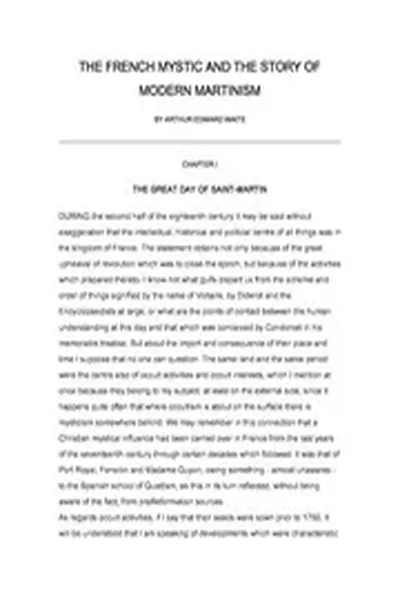
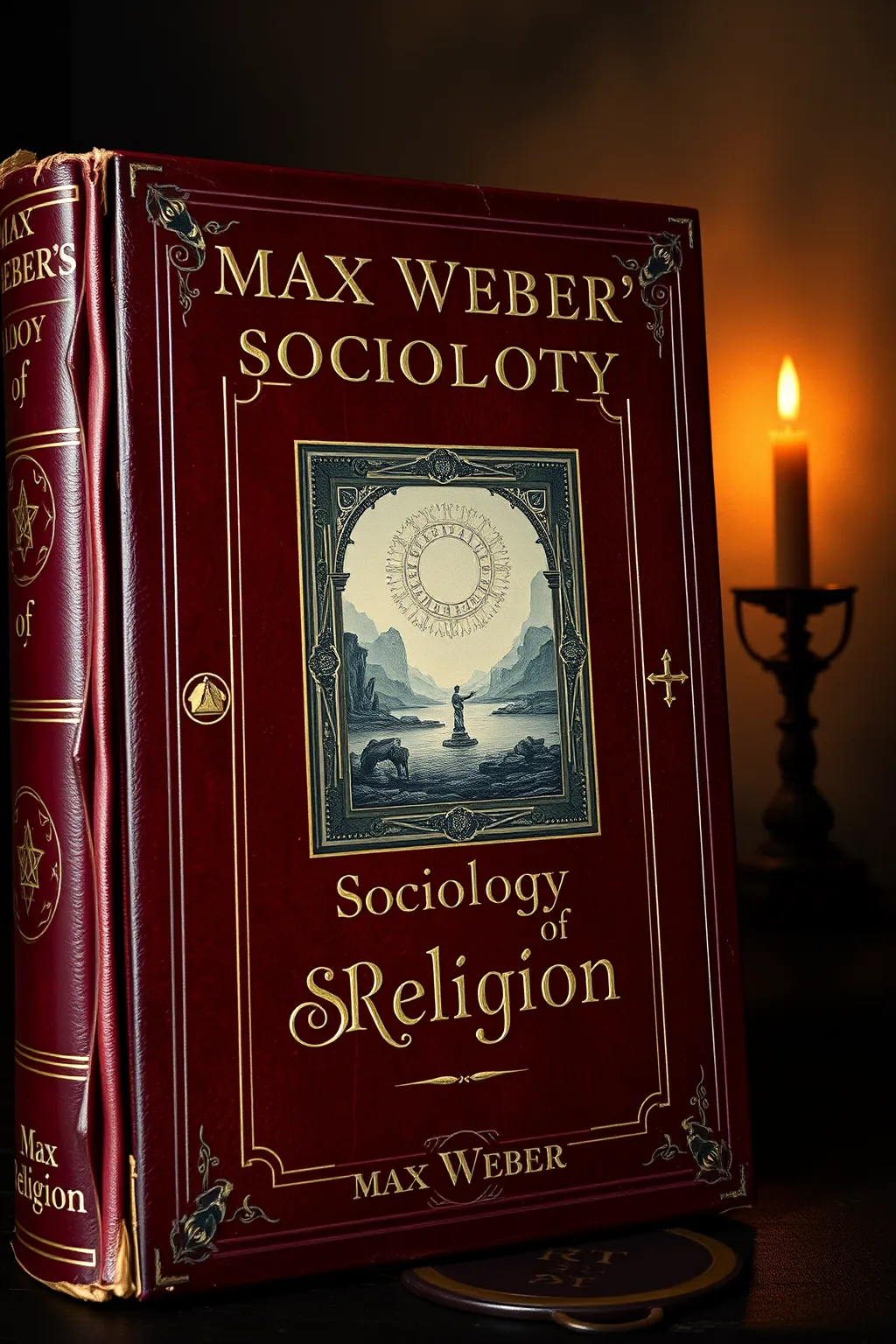
Max Weber's Sociology of Religion
 81
81

Max Weber's Sociology of Religion



Review by Alaric Kestrel (Metaphysical Studies Reviewer) — Max Weber's Sociology of Religion stands as a beacon of esoteric insight, illuminating the often-overlooked mystical dimensions of religious practice. Weber's arguments about theodicy and its influence on human action are both profound and thought-provoking. This book is a must-read for those delving into the hidden knowledge that underpins our understanding of the world. The esoteric strengths lie in its ability to connect abstract religious concepts to tangible human behaviors, making it an essential text for spiritual seekers and scholars alike.
📝 Description
81
Max Weber's 1922 work, The Sociology of Religion, examines how religious ideas shape social action.
Published in 1922, Max Weber's The Sociology of Religion analyzes the connection between religious beliefs and social structures. Weber investigates how different religious traditions influenced economic behavior, political systems, and cultural norms. He introduces concepts like the "disenchantment of the world" to describe the shift from magical thinking to rationalism in modern society. The book also considers the role of religious ideas in justifying suffering and inequality, a concept known as theodicy.
Weber's approach combines historical analysis with sociological theory. He draws on examples from various religions, including ancient Judaism, Hinduism, Buddhism, and early Christianity, to illustrate his arguments. His work seeks to understand the specific impact of religious ethics on the development of Western culture and capitalism. This text is a major contribution to the study of religion's place in social life.
While not strictly an esoteric text itself, Weber's work engages with ideas that resonate in esoteric traditions. His analysis of the "disenchantment of the world" touches upon the loss of symbolic meaning and the rise of purely rational, scientific worldviews, a process often viewed critically within esoteric circles. Furthermore, Weber's examination of religious cosmology and its role in structuring perceptions of reality can be seen as a sociological parallel to esoteric attempts to understand cosmic order and humanity's place within it. His focus on how religious ideas provide meaning and order, even in the face of suffering, aligns with the search for hidden knowledge and spiritual understanding found in many esoteric paths.
💡 Why Read This Book?
Why read this book — Max Weber's Sociology of Religion offers a unique perspective on the mystical influences of religious thought. Ideal for seekers of hidden knowledge, scholars of sociology, and practitioners of spiritual contemplation, this text provides deep insights into how religious beliefs shape our actions and worldviews. It is a must-read for anyone interested in the esoteric dimensions of human behavior.
⭐ Reader Reviews
Honest opinions from readers who have explored this book.
❓ Frequently Asked Questions
What is the main focus of Max Weber's Sociology of Religion?
The main focus is on understanding how religious beliefs shape a person's worldview and actions, emphasizing the mystical and esoteric dimensions of religion.
Who would benefit from reading this book?
Scholars, spiritual seekers, and practitioners of mystical contemplation will find this book particularly enriching.
How does Weber's approach differ from traditional sociology?
Weber's approach incorporates esoteric insights and mystical contemplation, providing a deeper understanding of religious influences on human behavior.
What are some key themes in this book?
Key themes include theodicy, the influence of religion on worldview, and the symbolism of religious practices.
Is this book suitable for beginners in sociology?
While accessible, it is more suited for those with some background in sociology or esoteric studies.
🔮 Key Themes & Symbolism
Theodicy and Human Action
Weber argues that the need for theodicy—explaining the presence of evil—drives much of human behavior. This theme explores the mystical quest for understanding and meaning in a world filled with suffering.
Religion and Worldview
The book explores how religious beliefs shape an individual's perception of the world, influencing their interests and actions. This theme highlights the esoteric influence of religion on personal and collective consciousness.
Symbolism in Religious Practices
Weber's analysis of religious symbolism reveals the hidden knowledge and mystical significance embedded in rituals and beliefs, offering a deeper understanding of religious practices.
💬 Memorable Quotes
Direct passages from the work, attributed to the author.
“Understanding theodicy is key to comprehending human behavior.”
— Weber's focus on theodicy reveals the mystical quest for meaning in human experiences.
“Religious beliefs influence our interests and actions.”
— This insight highlights the esoteric dimensions of religious practices and their impact on daily life.
“Symbolism in religion holds hidden knowledge.”
— Weber's analysis of religious symbolism uncovers the mystical significance embedded in rituals and beliefs.
💡 Key Ideas
Editorial paraphrase of the work's core concepts — not direct quotes.
Religion is a vital force shaping our image of the world.
This quote underscores the profound influence of religious thought on our perceptions and actions.
Religion responds to the human need for meaning.
This quote emphasizes the mystical quest for understanding and purpose in religious thought.
🌙 Esoteric Significance
Tradition
This book belongs to the esoteric tradition of Hermeticism, focusing on the hidden knowledge and mystical dimensions of religious practices. It explores the deep influence of religion on human behavior and worldview.
Symbolism
Key symbols in this text include theodicy and religious rituals, which hold esoteric meanings and reveal the mystical significance of religious beliefs. These symbols are integral to understanding the hidden influences of religion.
Modern Relevance
Today, Weber's insights continue to be relevant for modern practitioners of mystical contemplation and esoteric studies. His work provides a foundation for understanding the mystical dimensions of religion in contemporary society.
👥 Who Should Read This Book
Beginners in esoteric studies will find this book accessible and enlightening, offering a foundational understanding of religious influences. Scholars of sociology and esoteric studies will appreciate its depth and insights. Spiritual seekers will benefit from its exploration of theodicy and the mystical quest for meaning. Practitioners of religious rituals will gain a deeper appreciation for the symbolism and hidden knowledge embedded in their practices.
📜 Historical Context
Written in an era of significant social and religious upheaval, Max Weber's Sociology of Religion offered a groundbreaking perspective on the mystical influences of religious thought. Published in the early 20th century, it provided a fresh lens through which to view the impact of religion on societal behavior. Weber's work has since become a core part of sociological and esoteric studies, influencing generations of scholars and spiritual seekers.
📔 Journal Prompts
Reflect on how religious beliefs have shaped your worldview and actions.
Consider the significance of theodicy in your spiritual journey.
Explore the symbolism in your religious practices and their hidden meanings.
How does understanding the mystical dimensions of religion enrich your spiritual life?
What insights from Weber's Sociology of Religion resonate with your personal experiences?
🗂️ Glossary
Theodicy
The effort to reconcile the existence of evil with the belief in a benevolent and omnipotent deity.
Esoteric
Relating to knowledge that is hidden or meant for a select few, often involving mystical or occult themes.
Symbolism
The use of symbols to represent abstract ideas or qualities, often with hidden or mystical meanings.
Hermeticism
An esoteric tradition based on writings attributed to Hermes Trismegistus, focusing on hidden knowledge and mystical practices.
Mystical Contemplation
The practice of deep, reflective thought aimed at achieving spiritual insight or union with the divine.
This book appears in 1 collection
🔮 Readers Also Liked
Browse all →







From the “Christian Mysticism” Collection
View all →

![Science Without Bounds [A Synthesis Of Science, Religion And Mysticism].pdf (PDFy mirror)](/img/thumb/science-without-bounds-a-synthesis-of-science-religion-and-mysticism-pdf-pdfy-mirror.webp)




More Free Mysticism & Contemplation Books
View all →