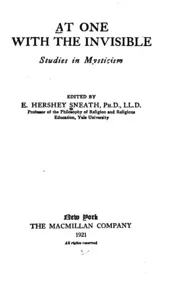
True Christianity

 75
75

True Christianity
Johann Arndt's "True Christianity" presents a compelling case for faith as an active, internal state rather than a passive acceptance of dogma. The work's strength lies in its relentless focus on the transformation of the individual soul. Arndt’s insistence on the necessity of the "inner man" being renewed by divine grace offers a powerful counterpoint to purely external religious forms. However, the prose, while earnest, can feel dense to a modern reader, occasionally obscuring the directness of its message. A passage discussing the "crucified life" vividly illustrates the book's core: the idea that true spiritual progress often involves embracing hardship and self-renunciation as essential steps toward divine union. While its historical context is invaluable, its devotional intensity may require dedicated engagement. It is a significant text for understanding the history of Christian spirituality.
📝 Description
75
Johann Arndt's 'True Christianity,' first published in 1809, guides readers to a lived experience of faith.
Johann Arndt's "True Christianity" is a devotional manual, not a modern theological treatise. It aims to lead readers toward a deeper, lived experience of Christian faith, emphasizing inner transformation and a personal relationship with God over outward practices. The book is arranged around practical spiritual exercises and reflections intended to cultivate piety and encourage a reformed life.
This work is for individuals who wish to move beyond superficial religious engagement and connect with their faith on a more personal level. It will appeal to those interested in early modern European devotional literature and the historical development of Christian mysticism. Readers who value introspection and the practical application of spiritual principles will find this book particularly useful.
"True Christianity" appeared during a time of significant religious and intellectual change in Europe. Arndt's text, while grounded in Lutheran orthodoxy, included ideas that highlighted subjective experience and inner piety. Some contemporaries found these elements concerning. The book achieved widespread acceptance throughout Protestant Europe, influencing later devotional writers and reformers. Its focus on the "inner church" and individual conviction distinguished it from more ritualistic or scholastic methods common then.
Arndt's work emerged from the Pietist movement within Lutheranism, which sought a more personal and experiential form of faith than was common in established church practice. This emphasis on the "inner man" and a direct, felt connection to the divine aligns with broader mystical traditions that prioritize inward contemplation and spiritual transformation over outward ceremony. While rooted in a specific Christian tradition, its focus on subjective experience and the cultivation of an "inner church" resonates with contemplative practices found across various spiritual paths.
💡 Why Read This Book?
• Gain an understanding of the "inner man" concept, a core tenet of Arndt's devotional theology, to explore faith as an internal transformation rather than external ritual. • Engage with the concept of the "living faith" as described by Arndt, learning to discern genuine spiritual vitality from mere intellectual assent. • Study the practical application of the "crucified life" through Arndt's devotional exercises, offering a historical perspective on spiritual discipline and self-denial.
⭐ Reader Reviews
Honest opinions from readers who have explored this book.
❓ Frequently Asked Questions
When was "True Christianity" by Johann Arndt first published?
Johann Arndt's influential devotional work, "True Christianity," was first published in its entirety in 1809, although parts of it were circulated earlier. It quickly became a foundational text for Protestant piety.
What is the main focus of "True Christianity"?
The book's primary focus is on the inner spiritual life and the practical experience of Christian faith, emphasizing personal transformation and a direct relationship with God over outward religious forms.
Is "True Christianity" considered a theological or devotional work?
While rooted in theological concepts, "True Christianity" functions primarily as a devotional manual. Its aim is to guide the reader's spiritual practice and foster personal piety.
Who was Johann Arndt?
Johann Arndt (1555–1621) was a German Lutheran theologian and pastor whose devotional writings, especially "True Christianity," had a profound impact on Protestant spirituality across Europe.
What is the significance of the "inner man" in Arndt's work?
The "inner man" refers to the spiritual core of a person, which Arndt believed must be renewed by God's grace. This internal renewal is central to achieving "true Christianity."
Is "True Christianity" available for free online?
As a work first published in 1809, "True Christianity" is in the public domain and widely available for free online through various digital libraries and archives.
🔮 Key Themes & Symbolism
The Inner Man
This theme centers on the concept of the "inner man," representing the spiritual, unseen core of an individual. Arndt argues that true Christianity begins with the renewal of this inner man by divine grace, distinguishing it from mere external religious observance. The work guides readers to cultivate this internal spiritual life through prayer, meditation, and self-examination, leading to a profound and authentic connection with God.
Living Faith
Arndt differentiates "living faith" from dead or intellectual assent. Living faith, he posits, is an active, dynamic force that compels the believer toward love, good works, and a transformed life. It is a faith that is felt and lived, not just believed. This theme encourages readers to assess the vitality of their own faith and to seek its active manifestation in their daily existence.
The Crucified Life
This theme explores the necessity of embracing suffering, self-denial, and the "cross" as integral components of the Christian journey. Arndt presents this not as masochism, but as a process of spiritual purification and conformity to Christ's example. By dying to self, the believer makes room for God's life to flourish, leading to a deeper spiritual maturity and union with the divine.
The Kingdom of God Within
Arndt emphasizes that the Kingdom of God is not solely a future eschatological reality but a present, internal state. It is established in the hearts of believers through submission to God's will and the indwelling of the Holy Spirit. This perspective encourages readers to seek and experience God's reign in their lives here and now, transforming their present circumstances.
💬 Memorable Quotes
Direct passages from the work, attributed to the author.
“True Christianity is not merely an external profession.”
— This highlights Arndt's core argument that genuine faith is an internal reality, not just a public display or intellectual agreement. It points to the need for inner transformation.
“The inner man must be renewed by the Spirit.”
— This captures the central role of divine grace in Arndt's theology. The focus is on the spiritual core of the person being fundamentally changed from within.
“Faith is a living root from which good works grow.”
— This illustrates the concept of 'living faith,' emphasizing that true belief is inherently active and produces tangible positive actions as a natural outgrowth.
“To bear the cross is to follow Christ.”
— This reflects the theme of the 'crucified life,' suggesting that embracing hardship and self-renunciation is an essential part of discipleship and spiritual growth.
“The Kingdom of God is within you.”
— This points to the idea that spiritual sovereignty and divine presence can be realized inwardly, not just as a future hope, making faith a present reality.
🌙 Esoteric Significance
Tradition
While "True Christianity" is fundamentally a work of Christian devotional literature, its profound emphasis on the inner life, spiritual transformation, and direct communion with the divine aligns it with broader esoteric traditions. It shares with Christian Gnosticism a focus on inner knowledge and the "spark" of divinity within the individual. Its practical exercises for cultivating spiritual awareness can be seen as a form of practical mysticism, akin to contemplative practices found in Hermeticism and other Western esoteric paths.
Symbolism
The "inner man" serves as a central symbol, representing the soul's true essence, distinct from the physical body and the external self. The "Kingdom of God" is also a significant symbolic motif, interpreted not as an external territory but as an internal state of divine rule within the believer's heart. The concept of the "crucified life" symbolizes the process of spiritual purification through self-denial and suffering, mirroring Christ's sacrifice as a path to resurrection and spiritual renewal.
Modern Relevance
Arndt's focus on the inner life and experiential faith continues to influence contemporary Christian spirituality, particularly within contemplative and charismatic circles. His work provides a historical anchor for those seeking authentic spiritual practice beyond institutional dogma. Modern practitioners of mindfulness and psychological introspection may find parallels in Arndt's methods for self-examination and cultivating inner peace, bridging historical devotionalism with contemporary wellness practices.
👥 Who Should Read This Book
• Individuals interested in the history of Christian spirituality and devotional literature, particularly the Pietist movement and its precursors. • Seekers of a deeper, more personal faith experience who wish to explore practical methods for inner transformation and spiritual growth. • Students of comparative religion and mysticism looking to understand the internal devotional currents within Western Christianity.
📜 Historical Context
Johann Arndt's "True Christianity," first fully published in 1809, emerged in a Europe grappling with the aftermath of the Reformation and the dawn of the Enlightenment. While firmly rooted in Lutheranism, Arndt's emphasis on subjective experience and the "inner man" resonated with Pietism, a movement that sought a more personal and experiential form of faith, often critiquing the perceived dryness of established church practices. His work offered a powerful devotional counter-narrative to the rising rationalism of the era and the scholasticism that still held sway in some theological circles. Contemporary figures like Philipp Jakob Spener, a key leader of the Pietist movement, would later acknowledge Arndt's influence. The book's widespread popularity, despite occasional critiques from more conservative elements within Lutheranism, demonstrates its significant appeal to those seeking a deeper, more practical engagement with Christian spirituality.
📔 Journal Prompts
The state of the "inner man": Assess its current condition.
Reflect on moments where "living faith" manifested in your actions.
Consider the "crucified life" in contemporary challenges.
Identify areas where the "Kingdom of God" can be more fully realized within your life.
Evaluate the distinction between external profession and internal conviction.
🗂️ Glossary
Inner Man
The spiritual core or true self of an individual, believed by Arndt to be capable of renewal by divine grace, distinct from the outward, physical person.
Living Faith
A dynamic, active faith that is deeply felt and demonstrably expressed through love, obedience, and good works, as opposed to mere intellectual assent.
Crucified Life
The spiritual discipline of self-denial, suffering, and renunciation of worldly desires, seen as a necessary path to spiritual growth and conformity to Christ.
Kingdom of God
In Arndt's context, this refers not only to a future divine reign but also to the present reality of God's rule established within the heart of the believer.
Pietism
A movement within 17th and 18th-century Lutheranism emphasizing personal piety, experiential faith, and the importance of the "inner life," often critiquing formal religious structures.
Devotional Literature
Writings intended to inspire religious devotion and guide the reader in their spiritual practice, often focusing on prayer, meditation, and the inner life.
Spiritual Renewal
The process by which the inner spiritual nature of a person is reformed and revitalized through the influence of divine grace.
🔮 Readers Also Liked
Browse all →







More Free Mysticism & Contemplation Books
View all →