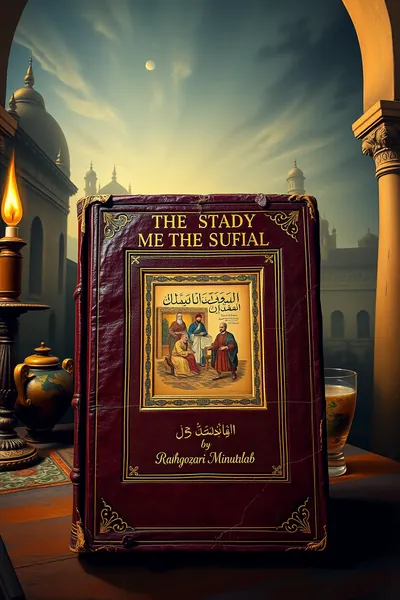
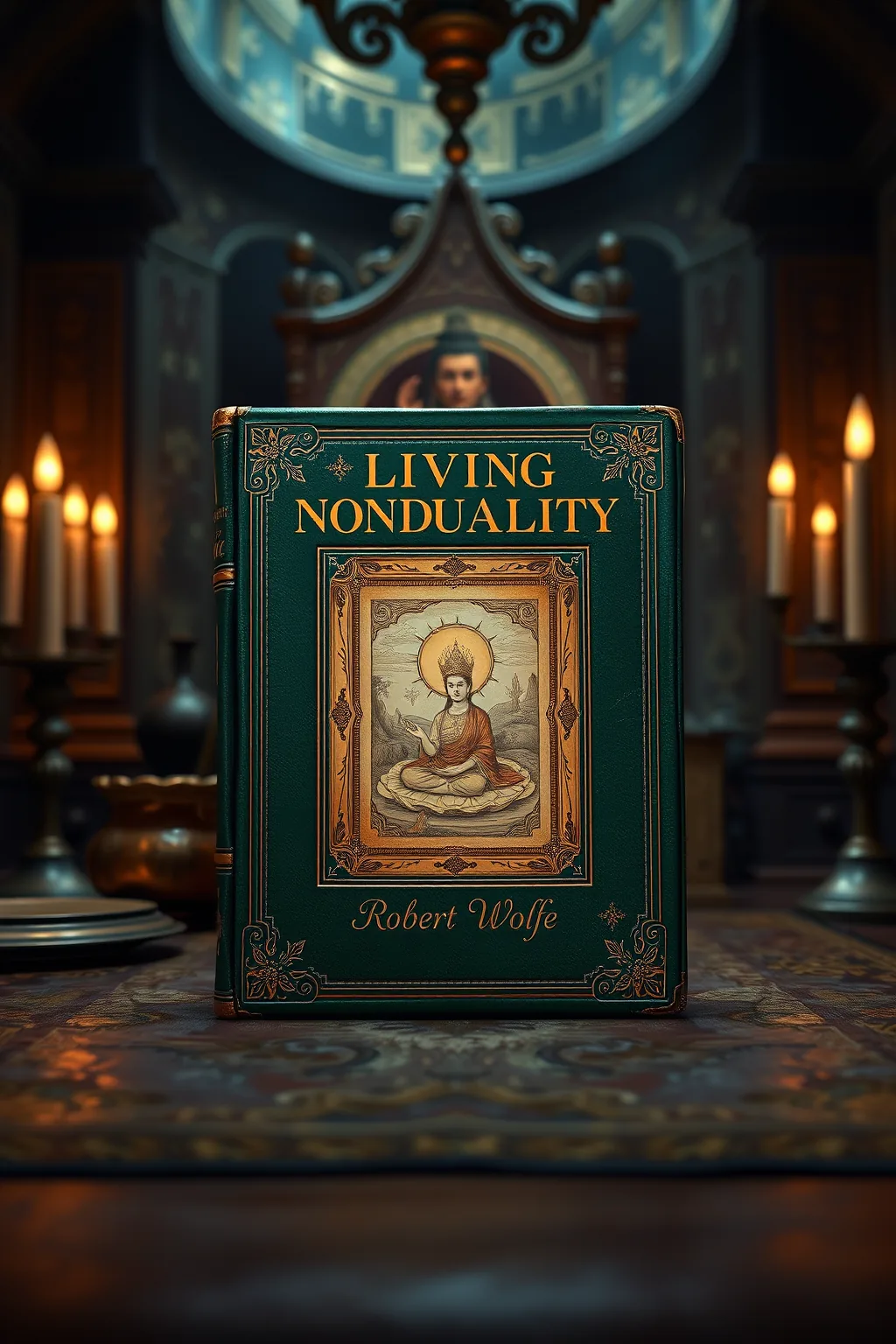
Living Nonduality
 71
71

Living Nonduality



Robert Wolfe's 'Living Nonduality' is a monumental contribution to contemporary spiritual literature. As a modern exposition of Nondualism, it distills complex metaphysical concepts into potent, actionable insights. Wolfe's clarity cuts through the usual esotericism, presenting the direct teachings of self-realization with an authority born of profound understanding. This text is essential for anyone seeking to grasp the experiential core of wisdom traditions, offering a direct pathway to dismantling the illusion of self. Its strength lies in its unwavering focus on the immediate realization of our true nature. Highly recommended for serious practitioners and scholars of mysticism alike.
📝 Description
71
Robert Wolfe's 'Living Nonduality' (2018) presents a direct path to understanding the unified nature of reality.
Robert Wolfe's 'Living Nonduality' explicates the core principles of Nondualism, drawing parallels across disparate spiritual traditions. He argues that the apparent separation between self and world is an illusion, a construct of the ego. The book guides the reader toward recognizing the unified nature of existence, moving beyond conceptual understanding to direct experience.
Wolfe aims to illuminate the path for those seeking to awaken to their true, boundless nature. The text encourages a shift from dogma to the lived reality of Nonduality. It focuses on the direct experience of 'is-ness,' aligning with insights found throughout spiritual history.
This work engages with Nondual traditions that span centuries and cultures, including Zen Buddhism, Dzogchen, Taoism, Advaita Vedanta, and Sufism. These traditions share a common aim: to reveal the underlying unity of existence and the illusory nature of the separate self. Mystics like Meister Eckhart also articulated similar nondual perspectives within a Western context. 'Living Nonduality' positions itself within this lineage, translating these profound insights into accessible language for contemporary seekers.
✍️ Author
Enlightenment Teachings of Self-Realization by Robert Wolfe
Nondualism, also called nonduality, is a polyvalent term originating in Indian philosophy and religion, where it is used in various, related contemplative philosophies which aim to negate dualistic thinking or conceptual proliferation (prapanca) and thereby…
💡 Why Read This Book?
This book offers a direct pathway to understanding and experiencing the fundamental unity of existence. It bridges ancient wisdom with modern comprehension, making the profound teachings of Nondualism accessible. Essential for seekers ready to transcend egoic limitations and for scholars investigating the common ground of spiritual traditions. It guides you towards a profound inner shift.
⭐ Reader Reviews
Honest opinions from readers who have explored this book.
❓ Frequently Asked Questions
What is Nonduality?
Nonduality, or Advaita, posits that reality is ultimately a single, undivided essence, transcending the perceived separation between subject and object, self and other. It's the recognition of a unified consciousness.
Is this book for beginners?
Yes, while deep, the book is written with clarity that can guide sincere beginners. It offers a direct approach to understanding the core of spiritual realization.
What spiritual traditions does it draw from?
It synthesizes insights from Zen, Dzogchen, Taoism, Vedanta, Sufism, and Christian mysticism, highlighting their shared nondual core.
What is the 'Self-Realization' mentioned?
Self-Realization is the direct, experiential understanding and embodiment of one's true, nondual nature, beyond the limited egoic identity.
Is this book available for free?
Yes, 'Living Nonduality' is released under a Creative Commons Attribution license, making it accessible for wider dissemination and study.
🔮 Key Themes & Symbolism
The Illusion of Separation
This theme meticulously deconstructs the ego's fabricated sense of individuality, revealing it as a construct that obscures our inherent oneness. The book guides the reader to observe the subtle mechanisms of this illusion, demonstrating how it creates suffering and limits our perception of reality. By understanding the ephemeral nature of the separate self, one can begin to dismantle the psychological architecture that binds them, paving the way for a more expansive and liberated perspective. This exploration is crucial for any spiritual seeker aiming to transcend conventional limitations.
Direct Experiential Realization
Central to 'Living Nonduality' is the emphasis on direct, unmediated experience over intellectual assent. The teachings are presented not as abstract philosophy, but as pointers towards an immediate, embodied understanding of 'is-ness.' The book encourages readers to shift their focus from conceptual grasping to the raw presence of awareness itself. This theme highlights the transformative power of recognizing one's true nature in the here and now, moving beyond dogma and belief systems towards an authentic awakening that is lived rather than merely understood.
The Unity of Traditions
Robert Wolfe masterfully illustrates how diverse spiritual lineages, from the East to the West, converge on the singular truth of Nondualism. The book acts as a bridge, demonstrating that the clear insights of Zen, Dzogchen, Vedanta, Sufism, and Christian mystics like Meister Eckhart are not disparate doctrines, but different expressions of the same fundamental reality. This theme reveals the universal nature of spiritual wisdom, encouraging a holistic appreciation of humanity's quest for ultimate truth and the interconnectedness of all paths leading to enlightenment.
💬 Memorable Quotes
Direct passages from the work, attributed to the author.
“To know oneself is to know the unmanifest.”
— This points to the idea that true self-knowledge transcends the ego and leads to an awareness of the fundamental, unmanifest ground of all being.
“Awareness is not a thing, but the space in which things appear.”
— This highlights the nature of consciousness as the boundless canvas of existence, rather than an object within it.
“The path is the destination.”
— This emphasizes the importance of the present moment and the process of seeking, suggesting that enlightenment is not a future attainment but a present realization.
“You are not looking for something, you are recognizing what you are.”
— This reframes the spiritual journey from acquisition to remembrance, implying that our true nature is already present and simply needs to be recognized.
💡 Key Ideas
Editorial paraphrase of the work's core concepts — not direct quotes.
The illusion of separation is the root of all suffering.
This quote captures the core premise of Nondualism, suggesting that our perceived individuality is the primary source of psychological pain and existential angst.
🌙 Esoteric Significance
Tradition
This work is deeply rooted in the perennial philosophy, specifically the nondual traditions found across major spiritual lineages. It draws heavily from Advaita Vedanta's concept of Brahman, Zen's emphasis on direct experience and emptiness, Dzogchen's natural state, and the mystical insights of Sufism and Christian mystics. Its esoteric significance lies in its ability to synthesize these seemingly disparate paths into a unified understanding of ultimate reality.
Symbolism
While 'Living Nonduality' favors direct experience over symbolic interpretation, the concept of 'the void' or 'emptiness' functions as a profound, albeit negative, symbol for the boundless nature of consciousness. The 'mirror' is often implied, representing awareness that reflects all phenomena without distortion. The absence of a separate self is itself a potent symbol for liberation, pointing towards a state beyond conceptual definition and duality.
Modern Relevance
In a world increasingly characterized by division, anxiety, and a sense of disconnection, the teachings of Nonduality offer a powerful antidote. 'Living Nonduality' provides a practical and philosophical guide to realizing our inherent interconnectedness and the illusory nature of perceived separation. Its relevance lies in its capacity to foster inner peace, reduce suffering, and cultivate a more compassionate and unified worldview, directly addressing the existential challenges of contemporary life.
👥 Who Should Read This Book
This book is an indispensable resource for spiritual seekers beginning the path of self-inquiry, offering clarity and direct guidance. Scholars of comparative religion and mysticism will find its synthesis of traditions important for understanding the common threads of spiritual wisdom. Practitioners of meditation and contemplative disciplines will discover clear insights that deepen their practice. Even those new to spiritual concepts will find the accessible yet potent language an inviting gateway to exploring the fundamental nature of reality and their place within it.
📜 Historical Context
Published in an era marked by a growing global interest in Eastern philosophies and contemplative practices, 'Living Nonduality' emerged as a significant voice in the Western discourse on spirituality. The late 20th and early 21st centuries witnessed a surge in the accessibility of texts from traditions like Buddhism (Zen, Dzogchen), Hinduism (Vedanta), and Taoism, leading many to seek the underlying commonalities. Robert Wolfe's work speaks to this intellectual and spiritual zeitgeist, providing a coherent framework for understanding Nondualism as a universal spiritual principle. The book's release under Creative Commons further aligns with the modern spirit of open knowledge sharing, democratizing access to profound wisdom in an increasingly interconnected world.
📔 Journal Prompts
Reflect on a moment when you felt a profound sense of interconnectedness. What triggered this feeling, and how did it differ from your usual state?
Observe your thoughts for a day without judgment. Can you discern a 'self' that is separate from the stream of thoughts, or is the self the stream itself?
When faced with a challenging situation, what is the 'I' that experiences the challenge? Explore the nature of this 'I'.
Consider a time you experienced pure presence or effortless awareness. What were the characteristics of that state?
How does the concept of 'nonduality' challenge your everyday assumptions about yourself and the world?
🗂️ Glossary
Nonduality
The philosophical or spiritual concept that reality is ultimately a single, undivided essence, transcending the perceived separation between subject and object, self and other.
Advaita
A major school of Hindu philosophy, particularly Vedanta, that emphasizes the doctrine of nonduality, asserting the oneness of the individual soul (Atman) and the ultimate reality (Brahman).
Ego
In a spiritual context, the sense of a separate, individual self, often characterized by personal identity, desires, and a belief in being distinct from others and the universe.
Self-Realization
The direct, experiential understanding and embodiment of one's true, nondual nature, often described as the awakening to the essential 'is-ness' beyond the limited egoic identity.
Contemplation
A form of deep, meditative reflection or sustained attention, often aimed at spiritual insight, understanding, or direct experience of a truth or reality.
This book appears in 2 collections
🔮 Readers Also Liked
Browse all →



From the “Christian Mysticism” Collection
View all →








More Free Mysticism & Contemplation Books
View all →



![[Bat i le-gani] =](/img/thumb/bat-i-le-gani-joseph-isaac-schneersohn-604811.webp)