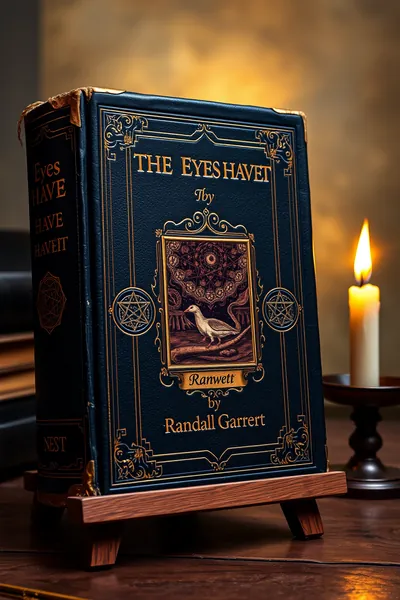
The Flower of Iceland

 78
78

The Flower of Iceland
Villamaria's 'The Flower of Iceland' offers a compelling, if somewhat uneven, glimpse into the subterranean currents of Icelandic folklore. The strength of the collection lies in its direct presentation of narratives concerning the Huldufólk and land spirits, allowing the reader to encounter these entities without extensive scholarly mediation. One particularly striking passage describes the consequences of disturbing the dwelling places of the hidden people, a stark reminder of the respect these traditions demand. However, the collection occasionally suffers from a lack of consistent annotation; while the preface provides a brief overview, deeper contextualization for some of the more obscure magical practices or specific locations mentioned would have been beneficial. The absence of a more detailed glossary for specific terms, beyond the basic introduction, also presents a minor hurdle for those unfamiliar with Old Norse or Icelandic linguistic nuances. Despite these limitations, the book successfully captures the elemental spirit of Iceland's mythical landscape. It serves as a valuable, unadorned resource for those willing to engage with the raw material of ancient belief.
📝 Description
78
Villamaria's 'The Flower of Iceland' collected traditional Icelandic folklore in 2012.
'The Flower of Iceland' gathers traditional Icelandic folklore and mystical narratives, first compiled in 2012. The book draws on a rich oral tradition, recounting tales about elemental spirits, hidden folk, and the deep connection between the land and its people. Its goal is to preserve and share these old stories, showing a worldview where the supernatural is part of everyday life. This is not a historical account but a selection of myths and legends.
The compilation suits readers interested in comparative mythology, folklore studies, and esoteric traditions from Northern Europe. It offers insight into Iceland's cultural and spiritual past, especially for those curious about the 'hidden people' (huldufólk) and their interactions with humans. Writers and artists seeking inspiration from ancient, nature focused cosmologies will also find value here.
This collection fits within the broader study of European folk magic and pagan survivals. It documents narratives that reflect a worldview where the natural and supernatural are intertwined, a common feature in many indigenous and pre-Christian European traditions. The persistence of these beliefs, even alongside later Christianization, highlights a continuous thread of animistic and spirit focused practices that inform esoteric traditions.
💡 Why Read This Book?
• Understand the deep-rooted belief in 'Huldufólk' (hidden people) and their societal structure, as depicted in tales originating from Iceland's folklore tradition. This offers a unique perspective on non-human intelligence and coexistence. • Explore the concept of 'Landvættir' (land spirits) and their influence on the Icelandic natural world, learning how ancient cultures perceived spiritual forces within landscapes, a perspective distinct from modern animism. • Encounter narratives detailing the practice of 'Galdr' and 'Seiðr' (forms of magic), revealing ancient methods of interacting with unseen forces and the environment, distinct from contemporary magical systems.
⭐ Reader Reviews
Honest opinions from readers who have explored this book.
❓ Frequently Asked Questions
What is the origin of the stories in 'The Flower of Iceland'?
The stories are drawn from Iceland's rich oral folklore tradition, collected and compiled over centuries. While the book was first published in 2012, the tales themselves reflect beliefs and narratives passed down through generations, dating back to the Norse settlement period and beyond.
Who are the 'Huldufólk' mentioned in the book?
The 'Huldufólk,' or hidden people, are supernatural beings central to Icelandic folklore. They are believed to live parallel lives to humans, often in rocks or hills, and require respect; disturbing their homes can lead to misfortune.
What is the significance of 'Landvættir' in Icelandic tradition?
'Landvættir' are the guardian spirits of Iceland's land. These beings are associated with specific natural landmarks like mountains and rivers, embodying the sacredness and power of the Icelandic environment. Respecting them was crucial for well-being.
Does 'The Flower of Iceland' include practical magic or rituals?
The book primarily presents folklore narratives. While it references magical practices like 'Galdr' and 'Seiðr' within the stories, it does not offer step-by-step instructions for modern practice. It illustrates historical beliefs about magic.
Is 'The Flower of Iceland' based on academic research?
While drawing from folkloric traditions that have been studied academically, 'The Flower of Iceland' is presented as a curated collection of myths and legends. Its focus is on the stories themselves rather than academic analysis, though it reflects deeply ingrained cultural beliefs.
When was 'The Flower of Iceland' first published?
'The Flower of Iceland' was first published on May 10, 2012. This edition serves to bring together and preserve traditional Icelandic folk tales for a contemporary audience.
🔮 Key Themes & Symbolism
The Hidden Folk
Central to the collection are the 'Huldufólk,' Iceland's hidden people. These narratives portray them not as mere sprites but as distinct entities with their own societies, dwelling within the landscape itself—often in prominent rocks or hills. The stories detail the consequences, both positive and negative, of human interaction with these beings, emphasizing the need for caution and respect. They represent a persistent belief in a parallel realm coexisting with the human world, influencing fortune and misfortune based on perceived slights or courtesies.
Guardians of the Land
The concept of 'Landvættir,' or land spirits, is deeply ingrained in these tales. Each mountain, river, and significant natural feature is depicted as having its own consciousness and protective spirit. These entities are crucial to the ecological and spiritual balance of Iceland. The folklore illustrates how ancient Icelanders viewed their environment as alive and sentient, requiring reverence. Ignoring or disrespecting these spirits, often through disruptive construction or disregard for nature, was believed to invite calamity, underscoring a profound indigenous ecological ethic.
Ancient Icelandic Magic
Within the narratives, elements of ancient Icelandic magic, such as 'Galdr' and 'Seiðr,' are present. These are not presented as abstract theories but as practical arts employed by characters within the stories—sorcerers, wise women, or even ordinary individuals seeking to influence events. The magic often involves specific incantations, runes, or rituals tied to natural forces and the spirit world. The book showcases a worldview where the manipulation of unseen energies was a recognized, albeit often feared, aspect of life in historical Iceland.
The Immanence of the Sacred
A pervasive theme is the immanence of the sacred within the mundane. Unlike dualistic worldviews that separate the spiritual from the material, these stories posit that the supernatural is an intrinsic part of the everyday. Elves, trolls, ghosts, and elemental forces are not external intrusions but inherent aspects of the Icelandic landscape and existence. This perspective fosters a sense of wonder and interconnectedness, suggesting that the veil between worlds is thin and that human lives are constantly interwoven with these potent, unseen presences.
💬 Memorable Quotes
Direct passages from the work, attributed to the author.
“The Huldufólk dwell in the hills and rocks, unseen by most.”
— This simple statement expresses the core belief in hidden beings coexisting with humanity. It highlights their integration into the physical landscape, suggesting their presence is a matter of perception and respect rather than complete absence.
“The spirits of the land watch over their domains.”
— This conveys the essence of 'Landvættir.' It portrays the natural world as actively overseen by sentient forces, implying that geographical features possess agency and require a respectful approach from those who inhabit or traverse them.
“Magic was woven into the fabric of life, not separate from it.”
— This interpretation highlights the practical and integrated nature of 'Galdr' and 'Seiðr' in the folklore. Magic was not an esoteric pursuit for a select few but a recognized force influencing daily events and interactions.
“Respect the ancient ways, lest the old powers turn against you.”
— This serves as a general admonition found within the tales, urging adherence to traditional customs and beliefs. It suggests that neglecting or violating these ancient principles can provoke negative repercussions from established spiritual forces.
💡 Key Ideas
Editorial paraphrase of the work's core concepts — not direct quotes.
To disturb their homes is to invite ill fortune.
This paraphrased concept emphasizes the reciprocal relationship and the potential consequences of human actions. It warns against disrespecting the unseen inhabitants of the land, linking environmental disruption to personal or communal misfortune.
🌙 Esoteric Significance
Tradition
This work aligns with Northern European folk magic and shamanistic traditions, often categorized under broader umbrellas of Germanic paganism or indigenous European spirituality. It predates and stands apart from later esoteric movements like Theosophy or the Hermetic Order of the Golden Dawn. Its significance lies in its preservation of a worldview where the spirit world is immanent within the natural landscape, emphasizing localized deities and elemental forces rather than a codified pantheon or abstract metaphysical principles.
Symbolism
Key symbols include prominent rock formations and hills, which often represent the dwellings or sacred sites of the Huldufólk. These are not merely geological features but portals or residences for unseen beings. Water bodies, such as rivers and hot springs, symbolize purification, transformation, and the domain of elemental spirits. The concept of the 'hidden' itself is a potent symbol, representing the unseen dimensions of reality that influence the visible world, accessible through respect, ritual, and specific perceptive faculties.
Modern Relevance
Contemporary practitioners of Ásatrú and Heathenry often draw inspiration from the reverence for nature and the belief in localized spirits evident in these tales. Modern animistic movements and eco-spiritual groups find resonance in the concept of Landvættir, promoting a deeper connection and responsibility towards the environment. Furthermore, writers and artists exploring themes of folklore, mythology, and the uncanny continue to find 'The Flower of Iceland' a valuable source for understanding a unique European spiritual landscape.
👥 Who Should Read This Book
• Students of comparative folklore and mythology seeking primary source material on Northern European beliefs, particularly concerning elemental spirits and hidden folk traditions. • Practitioners of indigenous European spiritual paths interested in understanding the roots of nature veneration and localized spirit work found in Icelandic traditions. • Aspiring authors and artists looking for authentic, evocative source material rooted in a specific cultural and mystical landscape, offering unique narrative elements beyond common fantasy tropes.
📜 Historical Context
The tales compiled in 'The Flower of Iceland' emerge from a cultural milieu where the boundaries between the mundane and the supernatural were fluid. Iceland, isolated and shaped by volcanic landscapes, fostered a rich tradition of folklore. These stories reflect a persistence of pre-Christian Norse beliefs, including animism and shamanistic practices, which coexisted with and were often syncretized into the dominant Lutheranism following the Reformation. While the collected edition dates to 2012, the narratives echo beliefs prevalent from the settlement era (c. 874-930 AD) onwards. Figures like Jón Árnason, whose extensive collection of Icelandic folktales was published in the mid-19th century, laid crucial groundwork for preserving this oral heritage. Unlike the more formalized magical systems developing concurrently in continental Europe (e.g., Renaissance ceremonial magic), Icelandic magic ('Galdr' and 'Seiðr') was deeply intertwined with the specific natural environment and believed spirit-inhabitants of the island.
📔 Journal Prompts
The Huldufólk's perceived society and its parallels to human communities.
Reflections on the 'Landvættir' as guardians of specific Icelandic geographical features.
The practical application and ethical considerations of 'Galdr' as depicted in the narratives.
Personal experiences or perceptions of hidden presences in natural environments.
The balance between respecting the unseen and working through the demands of the physical world.
🗂️ Glossary
Huldufólk
Literally 'hidden people.' Supernatural beings in Icelandic folklore believed to inhabit the land, often living in rocks or hills. They are distinct from elves and trolls but share characteristics with both.
Landvættir
Land spirits or guardian beings of Iceland. Each significant natural feature, like mountains or rivers, is believed to have its own Landvættir protecting it.
Galdr
A form of Norse magic, often involving chanted spells or incantations. It was considered a practical art used to influence events or nature.
Seiðr
A type of Norse shamanistic magic associated with prophecy, fate manipulation, and trance-like states. It was often practiced by women (völva) but also by men.
Álfur
Elf. While distinct from Huldufólk, elves are also part of Icelandic folklore, often associated with light or beauty, and sometimes with hidden realms.
Troll
Mythical beings, often depicted as large, strong, and sometimes malevolent creatures dwelling in remote areas like mountains or caves.
Völva
A female seer or sorceress in Norse society, often associated with the practice of Seiðr. They held significant spiritual and sometimes social influence.
This book appears in 1 collection
🔮 Readers Also Liked
Browse all →







From the “Folklore Magic” Collection
View all →


More Free Magic & Ritual Books
View all →