The honor student at magic high

 84
84

The honor student at magic high
Satō, Tsutomu's The Honor Student at Magic High offers a familiar, yet competently executed, premise: the struggles of a student in a magical academy who may not possess the expected raw talent. The narrative effectively establishes the high-stakes environment of "magic high," where one's academic standing is inextricably linked to their perceived aptitude. A notable strength lies in the characterization of the protagonist, whose internal monologue often grounds the fantastical elements in relatable anxieties about performance and belonging. However, the pacing occasionally falters, particularly in the mid-section, where the exposition on the school's arcane curriculum becomes somewhat dense, momentarily slowing the character-driven momentum. The depiction of the "aptitude test" sequence, a pivotal moment where the protagonist's capabilities are put to the ultimate test, is a particularly memorable passage, showcasing both the world's mechanics and the character's resilience. Ultimately, The Honor Student at Magic High is a solid entry in the magical school genre, offering a satisfying, if not entirely novel, experience.
📝 Description
84
Satō, Tsutomu's 2016 book, The Honor Student at Magic High, examines a school where magical talent defines student success.
The Honor Student at Magic High, published in 2016, is set in an academy where magical aptitude is the main standard for student achievement. The story follows characters as they navigate a system that frequently values natural talent and academic performance in magic above all else. It focuses on individuals who might not possess the highest innate abilities but strive to succeed through other means.
The book appeals to readers who enjoy fictional examinations of educational systems, especially those with a speculative element involving supernatural powers. It is best suited for those who like character-focused stories about personal growth within competitive, structured settings. Readers interested in narratives about overcoming limitations or societal expectations in a unique environment will find this work engaging.
This work fits within the tradition of supernatural school fiction, a genre that gained significant traction in the light novel and manga industries around its publication year. It draws on established tropes of magic academies and gifted protagonists, common in works from the late 20th and early 21st centuries. The narrative contributes to this lineage by focusing on the quantifiable or qualitative measure of 'magic aptitude' and its impact on a student's life and opportunities within the institution.
💡 Why Read This Book?
• Gain an understanding of "magic aptitude" as a narrative device for social stratification, similar to how IQ or athletic ability functions in other fictional contexts, as explored through the protagonist's challenges. • Experience the dynamic between innate talent versus learned skill within a high-stakes academic setting, observing how the protagonist navigates the pressures of "magic high" in 2016. • Appreciate the depiction of mentorship and rivalry within a specialized educational environment, noting how characters like the protagonist's peers and instructors influence their journey.
⭐ Reader Reviews
Honest opinions from readers who have explored this book.
❓ Frequently Asked Questions
What is the primary conflict in The Honor Student at Magic High?
The primary conflict centers on the protagonist's struggle to succeed and prove their worth in a magical academy where inherent talent, or "magic aptitude," is highly valued and often dictates social standing and academic opportunity.
When was The Honor Student at Magic High first published?
The work by Satō, Tsutomu was first published in 2016, placing it within the contemporary wave of fantasy and light novel-inspired narratives.
Does the book focus more on magic theory or character development?
While magic theory and the academic environment are crucial to the setting, the narrative strongly emphasizes character development, particularly the protagonist's personal growth and internal struggles within the academy.
Are there specific magical systems or schools of magic detailed?
The book details a system of "magic aptitude" that governs student success. While specific schools of magic are implied within the academy's curriculum, the focus remains on how this aptitude system impacts the characters.
Who is Satō, Tsutomu?
Satō, Tsutomu is identified as a comic book author, indicating their expertise in visual storytelling and sequential art, which likely informs the style and presentation of this work.
What is the general tone of the book?
The general tone is one of earnest striving and academic pressure, mixed with elements of fantasy. It balances the fantastical setting of a magic high school with relatable themes of effort, self-doubt, and achievement.
🔮 Key Themes & Symbolism
Academic Pressure and Meritocracy
The narrative critically examines a meritocratic system within a magical academy, where "magic aptitude" serves as the primary benchmark for success. Students are constantly evaluated, and their futures are heavily influenced by their performance in arcane studies. This creates an environment rife with competition and anxiety, mirroring real-world academic pressures. The work explores the psychological toll of such a system, particularly on individuals who may not possess extraordinary innate abilities but strive through sheer determination. The year 2016, when the book was published, saw continued global discourse on educational fairness and the impact of standardized testing, themes subtly echoed in the book's depiction of magical evaluations.
Innate Talent vs. Diligent Effort
A central thematic conflict revolves around the age-old debate of whether natural talent or hard work is more crucial for achievement. The protagonist often finds themselves at a disadvantage compared to peers who demonstrate effortless magical prowess. The story explores the protagonist's relentless efforts to compensate for perceived deficiencies, highlighting the value of perseverance and strategic learning. This theme challenges the notion that destiny or inherent gifts are the sole determinants of success, suggesting that dedication and resilience can forge a path even in highly specialized and competitive fields like magic.
Social Hierarchy in Specialized Education
The structure of the magic high school creates a distinct social hierarchy based on magical aptitude. Students with higher aptitudes often enjoy privileges and are destined for more prestigious roles, while those with lower aptitudes face marginalization and limited opportunities. The work portrays how this system shapes relationships, fosters rivalries, and influences self-perception. It questions the fairness of such rigid stratification, prompting reflection on how societal structures, even within fictional universes, can create barriers and dictate individual destinies based on specific, often narrowly defined, criteria.
The Burden of Expectation
The protagonist, and potentially others, carries the weight of external expectations, whether from family, instructors, or peers. This burden can manifest as intense self-pressure to perform, leading to fear of failure and imposter syndrome. The narrative explores how individuals cope with these expectations, sometimes leading to isolation or a desperate need for validation. The story implicitly critiques environments that place undue emphasis on singular achievements, potentially overlooking the complex development of an individual. The year of publication, 2016, was also a time when discussions around mental well-being in academic settings gained more traction.
💬 Memorable Quotes
Direct passages from the work, attributed to the author.
“The aptitude test results are everything here.”
— This statement highlights the core of the book's setting: a magical academy where a single metric, "magic aptitude," dictates an individual's entire academic and social trajectory. It underscores the high-stakes environment and the pressure faced by students.
“This academy trains wizards, not just people who can cast spells.”
— This interpretation suggests the narrative explores a deeper aspect of magical education beyond mere technical skill. It implies a focus on the character, discipline, and broader understanding required to be a true "wizard."
“They see my rank, not the effort behind it.”
— This sentiment reflects the protagonist's frustration with a system that prioritizes outcomes over process. It speaks to the feeling of being misunderstood and undervalued when one's hard work is overshadowed by external metrics.
💡 Key Ideas
Editorial paraphrase of the work's core concepts — not direct quotes.
I may not have their talent, but I have my study hours.
This paraphrased concept expresses the protagonist's core philosophy and struggle. It emphasizes the theme of effort and determination versus innate ability, suggesting that hard work can be a powerful, albeit different, path to mastery.
Every point matters on the final arcane assessment.
This quote emphasizes the granular and rigorous nature of the academic system within the magic high school. It points to the constant pressure and the importance of every detail in achieving academic success.
🌙 Esoteric Significance
Tradition
While not explicitly rooted in a single, named esoteric tradition like Kabbalah or Hermeticism, The Honor Student at Magic High engages with concepts common in modern occult fiction. The idea of "magic aptitude" can be seen as a fictionalized interpretation of inherent spiritual or energetic potential, a concept present in various spiritualist and New Age philosophies that gained traction in the 20th century. The work departs from traditional grimoire-based magic by framing magical ability within a structured, almost scientific, academic system, reflecting a more contemporary, secularized approach to the mystical.
Symbolism
The "aptitude test" serves as a central symbolic element, representing not just a measure of magical skill but also a gatekeeper to social status and opportunity within the depicted society. The academy itself can be seen as a symbol of initiation and rigorous training, akin to esoteric schools that emphasize a structured path of learning. The protagonist's struggle symbolizes the alchemical process of transformation, where base potential is refined through hardship and effort into something valuable, mirroring the concept of the Philosopher's Stone.
Modern Relevance
Contemporary thinkers and practitioners interested in the psychology of achievement and the societal impact of meritocratic systems may find resonance in the book's themes. While not a direct source for modern occult practices, its exploration of inherent potential versus learned skill and the pressures of specialized education aligns with current discussions in self-help and personal development spheres that often intersect with spiritual or metaphysical frameworks. The narrative's depiction of a system valuing specific talents can be analyzed through lenses of modern educational psychology and critiques of talent-based selection.
👥 Who Should Read This Book
• Students and young adults grappling with academic pressures or questioning their own talents and capabilities within competitive environments. • Fans of fantasy narratives that explore structured magical systems and academy settings, particularly those who appreciate character-driven stories. • Readers interested in fictional examinations of meritocracy and social hierarchies, and how individual effort can challenge established systems.
📜 Historical Context
The Honor Student at Magic High, published in 2016, emerged during a vibrant period for manga and light novels, a market that had seen substantial growth throughout the early 21st century. This era was characterized by a prolific output of series featuring supernatural elements, often set in high school environments. These narratives frequently built upon established tropes from earlier works, such as the magic academy setting popularized by series like *Harry Potter* and various anime and manga that followed. The genre often explored themes of chosen ones, inherent abilities, and the struggle for recognition within specialized institutions. Satō, Tsutomu's work contributes to this continuing trend, offering a specific take on the dynamics of academic performance and magical talent. While not directly engaging with a specific competing school of thought in a philosophical sense, the work operates within the popular fantasy fiction sphere, which itself competes for audience attention with other genres. The reception of such works in 2016 often depended on their ability to innovate within familiar frameworks or to deliver compelling character arcs, rather than engaging in overt intellectual debate.
📔 Journal Prompts
The concept of "magic aptitude" within the academy.
The protagonist's strategies for overcoming perceived talent deficits.
The social stratification based on academic performance.
The balance between innate ability and diligent study.
The pressures associated with arcane assessments.
🗂️ Glossary
Magic Aptitude
A quantifiable or qualitative measure of an individual's innate magical capabilities, serving as a primary determinant of academic success and social standing within the magic high school setting.
Arcane Assessment
Formal evaluations conducted within the magic academy to measure students' proficiency in magical arts and academic subjects, directly impacting their ranking and future prospects.
Wizardry Academy
The institutional setting where students are trained in magical arts, characterized by a structured curriculum, competitive environment, and a hierarchy based on magical talent.
Rank
A student's position within the academic hierarchy of the magic academy, determined by their performance in various assessments and directly influencing their privileges and opportunities.
Study Hours
The dedicated time and effort a student invests in learning and practicing magical arts and academic subjects, often presented as a contrasting factor to innate talent.
Final Assessment
A significant, often end-of-term or end-of-year, evaluation that comprehensively tests a student's accumulated knowledge and skills in magic and related subjects.
Wizards
Individuals trained in magical arts, with the term implying a level of mastery and understanding beyond mere spellcasting, suggesting a deeper connection to the craft.
🔮 Readers Also Liked
Browse all →








More by Satō, Tsutomu (Comic book author)
All books →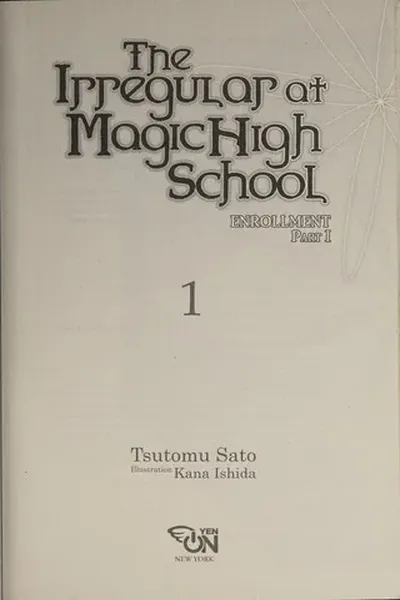





More Free Magic & Ritual Books
View all →