Ancient Grimoires and Modern Magic
 81
81

Ancient Grimoires and Modern Magic
Rowan Blackwood’s *Ancient Grimoires and Modern Magic* offers a much-needed corrective to the often-mythologized perception of grimoires. By framing them as "ritual toolkits," Blackwood successfully cuts through the sensationalism to present a practical, research-driven analysis. The book excels in detailing the structural components of grimoires—instructions, symbols, timing—demonstrating their function as reproducible systems for magical practice. A particularly strong passage details the "authority language" grimoires employ, illustrating how specific phrasings function to command and direct spiritual forces, grounding the esoteric in linguistic pragmatism. However, the text occasionally leans heavily on academic language, which might present a slight barrier for absolute beginners. Despite this, the work’s clarity on the historical evolution of grimoires, particularly its connections to figures like Heinrich Cornelius Agrippa, provides invaluable context. Blackwood’s approach is a significant contribution to understanding the mechanics of historical occult traditions. It stands as an authoritative guide for those seeking substance over spectacle in magical literature.
📝 Description
81
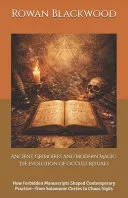
Rowan Blackwood's 2023 book examines grimoires as structured ritual toolkits.
Ancient Grimoires and Modern Magic looks at historical grimoires not as objects of sensationalism, but as practical systems for magical work. Rowan Blackwood details how these texts offer more than just spells. They contain instructions, symbolic languages, astrological timing, authoritative texts, and repeatable methods. The book explains that grimoires were designed to turn belief into concrete, repeatable magical actions, showing their lasting impact.
This book is for occult practitioners who want historical and practical context for grimoires, avoiding popular myths. It appeals to those who appreciate a methodical approach to magic and want to understand the structure that makes rituals work consistently. Readers will learn how these old instruction manuals still influence modern magical practices.
Blackwood places grimoires in their historical setting, tracking their development from early medieval writings through the Renaissance and later periods. These texts are presented not as oddities, but as key parts of Western esotericism, affected by figures like Agrippa and Dee. Grimoires acted as knowledge bases and practical guides for people trying to work with supernatural forces, change practices, and keep magical traditions alive through written systems.
This work situates grimoires within the broader currents of Western esotericism, a tradition concerned with hidden knowledge and spiritual practices. It traces their lineage through medieval magic and Renaissance occultism, connecting them to figures who synthesized magical theory and practice. By analyzing grimoires as practical manuals, Blackwood highlights their role in codifying and transmitting ritualistic knowledge across generations, a common aim within esoteric traditions seeking to systematize the relationship between the human and the divine or supernatural.
💡 Why Read This Book?
• Understand grimoires as structured "ritual toolkits" with repeatable methodologies, moving beyond sensationalism to grasp their functional design for magical practice, as detailed in the section on "Core Concepts Unpacked." • Gain a clear historical perspective on grimoires, tracing their evolution and impact within Western esotericism from medieval times through the Renaissance, referencing key figures like Heinrich Cornelius Agrippa. • Learn to identify and analyze the "authority language" within grimoires, recognizing how specific linguistic structures were employed to enact magical will, a concept explored in the book's detailed examinations of ritual components.
⭐ Reader Reviews
Honest opinions from readers who have explored this book.
❓ Frequently Asked Questions
What is the primary function of a grimoire according to Rowan Blackwood?
Rowan Blackwood posits that grimoires function primarily as "ritual toolkits." They are not just collections of spells but contain instructions, symbolic systems, timing protocols, and authoritative language designed to enable repeatable magical practices and translate belief into action.
Who is Rowan Blackwood and when was this book first published?
Rowan Blackwood is the author of *Ancient Grimoires and Modern Magic*. The book was first published on February 4, 2026, positioning it as a contemporary analysis of historical occult texts.
Does the book focus on Hollywood portrayals of magic?
No, the book explicitly aims to cut through "Hollywood fog" and sensationalism. It focuses on the actual historical and functional aspects of grimoires as practical guides for occult ritual, rather than fantastical depictions.
What historical context does *Ancient Grimoires and Modern Magic* provide?
The work situates grimoires within their historical development, discussing their role in Western esotericism, particularly from the medieval period through the Renaissance, and their connection to figures influential in occult studies.
What are the essential components of a grimoire discussed in the book?
Blackwood identifies key components including detailed instructions, symbolic languages, specific timing systems (like astrological timing), authoritative pronouncements, and repeatable structures that define the grimoire's practical utility.
Is this book suitable for beginners in occult studies?
Yes, the book is designed for readers interested in grimoires who want real context beyond popular myth. Its clear explanations and focus on function make it accessible, though some academic phrasing may require careful reading.
🔮 Key Themes & Symbolism
Grimoires as Functional Toolkits
This theme redefines grimoires from mere spellbooks to comprehensive "ritual toolkits." Blackwood meticulously outlines how these texts provide structured instructions, symbolic lexicons, astrological timing systems, and specific linguistic formulas designed for reproducible magical results. The emphasis is on the practical, architectural nature of grimoires, showcasing how they enable practitioners to translate abstract belief into concrete, repeatable actions within defined ritual frameworks.
The Evolution of Occult Ritual
The work traces the historical trajectory of grimoires, illustrating their development and adaptation across different eras of Western esotericism. It highlights how these texts served as crucial conduits for preserving, transmitting, and evolving magical knowledge, connecting ancient practices to the burgeoning occult movements of the Renaissance and beyond. This perspective emphasizes grimoires as dynamic historical documents shaping ongoing occult traditions.
Authority and Structure in Magic
A core concept is the nature of authority within grimoire magic. Blackwood examines how "authority language" and repeatable structures lend efficacy to rituals, deriving power from tradition, divine invocation, or cosmic principles. The book clarifies that the effectiveness of grimoire magic relies not just on intent, but on adhering to established protocols and understanding the symbolic and linguistic frameworks that grant the practitioner agency.
Explaining Occult Practice
This theme addresses the book's intent to strip away sensationalism and Hollywood-inspired fantasy surrounding grimoires. By focusing on research-backed analysis and practical application, Blackwood provides a clear, grounded understanding of what grimoires are and how they have historically functioned. The aim is to educate readers on the serious, methodical aspects of occult ritual, differentiating them from popular misconceptions.
💬 Memorable Quotes
Direct passages from the work, attributed to the author.
“Grimoires are best understood as functional ritual toolkits.”
— This core assertion reframes grimoires from arcane curiosities to practical manuals. It emphasizes their design for use, containing all necessary components for executing magical operations reliably and effectively.
“The authority language in grimoires imbues instructions with directive power.”
— This highlights the crucial role of specific phrasing and invocations in grimoire practice. It suggests that the precise wording is not arbitrary but designed to command spiritual forces and ensure the ritual's intended outcome.
“Timing systems within grimoires connect earthly action to cosmic cycles.”
— This interpretation focuses on the astrological and temporal elements often found in grimoires. It underscores the belief that aligning magical work with specific celestial alignments enhances its potency and effectiveness.
“Repeatable structures turn esoteric belief into tangible magical practice.”
— This emphasizes the methodical and systematic nature of grimoire magic. The focus is on the 'how-to' aspect, ensuring that rituals can be performed consistently to achieve desired results, bridging the gap between faith and demonstrable outcome.
“Cutting through Hollywood fog reveals the grimoire's true purpose.”
— This speaks to the book's objective of providing an accurate, research-based understanding of grimoires, contrasting it with sensationalized or fictional portrayals commonly found in popular media and entertainment.
🌙 Esoteric Significance
Tradition
This work primarily engages with the Western Esoteric Tradition, particularly its Hermetic, Kabbalistic, and ceremonial magic branches. It situates grimoires as foundational documents within this lineage, acting as practical manuals that facilitated the transmission and evolution of magical practices from the late medieval period through the Renaissance and into modern occultism. It offers a functionalist perspective, aligning with traditions that emphasize ritual as a technology for spiritual or material transformation.
Symbolism
Key symbols explored include the magical circle, representing a consecrated space for ritual operations and protection; divine names and sigils, which function as keys to invoking specific spiritual intelligences or powers; and astrological symbols, used to align magical actions with favorable cosmic timings and influences. These elements are presented not as mere decoration but as integral components of the grimoire's 'toolkit' for effective magical work.
Modern Relevance
Contemporary practitioners of ceremonial magic, chaos magic, and modern witchcraft often draw heavily on grimoire structures and concepts, even if adapted. Thinkers and groups exploring practical applications of historical magic, comparative occultism, or the psychology of ritual continue to find value in grimoires. Blackwood's work provides a crucial analytical lens for these modern explorers, helping them understand the underlying mechanics and historical roots of practices they may be engaging with today.
👥 Who Should Read This Book
['• Students of Western Esotericism seeking a grounded understanding of grimoires beyond popular myth, interested in their historical function and structure.', '• Practicing occultists and ceremonial magicians looking to contextualize their rituals within historical frameworks and understand the pragmatic design of grimoire magic.', '• Comparative religion scholars or historians of magic interested in the material culture and practical application of ritual texts in pre-modern and early modern Europe.']
📜 Historical Context
Published in 2026, Rowan Blackwood's *Ancient Grimoires and Modern Magic* engages with a long tradition of occult scholarship that gained significant traction in the late 19th and early 20th centuries, influenced by figures like Eliphas Lévi and the Hermetic Order of the Golden Dawn. Blackwood's work builds upon foundational texts like Agrippa's *Three Books of Occult Philosophy* (1533) and the *Lemegeton* (first compiled mid-15th century), contextualizing them within evolving Western esoteric thought. The book appears during a period of renewed interest in practical magic and historical occultism, often contrasted with more speculative or New Age spiritualities. While not directly engaging with a specific contemporary scholar in its initial blurb, its analytical approach to grimoires as functional systems implicitly responds to academic debates surrounding ritual efficacy and the historical transmission of magical knowledge, particularly in relation to the scholarly work of figures like Owen Davies or Joseph H. Peterson.
📔 Journal Prompts
The ritual toolkit: Analyze the core components of a grimoire's functional design.
Authority language: How does the phrasing in grimoires aim to direct spiritual forces?
Symbolic systems: Reflect on the purpose of sigils and divine names in magical operations.
Repeatable structures: Consider how consistency transforms belief into practice.
Historical context: Examine the evolution of grimoires from medieval manuscripts to Renaissance texts.
🗂️ Glossary
Grimoire
A textbook of magic, typically containing instructions on how to create magical tools, perform rituals, invoke spirits, and cast spells, often dating from the late medieval period onward.
Ritual Toolkit
A concept framing grimoires as collections of practical components (instructions, symbols, timing) designed for repeatable magical operations, rather than purely theoretical or narrative texts.
Authority Language
Specific linguistic structures, commands, and invocations found in grimoires intended to grant the practitioner power and direct supernatural forces effectively.
Symbolic Systems
The use of specific signs, sigils, divine names, and allegorical representations within grimoires that hold particular meanings and are employed to achieve magical effects.
Timing Systems
Protocols within grimoires, often based on astrology or numerology, dictating the most auspicious times to perform specific magical operations for maximum efficacy.
Occult Ritual
A ceremonial practice intended to achieve a supernatural or magical effect, often involving specific procedures, invocations, and symbolic actions derived from esoteric traditions.
Western Esotericism
A broad category encompassing various intellectual, spiritual, and magical traditions originating in or developing within Europe, including Hermeticism, Kabbalah, Alchemy, and ceremonial magic.