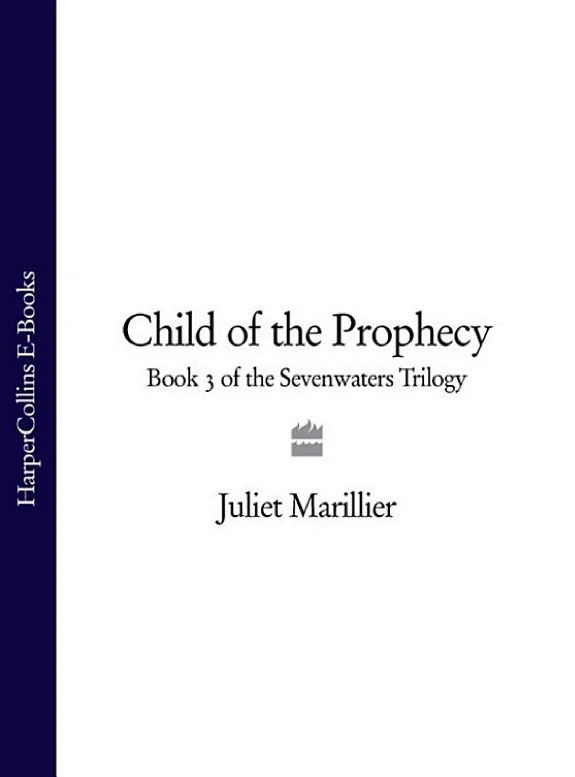
Child of the Prophecy (The Sevenwaters Trilogy, Book 3)
 71
71

Child of the Prophecy (The Sevenwaters Trilogy, Book 3)
Juliet Marillier’s Child of the Prophecy concludes the Sevenwaters Trilogy not with a bang, but with a profound, quiet resonance that lingers long after the final page. The novel centers on Sorcha, whose journey from a sheltered existence to one of immense responsibility is charted with Marillier’s characteristic grace. The strength here lies in the intricate character development, particularly Sorcha’s internal struggles and her evolving understanding of her own power and heritage. A specific passage detailing her first true encounter with the Otherworld, not as a place of wonder but of stark, unforgiving reality, highlights the author's ability to imbue fantasy with genuine emotional weight. However, the sheer density of interconnected plot threads from previous books, while rewarding for long-time readers, can occasionally feel overwhelming, demanding a thorough recall of earlier events. Despite this, the novel’s exploration of sacrifice and the complex nature of love, particularly the familial bonds strained by prophecy, remains its most compelling aspect. It is a deeply felt conclusion that prioritizes emotional truth over spectacle.
📝 Description
71
Published in 2013, Child of the Prophecy continues Juliet Marillier's Sevenwaters saga.
This third installment of the Sevenwaters Trilogy centers on Sorcha, a daughter of the Sevenwaters family. Her life is profoundly reshaped by ancient prophecy and a deep connection to the supernatural. The story unfolds in a turbulent Ireland where political unrest and magical forces intertwine.
Readers will find a continuation of the overarching narrative established in previous books, Daughter of the Forest and Son of the Shadows. The novel appeals to those who enjoy historical fantasy grounded in Celtic mythology and lore. It examines Sorcha's journey through themes of destiny, sacrifice, and the enduring strength of love against a backdrop of conflict.
Marillier's Sevenwaters Trilogy is set in a reimagined 'lost Celtic past,' evoking the early medieval period in Ireland. This era saw the clash between clan warfare, the rise of Christianity, and the persistence of pagan beliefs. The series situates itself within a literary tradition that draws on and reinterprets Celtic spirituality and mythology, echoing works like Marion Zimmer Bradley's The Mists of Avalon which similarly re-envisioned legendary periods.
💡 Why Read This Book?
• Gain insight into the intricate portrayal of the Fae and their relationship with humanity, as depicted through Sorcha's evolving connection to the Otherworld in Child of the Prophecy. • Experience a nuanced exploration of destiny versus free will, particularly how the prophecy concerning Sorcha forces her to confront and redefine her predetermined path. • Understand the thematic weight of sacrifice and loyalty, as Sorcha navigates treacherous political landscapes and personal relationships, mirroring historical challenges faced by women in early medieval Ireland.
⭐ Reader Reviews
Honest opinions from readers who have explored this book.
❓ Frequently Asked Questions
What is the primary focus of Child of the Prophecy?
Child of the Prophecy primarily focuses on the character of Sorcha and her journey as she grapples with a prophecy that dictates her fate and her deep connection to the supernatural world of the Fae.
When was Child of the Prophecy first published?
Child of the Prophecy was first published on September 19, 2013, serving as the concluding volume of Juliet Marillier's Sevenwaters Trilogy.
Does Child of the Prophecy require reading the previous books?
While it can be read as a standalone, understanding the full narrative arc and character development is significantly enhanced by reading the preceding books, Daughter of the Forest and Son of the Shadows, first.
What mythological traditions influence the book?
The book is heavily influenced by Celtic mythology, particularly the lore surrounding the Tuatha Dé Danann (the Fae), and explores themes prevalent in ancient Irish folklore and spirituality.
What are the main themes explored in the novel?
Key themes include destiny and prophecy, the clash between different belief systems (paganism and Christianity), the nature of sacrifice, the power of love, and the complex relationship between humans and the Fae.
Is the book based on historical events?
While set in a historically inspired period in Ireland, the story is a work of fantasy. It draws upon the atmosphere and societal structures of early medieval Ireland but is not a historical account.
🔮 Key Themes & Symbolism
The Fae and the Otherworld
The presence of the Fae, often referred to as the Tuatha Dé Danann, is central to Child of the Prophecy. Marillier portrays them not as simple sprites but as ancient, powerful beings with their own complex society and motivations, deeply interwoven with the human realm. Sorcha's personal connection to this world, and her struggle to understand its influence on her life and destiny, forms a core element of the narrative. This exploration studies the liminal spaces where magic and reality converge, reflecting ancient Celtic beliefs about the unseen forces shaping human existence.
Prophecy and Destiny
The concept of prophecy looms large over Sorcha and the Sevenwaters family. The narrative questions whether destiny is an immutable force or something that can be shaped by individual choices and actions. Sorcha's journey is one of confronting a foretold path, understanding its implications, and ultimately asserting her agency within its confines. This theme speaks to ancient ideas of fate in Celtic traditions, where the actions of gods and the pronouncements of seers held significant sway over mortal lives, yet individual courage could still carve out a unique destiny.
Sacrifice and Loyalty
Child of the Prophecy is steeped in acts of sacrifice, both personal and familial. Sorcha, in particular, is called upon to make profound choices that impact not only her own life but the lives of those she loves and her entire community. The novel examines the different forms loyalty can take—to family, to a cause, to oneself—and the heavy price that often accompanies unwavering devotion. This exploration of sacrifice is presented through a lens that reflects the harsh realities and societal expectations of the historical period evoked by the story.
The Clash of Beliefs
The narrative touches upon the historical tension between the old pagan ways of Celtic Ireland and the encroaching influence of Christianity. While not overtly preachy, the story subtly illustrates how ancient beliefs, particularly those connected to the Fae and the natural world, persist and interact with the newer faith. Sorcha's own spiritual journey and the community's traditions reflect this blend, showcasing a world where the sacred is experienced in multiple, sometimes conflicting, forms, mirroring the real-world transitions of the era.
💬 Memorable Quotes
Direct passages from the work, attributed to the author.
“The child of prophecy would be born under the eye of the Old Gods, and would carry their mark.”
— This statement expresses the central premise of Sorcha's existence within the narrative. It highlights the ancient, pre-Christian forces that are believed to govern her fate, setting the stage for the conflict between destiny and free will that defines her journey.
“Her heart was a battlefield where love and duty fought for supremacy.”
— This metaphorical description captures Sorcha's internal conflict. It illustrates the profound personal struggles she faces as she is torn between her affections and the obligations imposed upon her by prophecy and her lineage.
“The Fae did not understand the fragile nature of human hope.”
— This observation underscores the fundamental differences between the immortal Fae and mortal humans. It suggests a lack of empathy or understanding from the Fae regarding human emotions and aspirations, contributing to the challenges faced by characters interacting with them.
“The past was not dead; it was a living presence, shaping the now.”
— This reflects a core tenet of the story's world-building, where ancient myths, prophecies, and the influence of the Fae are not relics but active forces. It emphasizes the interconnectedness of time and the enduring power of tradition and history.
💡 Key Ideas
Editorial paraphrase of the work's core concepts — not direct quotes.
To protect her own, she would walk through fire.
This quote signifies Sorcha's fierce determination and willingness to endure extreme hardship for the sake of her loved ones. It speaks to the theme of sacrifice and the protective instincts that drive her actions throughout the novel.
🌙 Esoteric Significance
Tradition
The Sevenwaters Trilogy, and Child of the Prophecy specifically, draws deeply from the wellspring of Celtic paganism and its associated folklore. While not adhering to a formalized esoteric system like Hermeticism or Kabbalah, it taps into the animistic and polytheistic worldview prevalent in ancient Ireland. The narrative explores the concept of the Otherworld, a area of powerful, often capricious supernatural beings (the Fae), and its permeability with the human world. This aligns with ancient Celtic spirituality's emphasis on the sacredness of nature, the cyclical nature of life and death, and the potent influence of ancestral spirits and deities.
Symbolism
Key symbols in Child of the Prophecy include the ancient trees, often depicted as sentient or sacred conduits to the Fae and the natural world's power. Water, particularly rivers and lakes, serves as a recurring motif, symbolizing transition, purification, and the boundary between the human and supernatural realms, echoing Celtic beliefs in sacred wells and waterways. The concept of the bloodline itself functions as a potent symbol, representing inherited destiny, ancestral memory, and the spiritual inheritance passed down through generations of the Sevenwaters family.
Modern Relevance
Contemporary interest in Celtic spirituality, neo-paganism, and nature-based spiritualities finds resonance in Marillier's work. Readers exploring modern Druidry or Celtic Reconstructionism often find the Sevenwaters books to be evocative portrayals of the worldview these paths seek to revive. The emphasis on the interconnectedness of all life, the power inherent in natural landscapes, and the complex relationship with the unseen world speak to modern spiritual seekers looking for alternatives to mainstream religious frameworks.
👥 Who Should Read This Book
• Readers interested in Celtic mythology and folklore: Those seeking to immerse themselves in stories that authentically capture the spirit and lore of ancient Ireland will find Child of the Prophecy a compelling read. • Aspiring writers of historical fantasy: Individuals looking to understand how to blend historical settings with mythological elements and create deeply realized characters will benefit from Marillier's detailed approach. • Fans of character-driven epics: Readers who appreciate narratives focused on personal growth, emotional depth, and the exploration of complex relationships against a backdrop of significant conflict will find this novel satisfying.
📜 Historical Context
Juliet Marillier's Child of the Prophecy, published in 2013, draws heavily from the collection of early medieval Ireland. This era, roughly from the 5th to the 10th centuries, was a period of significant cultural and political flux, marked by clan warfare, the gradual spread of Christianity, and the enduring presence of pagan beliefs and folklore. Marillier's work taps into this historical milieu, creating a fictional world that reflects the societal structures, spiritual landscape, and conflicts of the time. The narrative engages with the concept of a 'lost Celtic past,' a romanticized yet potent idea that has captivated writers for centuries. In this literary space, Marillier positions herself alongside authors like Morgan Llywelyn, who also explore ancient Celtic societies. The trilogy's reception within the fantasy genre highlights a sustained interest in mythologically-rooted historical fiction, often seen as a counterpoint to more overtly political or military historical narratives. The work itself does not shy away from depicting the harsh realities of the period, including violence and societal constraints, while simultaneously infusing it with the magic and mystery of Celtic lore.
📔 Journal Prompts
Sorcha's inheritance of the 'mark' of the Old Gods: how does this influence her choices?
The boundary between the human world and the Otherworld: what are its characteristics?
The concept of sacrifice as depicted through Sorcha's journey.
Reflect on the relationship between prophecy and personal agency in the narrative.
The role of ancient trees and natural landscapes in the story's unfolding events.
🗂️ Glossary
Fae
In the context of Child of the Prophecy, the Fae refers to the Tuatha Dé Danann, ancient, powerful, and often otherworldly beings from Celtic mythology who inhabit a separate realm but interact significantly with the human world.
Otherworld
A concept from Celtic mythology representing a parallel spiritual realm, often inhabited by the Fae, deities, and the dead. It is a place of magic and mystery, sometimes accessible from the human world through sacred sites.
Sevenwaters
The ancestral home and family name of the protagonists in Juliet Marillier's trilogy. The family is depicted as having a deep, often burdensome, connection to the Fae and ancient prophecies.
Prophecy
A foretelling of future events, often delivered by supernatural means or wise individuals. In the book, prophecy dictates much of the characters' destinies, creating internal and external conflict.
Old Gods
Refers to the pre-Christian deities and spiritual forces of Celtic belief, distinct from the encroaching Christian God. They represent the ancient, nature-based power influencing the world of Sevenwaters.
Tuatha Dé Danann
An ancient race of supernatural beings in Irish mythology, often equated with the Fae in later folklore. They are depicted as powerful, magical, and having a complex relationship with humanity.
Mark
A symbolic or literal sign indicating a person's connection to or destiny with supernatural forces, such as the Fae or the Old Gods, as seen in the 'child of prophecy'.
This book appears in 1 collection
🔮 Readers Also Liked
Browse all →








From the “High Magic” Collection
View all →





More Free Magic & Ritual Books
View all →