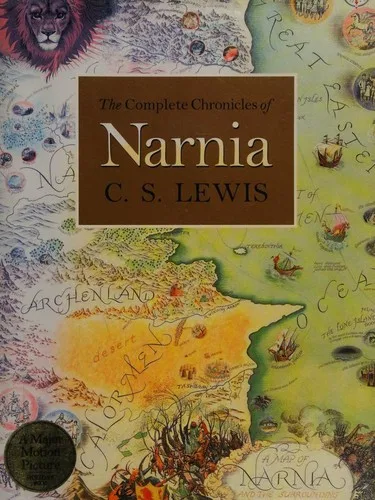
The Chronicles of Narnia
 76
76

The Chronicles of Narnia


By Aurelia Blackwood (Occult Philosophy Critic) — 'The Chronicles of Narnia' transcends its genre, presenting a masterful allegorical framework for understanding fundamental spiritual principles. Lewis's genius lies in weaving complex theological and philosophical concepts into a narrative so accessible, it enchants young minds while offering profound insights to seasoned practitioners. The archetypal figures and the clear delineation of cosmic forces between good and evil offer a potent symbolic language for exploring the human condition and the nature of divine intervention. Its strength lies in its subtle yet powerful evocation of spiritual truths, making it an invaluable resource for those seeking to understand the interplay of faith, free will, and the transcendent. This work is a beacon for young seekers and adults alike, illuminating the path towards deeper self-awareness and spiritual understanding.
📝 Description
76
Step through the wardrobe into a realm steeped in ancient magic and forgotten lore, where the whispers of prophecy guide the destinies of children and the very fabric of existence is woven with potent symbolism. 'The Chronicles of Narnia' is more than a children's tale; it is a profound allegorical journey into the heart of archetypal struggles between light and shadow, illusion and truth. Lewis masterfully crafts a world teeming with mythical creatures, elemental spirits, and profound moral quandaries, inviting readers to uncover layers of meaning often obscured by the mundane. This collection, veiled in the guise of a simple adventure, offers a rich tapestry of hidden knowledge, exploring themes of sacrifice, redemption, and the eternal battle for the soul. It resonates with seekers who understand that the greatest truths are often found in the most unexpected places, encouraging contemplation on the nature of faith, courage, and the unseen forces that shape our reality. Each entry unveils a deeper layer of this enchanted universe, urging the reader to discern the subtle currents of spiritual and philosophical import flowing beneath the surface of a fantastical narrative.
✍️ Author
💡 Why Read This Book?
Embark on an allegorical quest through a magical realm brimming with ancient wisdom and spiritual resonance. Discover profound lessons on courage, sacrifice, and the eternal conflict between light and darkness. Ideal for seekers of hidden truths, scholars of symbolism, and practitioners who appreciate the power of myth to illuminate the soul's journey. Uncover layers of meaning that speak to the enduring human quest for redemption and understanding.
⭐ Reader Reviews
Honest opinions from readers who have explored this book.
❓ Frequently Asked Questions
What esoteric traditions are hinted at in Narnia?
The narrative subtly draws upon Christian allegory, Platonic forms, and archetypal psychology, exploring universal themes of creation, fall, and redemption through symbolic characters and events.
Are there deeper philosophical underpinnings to Narnia?
Indeed. Lewis explores concepts of innate morality, the nature of good and evil, the power of belief, and the concept of a benevolent, guiding force, all framed within a compelling narrative.
Is Narnia suitable for adults interested in spiritual exploration?
Absolutely. While presented as a children's series, its rich symbolism, allegorical depth, and philosophical inquiries offer profound insights for adult readers on spiritual and metaphysical journeys.
What makes Narnia's magic system unique?
Narnia's magic is not a formulaic system but a manifestation of an inherent, often benevolent, cosmic order. It is intrinsically tied to the land's spiritual essence and the will of its creator.
How does Narnia explore the concept of good versus evil?
The series presents a clear, archetypal struggle between forces of divine goodness, represented by Aslan, and malevolent evil, embodied by figures like the White Witch, illustrating the moral choices individuals face.
🔮 Key Themes & Symbolism
The Great Chain of Being & Divine Order
Narnia's cosmology reflects a hierarchical structure, mirroring the concept of the Great Chain of Being, where all beings occupy a specific place within a divinely ordained order. This theme explores the interconnectedness of all creation, from the humblest creature to the majestic Aslan, representing a supreme, benevolent intelligence. The narrative subtly illustrates the consequences of disrupting this order, emphasizing the importance of harmony and adherence to a higher, spiritual law. The presence of elemental beings and the ancient magic underscores a world governed by profound, unseen forces, inviting readers to contemplate the nature of reality beyond empirical observation.
Archetypal Symbolism & The Hero's Journey
The series is a rich tapestry of archetypal figures and narratives, deeply resonant with Jungian psychology and ancient mythologies. Aslan embodies the divine redeemer, the wise old man, and the sacrificial lamb, while the Pevensie children embark on a classic Hero's Journey, facing trials, acquiring wisdom, and ultimately transforming. The wardrobe itself serves as a potent symbol of transition and passage between realms, a common motif in esoteric traditions signifying the movement from the mundane to the sacred. The exploration of virtues like courage, loyalty, and faith are presented not merely as character traits but as essential components for spiritual growth and overcoming illusion.
The Battle Between Light and Shadow
At its core, Narnia is a profound exploration of the eternal conflict between spiritual light and encroaching darkness. The White Witch represents the seductive allure of power through control, illusion, and despair, while Aslan embodies selfless love, sacrifice, and the transformative power of truth. This dualistic struggle is not merely external but mirrors the internal battles fought within the human soul. The narrative encourages readers to recognize the subtle manifestations of evil and to actively choose the path of light, emphasizing that true victory lies not in conquest, but in spiritual resilience and unwavering faith in the benevolent force that governs existence.
💬 Memorable Quotes
“Doubt is the beginning of wisdom.”
— This quote highlights the esoteric principle that questioning established norms and assumptions is the first step towards genuine understanding and enlightenment, moving beyond blind faith.
“It is hard for you to understand that we are not all of the same stuff.”
— This speaks to the hidden hierarchical nature of existence and the varied spiritual essences or 'stuff' that compose different beings, a concept found in many mystical philosophies.
“Courage, dear heart.”
— A simple yet profound reminder of inner fortitude, suggesting that true courage originates from within, a vital attribute for navigating spiritual challenges.
“The deeper you go into Narnia, the more you will see.”
— This encourages a journey of inner exploration, implying that greater spiritual insight and understanding are revealed through deeper engagement with the mystical or the subconscious.
“Things never happen the same way twice, even if they look just alike.”
— This points to the dynamic and ever-evolving nature of reality, where each experience, though seemingly similar, carries unique energetic imprints and lessons.
🌙 Esoteric Significance
Tradition
The Chronicles of Narnia can be understood through the lens of Christian Gnosticism and Neoplatonism, drawing parallels between Aslan and a divine demiurge or Logos, and the children's journey as an ascent towards spiritual knowledge and redemption. It echoes the Hermetic principle of 'as above, so below,' demonstrating how cosmic truths are reflected in the microcosm of human experience and the enchanted world of Narnia.
Symbolism
Key symbols include the wardrobe (threshold between worlds, initiation), the lamp-post (divine light, guiding principle), the apple tree (knowledge, duality, temptation), and Aslan himself (the Christ-figure, divine order, sacrificial love). These archetypal symbols offer a rich language for exploring spiritual concepts, the nature of good and evil, and the transformative power of faith and sacrifice.
Modern Relevance
In an age often characterized by cynicism and materialism, Narnia's enduring appeal lies in its timeless exploration of hope, courage, and the existence of a moral order. Its allegorical depth provides a framework for understanding spiritual warfare, the importance of inner conviction, and the potential for transformation, making it a relevant touchstone for those seeking meaning beyond the superficial.
👥 Who Should Read This Book
Beginners in esoteric thought will find Narnia an accessible gateway, introducing complex ideas through engaging narrative. Scholars of mythology and theology will appreciate Lewis's masterful synthesis of classical and Christian symbolism. Spiritual seekers will resonate with the allegorical journey of redemption and the exploration of faith and sacrifice. Practitioners may find inspiration in the clear delineation of archetypal forces and the emphasis on inner strength and moral choice.
📜 Historical Context
Written during the mid-20th century by C. S. Lewis, a renowned Oxford scholar and Christian apologist, 'The Chronicles of Narnia' emerged during a period of profound global upheaval and intellectual re-evaluation. The post-war era saw a renewed interest in mythology, spirituality, and existential questions, as humanity grappled with the consequences of technological advancement and ideological conflict. Lewis, deeply versed in classical literature, theology, and ancient philosophy, infused his stories with these influences, creating a resonant allegorical framework that appealed to a generation seeking meaning. The series offered a comforting yet challenging vision of hope, redemption, and the enduring power of good in a world that had witnessed immense suffering. Its publication resonated with a desire for imaginative escape while simultaneously offering profound moral and spiritual guidance, making it a cornerstone of modern fantasy literature.
📔 Journal Prompts
Reflect on a time you stepped through a 'wardrobe' into a new and challenging phase of your life. What inner transformations occurred?
Consider the nature of 'Deep Magic' in your own life. What universal laws or principles guide your actions and beliefs?
If you were to encounter a figure like the White Witch, how would you discern illusion from truth and resist temptation?
What does the concept of 'sacrifice' mean to you in your spiritual or personal journey? How has it shaped you?
Explore the idea of 'as above, so below' within your own experiences. How do larger spiritual or universal principles manifest in your daily life?
🗂️ Glossary
Aslan
The noble, lion-like creator and benevolent ruler of Narnia, embodying divine power, wisdom, and sacrificial love. He represents a higher, spiritual authority and guiding force.
The White Witch
A powerful, malevolent sorceress who embodies evil, deceit, and tyranny. She represents the forces of spiritual darkness and the temptation of power through control.
Deep Magic
Ancient, fundamental laws governing Narnia, originating from the Emperor-Beyond-the-Sea. These laws represent cosmic principles of justice, sacrifice, and redemption.
Wardrobe
A portal or threshold, symbolizing transition between different realms of existence, often representing a passage from the mundane to the magical or spiritual plane.
Treason
In Narnian context, not merely betrayal but a fundamental violation of divine order or allegiance, carrying profound spiritual consequences for individuals and the realm.