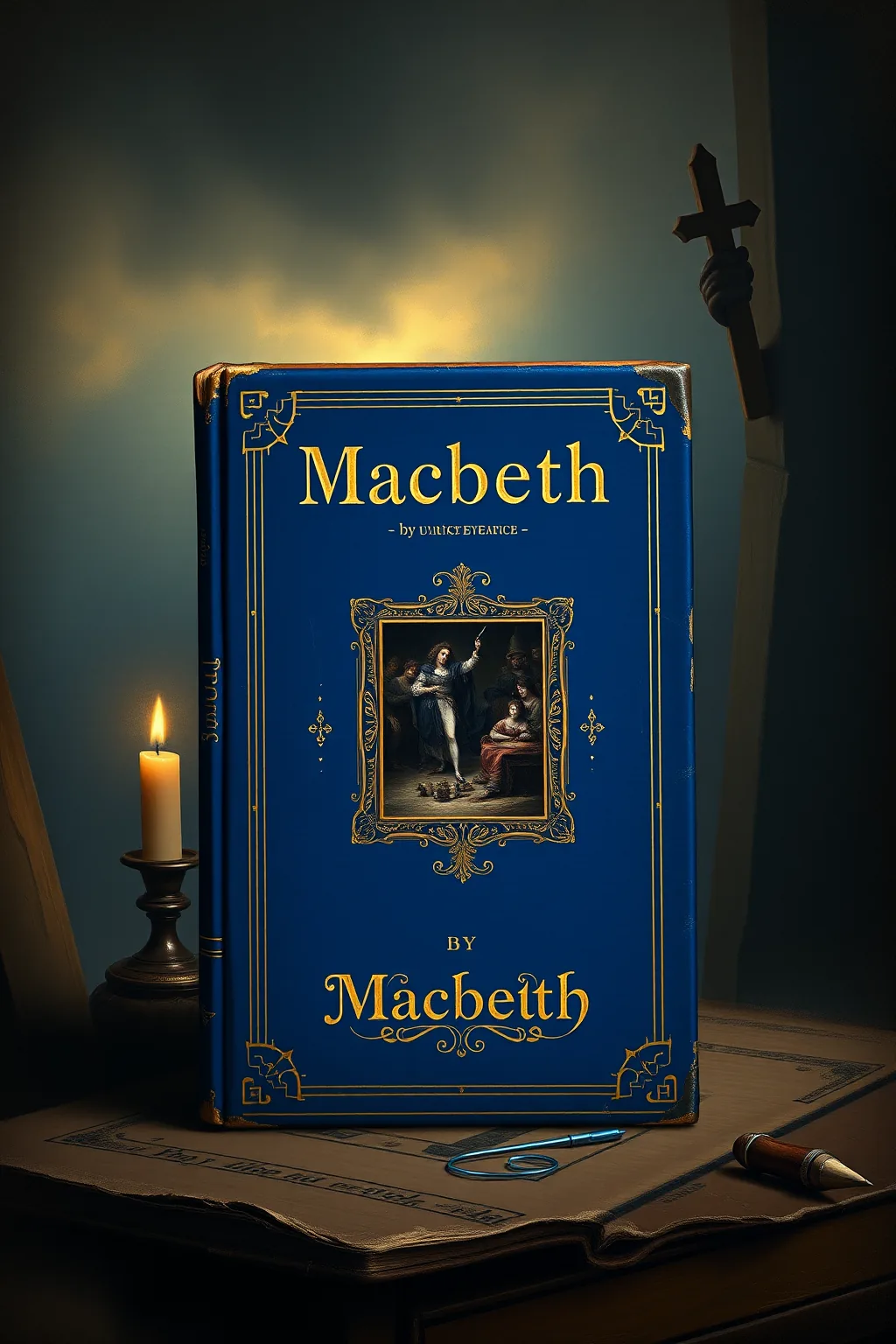
Macbeth
 61
61

Macbeth


Lorelei Sage (Contemplative Literature Editor) — Maurice Evans' 'Macbeth' is a masterful unveiling of Shakespeare's darkest masterpiece. Beyond the historical drama, this production, as captured in its textual essence, resonates with profound esoteric insights. The potent portrayal of the Weird Sisters as weavers of fate and manipulators of destiny offers a compelling lens for examining occult principles of causality and influence. Evans' interpretation illuminates the psychological landscape of ambition corrupted by supernatural suggestion, a timeless theme for practitioners and scholars of the hidden arts. Its strength lies in its ability to render the play's mystical undercurrents palpable, making it an essential read for those who seek wisdom from the intersection of human frailty and cosmic forces. This is not merely a play; it is an incantation.
📝 Description
61
Maurice Evans' 1977 interpretation of Macbeth examines the play as a psychological and supernatural text.
This edition of Shakespeare's Macbeth, directed by Maurice Evans, treats the play as more than a historical drama. Evans presents 'Macbeth' as a study of ambition's destructive path and the forces that influence it. The staging emphasizes the play's dark atmosphere, highlighting the conflict between control and disorder, good and evil.
The text considers the witches not just as characters but as symbols of primal chaos and the corrupting nature of power. It investigates the interplay of fate, individual choice, and the pursuit of forbidden understanding. This interpretation invites readers to consider the hidden drivers of human behavior, the tempting pull of authority, and the ways desires can steer one's future.
This edition frames Macbeth within an esoteric tradition, viewing the witches as conduits of cosmic forces rather than simple plot devices. It suggests the play explores forbidden knowledge and the hidden currents of motivation. The interpretation aligns with traditions that see drama as a vehicle for exploring primal chaos, the allure of power, and the shaping of destiny through internal desires.
💡 Why Read This Book?
Uncover the potent symbolism of ambition, fate, and supernatural influence woven into Shakespeare's tragedy. This edition, championed by Maurice Evans and lauded for its atmospheric staging, serves as a profound exploration of the occult forces that shape human destiny. Ideal for seekers of hidden knowledge, scholars of esoteric literature, and practitioners interested in the psychological and metaphysical dimensions of power and corruption.
⭐ Reader Reviews
Honest opinions from readers who have explored this book.
❓ Frequently Asked Questions
What are the primary esoteric themes explored in this edition of Macbeth?
This edition emphasizes themes of fate versus free will, the corrupting influence of ambition, the power of prophecy, and the psychological impact of supernatural suggestion, mirroring occult concepts of destiny manipulation and the shadow self.
How does the staging by Margaret Webster enhance the esoteric aspects?
Webster's staging, as reflected in this edition's presentation, amplifies the play's atmosphere of dread and supernatural unease, making the witches' influence and Macbeth's descent into darkness feel more tangible and psychologically potent.
Who are the 'Weird Sisters' from an esoteric perspective?
The 'Weird Sisters' can be interpreted as archetypes of fate, primordial cosmic forces, or conduits of forbidden knowledge. They represent the chaotic potential and the allure of power that tempts individuals to transgress moral and natural laws.
What is the philosophical significance of Macbeth's ambition?
Macbeth's ambition serves as a potent allegory for the dangers of unchecked desire and the Faustian bargain. It explores the philosophical quandary of whether destiny is predetermined or if individuals possess the agency to alter their fate, often at a profound spiritual cost.
Is this edition suitable for beginners to esoteric literature?
Yes, while rich in complexity, this edition provides accessible entry points into esoteric themes through its compelling narrative and clear presentation of Shakespeare's profound dialogue, making it valuable for both neophytes and seasoned practitioners.
🔮 Key Themes & Symbolism
The Pact with Darkness
This edition examines the insidious nature of the pact Macbeth makes, not just with his wife, but with the very forces of darkness whispered by the Weird Sisters. It explores how ambition, once ignited by external suggestion, can lead to a spiritual contract, where the soul is bartered for temporal power, a concept deeply resonant with occult lore concerning the dangers of seeking forbidden knowledge or power through unhallowed means.
The Unraveling of Fate
The play masterfully interrogates the tension between predestination and free will. The prophecies of the witches act as catalysts, but it is Macbeth's choices that ultimately dictate his downfall. This theme invites contemplation on how external forces, whether divine, demonic, or simply the currents of fate, interact with our own agency, and how our perceptions of destiny can become self-fulfilling prophecies, a central tenet in many mystical traditions.
The Illusion of Power
Maurice Evans' portrayal highlights the ephemeral and ultimately hollow nature of the power Macbeth attains. The blood on his hands, both literal and metaphorical, symbolizes the moral and spiritual decay that accompanies ill-gotten gains. This serves as a profound lesson on the illusory nature of worldly power when pursued without regard for ethical or spiritual integrity, a recurring motif in esoteric teachings on true mastery.
💬 Memorable Quotes
Direct passages from the work, attributed to the author.
“Fair is foul, and foul is fair.”
— This iconic line captures the play's central theme of moral inversion and the blurring of reality, suggesting that what appears good may be evil and vice versa, a common distortion in occult manipulation.
“Is this a dagger which I see before me, The handle toward my hand?”
— A potent manifestation of psychological projection and supernatural suggestion, where Macbeth's murderous intent takes a tangible, hallucinatory form, blurring the lines between inner desire and external reality.
“Thou shalt not be afraid of the shadow, Until Birnam Wood come to Dunsinane.”
— A seemingly comforting prophecy that masks a deeper, more insidious deception. It highlights the trickery of the occult, where reassurances are often couched in riddles that lead to unforeseen destruction.
“Out, damned spot! Out, I say!”
— Lady Macbeth's descent into madness, driven by guilt and the indelible stain of her actions. This symbolizes the inescapable karmic consequence of transgressions, a core concept in many spiritual doctrines.
“Life's but a walking shadow, a poor player That struts and frets his hour upon the stage And then is heard no more.”
— Macbeth's profound existential despair, viewing life as ultimately meaningless and transient. This reflects themes of nihilism and the search for meaning in the face of mortality, a common philosophical inquiry in esoteric thought.
🌙 Esoteric Significance
Tradition
Macbeth deeply appeals to the Western Esoteric tradition, particularly concerning themes of pacts with dark forces, the manipulation of fate, and the psychological consequences of ambition fueled by supernatural suggestion. It aligns with concepts found in alchemy, where transformation can be both spiritual and perilous, and in demonology, exploring the nature of temptation and the architecture of evil. The play acts as a cautionary tale about the dangers of seeking forbidden knowledge and power outside conventional moral and spiritual frameworks.
Symbolism
Key symbols abound: the dagger represents Macbeth's murderous intent made manifest; blood symbolizes guilt and indelible sin; the witches embody primal chaos and the allure of destiny; the crown signifies corruptible power. The ethereal and spectral elements, such as the apparitions and the phantom dagger, are potent symbols of the subconscious mind's power and the externalization of internal turmoil, reflecting esoteric notions of psychic phenomena and the manifestation of thought.
Modern Relevance
In the modern era, 'Macbeth' remains profoundly relevant as an exploration of the dark side of human nature, the seductive power of ambition, and the ethical dilemmas posed by unchecked desire. Its themes of psychological manipulation, the fragility of power, and the consequences of moral compromise continue to resonate in contemporary society, offering timeless lessons for understanding leadership, personal responsibility, and the enduring struggle between light and shadow within the human psyche.
👥 Who Should Read This Book
This edition of 'Macbeth' is a treasure for a diverse readership. Beginners to esoteric studies will find a compelling narrative that subtly introduces concepts of fate, temptation, and psychological darkness. Scholars of literature and occultism will appreciate the nuanced interpretation and its rich symbolic range. Seekers of hidden wisdom will find profound philosophical and spiritual insights into the nature of ambition and its consequences. Practitioners of magic and divination may draw inspiration from the depiction of supernatural influence and the archetypal forces at play, using it as a text for contemplation on power, choice, and spiritual integrity.
📜 Historical Context
Written around 1606, 'Macbeth' emerged during the Jacobean era, a period marked by intense interest in witchcraft, demonology, and the divine right of kings. King James I, who succeeded Elizabeth I, was fascinated by the supernatural and had written 'Daemonologie,' a treatise on witchcraft. This cultural milieu provided fertile ground for Shakespeare to explore themes of witchcraft, prophecy, and the psychological torment of a monarch's ambition. The play's exploration of regicide and its divine repercussions also resonated deeply with the political anxieties of the time, where the stability of the monarchy was paramount. The theatrical innovations of the era, including advancements in stagecraft and lighting, would have further enhanced the play's dramatic and potentially unsettling atmosphere, making it a powerful reflection of both the spiritual and political currents of its age.
📔 Journal Prompts
Reflect on a time when ambition seemed to whisper temptations similar to those of the Weird Sisters. How did you navigate this internal conflict?
Consider the concept of 'fair is foul, and foul is fair.' In what ways do societal perceptions or personal beliefs invert what is conventionally understood as good or evil?
Explore the idea of a 'pact with darkness.' What constitutes such a pact in modern life, and what are its potential spiritual or psychological costs?
Analyze the role of prophecy in your own life or in the lives of those around you. How do predictions, whether external or self-imposed, shape actions and outcomes?
Meditate on the symbol of blood in the play. What does it represent in terms of guilt, lineage, or the price of power in your own understanding?
🗂️ Glossary
Weird Sisters
In Shakespearean context, these are supernatural beings, often interpreted as witches or Fates, who deliver prophecies and influence events through their pronouncements. Esoterically, they represent primal forces of destiny and chaos.
Prophecy
Foretelling of future events. In 'Macbeth,' the prophecies are ambiguous and manipulative, highlighting the esoteric concept that future knowledge can be a dangerous tool.
Ambition
A strong desire to achieve power, success, or wealth. In the play, unchecked ambition becomes a corrupting force, leading to moral decay and spiritual ruin.
Hallucination
A perception of having had when one has not. Macbeth's visions, such as the dagger, are potent symbols of his psychological state and the influence of external forces.
Regicide
The act of killing a king. In 'Macbeth,' this act is central to the play's themes of divine right, usurpation, and the ensuing chaos and guilt.
This book appears in 2 collections
🔮 Readers Also Liked
Browse all →








From the “Ceremonial Magic” Collection
View all →







More Free Magic & Ritual Books
View all →