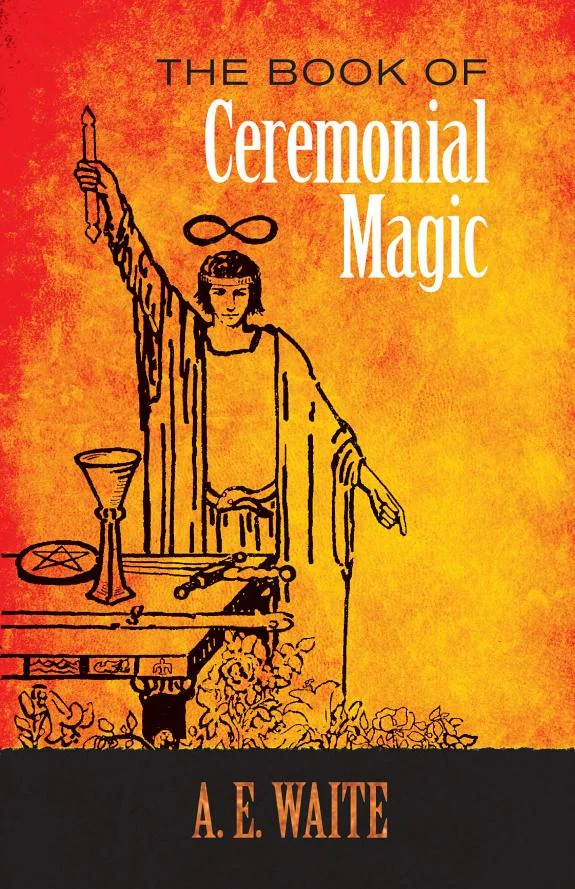
The Book of Ceremonial Magic
 74
74

The Book of Ceremonial Magic
Arthur Edward Waite's scholarship in The Book of Ceremonial Magic offers a meticulously researched exploration into the historical practice of ritualistic magic. Rather than presenting a mere collection of spells, Waite contextualizes these practices within their original historical and intellectual frameworks, citing extensively from Renaissance grimoires. His analysis of the necessary preparations, including the symbolic architecture of the magical circle and the precise invocations required, demonstrates a profound understanding of the era's occult worldview. A particular strength lies in his systematic breakdown of the angelic and infernal hierarchies that were central to conjuration. However, the book’s academic tone, while a virtue for researchers, can make it dense for the casual reader seeking practical application. Waite's own skepticism, present beneath the scholarly veneer, occasionally colors his presentation of the material. Nevertheless, for anyone serious about the historical underpinnings of Western ceremonial magic, this volume remains a vital, if demanding, resource.
📝 Description
74
Arthur Edward Waite published The Book of Ceremonial Magic in 1911, drawing on Renaissance grimoires.
Arthur Edward Waite’s The Book of Ceremonial Magic, first published in 1911, examines historical ceremonial magic through a scholarly lens. Waite, a noted occult researcher, gathered and analyzed key passages from Renaissance grimoires and other historical esoteric documents. The book details the theory and practice of ritual magic as it was understood in earlier periods. Readers will find explanations of necessary preparations, the construction of magical circles, methods for invoking entities, and the formulation of spells.
This volume is a valuable resource for students of Western esotericism, occult history, and comparative religion. It will also interest serious practitioners of ceremonial magic who seek to understand the historical basis and theoretical foundations of their practice, beyond simple spell instructions. Researchers focused on Renaissance occultism, demonology, or the history of magic will appreciate Waite's thorough research and extensive citations. Those interested in the intellectual currents of the late 19th and early 20th centuries, a time marked by a revival of occult societies and esoteric studies, will also find it relevant.
Waite authored this book during a period of significant interest in occultism and spiritualism across Europe and North America. The late 19th and early 20th centuries saw the growth of organizations like the Hermetic Order of the Golden Dawn, with which Waite was associated. This era also witnessed a surge in the publication and study of historical magical texts. The Book of Ceremonial Magic emerged from this intellectual environment, offering a systematic and historically informed overview of magical practices that often lacked clear documentation or were dismissed by mainstream scholarship.
💡 Why Read This Book?
• Gain a structured understanding of historical magical rituals, including the precise construction of the magical circle and the invocation of specific angelic hierarchies, as detailed in Waite's analysis of Renaissance grimoires. • Appreciate the intellectual context of late 19th-century occult revival, recognizing how figures like Waite engaged with and documented esoteric traditions through works like this, first published in 2017. • Learn about the complex systems of correspondences—astrological, elemental, and divine names—that informed ceremonial magic, providing a framework for understanding historical magical texts and practices.
⭐ Reader Reviews
Honest opinions from readers who have explored this book.
❓ Frequently Asked Questions
Is 'The Book of Ceremonial Magic' a practical spellbook for modern use?
No, Arthur Edward Waite's work is primarily a historical and scholarly analysis. While it details historical practices, its focus is on understanding the theory and context of Renaissance ceremonial magic rather than providing a direct guide for contemporary practitioners.
What kind of historical documents does A. E. Waite cite in this book?
Waite cites extensively from Renaissance-era documents, including various grimoires, occult treatises, and historical accounts related to magical practices from that period.
When was 'The Book of Ceremonial Magic' originally published?
The book was first published on September 13, 2017, though it is based on extensive historical research into earlier periods of occult practice.
Does the book cover the summoning of spirits?
Yes, a significant portion of the book is dedicated to explaining the historical methods and theoretical frameworks for conjuring spirits, including discussions on the hierarchies and rituals involved.
Who was A. E. Waite?
Arthur Edward Waite was a prominent occult historian and writer, co-founder of the Hermetic Order of the Golden Dawn, known for his extensive research into Western esotericism and his critical approach to magical traditions.
What are the key preparations mentioned for ceremonial magic?
Waite details preparations including the mental and spiritual state of the operator, the consecration of ritual space and tools, the construction of magical circles, and the use of specific invocations and divine names.
🔮 Key Themes & Symbolism
Historical Grimoire Analysis
This work meticulously examines foundational texts of ceremonial magic, primarily from the Renaissance period. Waite's contribution lies in his scholarly dissection of these grimoires, extracting essential passages and providing modern analysis. He focuses on the theoretical structures and practical instructions embedded within these ancient documents, moving beyond mere superstition to reveal a complex system of ritualistic practice and belief prevalent in earlier centuries. The book serves as a vital conduit to understanding the evolution of Western esoteric traditions through their primary source materials.
The Mechanics of Ritual
A core theme is the detailed exposition of the mechanics of ceremonial magic. Waite breaks down the essential components required for ritual operations, including the precise construction and consecration of the magical circle, the significance of talismans and implements, and the correct use of invocations and divine names. The work emphasizes the operator's state of mind and spiritual preparedness, highlighting that effective ritual was understood as a highly disciplined and systematic endeavor, grounded in specific cosmological beliefs of the era.
Spirit Conjuration and Hierarchy
The book delves deeply into the historical practices of conjuring spirits, angels, and other supernatural entities. Waite outlines the complex angelic and infernal hierarchies that were central to these operations, presenting the names, attributes, and classifications as found in the source texts. He explains the specific rituals, incantations, and methods believed to compel the appearance and obedience of these beings, offering insights into the historical understanding of the spiritual cosmos and humanity's place within it.
Renaissance Esoteric Thought
This volume provides a window into the intellectual currents of the Renaissance, a period characterized by a resurgence of interest in Hermeticism, Neoplatonism, and Kabbalah. Waite contextualizes ceremonial magic within this broader milieu, demonstrating how these esoteric philosophies informed magical theory and practice. The book illuminates how scholars and practitioners of the time sought to synthesize ancient wisdom with contemporary understanding, creating a rich and complex system of spiritual and magical inquiry.
💬 Memorable Quotes
Direct passages from the work, attributed to the author.
“The magical circle is a consecrated space for the operator's protection.”
— This highlights the critical importance placed on the magical circle not just as a boundary, but as a sacred, protected zone essential for the magician's safety during encounters with potentially dangerous entities.
“Precise invocations are necessary to compel spiritual beings.”
— This emphasizes the belief that specific, correctly formulated incantations, often containing divine names, were the key to gaining authority over and commanding the appearance of spirits in historical ceremonial magic.
“The operator's mental and spiritual preparation is paramount.”
— This points to the understanding that ritual success depended heavily on the magician's internal state—their focus, willpower, and spiritual purity—as much as external actions or tools.
“Understanding angelic and infernal hierarchies is crucial for conjuration.”
— This underscores the structured cosmology of ceremonial magic, where knowledge of the specific ranks and natures of spiritual beings was a prerequisite for any attempt at summoning or interacting with them.
“Renaissance grimoires offer insights into historical occult practices.”
— This statement frames the book's core methodology: using ancient magical texts as primary sources to reconstruct and analyze the beliefs and practices of occultism from a specific historical era.
🌙 Esoteric Significance
Tradition
Waite's work is deeply rooted in the Western Esoteric Tradition, particularly its Hermetic, Kabbalistic, and ceremonial magical branches. It attempts to synthesize and present the historical practices associated with these lineages, often with a critical eye. While adhering to the general framework of magical operations prevalent in grimoires and occult orders of his time, Waite's personal theological views and academic rigor sometimes led him to present material with a degree of detachment or skepticism, distinguishing his approach from purely devotional or dogmatic presentations.
Symbolism
The book frequently references the symbolism inherent in magical circles, which represent cosmic order, divine protection, and the microcosm. Symbols of divine names, often in Hebrew or Latin, are crucial, acting as conduits of spiritual power and authority for invoking entities. The geometric patterns and sigils found within grimoires also represent condensed forms of spiritual energy or specific angelic/demonic correspondences, serving as keys to unlock particular magical operations or intelligences.
Modern Relevance
Contemporary practitioners of Western ceremonial magic, particularly those involved in reconstructionist or historical magical paths, often consult Waite's work for its scholarly insights into foundational texts and practices. Thinkers and groups studying the history of Western esotericism, comparative religion, and the evolution of occult thought continue to find value in Waite's meticulous research. His analysis provides a baseline for understanding the theoretical underpinnings of ritual magic that inform many modern magical systems and philosophical inquiries into consciousness and reality.
👥 Who Should Read This Book
["• Students of Western Esotericism: Those seeking a scholarly overview of historical ceremonial magic, its texts, and theoretical frameworks will find Waite's research invaluable.", '• Historical Magic Practitioners: Individuals interested in the historical evolution of ritual magic, its methods, and the intellectual climate from which it arose, particularly during the Renaissance and its later revival.', '• Researchers of Occult History: Academics and independent scholars investigating the history of magic, demonology, secret societies, and the broader range of Renaissance and early modern occult thought.']
📜 Historical Context
Arthur Edward Waite penned The Book of Ceremonial Magic during the late 19th and early 20th centuries, a period marked by a significant revival of interest in Western esotericism. This era saw the formation of influential occult societies, such as the Hermetic Order of the Golden Dawn (co-founded by Waite), which actively researched and practiced ceremonial magic. Waite’s work emerged from this milieu, aiming to provide a systematic and scholarly survey of historical magical practices, drawing heavily on Renaissance-era grimoires. This contrasted with the more speculative or sensationalist accounts of magic prevalent at the time. His meticulous citation of sources, often from obscure or difficult-to-access texts, positioned his work as a serious academic contribution. Key contemporaries like Aleister Crowley, though often in intellectual opposition to Waite, also engaged with similar source materials, reflecting the widespread scholarly and practical interest in occult traditions.
📔 Journal Prompts
The precise construction of the magical circle as described by Waite.
The significance of divine names in historical conjuration rituals.
Waite's interpretation of angelic hierarchies.
The operator's mental and spiritual preparation for ritual.
The role of Renaissance grimoires in understanding ceremonial magic.
🗂️ Glossary
Grimoire
A textbook of magic, typically containing instructions on how to create magical tools, cast spells, and invoke supernatural beings. Many grimoires date from the late medieval period through the Renaissance and early modern era.
Ceremonial Magic
A type of magic involving elaborate rituals, symbolic gestures, and the invocation of spiritual entities. It emphasizes discipline, precise timing, and a structured cosmological understanding.
Invocation
The act of calling upon a deity, spirit, or other supernatural power for assistance, guidance, or to manifest its presence. In ceremonial magic, specific formulas and divine names are often used.
Concordance
In the context of magical texts, a detailed listing or comparison of correspondences, such as astrological, elemental, or planetary associations, used to structure rituals and understand the relationships between different spiritual forces.
Operator
The individual performing a magical ritual. The term emphasizes the active, intentional role of the magician in conducting the ceremony and interacting with spiritual forces.
Sigil
A magical symbol, often a stylized design or emblem, believed to hold specific powers or represent a particular spirit or concept. Sigils are frequently used in ceremonial magic for invocation or consecration.
Renaissance Occultism
The diverse range of esoteric beliefs and practices that flourished during the European Renaissance (c. 14th-17th centuries), including Hermeticism, Kabbalah, astrology, and alchemy, often influencing ceremonial magic.
This book appears in 1 collection
🔮 Readers Also Liked
Browse all →








From the “Ceremonial Magic” Collection
View all →





More Free Magic & Ritual Books
View all →