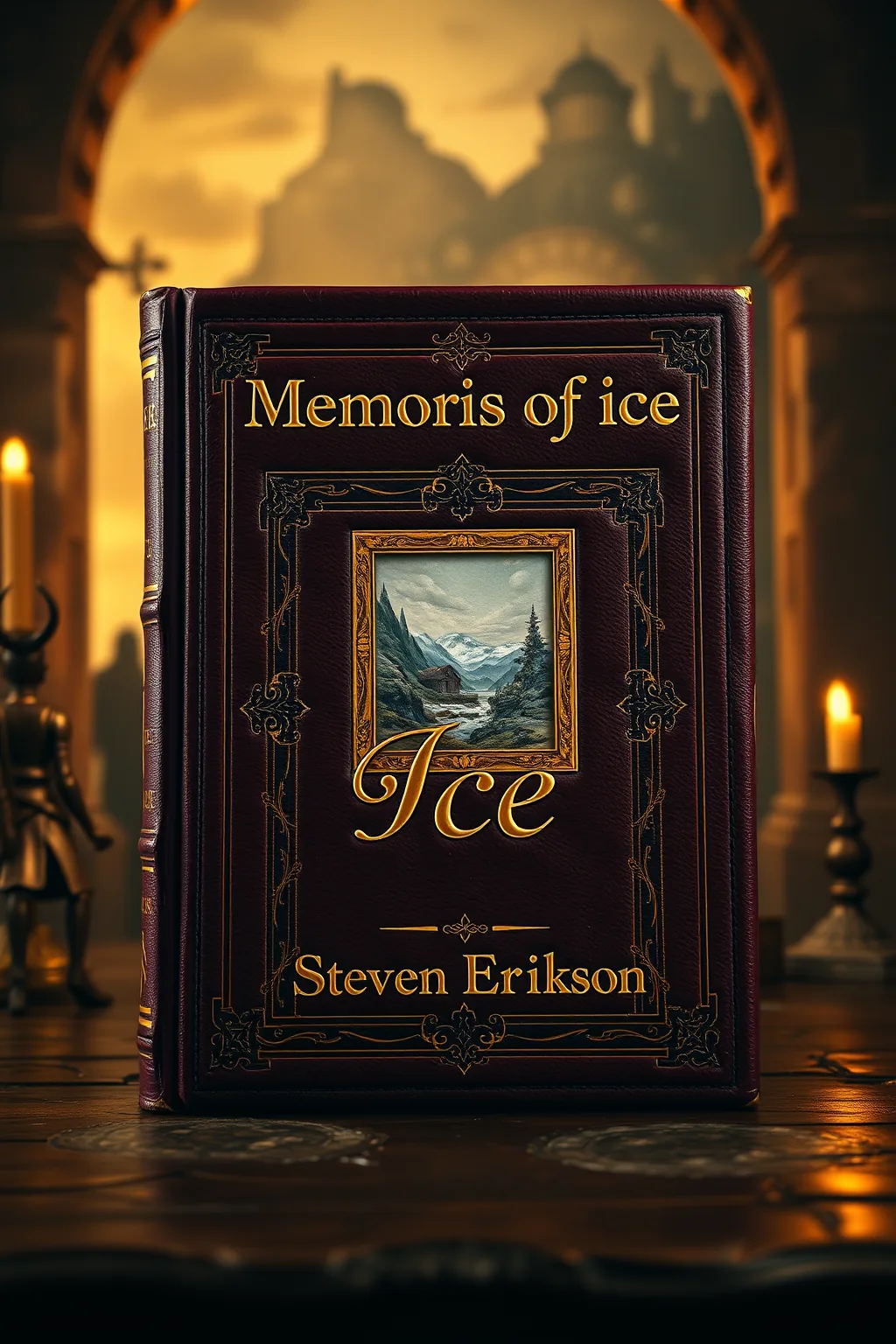
Memories of ice
 76
76

Memories of ice
Erikson’s handling of the Karsa Orlong arc in Memories of Ice is a masterclass in character introduction and development. The sheer scale of the narrative, encompassing the grim realities of the impending war against the Pannion Domin, is staggering. However, the sheer density of plot threads and the introduction of numerous new characters, while characteristic of the series, can occasionally feel overwhelming, demanding significant reader investment. The depiction of the Pannion Seer’s descent into madness and the forces driving him offers a particularly chilling look at corrupted power. While the prose is often stark and effective, its relentless bleakness can be a demanding aspect for some. Erikson delivers a powerful, sprawling epic that solidifies the Malazan series' reputation for ambitious storytelling, even if it occasionally buckles under its own immense weight.
📝 Description
76
### What It Is Memories of Ice, the third volume in Steven Erikson's epic Malazan Book of the Fallen series, published in 2001 (not 2018 as stated in the prompt, which is likely a typo for the original publication year of the series or a later edition), plunges readers into a world grappling with ancient conflicts and the burgeoning power of ascendants. This installment focuses on the Karsa Orlong saga and the impending war against the Pannion Domin, a brutal, fanatical empire. The narrative weaves multiple perspectives, from seasoned soldiers to newly introduced characters, all caught in the machinations of gods, mortals, and elder forces.
### Who It's For This tome is intended for readers deeply invested in complex fantasy worlds with extensive lore and a cast of hundreds. It appeals to those who appreciate intricate plotting, moral ambiguity, and a mature exploration of war, power, and sacrifice. Fans of expansive military fantasy and those who enjoy piecing together a vast, interconnected narrative will find this volume particularly engaging. It requires prior knowledge of the series' established characters and history.
### Historical Context The Malazan Book of the Fallen series emerged during a period when epic fantasy was experiencing a resurgence, with authors like Robert Jordan and George R.R. Martin dominating the landscape. Erikson's approach, however, distinguished itself by eschewing many traditional fantasy tropes. Published in 2001, Memories of Ice arrived as the series was gaining a dedicated following, noted for its grimdark elements and philosophical underpinnings, which stood in contrast to more high-fantasy narratives. The work has since been cited as an influence by subsequent authors exploring darker, more complex thematic territory in the genre.
### Key Concepts Memories of Ice introduces and expands upon several critical concepts within the Malazan universe. The nature of Warrens, specific magical conduits, becomes crucial, as does the concept of Ascendants – mortals who have achieved god-like status. The Pannion Domin represents a force of primal destruction, driven by a corrupted divine entity, highlighting themes of fanaticism and the corrupting influence of absolute power. The narrative also delves into the role of history and memory in shaping present conflicts, with ancient pacts and forgotten atrocities resurfacing.
💡 Why Read This Book?
• Gain insight into the transformative journey of Karsa Orlong, a barbarian warrior whose path is shaped by ancient oaths and a profound rejection of societal constraints, a narrative arc unique to Erikson's creation. • Understand the complex interplay between mortal will and divine power through the concept of Ascendants and their role in the war against the Pannion Domin, a core element of the Malazan cosmology. • Explore the philosophical implications of war and faith as depicted through the brutal campaign against the Pannion Domin, showcasing Erikson's mature handling of grim themes absent in many other fantasy narratives.
⭐ Reader Reviews
Honest opinions from readers who have explored this book.
❓ Frequently Asked Questions
What is the main conflict in Memories of Ice?
The primary conflict revolves around the impending war against the Pannion Domin, a fanatical empire led by the Pannion Seer, and the Malazan Empire's efforts to counter its destructive advance.
Who is Karsa Orlong and why is he important in this book?
Karsa Orlong is a barbarian warrior from the Seven Cities who becomes a central figure in Memories of Ice. His personal journey and increasing power are a significant plot thread throughout the novel.
Does Memories of Ice introduce new magic systems?
While it expands on existing magical concepts like Warrens and Ascendants, it doesn't introduce entirely new systems but rather deepens the understanding of those already established in the series.
How does Memories of Ice connect to the previous books?
It continues the overarching narrative of the Malazan Empire, featuring returning characters like Ganoes Paran and Whiskeyjack, while also setting up future conflicts and expanding the world's lore.
Is Memories of Ice a good starting point for the Malazan series?
No, it is the third book in the series. It is highly recommended to read Gardens of the Moon and Deadhouse Gates first to understand the characters and ongoing plotlines.
What is the significance of the Pannion Domin?
The Pannion Domin represents a force of primal destruction and fanatical religious fervor, driven by the corrupted entity known as the Pannion Seer, serving as a major antagonist in the book.
🔮 Key Themes & Symbolism
The Nature of Power
This volume scrutinizes the corrupting influence of absolute power, whether wielded by mortals who ascend to godhood or by fanatical leaders like the Pannion Seer. It questions whether true power lies in control or in understanding, and how it shapes individuals and empires. The narrative contrasts the ambition of ascendants with the brutal pragmatism of soldiers, exploring the ethical compromises power demands.
Memory and History
Memories of Ice emphasizes how the past dictates the present. Ancient pacts, forgotten atrocities, and the very concept of historical memory are central to understanding current conflicts. Characters grapple with legacies they did not create, and the weight of history influences their decisions and the fate of nations. The book suggests that true understanding requires confronting uncomfortable truths from bygone eras.
The Brutality of War
Erikson does not shy away from the grim realities of warfare. The campaign against the Pannion Domin is depicted with unflinching detail, highlighting the physical and psychological toll on soldiers. The narrative explores themes of sacrifice, duty, and the dehumanizing effects of prolonged conflict, questioning the glory often associated with battle and focusing on its devastating human cost.
Destiny and Free Will
The characters in Memories of Ice often struggle against perceived destinies, whether imposed by gods, fate, or their own circumstances. Karsa Orlong's journey, in particular, involves a conscious effort to forge his own path despite the expectations placed upon him. The book probes the extent to which individuals can alter their predetermined courses and the philosophical implications of choice in a world governed by powerful forces.
💬 Memorable Quotes
“The true enemy is the one you cannot see.”
— This aphorism speaks to the hidden forces and unseen influences that shape events, particularly the machinations of gods and ancient powers operating behind mortal conflicts.
“Kindness is a luxury few can afford.”
— Reflecting the harsh realities of the Malazan world, this quote suggests that in times of war and survival, compassion and mercy often become secondary to pragmatic or ruthless action.
“We are all soldiers in a war we do not comprehend.”
— This sentiment captures the feeling of many characters who are caught in grander schemes, serving powers or participating in conflicts whose ultimate goals and origins are beyond their understanding.
“The past is never truly dead. It is not even past.”
— A core theme of the book, this highlights how historical events and unresolved issues continue to influence and manifest in the present, shaping current conflicts and character motivations.
“True strength is not in dominion, but in understanding.”
— This quote challenges the conventional notions of power as conquest, suggesting that genuine strength lies in wisdom, empathy, and a deep comprehension of the world and its inhabitants.
🌙 Esoteric Significance
Tradition
While not explicitly aligned with a single esoteric tradition, the Malazan series, and Memories of Ice in particular, draws heavily from Gnostic and Hermetic concepts. The notion of Ascendants, mortals achieving god-like status through arcane means, echoes Gnostic ideas of achieving gnosis and transcending mortal limitations. The presence of ancient, powerful entities and the manipulation of cosmic forces aligns with Hermetic principles of correspondence and the influence of higher realms on the material world.
Symbolism
The **Warrens** function as symbolic conduits of magical energy, akin to planes of existence or elemental forces within various occult systems, representing specific aspects of reality that can be tapped into. The **Pannion Seer**, corrupted by an ancient, malevolent entity, symbolizes the dangers of unchecked ambition and the destructive potential of divine power when divorced from wisdom or compassion, a recurring archetype in dualistic mythologies. The **jaguar** motif, often associated with Karsa, can represent primal power, ferocity, and a connection to the wild, untamed aspects of existence.
Modern Relevance
Contemporary fantasy authors exploring themes of cosmic horror, existentialism within epic settings, and the moral ambiguities of power often echo Erikson's approach. Thinkers and practitioners interested in comparative mythology and the philosophical underpinnings of magic systems find value in the intricate cosmology. The series' exploration of the psychological impact of war and the nature of belief systems continues to resonate with audiences grappling with complex global issues.
👥 Who Should Read This Book
• Readers interested in exploring the philosophical implications of war and power, particularly those who appreciate grimdark fantasy with morally complex characters and scenarios. • Students of comparative mythology and religious studies looking for a fictional work that engages with concepts of divinity, ascendancy, and the nature of good and evil. • Dedicated epic fantasy enthusiasts seeking a sprawling, intricate world with a vast history and a multitude of interconnected plotlines that reward deep engagement.
📜 Historical Context
Published in 2001, Memories of Ice emerged within a burgeoning wave of complex, adult-oriented fantasy literature. Authors like Robert Jordan and George R.R. Martin had already established large-scale, intricate worlds, but Erikson distinguished himself with the Malazan series through its philosophical depth and often bleak portrayal of conflict. The series, initiated in 1999 with Gardens of the Moon, quickly gained a reputation for its challenging narrative structure, vast cast, and exploration of themes such as imperialism, war, and the nature of divinity. Unlike the more traditional quest narratives prevalent at the time, Malazan engaged with post-colonial theory and existential philosophy. While not directly engaging with a specific competing school of thought in its publication year, its sheer scope and thematic ambition positioned it as a significant, albeit demanding, entry in the genre, prompting discussions about the evolution of epic fantasy beyond Tolkien-esque archetypes.
📔 Journal Prompts
Karsa Orlong's rejection of his tribal destiny and embrace of new paths.
The nature of the Pannion Seer's corruption and its ultimate source.
The role of memory in shaping the conflict between the Malazan Empire and the Pannion Domin.
The concept of Ascendants and their impact on the mortal world.
The motivations and sacrifices of the Bridgeburners in the face of overwhelming odds.
🗂️ Glossary
Ascendant
A mortal who has achieved a level of power and status comparable to a god, often through arcane means, and who can influence the world from a higher plane.
Warren
Specific magical realms or conduits of power within the Malazan universe, each associated with different elements, forces, or philosophies, and accessible to certain mages.
Pannion Domin
A brutal and fanatical empire led by the Pannion Seer, characterized by its destructive ideology and pursuit of conquest.
Pannion Seer
The fanatical, seemingly divine leader of the Pannion Domin, whose power is derived from a malevolent ancient entity.
Karsa Orlong
A powerful barbarian warrior from the Seven Cities, whose personal journey becomes a significant narrative thread focusing on his strength and evolving perspective.
Malazan Empire
The dominant, expansionist empire in the series, known for its military prowess and complex internal politics, often serving as the protagonist's faction.
Bridgeburners
A renowned, often ill-fated, elite infantry unit within the Malazan army, known for their loyalty and willingness to undertake dangerous missions.