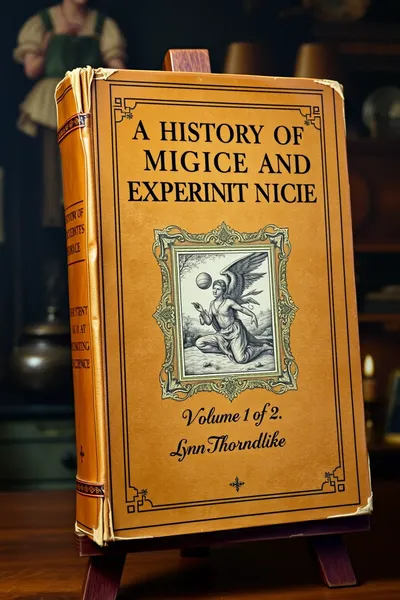
Maitrī and magic

 76
76

Maitrī and magic
Lambert Schmithausen’s *Maitrī and magic* offers a rigorous, if occasionally dense, examination of a curious nexus: the Buddhist ideal of loving-kindness and its conceptual parallels or applications in magical practice. The strength of the work lies in its meticulous scholarship, refusing to sensationalize or oversimplify the complex relationship between spiritual cultivation and ritualistic aims. Schmithausen’s detailed exegesis of *maitrī* as presented in Buddhist texts is particularly illuminating, providing a solid foundation for his subsequent comparative analysis. A limitation, however, is the academic tone which may deter readers seeking a more accessible or experiential exploration. The chapter discussing the potential for *maitrī*-generated states to influence ritual efficacy, while intellectually stimulating, demands considerable prior knowledge of both Buddhist philosophy and occult theory. Ultimately, *Maitrī and magic* serves as a valuable scholarly resource for specialists rather than a broad introduction to the subject.
📝 Description
76
Lambert Schmithausen's 1997 book examines maitrī and magic.
Lambert Schmithausen's 1997 study investigates the connections between Buddhist meditative practices, particularly maitrī or loving-kindness, and their potential use in magical systems. The book analyzes how these two seemingly distinct areas can inform each other, avoiding simple classifications to uncover subtle links. Schmithausen's method is analytical, relying on textual evidence and philosophical reasoning instead of mere speculation.
This work is aimed at advanced students and researchers in religious studies, comparative philosophy, and esoteric traditions. Specialists in Buddhism, especially Mahayana and Vajrayana, will find its detailed discussion of maitrī valuable. Individuals interested in the history and philosophy of Western and Eastern magical systems, and how contemplative states are viewed or employed within them, will also find it beneficial. It is not intended as an introduction for those seeking practical magical advice.
Published in 1997, Maitrī and magic arrived as academic interest in comparative religion and the scholarly study of esoteric movements grew. While earlier scholars had examined ecstatic techniques, Schmithausen specifically focused on integrating Buddhist ethics and meditative states into traditions often defined by ritual and symbolism. The book addressed a gap where Eastern contemplative practices and Western magical systems were frequently treated as separate or incompatible.
💡 Why Read This Book?
• Gain a nuanced understanding of how the Buddhist concept of *maitrī* (loving-kindness) is analyzed for its potential role in magical frameworks, a perspective not typically found in standard magical texts. • Explore the sophisticated philosophical arguments presented by Lambert Schmithausen regarding consciousness and intention, challenging conventional distinctions between spiritual development and ritual practice. • Understand the historical academic context of the 1997 publication, situating the work within late 20th-century scholarship on comparative religion and esoteric traditions.
⭐ Reader Reviews
Honest opinions from readers who have explored this book.
❓ Frequently Asked Questions
What is the core concept of 'maitrī' as discussed in Schmithausen's book?
Maitrī, as explored in the book, refers to the Buddhist cultivation of unconditional loving-kindness or benevolence towards all beings, often developed through specific meditative practices.
Does 'Maitrī and magic' offer practical magical techniques?
No, the book is primarily a scholarly and philosophical analysis, not a practical guide. It examines theoretical connections rather than providing instructional content.
What academic fields would find this book most relevant?
Scholars and advanced students in religious studies, comparative philosophy, Buddhist studies, and the history of esoteric traditions would find it most relevant.
What is the publication date of 'Maitrī and magic'?
The book was first published in 1997.
Who is the author of 'Maitrī and magic'?
The author is Lambert Schmithausen.
How does the book differentiate between Buddhist ethics and magical intent?
It critically examines the potential overlap and divergence, analyzing how the altruistic foundation of maitrī might interact with or be reinterpreted within the goal-oriented nature of magical practice.
🔮 Key Themes & Symbolism
Maitrī Meditation and Consciousness
The work meticulously dissects the practice and effects of maitrī meditation, a core part of Buddhist ethical development. Schmithausen explores how the sustained cultivation of benevolent regard can lead to profound shifts in consciousness, altering perception and emotional states. This detailed examination serves as a crucial precursor to understanding how such altered states might be conceptually linked to the efficacy sought in magical operations, moving beyond superficial comparisons to an analysis of internal experiential transformations.
The Intersection of Soteriology and Magic
A primary theme is the conceptual bridge between Buddhist soteriology (the doctrine of salvation or liberation) and the aims of magical traditions. Schmithausen investigates whether the transformative potential inherent in Buddhist paths, particularly through practices like maitrī, could be recontextualized or utilized within frameworks that seek to influence external reality or achieve specific worldly outcomes through ritual and symbolic means. This theme probes the fundamental nature of human aspiration across different spiritual and occult systems.
Ethical Frameworks in Esotericism
The book challenges assumptions about the inherent amorality or malevolence often associated with magic. By centering the concept of maitrī, Schmithausen introduces a potent ethical dimension into the discussion. He examines how the cultivation of unconditional positive regard might inform, guide, or even fundamentally alter the intent and execution of magical practices, suggesting a potential for integration that prioritizes well-being and universal compassion.
Conceptualizing Efficacy
Schmithausen grapples with how efficacy is understood and achieved in both Buddhist contemplative practices and magical systems. He contrasts the liberation-oriented efficacy of Buddhist paths with the often more specific, external-focused efficacy sought in magic. The work explores whether the internal states generated by maitrī can be seen as a causal factor in achieving magical results, or if the paradigms of efficacy are fundamentally incommensurable.
💬 Memorable Quotes
Direct passages from the work, attributed to the author.
“The meditative cultivation of maitrī involves directing benevolent awareness towards all beings.”
— This highlights the core practice of loving-kindness meditation, emphasizing its intentional and universal application as described within Buddhist doctrine.
“Scholarly inquiry into magic often neglects the potential role of profound contemplative states.”
— This suggests a critique of existing research, pointing out that the deep internal transformations achieved through practices like maitrī meditation are frequently overlooked when discussing magical phenomena.
“The ethical imperative of maitrī could offer a distinct orientation for magical intent.”
— This points to the possibility that the compassionate motivation behind maitrī might fundamentally reshape the goals and methods of magical practice, moving away from self-serving aims.
“Distinguishing between spiritual liberation and magical effect requires careful analysis of consciousness.”
— This emphasizes the book's focus on the internal states of the practitioner, suggesting that understanding consciousness is key to differentiating the outcomes of Buddhist practice from those of magic.
“Magic and Buddhist ethics may not be mutually exclusive categories.”
— This is a central thesis, proposing that elements from Buddhist ethical teachings, like maitrī, can be meaningfully integrated or compared with magical systems, challenging established dichotomies.
🌙 Esoteric Significance
Tradition
The work primarily engages with Buddhist contemplative traditions, specifically the Mahayana and Vajrayana emphasis on *maitrī*. It then seeks to find conceptual resonances within Western esoteric frameworks, particularly those concerned with consciousness manipulation, ritual efficacy, and the transformation of the practitioner. It doesn't align strictly with a single Western esoteric lineage but rather acts as a bridge, examining how a core Buddhist ethical and meditative concept might inform or be reinterpreted by esoteric practitioners across traditions.
Symbolism
While not focused on overt magical symbolism, the book implicitly engages with the symbolism of 'benevolence' and 'transformation.' The concept of *maitrī* itself can be seen as symbolic of pure, unconditional positive regard. The transformation of consciousness through its cultivation symbolizes spiritual growth and ethical refinement, which can be metaphorically linked to the alchemical transformation sought in many esoteric paths.
Modern Relevance
Contemporary discussions in mindfulness-based therapies and positive psychology often echo the principles of *maitrī*. Esoteric practitioners today, particularly those interested in ethical magical systems or integrating diverse spiritual practices, may find Schmithausen’s analysis valuable for understanding how compassion can be a foundational element in their work. Thinkers exploring the intersection of neuroscience, meditation, and consciousness continue to draw on detailed analyses of practices like maitrī, making the book’s insights relevant to modern inquiries into mind-body-spirit connections.
👥 Who Should Read This Book
['• Advanced scholars of Buddhist philosophy and practice seeking to understand the doctrinal nuances of *maitrī* beyond devotional contexts.', '• Researchers in comparative religion and esoteric studies interested in the theoretical integration of Eastern contemplative ethics with Western magical paradigms.', '• Students of consciousness studies and philosophical psychology looking for rigorous analyses of meditative states and their potential implications for altered experience.']
📜 Historical Context
Lambert Schmithausen's *Maitrī and magic*, published in 1997, emerged during a period when academic interest in the cross-cultural study of religion and esoteric traditions was gaining momentum. The late 20th century saw scholars moving beyond traditional theological studies to embrace comparative religious ethics and the anthropology of religion. Schmithausen’s work engaged with intellectual currents that sought to bridge perceived divides between Eastern contemplative disciplines and Western occult practices. While thinkers like Carl Jung had previously explored archetypes and the collective unconscious in relation to spiritual experiences, Schmithausen’s focus was more textually grounded and philosophically precise, specifically examining the Buddhist concept of *maitrī* within a magical context. This approach contrasted with earlier, more generalized studies of altered states or mystical experiences. The book contributed to a growing body of scholarship that treated esoteric traditions with academic rigor, moving them from the periphery of religious studies into more central discussions.
📔 Journal Prompts
The cultivation of *maitrī* as a foundation for magical intent.
Schmithausen's analysis of consciousness transformation through meditation.
Ethical considerations when exploring the intersection of Buddhist ethics and magic.
The conceptualization of efficacy in Buddhist practice versus magical aims.
How the concept of unconditional positive regard might influence personal practice.
🗂️ Glossary
Maitrī
A Sanskrit and Pali term referring to unconditional loving-kindness, benevolence, or friendship, a key ethical and meditative concept in Buddhism.
Soteriology
The study of religious doctrines of salvation or liberation. In Buddhism, it pertains to the path to enlightenment and freedom from suffering (dukkha).
Mahayana Buddhism
A major branch of Buddhism characterized by its emphasis on the bodhisattva ideal and the concept of emptiness (shunyata), prominent in East Asia.
Vajrayana Buddhism
A branch of Buddhism, often considered part of Mahayana, that utilizes tantric practices and rituals to achieve enlightenment, prevalent in Tibet and Mongolia.
Esoteric Traditions
Systems of belief and practice characterized by their hidden, inner, or secret knowledge, often accessible only to initiates, encompassing areas like alchemy, Kabbalah, and ceremonial magic.
Contemplative Practices
Mental disciplines that focus attention and awareness to achieve a mentally clear and emotionally calm and stable state, often for spiritual insight or well-being.
Ritual Efficacy
The perceived power or effectiveness of a ritual to produce a desired outcome, a concept examined in both religious and magical contexts.
🔮 Readers Also Liked
Browse all →







More Free Magic & Ritual Books
View all →