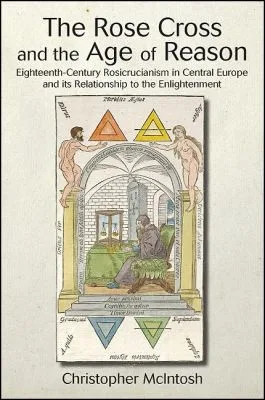
The Rose Cross and the Age of Reason
 78
78

The Rose Cross and the Age of Reason
Christopher McIntosh's "The Rose Cross and the Age of Reason" offers a compelling re-evaluation of the Rosicrucian revival in 18th-century Germany. Instead of accepting the common narrative of Rosicrucianism as merely a reactive force against the Enlightenment, McIntosh proposes a more dynamic interplay. He meticulously details how elements of Rosicrucian thought, drawing from Pietism, Kabbalah, and alchemy, found surprising resonance and adaptation within the very intellectual climate that prioritized reason. A particular strength is the detailed exposition of how Masonic lodges became conduits for these esoteric ideas. However, the book occasionally leans towards academic dryness, making some of the more intricate connections between philosophical concepts and esoteric symbolism require careful rereading. The discussion on the influence of German Pietism on Rosicrucian societies, specifically noting its emphasis on inner experience, is a standout section that illuminates a less-discussed facet of the movement. McIntosh avoids sensationalism, presenting a scholarly yet accessible argument about the period's intellectual ferment.
📝 Description
78
### What It Is The Rose Cross and the Age of Reason examines the intricate dialogue between the burgeoning Enlightenment philosophy and the persistent currents of Rosicrucian thought in eighteenth-century Germany. Christopher McIntosh traces the revival of Rosicrucianism, a movement rooted in early 17th-century mysticism, Pietism, Freemasonry, Kabbalah, and alchemy, during this period.
### Who It's For This work is essential for scholars of Western Esotericism, intellectual historians focusing on the Enlightenment era, and students of comparative religion. It appeals to those interested in how seemingly disparate philosophical and mystical traditions interacted and influenced each other during a pivotal period of European thought.
### Historical Context McIntosh positions the book within the intellectual landscape of 18th-century Germany, a time dominated by the rationalism of the Enlightenment. He challenges the conventional view that neo-Rosicrucianism acted solely as a Counter-Enlightenment force, suggesting a more nuanced relationship. This era saw figures like Immanuel Kant questioning traditional metaphysics, while esoteric societies continued to explore spiritual and symbolic knowledge.
### Key Concepts The central thesis explores the concept of "neo-Rosicrucianism" and its complex engagement with Enlightenment ideals. It highlights the fusion of Pietist devotionalism, Masonic ritual, Kabbalistic symbolism, and alchemical philosophy within this revival. The work also touches upon the philosophical underpinnings of the Enlightenment, such as empiricism and reason, and contrasts them with the intuitive and symbolic approaches of Rosicrucianism.
💡 Why Read This Book?
• Gain a nuanced understanding of the 18th-century German intellectual scene, moving beyond a simple Enlightenment vs. Counter-Enlightenment dichotomy, by examining McIntosh's analysis of neo-Rosicrucianism's specific engagement with Enlightenment philosophy. • Discover how esoteric traditions like Rosicrucianism, with roots in Pietism and Kabbalah, adapted and persisted during an era of rationalism, as detailed in the book's exploration of their revival. • Appreciate the role of Freemasonry in disseminating esoteric ideas during the 18th century, a concrete historical mechanism explored by McIntosh that offers a practical insight into intellectual history.
⭐ Reader Reviews
Honest opinions from readers who have explored this book.
❓ Frequently Asked Questions
What is "neo-Rosicrucianism" as discussed in Christopher McIntosh's book?
Neo-Rosicrucianism refers to the revival and adaptation of Rosicrucian ideas and societies in Germany during the 18th century. It drew upon earlier traditions but interacted with the intellectual currents of the Age of Reason, moving beyond a simple reactionary stance.
When was Christopher McIntosh's "The Rose Cross and the Age of Reason" first published?
The book was first published in April 1992, offering a scholarly examination of 18th-century esoteric thought during a period of significant philosophical change.
What were the main sources of influence for 18th-century German Rosicrucianism?
According to McIntosh, 18th-century German Rosicrucianism drew from a complex mix including early 17th-century Rosicrucian manifestos, Pietism's focus on inner religious experience, Freemasonry's ritualistic structure, Kabbalah's mystical teachings, and alchemical symbolism.
How does McIntosh challenge the traditional view of Rosicrucianism during the Enlightenment?
McIntosh argues against the common portrayal of neo-Rosicrucianism as solely a Counter-Enlightenment force. He posits a more integrated relationship, suggesting that these esoteric movements engaged with and were influenced by Enlightenment philosophy, rather than merely opposing it.
What is the significance of Pietism in relation to Rosicrucianism in this book?
The book highlights Pietism's emphasis on subjective religious experience and inner transformation as a significant element that informed the revival of Rosicrucianism in 18th-century Germany, providing a spiritual counterpoint to purely rationalistic philosophies.
Who are the primary intellectual movements discussed in "The Rose Cross and the Age of Reason"?
The primary intellectual movements explored are the Enlightenment, characterized by reason and empiricism, and Rosicrucianism, a complex esoteric tradition drawing from mystical, alchemical, and Kabbalistic sources that experienced a revival in 18th-century Germany.
🔮 Key Themes & Symbolism
Rosicrucian Revival and Enlightenment
This theme explores the resurgence of Rosicrucian societies and ideas in 18th-century Germany, a period dominated by the intellectual ascendancy of the Enlightenment. McIntosh meticulously details how these esoteric movements, often perceived as antagonistic to rationalism, were in fact engaged in a complex dialogue with Enlightenment philosophy. The work examines how concepts from Pietism, Freemasonry, Kabbalah, and alchemy were reinterpreted and integrated, challenging the simplistic dichotomy of Enlightenment versus Counter-Enlightenment thought during this pivotal era.
Pietism's Influence on Esotericism
The book highlights the often-underestimated role of German Pietism in shaping 18th-century esoteric movements, particularly Rosicrucianism. Pietism's emphasis on personal religious experience, inner transformation, and a direct relationship with the divine provided a fertile ground for mystical and symbolic explorations. McIntosh demonstrates how this devotional current infused the revival of Rosicrucianism, offering a spiritual dimension that complemented or contrasted with the rationalistic trends of the Age of Reason.
Kabbalah and Alchemy in Modern Esotericism
Central to the Rosicrucian revival discussed is the continued relevance of Kabbalistic symbolism and alchemical philosophy. McIntosh traces how these ancient traditions, with their intricate symbolic languages and focus on spiritual development, were adapted and utilized within 18th-century esoteric societies. The work illustrates their function not merely as historical curiosities but as living systems of thought that provided frameworks for understanding the cosmos and the human soul.
The Role of Freemasonry
Freemasonry emerges in McIntosh's analysis as a crucial conduit for the transmission and evolution of esoteric ideas during the 18th century. The book details how Masonic lodges became spaces where Rosicrucian concepts, alongside other mystical and philosophical currents, were discussed, practiced, and disseminated. This highlights the organizational and social structures that supported the esoteric landscape of the period and facilitated intellectual exchange.
💬 Memorable Quotes
“Historians have often depicted this neo-Rosicrucianism as a Counter-Enlightenment force.”
— This statement sets up McIntosh's central argument, challenging the conventional historical narrative that frames the 18th-century Rosicrucian revival as purely oppositional to the dominant rationalist philosophy of the Enlightenment.
“The Rosicrucianism movement enjoyed a revival in Germany during the eighteenth century.”
— This highlights the specific historical period and geographical focus of the book, emphasizing that esoteric traditions were not static but experienced periods of renewed interest and adaptation.
“The Rose Cross deals with the interaction between two movements of thought in eighteenth-century Germany: the philosophy of the Enlightenment, and the complex of ideas known as Rosicrucian.”
— This concise summary defines the core subject matter: the dynamic relationship and potential synthesis between rationalist philosophy and esoteric mysticism during a critical phase of Western intellectual history.
“Drawing on Pietism, Freemasonry, Kabbalah and alchemy...”
— This phrase enumerates the key traditional influences that informed the 18th-century Rosicrucian revival, indicating the rich and diverse esoteric heritage McIntosh explores.
“Dr. McIntosh argues rather that [neo-Rosicrucianism engaged with Enlightenment thought].”
— This paraphrased assertion points to the book's revisionist thesis, suggesting that the interaction was more complex and perhaps even symbiotic, rather than a simple conflict between opposing worldviews.
🌙 Esoteric Significance
Tradition
This work fits squarely within the study of Western Esotericism, specifically focusing on the Hermetic and Rosicrucian traditions. It examines how these lineages, which emphasize inner transformation, symbolic understanding, and a mystical apprehension of reality, navigated and were influenced by the rationalist milieu of the 18th century. McIntosh's analysis departs from purely historical accounts by exploring the continuity and adaptation of esoteric principles within a period often seen as hostile to them.
Symbolism
The book engages with potent symbols central to the Rosicrucian tradition, notably the "Rose Cross" itself, representing the union of the spiritual (rose) and the material/resurrectional (cross). It also explores the symbolic language of alchemy, such as transformation and the philosopher's stone, and the complex cosmological and divine mappings found in Kabbalistic Tree of Life diagrams, all as they were interpreted and employed by 18th-century esotericists.
Modern Relevance
McIntosh's work remains relevant for contemporary students of Western Esotericism, comparative religion, and intellectual history. Thinkers and practitioners interested in the ongoing dialogue between spirituality and modernity, the persistence of esoteric thought, and the historical roots of modern occultism find valuable context here. It informs current discussions on how ancient wisdom traditions can be reinterpreted and integrated into contemporary life and philosophical frameworks.
👥 Who Should Read This Book
• Scholars of Western Esotericism seeking a detailed analysis of the Rosicrucian revival in 18th-century Germany, particularly its complex relationship with the Enlightenment. • Intellectual historians interested in the interplay between rationalism and mystical traditions during a pivotal period of European thought, gaining insights into movements beyond mainstream philosophy. • Students of comparative religion and occult history who wish to understand how traditions like Pietism, Kabbalah, and alchemy informed later esoteric societies, such as those connected to Freemasonry.
📜 Historical Context
Christopher McIntosh's "The Rose Cross and the Age of Reason" situates itself within the intellectual ferment of eighteenth-century Germany. This was the era of the Enlightenment, championed by thinkers like Immanuel Kant, who emphasized reason, empirical observation, and critical inquiry. Simultaneously, however, esoteric traditions, including Rosicrucianism, experienced a significant revival. This neo-Rosicrucianism drew heavily from early 17th-century manifestos, Pietist spirituality, Masonic ritual, Kabbalistic lore, and alchemical symbolism. McIntosh directly confronts the prevailing historical interpretation, often articulated by scholars of the period, that viewed this esoteric resurgence merely as a reactionary force against Enlightenment rationalism. He proposes, instead, a more intricate engagement, suggesting that Rosicrucian thought adapted and, in some ways, even interacted with the dominant philosophical currents of its time, rather than existing in simple opposition.
📔 Journal Prompts
The interaction between Enlightenment philosophy and Rosicrucian thought, as detailed in McIntosh's work.
The specific influences of Pietism on the 18th-century Rosicrucian revival.
The symbolic meaning of the Rose Cross in the context of 18th-century German esoteric societies.
How Masonic lodges facilitated the spread of Rosicrucian ideas during the Age of Reason.
The challenge McIntosh poses to the view of neo-Rosicrucianism solely as a Counter-Enlightenment movement.
🗂️ Glossary
Rosicrucianism
An esoteric tradition originating in the early 17th century, associated with secret brotherhoods, mystical philosophy, and symbolic teachings often incorporating elements of alchemy, Kabbalah, and Hermeticism. It experienced revivals throughout history.
Age of Reason
A historical period, largely synonymous with the Enlightenment (roughly late 17th to 18th centuries), characterized by an emphasis on reason, logic, scientific inquiry, and individualism, challenging traditional authority and dogma.
Pietism
A movement within Lutheranism originating in the late 17th century, emphasizing personal faith, inner religious experience, devotional practices, and the importance of a transformed life, which influenced various aspects of German spirituality.
Kabbalah
A system of Jewish mysticism and esoteric interpretation of the Torah, exploring the relationship between God and the created universe through symbolic concepts like the Tree of Life, divine emanations, and spiritual ascent.
Alchemy
An ancient proto-scientific and philosophical tradition concerned with the transformation of matter, often involving the pursuit of the philosopher's stone, transmutation of metals, and a spiritual allegory for personal purification and enlightenment.
Neo-Rosicrucianism
Refers to the revival and adaptation of Rosicrucian ideas and organizations during specific historical periods, such as the 18th century, often interacting with contemporary philosophical and social currents.
Counter-Enlightenment
A term used to describe intellectual and artistic movements that reacted against the core tenets of the Enlightenment, often emphasizing tradition, emotion, faith, and established social hierarchies over reason and individualism.