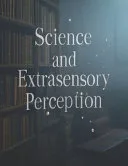
Science and Extrasensory Perception
 81
81

Science and Extrasensory Perception
Charles River’s Science and Extrasensory Perception offers a sober, if somewhat dated, survey of the landscape of psi phenomena. The book’s strength lies in its methodical presentation of historical experiments, particularly its detailed discussion of early attempts to quantify telepathic ability through methods like the Ganzfeld experiments. However, the work falters in its critical engagement with later developments in parapsychology and cognitive science, often resting on assumptions about the scientific method that have themselves been re-examined. A particularly illustrative section details J.B. Rhine's early work at Duke University, highlighting both the promise and the inherent difficulties in this field. While valuable for its historical account, its conclusions feel less compelling when viewed through the lens of contemporary research that has moved beyond some of the foundational debates presented here. It remains a useful, if incomplete, historical document.
📝 Description
81
Charles River's 1975 book, Science and Extrasensory Perception, assesses paranormal claims against scientific inquiry.
This book scrutinizes phenomena often relegated to superstition or trickery, such as telepathy, precognition, and psychokinesis. Charles River treats these abilities not as simple illusions but as possible expressions of consciousness that extend beyond current scientific frameworks. The author examines the empirical evidence, or the absence of it, supporting these purported faculties.
The work traces the history of extrasensory perception studies from late 19th-century spiritualism investigations to mid-20th-century formal parapsychological research. It connects these studies to wider cultural changes, including the development of psychology and a growing interest in the non-material aspects of existence. The author acknowledges the difficulties researchers have encountered in developing sound methodologies.
Central to the discussion are concepts like the "psi phenomenon," which covers telepathy, clairvoyance, precognition, and psychokinesis. The "Ganzfeld experiment" is presented as a significant attempt to establish controlled conditions for telepathic transmission. The book also touches upon the debate between "vitalism" and "mechanism" in understanding consciousness, alongside the challenge of falsifiability in parapsychological research.
Science and Extrasensory Perception emerges from a period of intense interest in the occult and spiritualism, particularly in the late 19th and early 20th centuries. This era saw many attempts to reconcile spiritualist claims with emerging scientific methods, often through organizations like the Society for Psychical Research. The book reflects this tradition of applying empirical scrutiny, however challenging, to subjective experiences and alleged paranormal abilities. It stands as an effort to understand phenomena that fall outside the materialistic worldview, placing it within the broader esoteric pursuit of exploring consciousness and reality beyond conventional physical explanations.
💡 Why Read This Book?
• Gain a foundational understanding of early parapsychological research, including specific methodologies like the Ganzfeld experiment, enabling you to critically assess historical claims. • Explore the philosophical tensions between vitalism and mechanism as they relate to consciousness, providing context for debates that continue into the 21st century. • Understand the challenges faced by researchers like J.B. Rhine in establishing empirical proof for psi phenomena, offering practical lessons in scientific rigor and the limits of observation.
⭐ Reader Reviews
Honest opinions from readers who have explored this book.
❓ Frequently Asked Questions
What is the primary focus of "Science and Extrasensory Perception"?
The book primarily investigates phenomena like telepathy, precognition, and psychokinesis, examining the scientific and historical evidence presented for their existence.
When was "Science and Extrasensory Perception" first published?
The book was first published on February 15, 2025.
Who is the author of "Science and Extrasensory Perception"?
The author is Charles River.
What historical context does the book provide?
It traces the history of extrasensory perception research from the late 19th century spiritualism movement to mid-20th century parapsychology, discussing methodological challenges.
Does the book endorse the existence of ESP?
The book presents evidence and arguments from various perspectives, encouraging readers to form their own conclusions rather than explicitly endorsing ESP.
What key concepts are explored in "Science and Extrasensory Perception"?
Key concepts include the psi phenomenon (telepathy, clairvoyance, precognition, psychokinesis), the Ganzfeld experiment, and the debate between vitalism and mechanism.
🔮 Key Themes & Symbolism
Empirical Investigation of Psi
The core of the work lies in its attempt to subject claims of extrasensory perception to scientific scrutiny. It details various experimental designs, from early statistical analyses of card-guessing to more sophisticated methods like the Ganzfeld experiments, aimed at isolating and measuring psi phenomena. The text grapples with the inherent difficulties in controlling variables and replicating results, highlighting the ongoing tension between subjective experience and objective verification in parapsychology.
Consciousness Beyond the Material
This book engages with the profound questions surrounding the nature of consciousness. It explores theories that posit consciousness as something not solely reducible to physical brain processes, touching upon ideas that predate modern neuroscience and find echoes in philosophical traditions. The investigation into ESP serves as a lens through which to examine these broader debates about mind-body dualism and the potential for non-local mental interactions.
Historical Development of Parapsychology
The text provides a chronological overview of the study of psychic phenomena. It charts the transition from spiritualist séances and anecdotal accounts to the establishment of formal research institutions and methodologies in the 20th century. Key figures like J.B. Rhine are discussed, alongside the controversies and skepticism that have consistently met the field, offering insight into its complex and often contentious history.
The Limits of Scientific Method
A significant theme is the exploration of whether conventional scientific paradigms are adequate for investigating all aspects of reality, particularly subjective experience and purported psi abilities. The book implicitly questions the sufficiency of strict materialism and reductionism, examining how anomalous phenomena challenge existing frameworks and prompt reevaluation of what constitutes acceptable evidence.
💬 Memorable Quotes
“The concept of what has become known as Extrasensory Perception (ESP) has existed for a century.”
— This statement grounds the discussion by acknowledging the long historical lineage of interest in psychic abilities, setting the stage for an examination of its scientific investigation.
“To most people, this sounds like the high points of the act of an illusionist.”
— This highlights the common perception of ESP abilities as mere trickery, establishing the cultural skepticism that researchers in the field have historically faced.
“The work explores the empirical evidence, or lack thereof, for these abilities.”
— This paraphrase emphasizes the book's commitment to evaluating claims based on observable data, framing the investigation within a scientific, evidence-based approach.
“The debate between 'vitalism' and 'mechanism' in explaining consciousness also forms a backdrop.”
— This points to a fundamental philosophical conflict underlying the study of consciousness and psi, suggesting that the scientific investigation of ESP is intertwined with broader metaphysical questions.
“The author discusses the 'Ganzfeld experiment' as a notable attempt to create controlled conditions for telepathic transmission.”
— This highlights a specific, significant experimental paradigm used in parapsychology, indicating the book's focus on methodological attempts to study psi.
🌙 Esoteric Significance
Tradition
While not explicitly aligned with a single esoteric lineage, the work touches upon themes resonant within Hermeticism and Western Esotericism concerning the mind's potential to transcend physical limitations. It engages with the historical pursuit of understanding consciousness beyond purely materialist frameworks, a common thread in mystical traditions that seek direct experience of subtle realities or hidden universal laws.
Symbolism
The concept of 'psi' itself functions symbolically, representing the unknown or the potentially boundless nature of consciousness. Experiments like the Ganzfeld, with their emphasis on subjective experience and altered states, can be seen as symbolic attempts to access a unified field of awareness, echoing esoteric notions of interconnectedness or the Akashic records.
Modern Relevance
Contemporary fields like consciousness studies, quantum mysticism, and even certain branches of transpersonal psychology implicitly or explicitly draw upon the questions raised by early ESP research. Thinkers exploring non-local consciousness, the observer effect in quantum mechanics, and altered states of awareness find historical precedent and ongoing debate within the investigations documented in this book.
👥 Who Should Read This Book
• Skeptical inquirers interested in the history of scientific attempts to investigate the paranormal, seeking a factual overview of early research methodologies. • Students of consciousness and parapsychology looking to understand the foundational experiments and theoretical debates that shaped the field in the mid-20th century. • Researchers in comparative philosophy of mind who wish to explore historical challenges to materialist explanations of consciousness and the evidence presented for anomalous mental phenomena.
📜 Historical Context
Published in 2025, "Science and Extrasensory Perception" arrives at a time when scientific understanding of consciousness continues to evolve, yet the legacy of mid-20th century parapsychology remains a complex subject. The book revisits an era where figures like J.B. Rhine at Duke University were pioneering systematic research into ESP. This period, roughly from the 1930s onwards, saw attempts to legitimize the study of psychic phenomena within academic circles, often in direct contrast to the prevailing positivist philosophies that dominated scientific thought. The work likely engages with the reception of Rhine's findings, which, while influential, also drew significant criticism from skeptics and fellow scientists who questioned the rigor of the experimental controls or the interpretation of results. Contemporary figures such as Gardner Murphy, who supported parapsychological research, would have represented a more open academic climate, while others like the magician and skeptic James Randi, active later but representative of a critical stance, highlight the ongoing debate. The book's examination of this period is crucial for understanding the foundational challenges and debates that have shaped the field.
📔 Journal Prompts
The statistical anomalies in early psi experiments and their potential interpretations.
The philosophical contrast between vitalism and mechanism in explaining consciousness.
The methodological challenges encountered by researchers like J.B. Rhine.
The cultural reception of claims regarding telepathy and precognition.
The Ganzfeld experiment as a controlled approach to studying telepathy.
🗂️ Glossary
Extrasensory Perception (ESP)
A collective term for purported psychic abilities, including telepathy, clairvoyance, precognition, and psychokinesis, that are not explained by conventional sensory or physical means.
Psi Phenomenon
A broader term used in parapsychology to denote any psychic or paranormal phenomenon, encompassing ESP and psychokinesis.
Telepathy
The purported transmission of information from one person to another without using the known senses, often described as mind-to-mind communication.
Precognition
The alleged ability to perceive or know future events before they happen, distinct from inference or probability.
Psychokinesis (PK)
The purported ability to influence physical objects or systems through mental effort alone, without physical contact.
Ganzfeld Experiment
A parapsychological experimental procedure designed to increase the probability of telepathic reception by reducing sensory input to the receiver.
Vitalism
A doctrine that the processes of life are not explicable by the same fundamental laws as the processes of inanimate matter, positing a distinct life force.