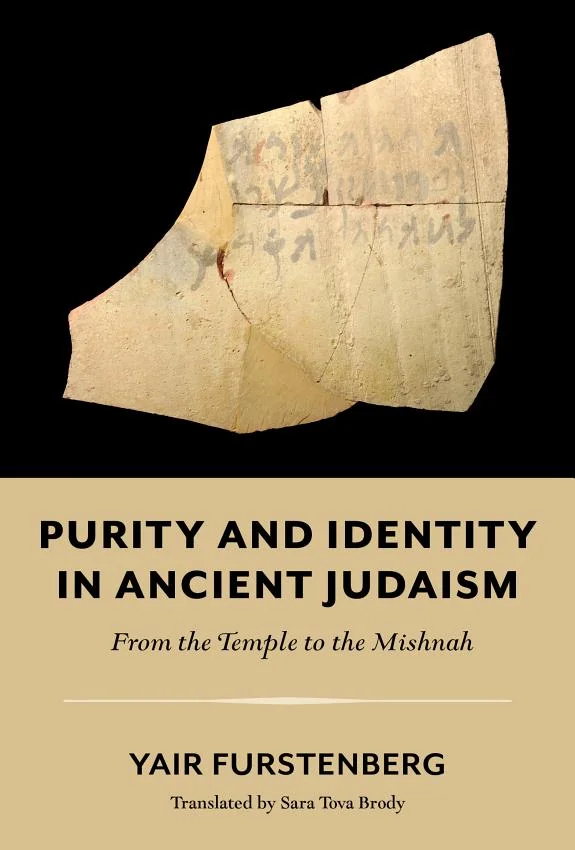
Purity and Identity in Ancient Judaism
 77
77

Purity and Identity in Ancient Judaism
Yair Furstenberg's examination of purity in Second Temple Judaism offers a granular look at a concept often treated monolithically. The book's strength lies in its detailed exposition of how purity functioned as a social and theological technology, enabling diverse groups to articulate distinct identities and salvation narratives. The argument that purity practices directly shaped the degree of sectarian separation is particularly compelling, moving beyond mere ritual observance to its profound societal implications. A point for critical consideration might be the extent to which the textual evidence fully supports the broad claims about cosmic salvation across all examined groups, though the work is careful in its distinctions. The discussion on the Essenes' stringent purity codes, for instance, vividly illustrates the link between ritual discipline and communal withdrawal. Furstenberg’s work provides a solid scholarly assessment of a foundational aspect of ancient Jewish life.
📝 Description
77
### The Purity Imperative Ancient Judaism's religious life was fundamentally structured around concepts of purity. This work investigates the pervasive influence of purity concerns on the worldview, daily routines, and social interactions of Jews during the crucial Second Temple period. It meticulously details how various factions within Judaism articulated distinct approaches to achieving and maintaining purity, presenting these practices not merely as ritualistic obligations but as pathways to both personal and cosmic salvation.
### Competing Visions of Sanctity The text highlights the dynamic tension between different groups, each proposing unique methods for embodying purity. These divergent strategies often served to demarcate sectarian boundaries, reinforcing group identity and distinguishing adherents from outsiders. The pursuit of purity, therefore, was intrinsically linked to the very definition of self and community within the ancient Jewish landscape.
### Second Temple Socio-Religious Dynamics Furstenberg's analysis places the concern for purity squarely within the socio-religious milieu of the Second Temple era (c. 516 BCE – 70 CE). This period was marked by intense debate and diverse interpretations of religious law and practice, with purity laws playing a central role in these discussions and shaping inter-group relations.
### Salvation Through Separation The exploration reveals that purity was not solely about ritual cleanliness but was deeply intertwined with eschatological hopes. Adherence to specific purity codes offered a promise of redemption and a means of aligning oneself with divine order, while simultaneously acting as a powerful mechanism for social and ideological separation among Jewish communities.
💡 Why Read This Book?
• Understand the Second Temple period's emphasis on purity laws, learning how these practices defined community boundaries and personal identity. • Grasp the competing interpretations of purity among different Jewish sects, revealing how adherence offered a promise of salvation and cosmic order. • Analyze the link between ritual purity and social separation, discerning how specific purity codes functioned as mechanisms for group demarcation.
⭐ Reader Reviews
Honest opinions from readers who have explored this book.
❓ Frequently Asked Questions
What was the primary focus of purity concerns in ancient Judaism during the Second Temple period?
The primary focus was on how purity shaped the religious culture, worldview, daily practices, and social relations of Jews. It was central to defining identity and communal boundaries.
How did different Jewish groups approach purity during this era?
Various groups offered competing visions and methods for achieving purity, often using these distinct approaches to delineate sectarian separation and articulate unique paths to salvation.
What is the significance of purity in relation to salvation according to the book?
Purity practices embodied a promise for personal and cosmic salvation, suggesting that adherence to specific codes was seen as a way to achieve redemption and align with divine order.
When was the Second Temple period, and why is it important for this study?
The Second Temple period spans roughly from 516 BCE to 70 CE. It was a time of significant religious and social development in Judaism, making it a critical era for understanding the evolution of purity concepts.
Does the book discuss specific Jewish sects and their purity practices?
Yes, the work examines how different groups, such as the Essenes or Pharisees (though not explicitly named in the blurb, implied by 'different groups'), offered competing visions and methods for living a life of purity.
What is the connection between purity and social relations in ancient Judaism?
Purity laws directly determined the degree of sectarian separation. Adherence to certain standards of purity was a key factor in defining who belonged to a specific community and how interactions with others were managed.
🔮 Key Themes & Symbolism
Purity as Identity Marker
The book argues that purity was not merely ritualistic but a foundational element in constructing Jewish identity during the Second Temple period. Adherence to specific purity codes served as a primary means by which individuals and groups defined themselves, distinguishing 'us' from 'them'. This theme explores how these practices were internalized, shaping worldviews and daily conduct, and how they provided a framework for understanding one's place in the cosmos.
Salvation Through Ritual Purity
A central tenet explored is the connection between purity and salvation. The work details how various factions within Judaism viewed the attainment of purity as a direct pathway to both personal redemption and the restoration of cosmic order. This theme examines the eschatological dimensions of purity, where ritual observance promised a future of divine favor and spiritual wholeness.
Sectarian Dynamics and Purity Codes
This theme focuses on the practical implications of purity concerns for social cohesion and division. The book elucidates how differing interpretations and applications of purity laws led to significant sectarian separation. It analyzes the mechanisms by which purity became a tool for group boundary maintenance, influencing social relations, communal practices, and the very structure of Jewish society.
Competing Visions of the Pure Life
The text highlights the ideological diversity surrounding purity. It investigates how distinct Jewish groups proposed and advocated for their particular methods of achieving and maintaining purity. This theme underscores the active, often contentious, debates over what constituted a truly pure life and the spiritual or communal benefits derived from these divergent practices.
💬 Memorable Quotes
“The concern for purity was the cornerstone of the religious culture of ancient Judaism.”
— This statement establishes purity not as an incidental practice, but as the central organizing principle around which Jewish religious life revolved during the period under study.
“Purity embodied a promise for personal and cosmic salvation.”
— This highlights the profound theological weight attached to purity, linking ritual observance directly to ultimate redemption and the proper functioning of the universe.
“Different groups offered competing visions and methods for living a life of purity.”
— This points to the internal diversity and debate within ancient Judaism regarding purity, suggesting that there was no single, universally accepted approach.
“Purity determined the degree of sectarian separation.”
— This emphasizes the social function of purity laws, illustrating how adherence to or deviation from purity standards served as a critical marker for group identity and exclusivity.
“The pursuit of purity shaped the worldview of Jews during the Second Temple period.”
— This suggests that purity concerns permeated the fundamental understanding of reality, influencing how individuals perceived themselves, their community, and the divine.
🌙 Esoteric Significance
Tradition
While not explicitly tied to a single Western esoteric lineage like Hermeticism or Kabbalah, this work resonates with Gnostic and Neoplatonic thought regarding the importance of purity for spiritual ascent and cosmic order. The emphasis on distinct purity codes as pathways to salvation echoes Gnostic ideas of hidden knowledge and separation from the material world. It offers a foundational historical context for understanding how purity functioned as a spiritual discipline aimed at achieving a higher state of being or divine favor, a recurring theme in many esoteric traditions.
Symbolism
The concept of 'purity' itself functions symbolically, representing not just physical cleanliness but spiritual integrity and separation from defilement. Within the context of Second Temple Judaism, purity laws also carried symbolic weight concerning the sanctity of the Temple, the covenantal relationship with God, and the ideal state of Israel. The demarcation of 'pure' versus 'impure' spaces and individuals acted as a symbolic representation of the cosmic struggle between holiness and impurity, order and chaos.
Modern Relevance
Contemporary esoteric practitioners, particularly those interested in Jewish mysticism (Kabbalah) or comparative religion, find value in understanding the historical roots of purity concepts. Movements focused on spiritual purification, self-discipline, and the creation of distinct communities often draw parallels to ancient practices. Thinkers exploring the intersection of religion, identity, and social control in modern contexts can also find relevant historical precedents in the detailed analysis of how purity dictated social relations and sectarian divisions.
👥 Who Should Read This Book
• Scholars of Second Temple Judaism and early Christianity seeking to understand the socio-religious landscape, particularly the role of purity laws in shaping identity and inter-group relations. • Students of comparative religion interested in the diverse ways purity has been conceptualized and practiced as a means of achieving spiritual status or salvation across different traditions. • Esoteric practitioners and historians of mysticism who wish to explore the historical and theological underpinnings of purity as a spiritual discipline, relevant to traditions emphasizing purification and separation.
📜 Historical Context
The Second Temple period (c. 516 BCE – 70 CE) was a time of immense religious ferment and intellectual development within Judaism. Emerging from Babylonian exile, Jewish communities navigated complex interactions with Hellenistic and later Roman powers, leading to diverse interpretations of law and identity. This era saw the rise of various groups, including proto-Pharisaic, Sadducean, and Essene movements, each with distinct theological and practical emphases. Yair Furstenberg's work places the pervasive concern for purity squarely within this dynamic context. Purity laws, derived from the Torah, became a crucial battleground for defining religious observance and communal boundaries. While the Pharisees sought to extend purity rules beyond the priestly caste to everyday life, groups like the Essenes adopted even more stringent practices, often leading to communal withdrawal. The scholarly reception of works focusing on this period often engages with scholars like E.P. Sanders, who examined the relationship between law and salvation, providing a backdrop against which Furstenberg's specific focus on purity's role in sectarian separation can be appreciated.
📔 Journal Prompts
The concept of purity as a cornerstone of religious culture.
Competing visions of purity and their role in sectarian separation.
The promise of personal and cosmic salvation through purity practices.
Daily practices shaped by concerns for purity during the Second Temple period.
The link between purity and the definition of Jewish identity in antiquity.
🗂️ Glossary
Second Temple Period
The historical era in Judaism spanning from the rebuilding of the Second Temple in Jerusalem (c. 516 BCE) to its destruction by the Romans (70 CE).
Purity Laws
A set of religious regulations derived from the Torah and subsequent rabbinic interpretation, concerning ritual and moral cleanness, essential for participation in sacred rites and community life.
Sectarian Separation
The process by which distinct religious groups within ancient Judaism distinguished themselves from others through specific beliefs, practices, and social boundaries, often reinforced by purity requirements.
Worldview
The fundamental cognitive orientation of an individual or society encompassing their beliefs, values, and understanding of reality and human existence.
Cosmic Salvation
A belief or hope concerning the restoration of universal order, divine harmony, or the ultimate redemption of the entire cosmos, often linked to specific religious or ritualistic practices.
Daily Practices
The routines, habits, and actions that individuals engage in regularly as part of their personal and communal religious observance, significantly influenced by purity concerns.
Identity
The sense of self or belonging, both individual and collective, shaped by shared beliefs, cultural norms, and social affiliations, with purity playing a key role in ancient Judaism.