Persepolis
 81
81

Persepolis
Ali Mousavi's meticulous chronicle of Persepolis's post-destruction history is a significant scholarly undertaking. The book excels in its exhaustive cataloging of expeditions, researchers, and the gradual unveiling of the site's layers. Its strength lies in assembling disparate archival evidence and unpublished field notes into a coherent narrative, particularly illuminating the often-overlooked early 20th-century excavations. However, the sheer density of detail, while admirable for specialists, occasionally risks overwhelming the general reader. A more focused exploration of the interpretive shifts regarding specific structures, like the Apadana, could have provided sharper analytical moments. Ultimately, it is an indispensable resource for serious students of archaeology and ancient Persian history.
📝 Description
81
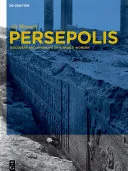
Ali Mousavi's 2012 book details Persepolis's exploration from its 330 BC destruction to today.
Published in 2012, Ali Mousavi's Persepolis examines the archaeological history of the ancient Persian capital. The book traces efforts to uncover and study the site from its destruction around 330 BC up to contemporary research. It draws on a range of sources, including archival materials, personal accounts, and previously unpublished documents, to reconstruct this history.
The work is for anyone interested in ancient civilizations and the practice of archaeology. Students of history, archaeology, and classics will find it valuable, as will general readers curious about lost ancient cities. The book addresses the methods and difficulties involved in excavating and understanding large historical sites.
Mousavi's study places the post-antiquity history of Persepolis within the context of sustained academic and public interest in ancient Persia. It covers the periods after Alexander the Great's conquest, when the Achaemenid Empire's former glory became the subject of both legend and methodical investigation. The book charts the progress of research from early travelers' observations to the systematic work of modern archaeological teams, documenting changes in research methods and interpretation.
While described as esoteric, this book focuses on the material rediscovery and historical memory of Persepolis rather than spiritual or mystical interpretations. Its "afterlife" concept refers to the site's continued presence in human consciousness and through ongoing archaeological work. This approach aligns with traditions that analyze how ancient civilizations and their remnants endure and are reinterpreted across centuries, bridging history and the study of cultural legacy.
💡 Why Read This Book?
• Learn about the specific challenges faced by early archaeologists at Persepolis, such as the logistical difficulties encountered during the 1930s expeditions funded by the Oriental Institute of Chicago. • Understand the evolution of archaeological documentation techniques from early sketches and traveler's accounts to modern photographic and survey methods applied to the site. • Grasp the historical process by which Persepolis transformed from a legendary ruin into a subject of systematic academic inquiry, informed by the detailed records of its rediscovery.
⭐ Reader Reviews
Honest opinions from readers who have explored this book.
❓ Frequently Asked Questions
When was Persepolis destroyed?
Persepolis was largely destroyed during Alexander the Great's campaigns around 330 BC. This event marked the end of its active use as a ceremonial capital and began its transition into a world wonder known primarily through historical accounts and its surviving ruins.
Who were some key figures in the early archaeological study of Persepolis?
Early systematic study involved figures like Ernst Herzfeld in the 1920s and the team from the Oriental Institute of Chicago, led by figures such as Erich Schmidt, in the 1930s. Their work laid crucial groundwork for subsequent research.
What is the significance of Persepolis?
Persepolis was the ceremonial capital of the Achaemenid Empire, renowned for its monumental architecture and as a symbol of Persian imperial power. Its rediscovery offers profound insights into ancient Near Eastern history and art.
What kind of archival evidence does the book use?
The book draws upon a wide range of archival evidence, including excavation diaries, correspondence between archaeologists, official reports, and photographic collections from various institutions and private archives.
How does the book cover the 'afterlife' of Persepolis?
It examines the 'afterlife' by tracing how the site was perceived, documented, and studied from antiquity through the medieval period and into modern scientific archaeology, detailing its changing presence in historical narratives.
Is this book accessible to non-specialists?
While detailed and scholarly, the book aims to address a broad audience, including students and interested general readers. Its narrative structure, focusing on discovery, makes it accessible beyond strict academic circles.
🔮 Key Themes & Symbolism
The Archaeology of Memory
This work examines how a monumental site like Persepolis persists in human consciousness long after its physical destruction. It moves beyond the initial collapse in 330 BC to explore how successive generations encountered, interpreted, and excavated the ruins. The book details the transition from legendary accounts to systematic archaeological investigation, highlighting how the physical remnants become vessels for historical memory and scholarly debate, piecing together a lost civilization from fragmented evidence.
Documenting a Lost World
A core theme is the meticulous process of documenting Persepolis’s physical presence and architectural details across centuries of exploration. From early traveler sketches to the extensive photographic archives and field notes generated by 20th-century archaeological expeditions, the book underscores the critical role of visual and textual records. It demonstrates how these documents, often scattered and unpublished, form the bedrock for understanding the site’s scale, design, and historical phases.
The Eras of Excavation
Mousavi charts the distinct phases of archaeological engagement with Persepolis, beginning with its decline after 330 BC and moving through centuries of intermittent interest to the intensive fieldwork of the 20th century. Each era, marked by figures like Herzfeld and Schmidt, brought new methodologies, theoretical approaches, and discoveries. The book illustrates how these successive waves of excavation built upon, and sometimes corrected, previous understandings of the Achaemenid capital.
Persepolis as a Scholarly Nexus
The book positions Persepolis not just as an archaeological site but as a focal point for scholarly discourse and international collaboration. It reveals how the study of Persepolis engaged scholars from diverse backgrounds and institutions, fostering debates on Persian history, art, and imperial administration. The archival materials themselves become artifacts, revealing the intellectual currents and institutional rivalries that shaped the understanding of this ancient wonder.
💬 Memorable Quotes
Direct passages from the work, attributed to the author.
“The history of Persepolis's exploration is a narrative of persistent inquiry.”
— This highlights the enduring human drive to uncover and understand the past, particularly a site as significant as Persepolis, despite the challenges and passage of time since its destruction.
“Archival evidence often requires careful reconstruction to reveal its full significance.”
— This emphasizes that historical documents and records are not always self-explanatory; they demand critical analysis and synthesis to illuminate the complex story of the site's discovery and interpretation.
“Visual documentation transformed perceptions of the ruins.”
— This points to the crucial role that photographs, drawings, and plans played in disseminating knowledge about Persepolis and shaping academic and public understanding of its scale and grandeur.
“Understanding Persepolis involves tracing its presence across different historical epochs.”
— This suggests that the site's significance is not static but evolves, viewed through the lenses of various historical periods, from antiquity to modern archaeological study.
“Unpublished materials offer vital, often overlooked, details of the discovery process.”
— This underscores the importance of exploring less-known sources, such as private papers and field notes, to gain a more complete and nuanced picture of archaeological endeavors at Persepolis.
🌙 Esoteric Significance
Tradition
While the book itself is a work of academic archaeology and history, its subject matter, Persepolis, has long held a place in esoteric traditions. Its grandeur and association with ancient Persian empires, figures like Cyrus the Great, and Zoroastrianism have made it a site of symbolic interest for movements seeking connections to ancient wisdom. The book's focus on discovery and preservation indirectly supports esoteric interests by ensuring the site's material presence and historical record remain accessible for interpretation.
Symbolism
Persepolis, as depicted through its archaeological remains, carries potent symbolism. The monumental staircases and reliefs, depicting processions of tribute bearers, can be interpreted esoterically as representations of cosmic order, the hierarchical structure of the universe, or the journey of the soul towards divine perfection. The very act of rediscovering and studying these structures can be seen as a symbolic uncovering of lost knowledge or a connection to the spiritual power of ancient empires.
Modern Relevance
Contemporary esoteric thinkers and practitioners interested in ancient civilizations, comparative mythology, and the symbolism of power often draw upon the historical and visual records of sites like Persepolis. While Mousavi's book is strictly academic, the detailed descriptions and historical context it provides can serve as a factual basis for those exploring Persepolis's deeper symbolic meanings within traditions like Theosophy or various forms of Western esotericism seeking ancient roots.
👥 Who Should Read This Book
• Students of ancient history and archaeology seeking detailed accounts of excavation methodologies and the historical study of major archaeological sites. • Researchers of Achaemenid Persia interested in primary source material and the evolution of scholarly understanding of Persepolis from its destruction to modern times. • General readers fascinated by the process of rediscovering lost civilizations and the challenges involved in piecing together historical narratives from fragmented evidence.
📜 Historical Context
Published in 2012, Ali Mousavi's work emerges in an era of advanced digital archiving and globalized academic collaboration, yet it focuses on the foundational, often arduous, work of uncovering Persepolis. The period it covers, from the 4th century BC onwards, spans the Hellenistic, Roman, Islamic, and early modern eras, each with its own relationship to the ruins. Crucially, the book engages with the intense archaeological activity of the early 20th century, particularly the expeditions led by Ernst Herzfeld and the Oriental Institute of Chicago. This era was marked by burgeoning nationalisms and competing imperial interests in the Near East, influencing both the practice and politics of archaeology. While not directly engaging with contemporary occult interpretations of ancient sites, the book's rigorous factual approach stands in contrast to more speculative historical narratives popular in earlier periods.
📔 Journal Prompts
The transformation of Persepolis from ruin to archaeological site.
The role of archival evidence in reconstructing historical narratives.
The methods employed during the 1930s excavations at Persepolis.
The concept of a 'world wonder' and its historical afterlife.
The visual documentation of Persepolis across different eras.
🗂️ Glossary
Achaemenid Empire
The ancient Persian empire that ruled from approximately 550 to 330 BC, with Persepolis serving as its ceremonial capital. It was known for its vast territory, sophisticated administration, and monumental architecture.
Alexander the Great
Macedonian king and conqueror who invaded the Persian Empire, famously sacking and burning Persepolis around 330 BC, marking a key moment in its destruction.
Oriental Institute of Chicago
A research center of the University of Chicago dedicated to the ancient Near East. It conducted significant archaeological excavations at Persepolis during the 1930s under contract with the Persian government.
Ernst Herzfeld
A German archaeologist and Iranologist who conducted early systematic excavations at Persepolis in the 1920s, laying crucial groundwork for subsequent research into the site's history and architecture.
Apadana
The grand audience hall of Darius I and Xerxes I at Persepolis, known for its massive columns and elaborate relief sculptures depicting processions and royal ceremonies.
Archaeological Exploration
The systematic process of uncovering and investigating ancient sites and artifacts through excavation, survey, and analysis to understand past human activity and cultures.
Archival Evidence
Primary source materials such as documents, letters, photographs, maps, and field notes created during historical periods, often crucial for reconstructing past events and research efforts.