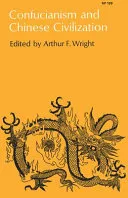
Confucianism and Chinese Civilization
 83
83

Confucianism and Chinese Civilization
Arthur F. Wright’s Confucianism and Chinese Civilization offers a robust exploration of a philosophical system's deep integration into a national identity. The strength of this 1975 work lies in its meticulous tracing of Confucian principles through China’s dynastic shifts, particularly its examination of how concepts like *li* were instrumental in statecraft. A limitation, however, is that the prose, while academically rigorous, can sometimes feel dense for the uninitiated, demanding sustained attention. The section detailing the bureaucratic examination system, and how it was steeped in Confucian classics, provides a concrete example of the philosophy's practical, pervasive impact. It’s a foundational text for understanding East Asian socio-political thought.
📝 Description
83
Arthur F. Wright's 1975 book examines the philosophical and social structures of Imperial China.
Published by Stanford University Press, Arthur F. Wright's Confucianism and Chinese Civilization goes beyond simple historical accounts. It analyzes the lasting impact of Confucius's teachings on governance, ethics, and the structure of Chinese society over many centuries. The book is for serious students of history, philosophy, and comparative religion who want a detailed understanding of how one philosophical system influenced a civilization for more than two thousand years. It considers everything from government appointments to family duties, grounded in textual evidence and historical context.
Wright's work appeared in 1975 when Western academic study of Chinese thought was growing. It offered an alternative to earlier, more China-centered or ideologically motivated viewpoints. This book became a primary resource for understanding Confucianism not just as a set of beliefs, but as a living influence within a complex society. It provides a scholarly look at the ideas that shaped China's past.
While not strictly esoteric in the sense of occult or mystical traditions, this work examines the deep philosophical underpinnings of a major world civilization. It addresses the ways in which a specific ethical and social framework, Confucianism, became woven into the fabric of governance, family life, and personal conduct for millennia. The book details how these core tenets were interpreted and applied, demonstrating their pervasive influence on the Chinese worldview and social order.
💡 Why Read This Book?
• Gain insight into the practical application of *ren* (benevolence) in Chinese governance, understanding how ethical principles were codified into state policy. • Grasp the significance of *li* (ritual propriety) as a mechanism for social cohesion and order, as detailed in the analysis of dynastic China. • Appreciate the enduring influence of the *Junzi* ideal on personal conduct and leadership, as explored through historical examples from the book.
⭐ Reader Reviews
Honest opinions from readers who have explored this book.
❓ Frequently Asked Questions
What is the primary focus of Arthur F. Wright's Confucianism and Chinese Civilization?
The book primarily focuses on how Confucian philosophy shaped the social, political, and ethical structures of Chinese civilization across many centuries, examining its enduring influence from its origins to its integration into statecraft and daily life.
When was Confucianism and Chinese Civilization first published?
Confucianism and Chinese Civilization by Arthur F. Wright was first published in 1975.
What are some key Confucian concepts discussed in the book?
Key concepts include *ren* (benevolence), *li* (ritual propriety), *xiao* (filial piety), and the ideal of the *Junzi* (noble person), all of which are explored for their impact on Chinese society and governance.
Who is Arthur F. Wright?
Arthur F. Wright was a prominent historian of China and East Asia, known for his scholarly work on Chinese intellectual history and culture, particularly during his tenure at Stanford University.
Is this book suitable for beginners interested in Confucianism?
While academically rigorous, the book provides a comprehensive historical and philosophical overview, making it valuable for serious students and those seeking a deep understanding of Confucianism's societal impact, though it demands focused reading.
What historical period does the book primarily cover?
The book covers a vast sweep of Chinese history, examining the evolution and application of Confucian principles from ancient times through various imperial dynasties, highlighting its consistent presence and adaptation over millennia.
🔮 Key Themes & Symbolism
The Mandate of Heaven
The work intricately examines how Confucian principles, particularly the emphasis on virtuous leadership and social harmony, became intertwined with the concept of the Mandate of Heaven. This celestial approval, traditionally granted to rulers who governed justly, was often interpreted through a Confucian lens, where ethical conduct and adherence to *li* were paramount. Wright illustrates how rulers and scholars alike invoked Confucian ideals to legitimize or challenge political authority, demonstrating its role as a central to imperial ideology and social control for centuries.
Confucian Bureaucracy and the *Junzi*
A central theme is the institutionalization of Confucianism through China's imperial examination system. The book details how the pursuit of becoming a *Junzi* (noble person), an individual embodying benevolence, righteousness, and propriety, became the ultimate goal for scholars aspiring to civil service. Wright analyzes the curriculum, the examination content, and the societal reverence for educated officials, revealing how Confucianism served not just as a moral compass but as the very engine of state administration.
*Li* as Social Architecture
Wright meticulously dissects the concept of *li* (ritual propriety, etiquette, social norms) as the operational code of Chinese civilization. It’s presented not merely as manners but as the intricate framework governing familial relationships, political interactions, and even religious observances. The work shows how the consistent practice and transmission of *li* across generations fostered a predictable social order and reinforced hierarchical structures, acting as a vital mechanism for societal cohesion and cultural continuity.
Adaptation and Evolution of Doctrine
Rather than presenting Confucianism as static, the book highlights its dynamic adaptation throughout Chinese history. Wright explores how Neo-Confucian thinkers in later dynasties synthesized Confucianism with other philosophical and metaphysical ideas to address new challenges. This demonstrates Confucianism’s capacity to evolve, absorbing and reinterpreting elements from other traditions while maintaining its core emphasis on ethics, governance, and human cultivation, ensuring its continued relevance across diverse historical epochs.
💬 Memorable Quotes
Direct passages from the work, attributed to the author.
“Filial piety (*xiao*) was the root of benevolence (*ren*).”
— This interpretation underscores the Confucian belief that the fundamental virtue of respect and duty towards one's parents is the foundational training ground for developing broader compassion and ethical concern for society.
“The examination system selected officials based on their mastery of the Classics.”
— This points to the concrete mechanism by which Confucian scholarship was integrated into the Chinese state, where rigorous testing on canonical texts determined entry into the imperial bureaucracy.
“Ritual (*li*) provided the structure for social harmony.”
— This concept emphasizes *li* not just as etiquette but as a system of prescribed behaviors and ceremonies that maintained social order, defined roles, and facilitated smooth interactions within the complex Chinese social hierarchy.
“The *Junzi* cultivated himself morally to serve the state.”
— This interpretation captures the essence of the Confucian ideal gentleman – an individual committed to continuous self-improvement in virtue for the ultimate purpose of contributing to good governance and societal well-being.
💡 Key Ideas
Editorial paraphrase of the work's core concepts — not direct quotes.
The sage rulers of antiquity established a model of governance based on moral example.
This paraphrased concept highlights the Confucian ideal that effective leadership stems from personal virtue and ethical conduct, serving as an inspiration for the populace rather than relying solely on coercion or law.
🌙 Esoteric Significance
Tradition
While primarily a work of historical and philosophical scholarship, Confucianism and Chinese Civilization can be viewed through an esoteric lens as an exploration of a highly structured, ethical, and cosmologically informed worldview. It aligns with traditions that emphasize self-cultivation, social order, and the alignment of human conduct with cosmic principles, echoing aspects found in certain Hermetic or philosophical schools that seek universal laws governing human affairs and societal harmony.
Symbolism
Key symbols include the *Junzi* (noble person), representing the cultivated individual striving for moral perfection, and *li* (ritual propriety), symbolizing the intricate, ordered patterns that govern human interaction and cosmic balance. The concept of the Mandate of Heaven, while political, carries symbolic weight, representing divine approval contingent on virtuous leadership and societal harmony, a recurring motif in many spiritual and philosophical systems.
Modern Relevance
Contemporary thinkers in fields ranging from ethics and political science to organizational psychology draw upon Wright's foundational analysis. The emphasis on ethical governance, social responsibility, and the cultivation of character continues to inform discussions on leadership and societal development. Modern interpretations of applied Confucianism in East Asia and global business ethics often implicitly or explicitly reference the historical frameworks detailed in works like this.
👥 Who Should Read This Book
• Students of comparative philosophy and religion seeking to understand the foundational ethical and political systems that shaped East Asian civilizations. • Historians of China and East Asia interested in the long-term impact of intellectual traditions on governance and social structures across dynasties. • Scholars of statecraft and ethics who wish to analyze how a single philosophical doctrine influenced political legitimacy, bureaucratic systems, and personal conduct for over two millennia.
📜 Historical Context
Arthur F. Wright's Confucianism and Chinese Civilization, published in 1975, emerged during a period of significant re-evaluation of East Asian history and philosophy in the West. Following the Cultural Revolution in China, which had actively suppressed Confucianism, Western scholars like Wright played an important role in preserving and analyzing this foundational intellectual tradition. The work provided a much-needed scholarly counterpoint to earlier, often ideologically charged, Western interpretations and offered a nuanced view of Confucianism's deep integration into the Chinese state and society. Its publication by Stanford University Press placed it within a lineage of serious academic discourse, building upon the foundational work of contemporaries and predecessors such as John Fairbank, who were simultaneously shaping the field of Chinese studies. The book addressed how Confucianism interacted with other philosophical currents, offering a detailed analysis of its enduring impact.
📔 Journal Prompts
The concept of *ren* and its manifestation in state policy.
The role of *li* in maintaining social hierarchy and order.
The ideal of the *Junzi* as a model for leadership.
The historical evolution of Confucianism through different dynasties.
The connection between filial piety (*xiao*) and societal harmony.
🗂️ Glossary
*Ren* (仁)
A core Confucian virtue, often translated as benevolence, humaneness, or goodness. It represents the ideal ethical quality of empathy, compassion, and concern for others.
*Li* (禮)
Encompasses ritual, propriety, etiquette, and social norms. It refers to the prescribed practices and ceremonies that govern social interactions and maintain order and harmony.
*Xiao* (孝)
Filial piety, the virtue of respect, obedience, and care for one's parents and elders. It is considered a foundational virtue in Confucian ethics.
*Junzi* (君子)
Literally 'son of a ruler,' translated as 'noble person' or 'gentleman.' It refers to the ideal individual in Confucianism, characterized by moral cultivation, righteousness, and wisdom.
Mandate of Heaven (天命)
A traditional Chinese political and religious doctrine used to justify the rule of the King or Emperor of China. It asserted that Heaven granted emperors the right to rule based on their ability to govern well and justly.
Neo-Confucianism
A philosophical movement that developed in China from the Tang dynasty onwards, synthesizing Confucianism with elements of Taoism and Buddhism, emphasizing metaphysics and cosmology alongside ethics.
Imperial Examination System
A civil service examination system in Imperial China used to select candidates for the state bureaucracy. It was heavily based on Confucian classics.