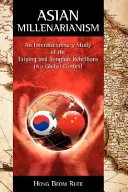
Asian Millenarianism
 84
84

Asian Millenarianism
Hong Beom Rhee's "Asian Millenarianism" offers a necessary corrective to scholarship that has often viewed East Asian messianic movements through a predominantly Western lens. The book's strength lies in its meticulous re-examination of the Taiping and Tonghak movements, demonstrating their deep connections to indigenous spiritual philosophies rather than treating them as mere echoes of Western apocalypticism. Rhee's exploration of the spiritual underpinnings of the Taiping Rebellion, for instance, provides a nuanced understanding of Hong Xiuquan's vision. A limitation, however, is the density of the philosophical arguments, which may require considerable background knowledge from the reader. The section discussing the Tonghak movement's synthesis of indigenous Korean beliefs with foreign influences is particularly illuminating, showcasing how spiritual ideas adapt and transform. Ultimately, "Asian Millenarianism" serves as an indispensable resource for anyone seeking a more culturally sensitive understanding of global millenarian phenomena.
📝 Description
84
Hong Beom Rhee argues that 19th-century Asian millenarian movements were fueled by indigenous spiritual concepts.
Hong Beom Rhee's book examines the Taiping Rebellion and the Tonghak Uprising, two significant 19th-century Asian socio-religious movements. Rhee challenges interpretations that view these events as solely political. Instead, the book argues they were deeply infused with indigenous spiritual and eschatological ideas. The analysis aims to place these movements within a wider context of Asian spiritual thought, moving away from Western-centric views of millenarianism.
The work situates the Taiping Rebellion (1850-1864) and the Tonghak movement (from the 1860s) within the turbulent political and social landscape of 19th-century Asia. This period saw widespread instability and the effects of Western colonialism. Rhee's work offers a perspective that acknowledges the internal spiritual dynamics driving these large popular movements.
Central to Rhee's thesis is the idea that Asian millenarian beliefs have distinct indigenous origins, not merely imitations of Western models. The book discusses concepts like divine mandate, utopian visions, and the role of charismatic leaders, showing how these movements expressed unique cultural and spiritual aspirations shaped by their specific historical contexts.
This book engages with the study of millenarianism, a concept concerned with apocalyptic beliefs and the idea of a coming radical transformation. While often studied through a Western theological lens, Rhee's work focuses on how such beliefs manifested within distinctly Asian cultural and spiritual frameworks. It highlights the indigenous roots of utopian visions and the role of charismatic figures in movements that sought profound societal change, placing these phenomena within a global history of religious and social upheaval.
💡 Why Read This Book?
• Learn how the Taiping Rebellion (1850-1864) integrated Christian elements with traditional Chinese cosmology, offering a unique perspective on syncretic spiritual movements. • Understand the Tonghak movement's distinct spiritual philosophy rooted in Korean traditions, differentiating it from Western millenarian expectations. • Gain insight into how Asian spiritual ideas informed large-scale social and political upheavals in the 19th century, challenging conventional historical narratives.
⭐ Reader Reviews
Honest opinions from readers who have explored this book.
❓ Frequently Asked Questions
What is the main argument of "Asian Millenarianism" regarding the Taiping Rebellion?
The book argues that the Taiping Rebellion was significantly shaped by indigenous Asian spiritual ideas and concepts, rather than being solely a political or foreign-influenced movement. It emphasizes the role of these deeply rooted beliefs in motivating and structuring the rebellion.
How does "Asian Millenarianism" differ from Western studies of apocalyptic movements?
It distinguishes itself by focusing on the unique spiritual and philosophical traditions within Asia that gave rise to millenarianism, suggesting these are not simply derivatives of Western eschatology but possess their own distinct characteristics.
What are the Tonghak and Taiping movements?
The Tonghak movement was a significant religious and peasant rebellion in 19th-century Korea. The Taiping Rebellion was a massive civil war in China from 1850 to 1864, led by Hong Xiuquan, who believed himself to be the younger brother of Jesus Christ.
Who is the author of "Asian Millenarianism"?
The author is Hong Beom Rhee, a scholar who first published this work in 2007. His research focuses on Asian religious history and comparative studies of millenarian movements.
What historical period does "Asian Millenarianism" primarily cover?
The book concentrates on the 19th century, specifically examining major socio-religious movements like the Taiping Rebellion (1850-1864) and the Tonghak movement in Korea during the latter half of the century.
What contribution does Rhee's work make to comparative millenarian studies?
Rhee's work contributes by offering historical and philosophical reflections that enrich the comparative study of millenarianism, specifically by highlighting the distinct Asian spiritual frameworks that informed these movements.
🔮 Key Themes & Symbolism
Indigenous Spiritual Frameworks
This theme centers on Rhee's assertion that movements like the Taiping Rebellion and Tonghak were not anomalies but expressions of deeply embedded Asian spiritual concepts. The work analyzes how traditional cosmologies, messianic expectations, and ethical systems within China and Korea provided the foundational structures for these large-scale uprisings. It moves beyond viewing these events solely through the prism of Western religious or political ideologies, highlighting the internal logic and spiritual impetus derived from local traditions.
Syncretism and Adaptation
A crucial aspect explored is how Asian millenarian movements engaged with and adapted external influences, particularly Christianity in the case of the Taiping Rebellion. Rhee investigates the syncretic nature of these beliefs, where foreign doctrines were reinterpreted and integrated into existing spiritual frameworks. This process of adaptation is presented not as passive reception but as an active re-shaping of ideas to fit indigenous needs and worldviews, creating unique hybrid spiritualities.
Millenarianism as Social Force
The book examines millenarianism not just as a set of beliefs but as a potent social and political force. It details how visions of a coming golden age or a divinely ordained new order mobilized vast populations, leading to significant historical events like the Taiping Rebellion (1850-1864). Rhee illustrates how these spiritual aspirations translated into concrete actions, challenging social hierarchies and political structures of the time.
Comparative Religious Studies
This theme addresses Rhee's contribution to the broader field of comparative millenarianism. By analyzing specific Asian cases, the work offers valuable data and theoretical insights for understanding the universal and particular aspects of apocalyptic beliefs across different cultures. It encourages scholars to broaden their scope beyond Abrahamic traditions and to appreciate the diverse manifestations of eschatological thought globally.
💬 Memorable Quotes
“The Taiping Rebellion and Tonghak movement are expressions, in part, of deeply rooted Asian spiritual ideas.”
— This statement encapsulates the book's central thesis: that these significant 19th-century Asian movements must be understood through their indigenous spiritual and philosophical underpinnings, not solely as political or externally influenced events.
“What studies of Asian millenarianism can contribute to the comparative study of millenarianism.”
— This highlights the book's aim to enrich global scholarship on apocalyptic beliefs by introducing and analyzing unique Asian perspectives, thereby broadening the scope and understanding of this complex religious phenomenon.
“Reexamines the Taiping and the Tonghak movements in 19th-century Asia.”
— This indicates the book's focus on specific historical case studies, suggesting a detailed analytical approach to understanding the nuances and distinct characteristics of these particular socio-religious upheavals.
“Providing an understanding of the movements as an expression of indigenous spiritual ideas.”
— This paraphrased concept emphasizes Rhee's effort to connect historical events to the underlying cultural and spiritual worldviews that shaped them, offering a more holistic interpretation of their origins and motivations.
“Historical and philosophical reflections on Asian millenarianism.”
— This suggests the book offers not just historical narrative but also deeper theoretical and philosophical engagement with the subject matter, encouraging critical thought on the nature of spiritual belief and social change.
🌙 Esoteric Significance
Tradition
While not strictly belonging to a single Western esoteric lineage like Hermeticism or Kabbalah, "Asian Millenarianism" engages with traditions of spiritual prophecy and utopianism that have parallels in esoteric thought. It explores how concepts of a divinely ordained future, charismatic leadership, and societal transformation—hallmarks of many esoteric systems—manifested within distinct Asian cultural and religious contexts. The work highlights how these movements sought radical spiritual and social renewal, a common aspiration in esoteric traditions aiming for a return to a perceived golden age or a higher state of being.
Symbolism
The Taiping Rebellion, for instance, involved potent symbolism such as the use of Christian imagery reinterpreted through a Chinese lens, with Hong Xiuquan positioning himself as a divine figure. The Tonghak movement incorporated symbols from Korean shamanism and folk religions, blending them with concepts of cosmic harmony and social justice. These symbols served not merely as decorative elements but as conduits for spiritual power, vehicles for communicating divine will, and rallying points for followers seeking transformative change.
Modern Relevance
Contemporary thinkers and practitioners interested in comparative spirituality, messianic movements, and the intersection of religion and social change find value in Rhee's work. It informs discussions on how spiritual beliefs can mobilize populations and challenge established orders, relevant to understanding modern social movements or the resurgence of religious nationalism. Scholars studying the evolution of religious thought in Asia and the dynamics of cultural syncretism continue to cite this book as a vital resource for nuanced analysis.
👥 Who Should Read This Book
• Scholars and graduate students of Asian history, religious studies, and comparative eschatology seeking in-depth analysis of the Taiping and Tonghak movements. • Readers interested in the unique spiritual and philosophical underpinnings of non-Western millenarian traditions, moving beyond Eurocentric interpretations. • Researchers of social and political movements driven by religious conviction, particularly those examining the 19th century and the impact of indigenous spiritual ideas on historical events.
📜 Historical Context
Published in 2007, Hong Beom Rhee's "Asian Millenarianism" emerged during a period of increasing scholarly interest in non-Western religious traditions and their historical impact. The 19th century, the focus of the book, was a time of immense upheaval across Asia, marked by the decline of imperial dynasties, the rise of nationalism, and the pervasive influence of Western powers. Key contemporaries in religious studies and Asian history were exploring themes of cultural exchange, resistance, and the formation of modern identities. Rhee's work directly engages with the scholarship on the Taiping Rebellion (1850-1864) and the Tonghak movement, offering a counter-narrative to interpretations that might have previously emphasized political or economic factors over spiritual ones. The book contributes to ongoing debates by highlighting the distinctiveness of Asian millenarianism compared to its Western counterparts, a discussion that has seen significant contributions from scholars like David K. Jordan and others analyzing Chinese popular religion.
📔 Journal Prompts
The concept of indigenous spiritual ideas as drivers of the Taiping Rebellion.
Hong Xiuquan's self-perception within the Taiping movement.
The Tonghak movement's synthesis of Korean traditions.
The role of charismatic leadership in 19th-century Asian millenarianism.
The comparative significance of Asian millenarianism for global studies.
🗂️ Glossary
Millenarianism
A belief system, often religious, that anticipates a coming fundamental transformation of society, usually heralded by a messianic figure or divine intervention, leading to a period of peace and righteousness (a 'millennium').
Taiping Rebellion
A massive civil war in China (1850-1864) led by Hong Xiuquan, who proclaimed himself the younger brother of Jesus Christ and sought to establish a heavenly kingdom on Earth.
Tonghak Movement
A significant 19th-century Korean religious and peasant rebellion movement, founded by Choe Je-u, which blended elements of Confucianism, Buddhism, Taoism, and Christianity with indigenous Korean beliefs.
Eschatology
The branch of theology concerned with the final events of history, or the ultimate destiny of humanity and the world, often involving concepts of judgment, salvation, and the end times.
Syncretism
The merging or attempted merging of different religions, cultures, or schools of thought, often resulting in a new, hybrid belief system or practice.
Indigenous Spiritual Ideas
Beliefs, concepts, and practices that originate from and are specific to the native traditions and cultural heritage of a particular region or people, as opposed to external influences.
Comparative Study
An academic approach that examines and contrasts different phenomena (in this case, millenarian movements) across various cultures, historical periods, or traditions to identify similarities, differences, and underlying patterns.