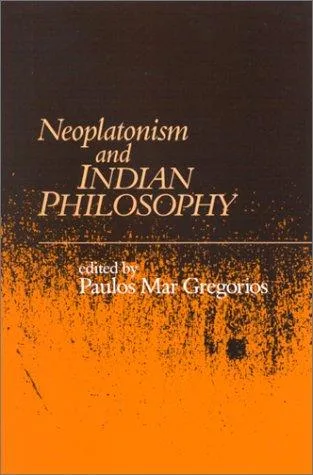
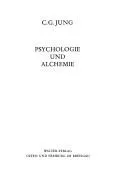
Psychologie und Alchemie
 81
81

Psychologie und Alchemie
Jung's exploration of alchemy in "Psychologie und Alchemie" is not merely an academic exercise; it's an attempt to map the unconscious through the symbolic language of a forgotten science. The sheer volume of alchemical texts and imagery he dissects is staggering, revealing recurring patterns that he correlates with stages of psychological development. His analysis of the *Visio Arisolei* provides a compelling example of how ancient alchemical narratives can mirror individual psychic journeys. However, the density of the material can be daunting; for readers unfamiliar with Jungian concepts or alchemical terminology, the initial chapters may present a significant barrier. The strength lies in its meticulous detail and the audacious claim that the alchemists were, in their own way, unconscious psychologists. It remains a pivotal work for understanding the bridge between ancient symbolism and modern psychological theory.
📝 Description
81
Carl Jung published "Psychologie und Alchemie" in 1952, connecting alchemical symbolism to the unconscious psyche.
Carl Jung's "Psychologie und Alchemie," published in 1952, examines alchemical symbolism as a projection of the unconscious mind. Jung uses alchemical texts and imagery to explain his theories of individuation, the process of psychological integration and self-realization. He views alchemy not as a historical curiosity but as a symbolic precursor to modern psychotherapy. The book details how alchemical procedures, such as *solve et coagula* (dissolve and coagulate), mirror psychological processes of breaking down and rebuilding the self.
This work is valuable for those interested in depth psychology, Jungian analysis, comparative mythology, and religious studies. It appeals to scholars and practitioners seeking to understand the symbolic language of the unconscious as expressed through ancient and medieval alchemical practices. Jung's engagement with alchemy placed him in dialogue with contemporaries like Mircea Eliade, who was also exploring archaic religions and magic. The book delves into concepts like the archetype of the Self, the collective unconscious, and the process of individuation.
Published in 1952, "Psychologie und Alchemie" emerged from Jung's extensive research into Gnosticism and other esoteric systems. It situates alchemy within a broader Hermetic tradition, viewing its symbolic language as a vital expression of the human psyche. Jung saw alchemical operations not as literal chemical processes but as metaphorical representations of inner transformation. The book connects these ancient practices to the development of analytical psychology, bridging rational inquiry with the symbolic dimensions of the mind.
💡 Why Read This Book?
• You will learn how Carl Jung interpreted alchemical processes like *solve et coagula* as metaphors for psychological integration, providing a unique lens for understanding personal transformation. • You will gain insight into the symbolic language of alchemy, understanding figures like the *coniunctio* and the *prima materia* as representations of psychic dynamics, as detailed in the text's extensive analysis. • You will discover the historical context of analytical psychology's development, seeing how Jung's engagement with 1952-era alchemical scholarship informed his theories on the collective unconscious.
⭐ Reader Reviews
Honest opinions from readers who have explored this book.
❓ Frequently Asked Questions
What is the main thesis of Carl Jung's "Psychologie und Alchemie"?
The book's central argument is that alchemical symbolism represents unconscious psychological processes, particularly the journey of individuation. Jung posits that alchemists, through their material transformations, were unknowingly projecting and working through archetypal patterns of the psyche.
When was "Psychologie und Alchemie" first published?
The original German edition of "Psychologie und Alchemie" was first published in 1952, marking a significant contribution to the study of psychology and esoteric traditions in the mid-20th century.
How does Jung connect alchemy to psychotherapy?
Jung connects alchemy to psychotherapy by interpreting alchemical operations and symbols (like the *prima materia* or the *coniunctio*) as symbolic representations of psychic states and developmental processes. He sees the alchemist's quest for transformation mirroring the individual's journey toward wholeness.
What is the significance of the philosopher's stone in Jung's interpretation?
In Jung's framework, the philosopher's stone symbolizes the integrated Self, the ultimate goal of the individuation process. It represents the union of opposites and the attainment of psychological wholeness, a concept he derives from extensive alchemical literature.
Does "Psychologie und Alchemie" require prior knowledge of alchemy or Jungian psychology?
While prior knowledge is helpful, Jung endeavors to explain alchemical concepts and their psychological relevance within the text. However, a basic familiarity with Jungian terminology and a willingness to engage with complex symbolism are beneficial for full comprehension.
What role do dreams play in Jung's analysis in this book?
Dreams are crucial as they provide direct access to the unconscious. Jung uses dream imagery, often rich with alchemical motifs, to demonstrate how the psyche spontaneously produces symbols that align with the alchemical process of transformation and individuation.
🔮 Key Themes & Symbolism
Individuation as Alchemical Transformation
Jung views the alchemical quest for the philosopher's stone as a symbolic parallel to the psychological process of individuation. The alchemical goal of transforming base metals into gold mirrors the ego's journey towards integrating unconscious contents and achieving psychic wholeness. He meticulously analyzes alchemical texts, such as those concerning the *coniunctio* (sacred marriage), to illustrate how ancient practitioners unconsciously depicted the union of opposites within the psyche, a critical step in becoming a complete individual.
The Collective Unconscious and Archetypes
This work is a reference for understanding Jung's concept of the collective unconscious. He argues that alchemical symbols, appearing across diverse cultures and eras, are not mere historical artifacts but expressions of universal archetypes residing in the collective unconscious. The recurring imagery of figures like the dragon, the hermaphrodite, and the anima/animus provides empirical evidence for these innate psychic structures, demonstrating how they manifest in both ancient esoteric traditions and modern psychological experiences.
Symbolic Language of the Psyche
Jung posits that the psyche communicates through a rich symbolic language, and alchemy provides a particularly potent vocabulary. He deciphers the meaning behind alchemical procedures like *solve et coagula* (dissolve and coagulate), equating them with psychological processes of breaking down rigid ego structures and integrating new psychic material. The book emphasizes that these symbols are not arbitrary but possess intrinsic meaning tied to fundamental human experiences and the drive toward self-realization.
Hermeticism and Psychological Projection
The book examines Hermeticism, the philosophical tradition from which alchemy largely emerged, as a fertile ground for psychological projection. Jung suggests that the alchemists' preoccupation with material transformation and the search for the *lapis philosophorum* (philosopher's stone) served as a screen onto which their unconscious psychic dramas were projected. By analyzing these projections, Jung offers a psychological interpretation of Hermetic goals and practices, revealing their inner significance.
💬 Memorable Quotes
Direct passages from the work, attributed to the author.
“The symbols of alchemy represent psychic facts.”
— This interpretation underscores Jung's central argument that the imagery and processes found in alchemical texts are not literal descriptions of material science but rather symbolic representations of psychological states and developmental stages.
“The *coniunctio* symbolizes the union of opposites.”
— This interpretation relates to the alchemical union of masculine and feminine principles, which Jung equates with the psychological integration of conscious and unconscious aspects of the personality, particularly the anima and animus.
💡 Key Ideas
Editorial paraphrase of the work's core concepts — not direct quotes.
The alchemists were trying to make the invisible visible.
This paraphrased concept highlights Jung's core thesis: alchemical operations, though material, were symbolic attempts to bring unconscious psychic contents into conscious awareness, making the inner world manifest.
The goal of alchemy was the attainment of wholeness.
This paraphrased concept points to Jung's view of the philosopher's stone not just as a material substance but as a symbol of the integrated Self, representing the ultimate aim of psychological development and unification of the personality.
Alchemy is the projection of the unconscious.
This paraphrased concept captures Jung's view that the entire field of alchemy, with its complex symbolism and procedures, served as a vast, unconscious projection of the human psyche's innate drive towards individuation and completion.
🌙 Esoteric Significance
Tradition
This work deeply engages with the Western Esoteric Tradition, particularly Hermeticism and its alchemical offshoot. Jung positions alchemy not as primitive science, but as a symbolic precursor to analytical psychology. He finds within alchemical texts a sophisticated, albeit unconscious, exploration of psychic transformation that parallels his own theories of individuation, thereby reinterpreting a key Hermetic practice through a psychological framework.
Symbolism
Central symbols like the *prima materia* (primordial matter) represent the undifferentiated unconscious from which psychic development begins. The *coniunctio* (sacred marriage) symbolizes the integration of conscious and unconscious, masculine and feminine principles within the psyche. The philosopher's stone itself stands for the achieved Self, the state of psychic wholeness and integration that is the ultimate goal of individuation.
Modern Relevance
Contemporary Jungian analysts and depth psychologists continue to draw heavily on "Psychologie und Alchemie" for its rich symbolic interpretations. Practices in Jungian psychotherapy often involve exploring dream imagery that echoes alchemical motifs. Moreover, scholars in comparative mythology, religious studies, and even fields like consciousness studies reference Jung's work to understand the enduring power of archetypal symbolism in shaping human experience and belief systems.
👥 Who Should Read This Book
• Students of Jungian psychology: Gain a deeper understanding of Jung's theories on individuation, archetypes, and the collective unconscious through his analysis of alchemical symbolism. • Researchers in comparative religion and mythology: Explore the historical connections between esoteric traditions and the development of psychological thought, using alchemy as a case study. • Individuals interested in esoteric symbolism: Discover how ancient alchemical imagery can be interpreted as a map of inner psychological processes and transformations.
📜 Historical Context
Published in 1952, "Psychologie und Alchemie" emerged during a period of significant intellectual ferment surrounding depth psychology and the study of esoteric traditions. Carl Jung, already a renowned figure, was actively exploring the historical roots of psychological phenomena. His work on alchemy built upon his earlier investigations into Gnosticism and other ancient belief systems, seeking to demonstrate the continuity of certain psychic patterns across millennia. The mid-20th century saw a growing academic interest in comparative religion and mythology, with scholars like Mircea Eliade examining archaic cosmologies and symbolic systems. Jung's book positioned itself within this burgeoning field, offering a novel psychological lens through which to understand the Hermetic traditions, distinguishing itself from purely historical or philological approaches.
📔 Journal Prompts
The *prima materia*'s symbolism in relation to your own initial psychic state.
Reflect on the *coniunctio* as a metaphor for integrating opposing aspects of your personality.
How does the alchemical process of *solve et coagula* mirror periods of personal change or dissolution you have experienced?
Consider the philosopher's stone as a symbol of your personal integration goals.
Analyze a personal dream for motifs that might align with alchemical symbolism as presented by Jung.
🗂️ Glossary
Individuation
The lifelong psychological process of differentiation of the self, involving the integration of unconscious elements into conscious awareness to achieve psychic wholeness and self-realization.
Collective Unconscious
A concept introduced by Jung, referring to a universal layer of the unconscious mind shared by all humans, containing archetypes and inherited predispositions.
Archetype
Universal, archaic patterns and images that derive from the collective unconscious and are the psychic counterpart of instinct; they are structural components of the psyche.
Prima Materia
In alchemy, the fundamental, undifferentiated substance from which all matter is derived; psychologically, it represents the chaotic, unformed potential of the unconscious.
Coniunctio
Latin for 'union' or 'conjunction,' referring in alchemy to the sacred marriage of opposites, often symbolized by the union of king and queen, or sun and moon.
Solve et Coagula
An alchemical maxim meaning 'dissolve and coagulate,' representing the cyclical process of breaking down and rebuilding, which Jung interprets as psychological dissolution and reintegration.
Philosopher's Stone (Lapis Philosophorum)
The legendary alchemical substance believed to transmute base metals into gold or silver, or to produce the elixir of life; psychologically, it symbolizes the integrated Self and psychic perfection.
🔮 Readers Also Liked
Browse all →








More by Carl Gustav Jung
All books →

More Free Alchemy & Hermeticism Books
View all →