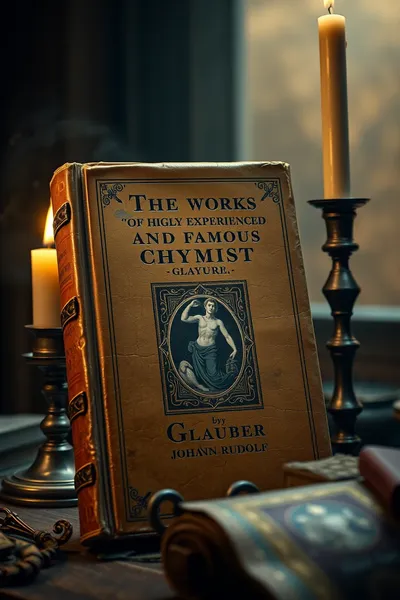
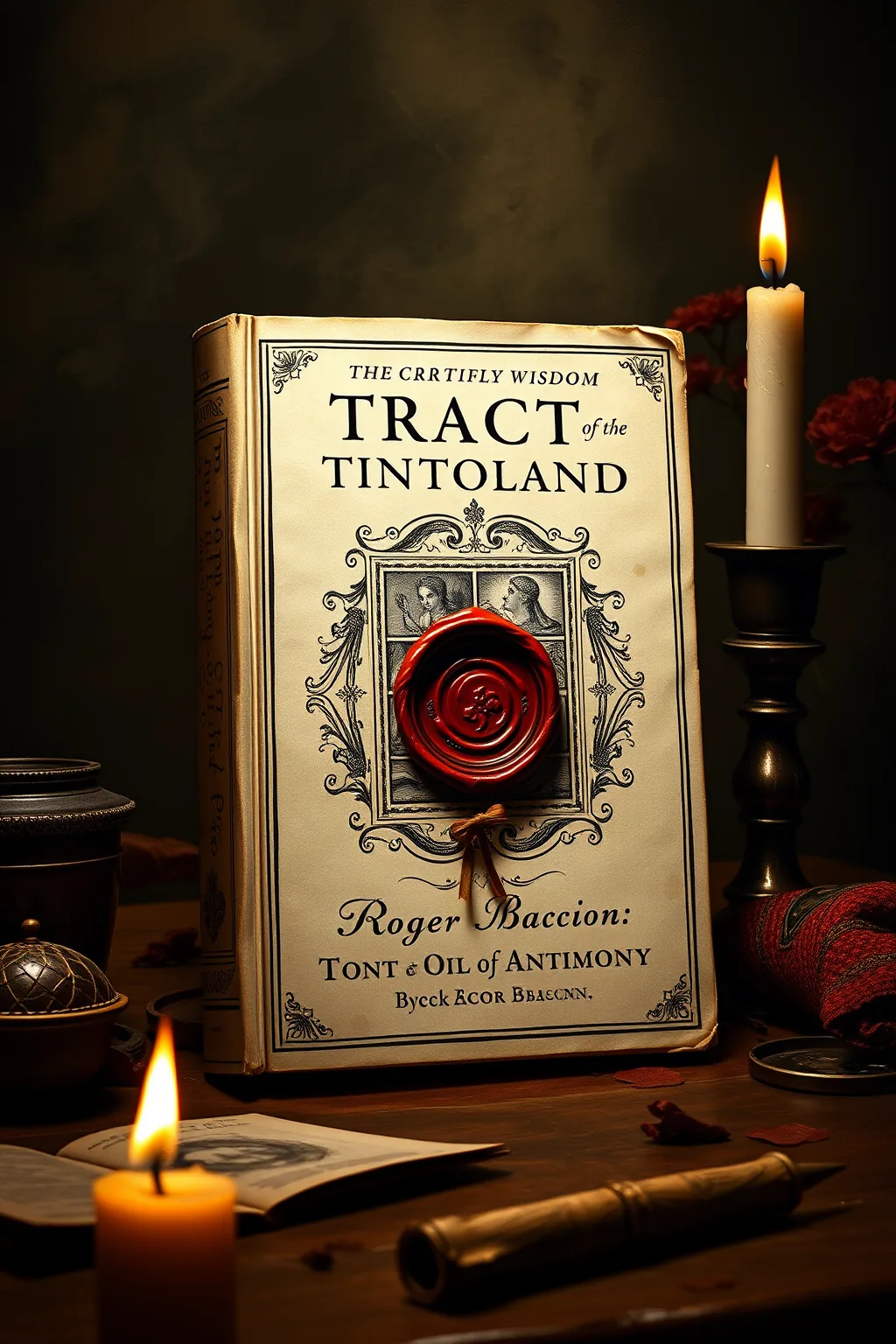
Tract on the Tincture and Oil of Antimony by Roger Bacon
 79
79

Tract on the Tincture and Oil of Antimony by Roger Bacon


Evander Ashcroft (Alchemy & Hermeticism Editor) — Roger Bacon's 'Tract on the Tincture and Oil of Antimony' is a cornerstone for any serious student of alchemy. Bacon, a true luminary of his age, meticulously dissects the nature of stibium, revealing its profound connection to the celestial spheres and the alchemical Sun. His insights into its preparation and potential are not merely technical but deeply philosophical, offering a potent blend of practical instruction and esoteric contemplation. This tract is essential for understanding the foundational principles of early alchemical metallurgy and its spiritual implications, making it an indispensable resource for those pursuing the Great Work.
📝 Description
79
Roger Bacon's 13th-century 'Tract on the Tincture and Oil of Antimony' details alchemical processes for antimony.
Written in the 13th century, Roger Bacon's "Tract on the Tincture and Oil of Antimony" examines the alchemical properties of antimony, referred to as the 'black lead of the Wise.' Bacon addresses the substance's connection to celestial influences, specifically the Sun's position in Aries, as understood by ancient practitioners.
The text instructs the initiated on methods for extracting powerful tinctures and oils from antimony. It moves beyond simple chemistry to discuss the philosophical implications of the alchemical process, linking the microcosm of the body with the macrocosm of the universe. Bacon explores the interplay between earthly materials and cosmic forces, suggesting a path toward spiritual and material transformation.
This work is suited for those committed to understanding ancient mysteries and alchemical practices. It reveals a worldview where the material and spiritual realms are interconnected, and the pursuit of transmutation is guided by a deep comprehension of cosmic principles.
This tract belongs to the corpus of medieval European alchemy, a tradition blending Aristotelian philosophy, Neoplatonism, and Hermeticism with practical laboratory work. Bacon's approach, while rooted in the era's understanding of sympathetic magic and the interconnectedness of the cosmos, also exhibits a nascent empiricism. The focus on antimony, a key substance in alchemical operations, reflects the broader pursuit of understanding and manipulating the fundamental principles of matter for spiritual and material ends.
💡 Why Read This Book?
Uncover the alchemical significance of antimony, a mineral revered by ancient sages. Explore the profound links between celestial influences and earthly substances as elucidated by the brilliant Roger Bacon. This tract is ideal for seekers of hidden knowledge, scholars of hermetic traditions, and practitioners aiming to deepen their understanding of material and spiritual transmutation.
⭐ Reader Reviews
Honest opinions from readers who have explored this book.
❓ Frequently Asked Questions
What is 'stibium' in the context of this tract?
Stibium, also known as antimony, is presented as a noble mineral, a 'black lead of the Wise,' possessing unique properties crucial for alchemical transmutation according to ancient wisdom.
What is the connection between antimony and the constellation Aries?
The tract posits a divine attribution of antimony to the constellation Aries, the first heavenly sign, where the Sun is considered to be exalted, suggesting a powerful celestial resonance.
What are 'tinctures' and 'oils' in alchemical terms?
In alchemy, tinctures and oils are potent preparations derived from substances, believed to hold concentrated virtues capable of transforming other materials or even the alchemist themselves.
Is this tract a purely practical guide to making antimony compounds?
While it offers insights into preparation, the tract is deeply philosophical, exploring the symbolic and spiritual dimensions of antimony and its alchemical potential, transcending mere practical instruction.
Who is Roger Bacon?
Roger Bacon (c. 1219/20 – 1292) was an English philosopher and Franciscan friar, renowned for his early advocacy of empirical methods and his extensive writings on various scientific and philosophical subjects, including alchemy.
🔮 Key Themes & Symbolism
The Alchemical Nature of Antimony
This theme examines the esoteric properties of antimony (stibium), viewed not merely as a mineral but as a substance holding profound alchemical significance. Bacon elaborates on its dual nature, its connection to 'noble Sulphur,' and its symbolic role as the 'black lead of the Wise.' The text explores how antimony acts as a key ingredient in alchemical operations, its capacity for purification and transformation, and its place within the broader spectrum of alchemical materia prima.
Celestial Influence and Cosmic Resonance
A central tenet of this tract is the profound influence of celestial bodies and constellations on terrestrial substances. Bacon meticulously details the attribution of antimony to Aries, the sign of the Sun's exaltation. This highlights the hermetic principle of 'as above, so below,' demonstrating how cosmic energies are imprinted upon earthly matter. The tract encourages a contemplation of these divine connections, suggesting that understanding astrological and astronomical correspondences is vital for successful alchemical work and spiritual attainment.
The Art of Transmutation and the Great Work
This theme encompasses the ultimate aim of alchemy: transmutation. Bacon's discussion of the tincture and oil of antimony points towards the creation of potent alchemical agents capable of transforming lesser metals into nobler ones, or even achieving the legendary Philosopher's Stone. Beyond material change, the tract implies a spiritual dimension to the Great Work, where the purification and transformation of antimony mirror the alchemist's own journey towards enlightenment and spiritual perfection.
💬 Memorable Quotes
Direct passages from the work, attributed to the author.
“Stibium, as the Philosophers say, is composed from the noble mineral Sulphur.”
— This highlights antimony's fundamental nature, linking it to the alchemical principle of Sulphur, signifying active, fiery, and masculine energies crucial for transformation.
“They have praised it as the black lead of the Wise.”
— This evocative phrase emphasizes antimony's hidden value and its recognized importance among enlightened alchemists, contrasting its dark appearance with its profound potential.
“The Sun is exalted, as the Magi found...”
— This refers to the astrological concept of exaltation, where a planet or celestial body is believed to be at its most potent and influential, linking antimony's power to solar energy.
“It will however lead to the consideration of high Secrets...”
— This promises that engaging with the subject matter of antimony will unlock profound mystical and alchemical knowledge, intended for those ready to pursue deeper truths.
💡 Key Ideas
Editorial paraphrase of the work's core concepts — not direct quotes.
The Magi found that this mineral was attributed by God to the Constellation Aries.
This quote underscores the sacred and divinely ordained connection between antimony and the celestial realm, specifically Aries, the sign of the Sun's power.
🌙 Esoteric Significance
Tradition
This tract is deeply rooted in the Hermetic tradition and Western esotericism, drawing heavily on alchemical principles that bridge the material and spiritual realms. It aligns with the Neoplatonic understanding of the cosmos, where celestial influences are seen as direct agents of divine power acting upon earthly substances. The emphasis on transmutation and the search for hidden virtues places it squarely within the lineage of alchemical philosophy aimed at achieving both material perfection and spiritual enlightenment.
Symbolism
Antimony, or stibium, serves as a potent symbol of duality: its dark, often forbidding appearance belies its transformative potential. It represents the 'prima materia' in its raw, unrefined state, a vehicle for purification and the extraction of hidden essences. The association with Aries and the exalted Sun symbolizes solar power, vitality, and the fiery principle of transformation, suggesting that the alchemical process with antimony is infused with cosmic energy and the promise of renewal.
Modern Relevance
In contemporary esoteric studies, Bacon's tract remains relevant for its exploration of the symbolic language of alchemy and its philosophical underpinnings. It offers a valuable lens through which to examine the historical evolution of chemical thought and the persistent human desire to understand and manipulate fundamental forces. For practitioners and scholars alike, it provides insights into the symbolic representation of matter, the relationship between the microcosm and macrocosm, and the enduring quest for transformation.
👥 Who Should Read This Book
This tract is essential for scholars of medieval science and alchemy, offering primary source material from an important figure. Aspiring alchemists and practitioners of Hermetic arts will find profound philosophical insights and foundational knowledge regarding the use of antimony. Seekers of esoteric wisdom interested in the historical intersection of science, philosophy, and mysticism will be captivated by Bacon's rigorous yet mystical approach. Beginners in alchemy may find it dense, but dedicated students seeking a deeper understanding of alchemical principles and symbolism will find it immensely rewarding.
📜 Historical Context
Roger Bacon's 'Tract on the Tincture and Oil of Antimony' emerges from the vibrant intellectual milieu of the 13th century, a period marked by renewed interest in classical texts and the burgeoning field of alchemy. Written during a time when alchemical pursuits were often shrouded in secrecy and intertwined with philosophy, medicine, and theology, this work reflects the era's scientific curiosity tempered by mystical worldview. Bacon, a polymath known for his empirical leanings, nevertheless operated within a framework where occult sciences were considered legitimate avenues of knowledge. His treatise on antimony contributes to a rich tradition of alchemical literature that sought to understand and manipulate the fundamental forces of nature, influencing subsequent generations of alchemists and philosophers.
📔 Journal Prompts
Reflect on the symbolic meaning of antimony as the 'black lead of the Wise.' What hidden potentials does this duality suggest?
Consider the connection between Aries and the Sun's exaltation. How might this celestial influence be understood as acting upon the mineral antimony?
How does Roger Bacon's description of stibium challenge modern, purely materialist views of chemistry?
If antimony represents a base substance with high potential, what parallels can you draw to personal growth or spiritual development?
What does the concept of 'high Secrets' revealed through the study of antimony imply about the nature of knowledge in the alchemical tradition?
🗂️ Glossary
Stibium
The ancient name for the element antimony (Sb), revered in alchemy for its transformative properties and referred to as the 'black lead of the Wise'.
Tincture
In alchemy, a concentrated liquid preparation of a substance, believed to hold its essential virtues and capable of effecting transformation.
Oil
An alchemical preparation, often referring to a volatile and potent essence extracted from a substance, rich in its active principles.
Sulphur (noble mineral)
In alchemy, Sulphur represents the active, fiery, and masculine principle, often associated with spirit and the animating force within substances.
Aries
The first astrological sign of the zodiac, associated with the element of fire, Mars, and the beginnings of spring, symbolizing initiation and potency.
This book appears in 2 collections
🔮 Readers Also Liked
Browse all →









From the “Hermeticism” Collection
View all →








More Free Alchemy & Hermeticism Books
View all →